Filed Report
Ministry of Health Issues New Guidelines on "Starch-Induced Domestic Volatility"
The Department of Health and Social Care has released a comprehensive report detailing a direct correlation between high-volume carbohydrate intake and the breakdown of domestic stability. The study, titled *The Glycemic Index of Marital Discord*, suggests that the consumption of complex starches—specifically artisanal sourdough and heavy pastas—is now a leading contributor to "unexplained household friction" and the sudden dissolution of long-term partnerships.
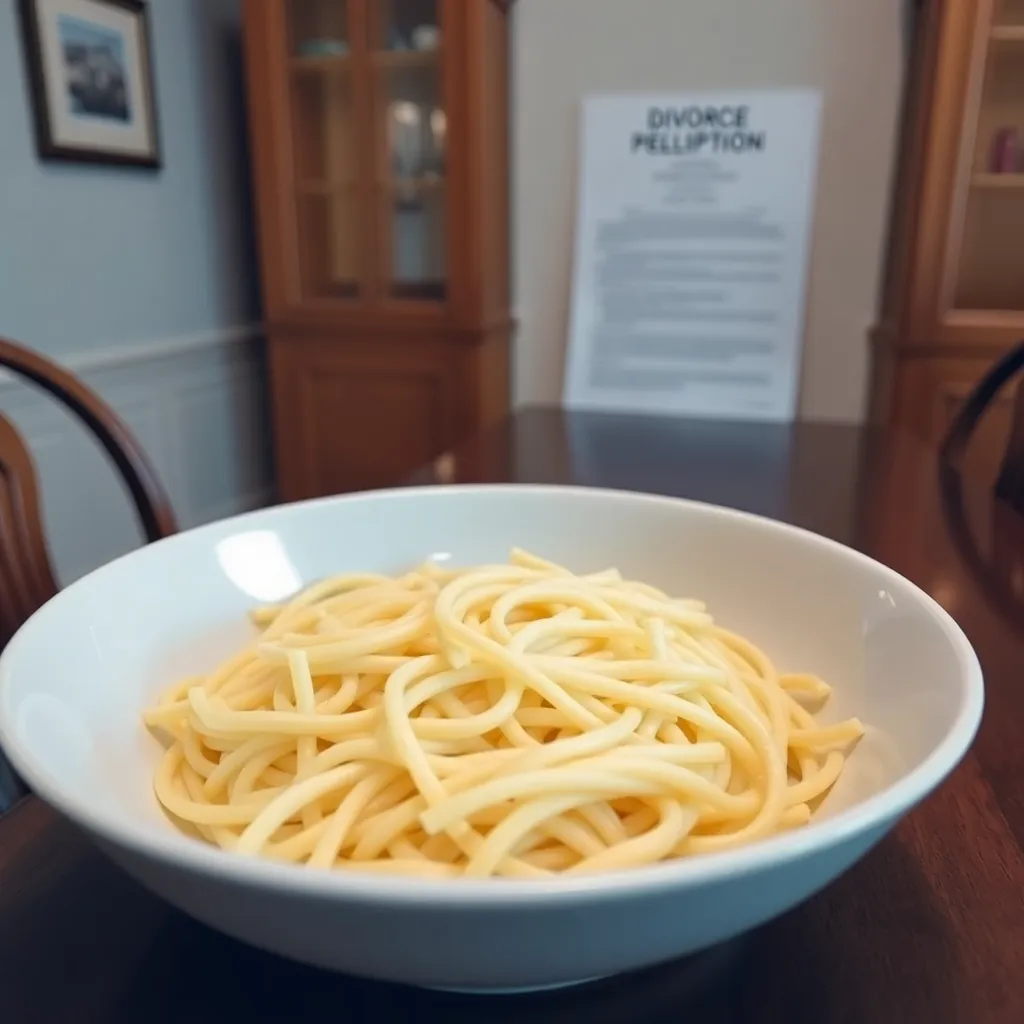
The "Bread-to-Bickering" Pipeline
According to the report, the physiological spike in blood sugar following a large meal of refined carbohydrates creates a specific neurological state known as "Starch-Induced Irritability" (SII). Researchers found that couples who shared a large pizza or a baguette-heavy brunch were 64% more likely to engage in what the Ministry calls "high-intensity verbal exchanges" regarding the correct orientation of the dishwasher or the historical tone of a text message.
"We are observing a distinct pattern where the metabolic load of a potato-based dinner precedes a total collapse in interpersonal diplomacy," said Dr. Aris Thorne, lead researcher at the Institute for Dietary Stability. "The body’s attempt to process a significant quantity of gnocchi appears to divert blood flow away from the prefrontal cortex, which is responsible for patience and the suppression of long-held grievances."
Municipal Response and Public Safety
Local councils have begun implementing "Carbohydrate Cooling-Off Periods" in high-density residential areas. Under these voluntary guidelines, citizens are encouraged to wait at least ninety minutes after consuming a baked potato before discussing financial planning, holiday logistics, or the behavior of in-laws.
In the borough of High Wycombe, the local council has piloted a "Starch Warden" program. These officials patrol restaurant districts, handing out leaflets that warn diners of the emotional risks associated with the "bottomless breadbasket" promotions common in Italian-themed chains.

Economic and Legal Implications
The legal sector has already begun to adjust to the findings. Several prominent family law firms have introduced "Dietary Discovery" phases into their divorce proceedings. Solicitors now routinely request grocery receipts from the six months leading up to a separation to determine if a "pasta-heavy environment" may have been a mitigating factor in the breakdown of the marriage.
"If we can prove that a client’s spouse was consistently over-serving risotto during the period of peak hostility, it changes the narrative of the case," explained Helena Vane, a senior partner at Vane & Associates. "It moves the conversation from 'irreconcilable differences' to 'metabolic mismanagement.' We are seeing more settlements that include mandatory low-carb mediation."
The hospitality industry, however, has pushed back against the report. The National Association of Bakers issued a statement claiming that the Ministry is "unfairly pathologizing the sandwich" and that domestic chaos is a multifaceted issue that cannot be blamed solely on the crust of a bloomer.
The "Potato Pivot" in Modern Dating
The impact is also being felt in the dating market. New mobile applications have emerged that allow users to filter potential partners based on their "Starch Sensitivity." On these platforms, users display badges indicating their commitment to a "Low-Friction Diet," prioritizing protein-heavy meals to ensure that first dates do not devolve into arguments about the 2014 general election or the ethics of the dairy industry.

As the government considers a "Sugar and Starch Tax" specifically aimed at evening meals, the public remains divided. While some welcome the intervention as a necessary step toward national tranquility, others argue that the right to eat a bowl of mashed potatoes without a subsequent lecture from a spouse is a fundamental civil liberty.
The Ministry of Health is expected to publish a follow-up paper in the autumn, focusing on the specific relationship risks posed by the Sunday Roast and its associated Yorkshire puddings.
Public Response
Comments
No comments yet.