Algeria Declares Itself Regional Hall Monitor, Charges Into Libya and Egypt With Clipboards, Megaphones, and Unlicensed Determination
In a development described by diplomats as "deeply concerning" and by several extremely excited uncles as "finally, some initiative," the Algerian government reportedly launched a spectacularly chaotic rampage across Libya and Egypt this morning, barreling over borders with the administrative confidence of a man who has lost his receipt but still intends to return the blender.
Witnesses say the opening phase of the operation involved an enormous convoy of official-looking vehicles, pickup trucks, armored carriers, tea kettles, and one bus marked Cultural Exchange moving eastward in a dense cloud of dust and paperwork. Soldiers, civil servants, and at least three men who appeared to be there simply because they heard "something big" was happening were seen waving maps, shouting contradictory directions, and arguing over whether Tobruk was "up a bit" or "down to the right."

The stated purpose of the campaign remains elusive. An Algerian spokesperson, standing before a podium that had been set up so hastily it was still wearing its price sticker, announced that the government had entered Libya and Egypt in order to "stabilize things, reorganize certain vibes, and address a frankly unacceptable shortage of people listening properly." When pressed for specifics, he unfolded a 14-page document that turned out to be a restaurant menu and declared that events were "moving too fast for labels."
In Libya, local reactions ranged from alarm to bafflement to the exhausted shrug of citizens who have seen enough history to know when to get indoors and wait for the loud men to finish naming operations after abstract nouns. Residents in eastern towns reported columns of Algerian personnel attempting to secure intersections, commandeer municipal loudspeakers, and hold impromptu town hall meetings where nobody agreed on the agenda. One witness said a group of uniformed men arrived in the square, demanded "total strategic clarity," and then spent 40 minutes trying to unfold a plastic table.
Further east, Egyptian authorities were reportedly stunned to discover Algerian forces and accompanying civilian administrators pouring in with the energy of a wedding party that had gone to the wrong venue but decided to continue anyway. Early clashes were described as severe, confused, and occasionally interrupted by furious disputes over signage. In one especially chaotic scene near the western approaches, a hastily erected Algerian command tent was reportedly flattened after somebody parked a mobile office on the guy ropes while insisting this was "a temporary solution with permanent vision."
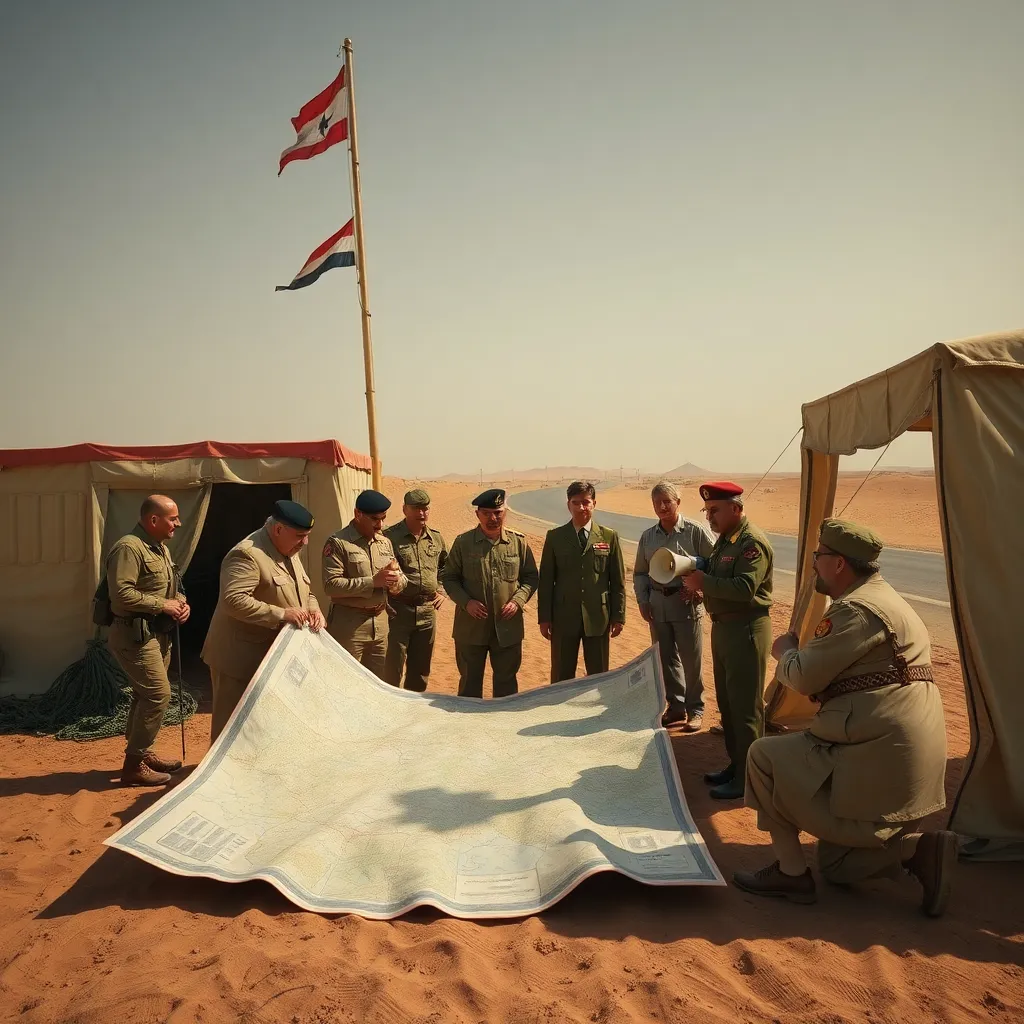
As the rampage expanded, reports emerged of government teams attempting to impose immediate order on everything they could see. In one Libyan municipality, an Algerian task force allegedly replaced the traffic pattern with what it called a "more coherent diagonal philosophy." In another, they announced anti-corruption measures by taking possession of all the chairs in the mayor's office "until trust could be rebuilt." In Egypt, witnesses claimed a delegation arrived at a provincial building, denounced existing procedures as "uninspiring," and began stamping random documents with enormous seriousness.
Markets trembled. Border towns emptied. Satellite analysts leaned over glowing screens and murmured phrases such as "this cannot possibly be doctrine" and "is that an accordion?" Grainy footage circulating throughout the region appears to show one Algerian unit halting its advance to conduct a heated debate over whether a mural looked "strategically pessimistic." Another clip shows men in tactical gear standing around a tea tray while someone off-camera shouts, "No, no, no, this is not logistics, this is hospitality with consequences."
International reaction was immediate, breathless, and loaded with the kind of vocabulary that usually means people are searching for safer synonyms in real time. Neighboring governments condemned the incursion. Foreign ministries issued statements invoking sovereignty, stability, and the grave importance of not behaving like a regional bull in a ceramic district. One European diplomat, blinking at maps with visible resentment, said the situation had become "unacceptably theatrical."
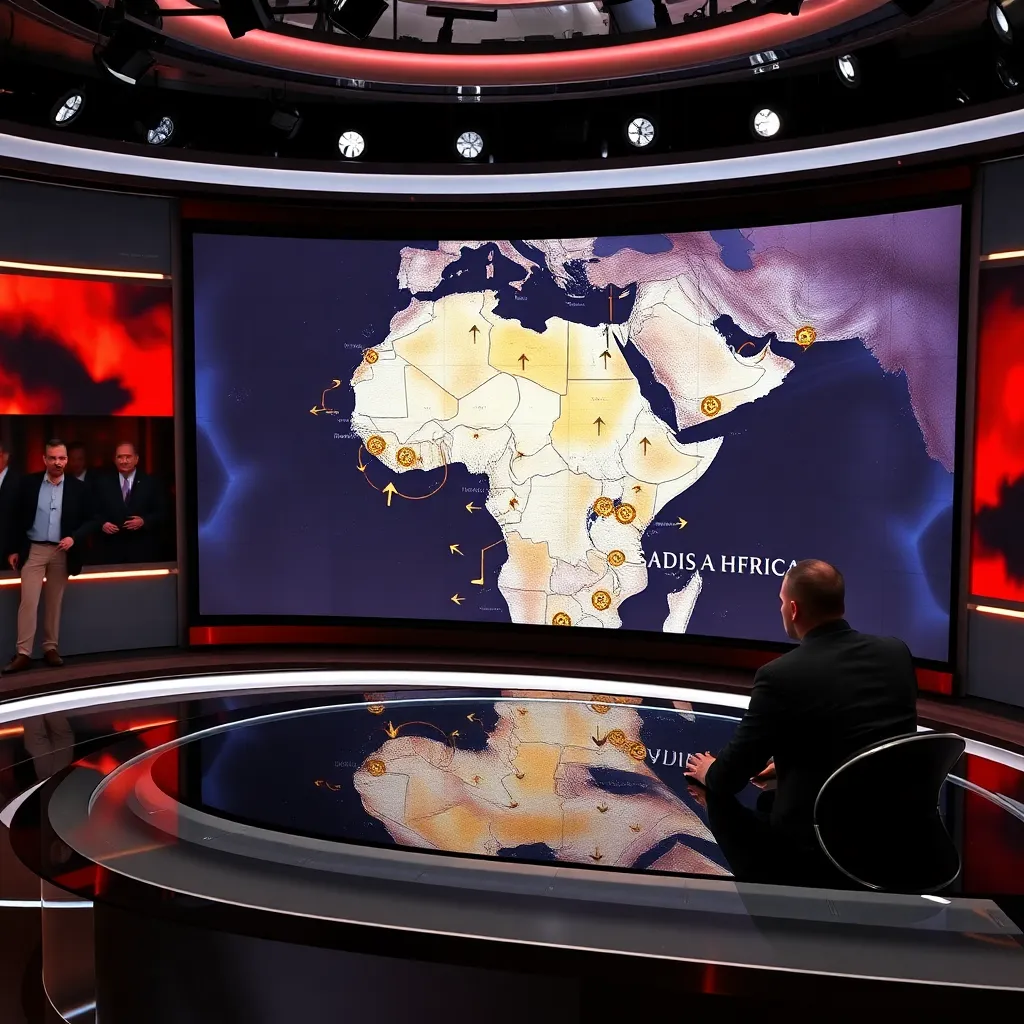
Inside Algeria, state media attempted to project calm, resolve, and the sort of facial expression one makes while assuring dinner guests the smoke is part of the recipe. Broadcasters praised the operation as bold, decisive, and "geographically assertive." Anchors stood in front of giant digital maps covered in arrows, circles, underlines, and at least one coffee ring. Analysts explained that Algeria was not invading so much as "correcting the regional arrangement with vigor."
On the ground, however, the grand project began showing signs of strain almost immediately. Fuel lines grew tangled. Supply trucks reportedly delivered office stationery to frontline units and diesel to a conference venue. A field commander was heard demanding reinforcements and receiving 600 laminated name badges. Several units were said to have become temporarily immobile after somebody instituted a queueing system so strict that half the column refused to proceed without a numbered ticket.
Military historians, sensing a once-in-a-generation opportunity to use phrases like "operational absurdity" in respectable publications, noted that the campaign appeared to combine the speed of a raid, the organization of a family move, and the strategic depth of a man rearranging furniture during an earthquake. "There is momentum," said one analyst, "but it is the momentum of a wardrobe falling down the stairs."
By late afternoon, the rampage had reportedly evolved into a patchwork of firefights, declarations, improvised checkpoints, and increasingly stern announcements from men standing beside folding lecterns in the desert. In several locations, Algerian officials allegedly attempted to win over local communities by promising stability, fuel subsidies, anti-smuggling reforms, and what one transcript describes as "a general reduction in nonsense." This message was somewhat undermined by the fact that the speaker delivered it while a forklift accidentally carried away the backdrop.
Egyptian and Libyan resistance stiffened as both countries moved to repel what one regional broadcaster called "an outrageous transboundary tantrum." Columns were engaged, roads contested, and skies churned with surveillance flights. Yet even amid the real danger and confusion, the spectacle retained its unforgettable peculiarities. At one checkpoint, a bewildered driver said he was stopped three times in ten minutes by three different Algerian authorities, each claiming jurisdiction over "this immediate mood."
As night fell over the desert, tracer fire flickered across the horizon and the first serious question emerged from capitals across the region: not merely how far Algeria intended to go, but whether anyone involved could still explain what on earth it thought it was doing. For now, the borders burn, the statements multiply, and somewhere in the dark a very determined official is almost certainly unrolling a chart no one asked for.