Six “Ridiculous” 1940s Conspiracy Theories That Later Took Off Their Groucho Glasses and Walked Into History
There was a time when saying “governments sometimes lie, corporations occasionally marinate ethics in kerosene, and intelligence agencies may have hobbies” was enough to get you gently escorted away from the good biscuits at a dinner party. The 1940s, with their fog, ration books, trench coats, and men named Harold staring at maps, were especially fertile ground for ideas dismissed as wild-eyed bunkum right up until filing cabinets burst open decades later and whispered, “well, yes, but in a very official font.”
Not every rumor from that decade deserves rehabilitation. Some belonged in the sea, weighted with a typewriter. But a surprising number of allegedly crackpot claims from the era turned out to have sturdy bureaucratic legs. Here, then, are several 1940s conspiracy theories that eventually stopped being theories and became the sort of historical fact people discuss while trying not to spill coffee on declassified documents.
1. “The Government Is Secretly Listening to Everyone’s Communications”
In the 1940s, this sounded like the complaint of a man who wore two ties at once and distrusted light bulbs. Yet wartime and postwar surveillance programs were very real, and signals intelligence expanded dramatically behind locked doors and under headings no civilian was supposed to see.
The public understanding of how much mail, telegraph traffic, radio transmissions, and later international communications could be monitored was pitifully small. States insisted they were merely defending civilization, which is exactly the sort of thing states say while quietly opening civilization’s envelopes. Programs involving censorship, interception, and cryptographic monitoring were substantial, and later revelations showed that broad surveillance was not a fever dream but an administrative category.
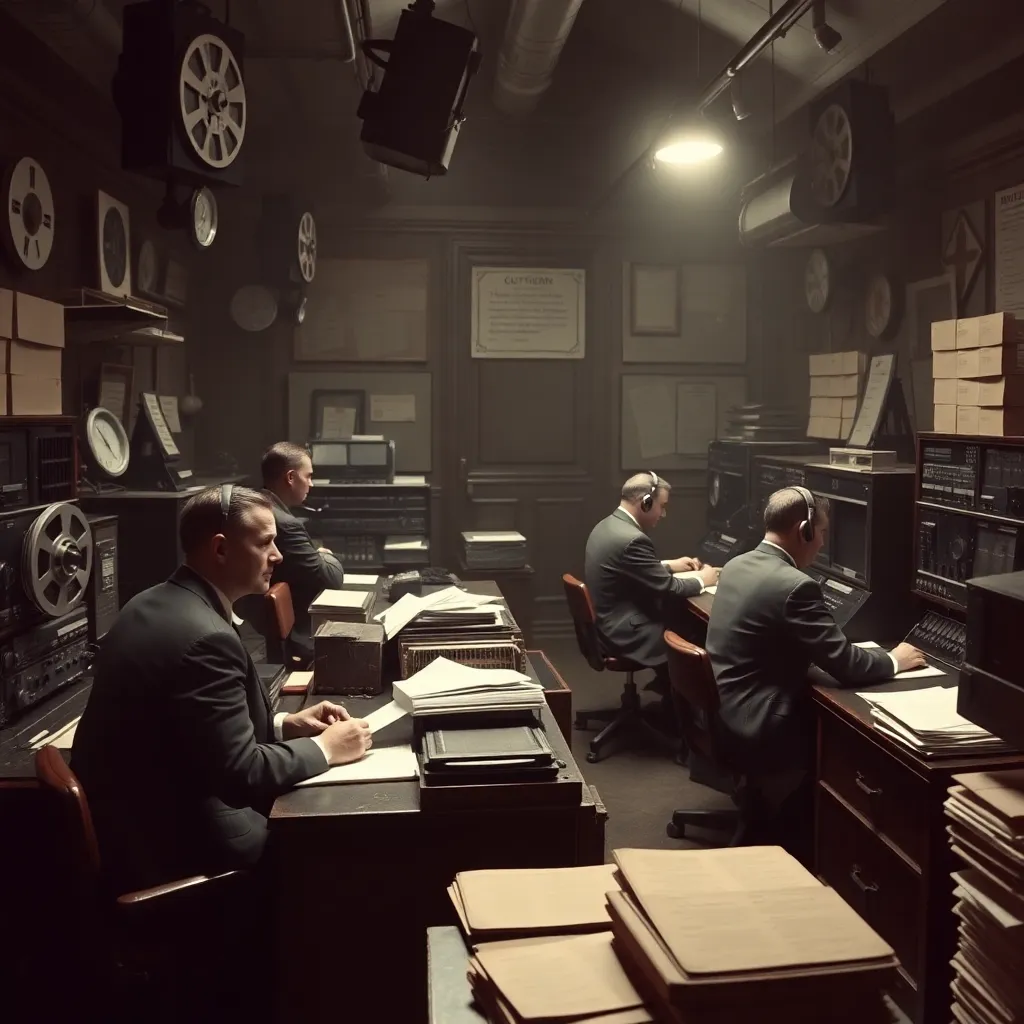
To be fair, governments did not usually stand on the town hall steps and announce, “good evening, we are now reading your overseas correspondence with a seriousness bordering on romantic devotion.” Instead, they preferred euphemisms, committees, and cabinets with better locks than morals.
2. “Former Nazis Are Being Quietly Recruited by the United States”
At the time, this accusation could get you accused of lacking imagination, despite requiring an almost athletic level of imagination not to consider it plausible. After the war, the United States did in fact recruit German scientists, engineers, and intelligence personnel through what became best known as Operation Paperclip.
Publicly, the defeated regime was evil incarnate. Privately, if one of its rocket experts could help with missiles, someone in Washington suddenly discovered a touching belief in second chances. Records later showed extensive efforts to bring over specialists, sometimes smoothing over or minimizing unsavory affiliations because apparently geopolitics can turn “absolutely not” into “perhaps after a quick paperwork adjustment.”
This was not a tiny footnote involving two confused chemists and a man who once tightened a bolt near a laboratory. It was a significant program, and it carried moral implications large enough to require their own freight service. The postwar race for military and technological advantage made former enemies strangely employable, particularly if they knew how to make machines go upward at regrettable speed.
3. “The Allies Already Knew More About Enemy Plans Than They Admitted”
During the war, ordinary people sometimes suspected that official stories about surprise attacks, military timing, or strategic confidence did not quite add up. They were often told to stop reading too much into things and return to knitting socks for civilization. Later, the story of Allied codebreaking—especially the work associated with Ultra and Bletchley Park—showed that Allied leadership indeed possessed extraordinary secret knowledge of enemy communications.
The conspiracy element was not simply “they break codes,” but the immense lengths taken to hide the extent of that success, sometimes even from friendly officials and often from the public for decades. This secrecy could shape operational decisions in ways that looked baffling in the moment. What seemed like guesswork or luck was sometimes the result of reading the enemy’s mail and then pretending to be merely intuitive.
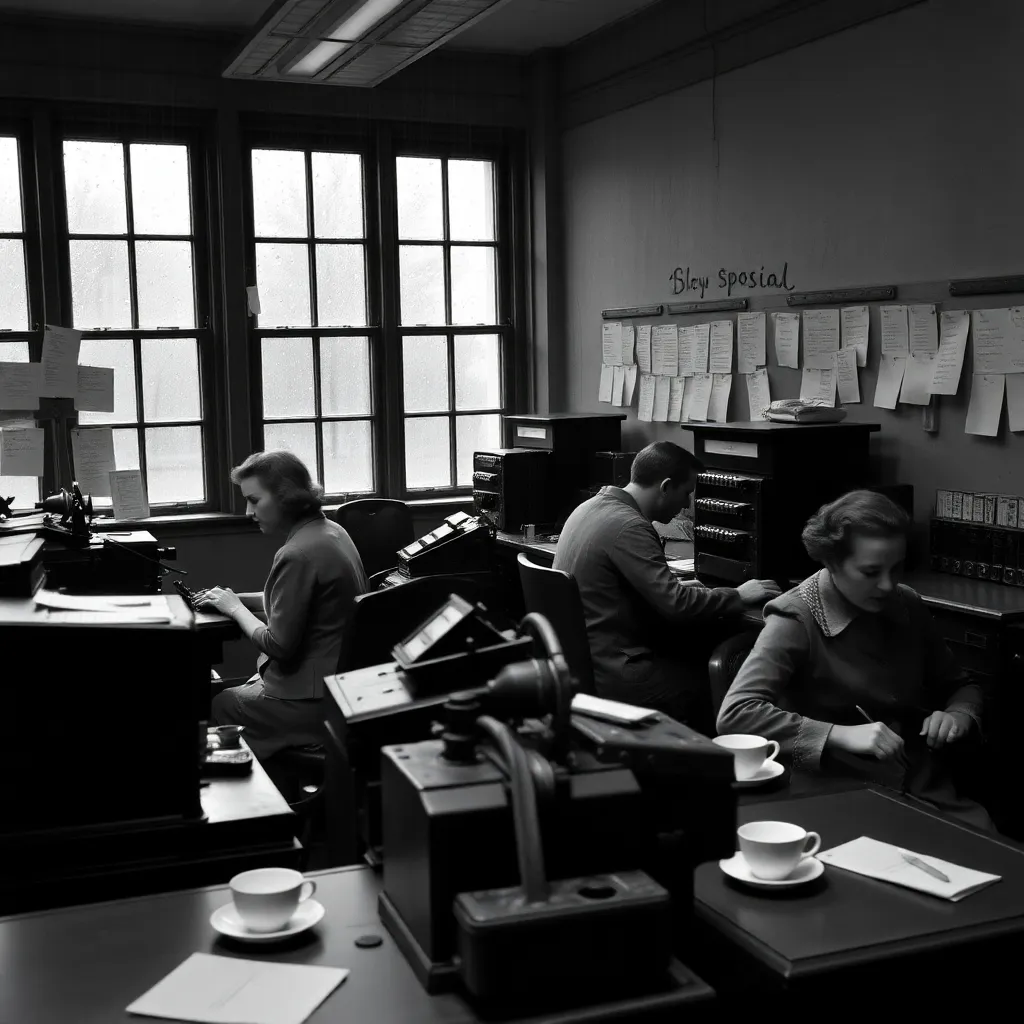
Naturally, once the truth emerged, many earlier “that seems suspicious” reactions no longer sounded suspicious at all. They sounded underinformed, which is what happens when history is wearing a fake moustache.
4. “There Are Secret Human Radiation Experiments”
Few claims were more likely to be dismissed as grotesque paranoia than the idea that authorities might expose people to dangerous substances without proper consent in the name of science, security, or a memo stamped URGENT. Yet later investigations uncovered deeply disturbing examples of human radiation experiments conducted in the United States beginning in the 1940s.
Subjects included hospital patients and vulnerable people who often had little idea what was being done to them or why. The larger context was the atomic age, which arrived wearing a lab coat and the expression of a man about to say “for research purposes” in a way that instantly ruins your afternoon. The need to understand radiation effects, combined with secrecy and moral corner-cutting, produced actions that now read like the minutes of a meeting between hubris and chloroform.
The terrible efficiency of the era was that once a program was called important enough, ethical objections were expected to stand aside and remove their hats.
5. “Big Industry and the Government Are Hiding Toxic Dangers”
In the 1940s, suspicion that companies and agencies knew more about chemicals, industrial hazards, and environmental risks than they admitted was often waved off as anti-progress muttering from the sort of person who also worried about soot, lungs, rivers, and other known enemies of profit. Yet later evidence repeatedly showed that industrial actors and public bodies did suppress, minimize, or delay acknowledgment of serious harms.
This took many forms. Workers were exposed to dangerous substances with incomplete warnings. Communities near industrial sites sometimes lived beside contamination wrapped in cheerful silence. Military and atomic production left trails of secrecy that only became visible much later, when records, lawsuits, and illnesses started introducing themselves to one another.
The pattern was not always a single smokestack villain twirling a sooty moustache beside a poisoned trout. It was more bureaucratic than that: fragmented responsibility, strategic vagueness, patriotic urgency, and the longstanding institutional belief that if one avoids writing something down, perhaps reality will lose interest and go home.

6. “Governments Are Running Covert Psychological and Mind-Control Research”
If someone in the late 1940s said intelligence services were becoming fascinated with manipulating human behavior using drugs, hypnosis, coercion, or interrogation science, many listeners would have assumed they had spent too long alone with a shortwave radio and a cabbage. Yet the early Cold War years did in fact see covert research into mind control, interrogation methods, and psychoactive substances, culminating in later programs better known to the public through projects such as MKUltra.
While MKUltra itself belongs mostly to the 1950s and beyond, the seedbed was already there in the late 1940s: deep anxiety about brainwashing, truth drugs, and psychological warfare. Intelligence bureaucracies, once given the vague mission of preventing catastrophe, have a way of treating every terrible idea as a receipt awaiting reimbursement.
So while the exact details varied, the broad suspicion—that agencies were probing the dark arts of mental manipulation in secret—was not fantasy. It was merely early.
Why These Sounded Absurd at the Time
The trick, then as now, was that real conspiracies rarely arrive with dramatic organ music and a man in a silver cape. They come as interdepartmental cooperation, legal ambiguities, special wartime powers, a locked archive, and a spokesperson saying there is “no evidence of improper activity,” which can mean anything from “nothing happened” to “we misplaced the volcano base.”
Most people in the 1940s were busy surviving war, rebuilding cities, inventing suburban casseroles, and trying to understand why every important man looked like he was carved from damp wool. They lacked access to the hidden mechanisms of state and industry, and institutions understood this beautifully. The less the public knew, the more outrageous the truth sounded.
The Fine Line Between “Crank” and “Historically Accurate but Early”
History has a recurring hobby: humiliating the smug. Plenty of allegations remain nonsense, and some deserve to be launched directly into the sun. But the 1940s produced enough genuine covert programs, secret deals, concealed risks, and classified manipulations to remind us that official improbability is not the same as impossibility.
Sometimes the man muttering in the corner is wrong. Sometimes he is wrong in seven different directions at once. And sometimes, with enormous inconvenience to everyone in authority, he is standing a few decades ahead of the archives, pointing at a locked door and saying, “I’m telling you, there’s something in there.”
Later, when the door opens, out strolls history carrying several boxes labeled CONFIDENTIAL, looking extremely annoyed at having been recognized.