Economists Discover Tariffs May Be “Somewhat Opposed” to Economics After Centuries-Long Administrative Oversight
In a development that has sent shockwaves through lecture halls, think tanks, and at least one extremely tense airport bookstore, economists around the world have reportedly realized that tariffs may conflict with several ideas they themselves have spent decades describing as “basic.”
The revelation emerged Tuesday after a 417-page policy brief was accidentally dropped into a bowl of punch at the International Symposium on Trade, Incentives, and Saying Things With Charts. As the pages dried under a hand dryer in the conference restroom, a graduate student noticed a troubling pattern: if you make imported goods more expensive on purpose, people may have to pay more for imported goods.
Witnesses say the room fell silent, except for the sound of twelve mechanical pencils snapping in unison.
“We’ve always had our theories,” said Dr. Leonard P. Wainscot, a senior economist who appeared to age eleven years while adjusting his glasses for emphasis. “But until now, no one had really stress-tested the proposition that adding cost to something might, under certain conditions, increase its cost. Frankly, the profession is humbled.”
For generations, economics has relied on several foundational concepts, including supply and demand, comparative advantage, and the deeply cherished assumption that everyone else in the room has read the same three books. Tariffs, by contrast, are taxes placed on imported goods, a mechanism experts now say may produce outcomes ranging from “predictable” to “the exact thing we warned about in Chapter Two.”
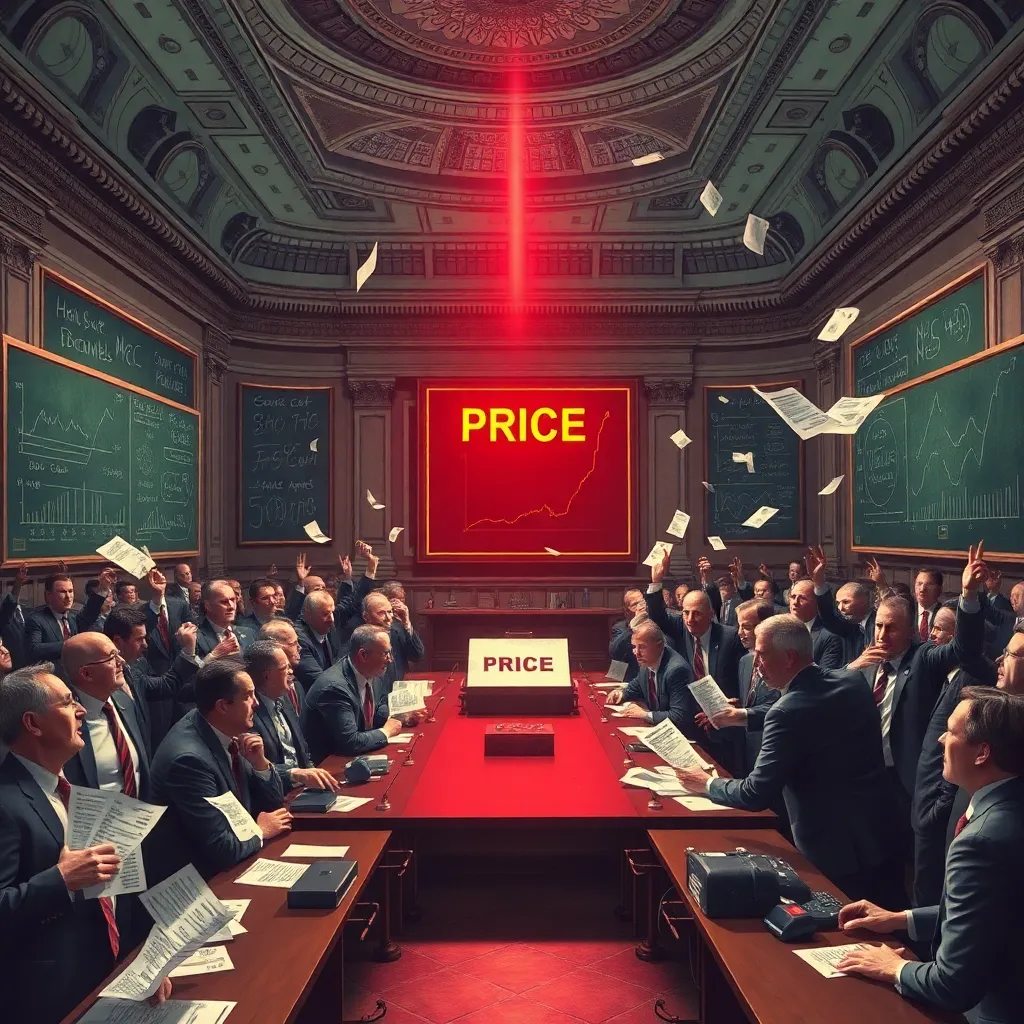
The crisis began when a panel titled New Frontiers in Trade Friction accidentally became a workshop on consequences. During a live demonstration, presenters imposed a mock tariff on imported coffee beans for the hotel café. Within minutes, the price of a cappuccino rose from $6 to $14, causing immediate unrest among development economists, who are statistically more likely to be found near coffee than development.
“What stunned us,” said one attendee, speaking from beneath a table draped with regression printouts, “was that domestic producers did not instantly become magical. We had been led to believe, mostly by speeches, that once foreign competition was taxed, local factories would spring from the earth like wheat in a patriotic musical. Instead we got three delayed shipments, a commemorative apron, and a forklift with no tires.”
Several economists admitted they had grown complacent after years of trying to explain trade-offs to people who preferred nouns like strength, winning, and leverage. “In retrospect, maybe we should have emphasized that the word tax was not decorative,” said Professor Elena Mirov, staring into the middle distance as if it contained a ghostly bar graph. “When you put a tax on imports, the importer pays it, then usually passes it along, and then everyone acts shocked that washing machines now require financing.”
The profession has responded with urgency. Universities are already updating introductory textbooks to include a new highlighted section titled, “If You Put Rocks in the River, the Water May Experience Inconvenience.” One draft appendix reportedly contains the even more advanced insight, “Retaliation Is Not Just a Word Diplomats Say Before Lunch.”
Markets reacted to the news with their customary mixture of alarm, confusion, and highly specific vocabulary. Shipping firms reported congestion, manufacturers reported uncertainty, and consumers reported looking at a price tag, inhaling sharply, and putting the item back with the quiet dignity of a Victorian widow.
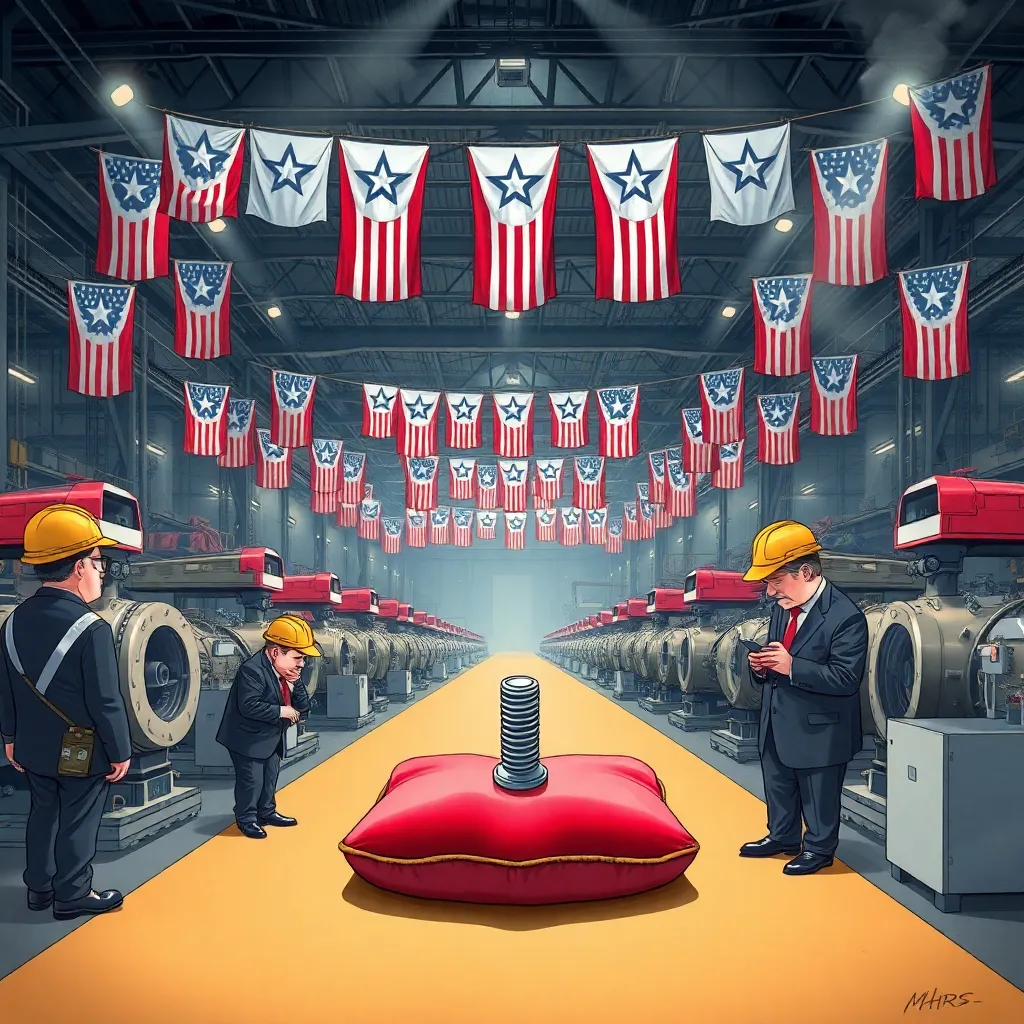
At a steel plant in the Midwest, managers celebrated temporary protection from overseas competition before discovering they still needed imported machinery parts, imported specialty inputs, and imported bolts apparently manufactured only by a man named Dieter in a valley no one can pronounce. “It’s been a learning journey,” said one executive. “We were thrilled to be shielded from global competition right up until the moment we remembered we are part of the globe.”
In Washington, policymakers defended tariffs as an important strategic tool, much like a hammer is an important strategic tool if your objective is to become intensely familiar with your own thumb. Supporters argued that tariffs can protect key industries, raise revenue, and pressure rivals. Economists conceded this point carefully, in the measured tone usually reserved for discussing fireworks in libraries.
“Yes, tariffs can do specific things for specific reasons,” said trade analyst Miriam Cho. “But that is not the same as saying they are broadly free money generated by shouting at cargo ships. A tariff can be useful in narrow circumstances. It can also be used like a trombone in a hostage negotiation. Context matters.”
The distinction has proven difficult for the broader public, many of whom continue to imagine tariffs as a fee paid by foreign governments out of sheer embarrassment. One nationwide poll found that 38 percent of respondents believe tariffs are “when another country has to apologize at customs,” while 22 percent said they were “basically coupons for domestic industry.”
In response, several economists have launched an educational campaign using simple analogies. One video compares tariffs to putting ankle weights on your own marathon team to intimidate the other runners. Another compares them to charging yourself admission to your own kitchen in order to improve national cooking independence.
The videos have had mixed success. A focus group in Ohio reportedly agreed that the kitchen analogy was “interesting” before asking whether the refrigerator was made abroad and, if so, whether it could be sanctioned.
Meanwhile, global trading partners have reacted with the traditional diplomatic custom of becoming absolutely furious in a very organized way. Counter-tariffs began appearing within days, targeting agricultural exports, manufactured goods, and several products selected through the ancient retaliatory art known as “hurting whichever senator looks nervous.”
Farmers caught in the middle expressed frustration at once again becoming the nation’s preferred bargaining chip. “Every time there’s a trade fight, suddenly soybeans are in the war room,” said one grower. “I got into farming to commune with the land, not to discover my livelihood is a bullet point in a slideshow called Strategic Escalation Pathways.”
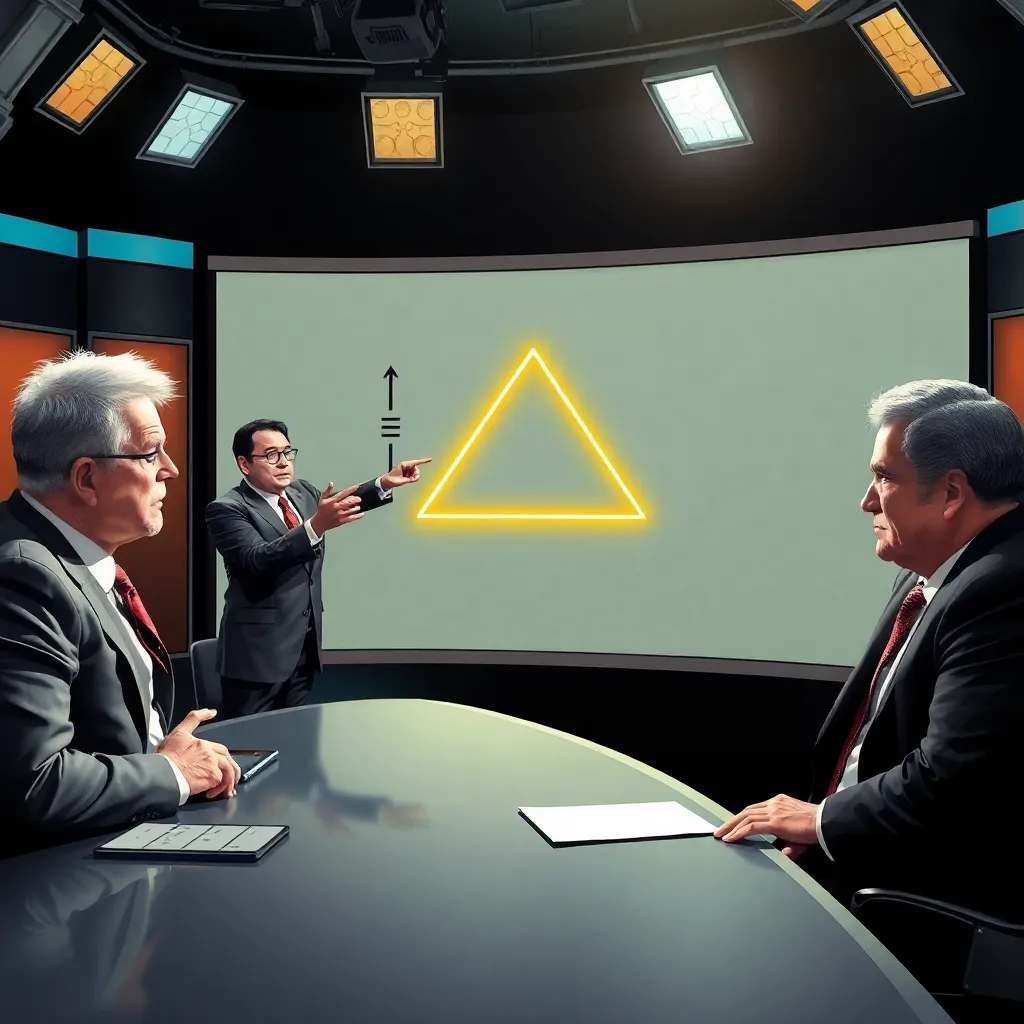
The tariff debate has also exposed a growing cultural divide between people who think economics is the study of incentives and people who think economics is when a chart tells them something rude. In one especially heated television segment, an economist attempted to explain deadweight loss using a whiteboard, only to be interrupted by a commentator accusing the triangle itself of elitism.
Perhaps the most profound impact of the discovery has been personal. Across the profession, economists are said to be reevaluating old assumptions, especially the one where repeating a principle enough times would eventually cause it to enter public life. Counseling centers near major universities have reported an uptick in appointments from trade scholars muttering phrases like “comparative advantage” and “incidence” into their scarves.
At the London School of Economics, a small vigil was held beside a vending machine whose imported chocolate bars now cost £9. Participants lit candles and recited selected passages from Adam Smith in the original tone of exhausted disbelief. One attendee placed a tiny wreath beside the snack spiral after a packet of biscuits became classified as a luxury event.
Still, some economists remain optimistic that the moment could lead to a broader appreciation of how trade actually works. “If nothing else,” said Professor Wainscot, now clutching a mug labeled There Is No Such Thing As A Free Border Tax, “we may finally get people to understand that economies are made of inputs, connections, incentives, and consequences. Not slogans. Not vibes. Not a map with angry arrows on it.”
At press time, the global economics community was preparing for another difficult breakthrough after early evidence suggested price controls may also have side effects, a finding experts described as “too devastating to discuss before lunch.”