English Language Declared Obsolete, 10 Glorious Replacement Tongues Emerge from the National Drawer of Slightly Better Ideas
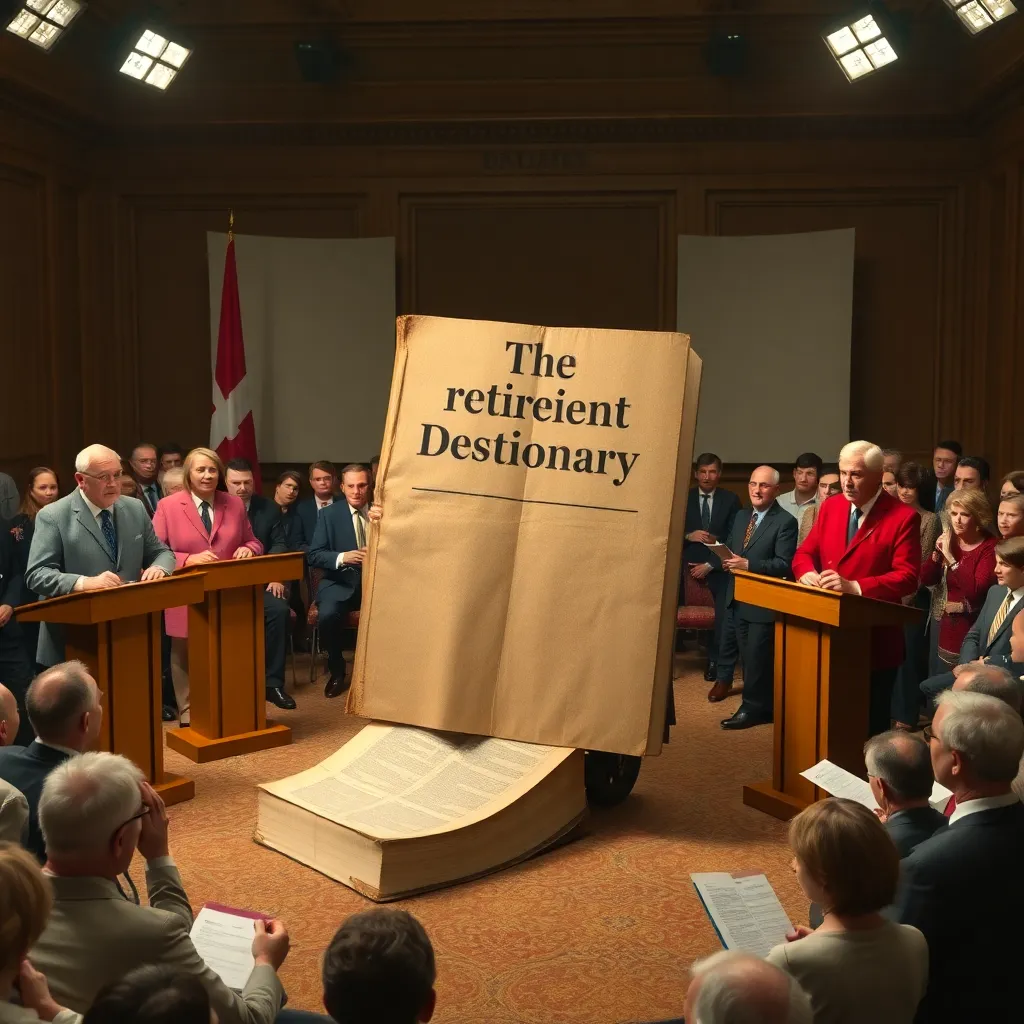
In a solemn press conference held between a vape shop, an abandoned Debenhams, and a man selling novelty socks from a hatchback, officials yesterday confirmed that the English language has been retired with immediate effect after "several exhausting centuries of overuse." The announcement followed an emergency review into phrases such as "circle back," "it is what it is," and "please see attached," all of which investigators described as "morally tiring" and "a bit damp."
The Language Retirement Board, dressed entirely in cardigans that suggested both authority and soup, declared that English had become too cluttered with silent letters, contradictory spellings, and the word "literally" being used to mean almost anything except literally. Citizens were advised not to panic and to continue communicating through interpretive nodding until one of ten approved replacement languages could be selected by public vote, thumb wrestling, or whooping.
Leading the pack is Claptonic, a language made entirely of hand gestures, eyebrow choreography, and one deeply judgmental exhale. Advocates say it is ideal for modern life because it allows users to convey disappointment, flirtation, tax fatigue, and sandwich preferences without ever opening their mouths. Early adopters have praised its elegance, though several office workers have already been accidentally promoted after performing what they believed was the sign for "printer jam" but was in fact "visionary regional leadership."
A close second is Snackrit, a crisp, crunchy language in which every sentence must be accompanied by a small edible item. Grammarians insist the syntax is straightforward: nouns are salted, verbs are lightly toasted, and rhetorical questions require a dipping sauce. Universities have moved quickly to establish departments devoted to advanced Snackrit, though most seminars now end with the faculty eating the coursework and calling it experiential learning.
There is also significant support for Murmurian, a language designed specifically for public transport, libraries, and family gatherings where someone has brought up inheritance. In Murmurian, every statement is delivered in a respectful whisper, regardless of urgency. Transport authorities are enthusiastic, arguing that phrases such as "the train is on fire" sound far less upsetting when murmured gently into a wool sleeve by a person named Colin.
One of the more ambitious contenders is Spreadsheet Latin, developed by consultants who felt ordinary speech lacked cells, dropdowns, and quarterly alignment. In Spreadsheet Latin, conversations begin with "per my previous utterance" and end only when everyone involved has been sorted alphabetically by concern. Critics say it is cold and inaccessible; supporters counter that all human emotion can be efficiently expressed through conditional formatting.

Meanwhile, children across the country have fallen hard for Goblin Decimal, a number-based tongue in which personal feelings are ranked from 1 to 14 and arguments are settled by whoever can produce the longest receipt. Teachers initially worried the system would be confusing, but pupils took to it immediately, with one seven-year-old reportedly telling his headmaster, "You are being a solid 8.4 and your lunchtime policies are 3.1 at best," before moonwalking out of assembly.
For the luxury market, tastemakers have endorsed Velvetese, a language in which every sentence must sound as though it has just emerged from a chaise longue with excellent gossip. It contains no harsh consonants and several words that mean "well, I never" depending on hat angle. Sales of silk dressing gowns have surged in neighborhoods where Velvetese is being trialed, and estate agents report a sharp rise in buyers asking whether properties contain "sufficient murmuring rooms."
Then there is Emergency Italian, which linguists describe as normal communication delivered as though everyone is trying to rescue a chandelier from a canal. It has become especially popular in kitchens, football stadiums, and municipal planning meetings. Native speakers of nothing in particular have embraced its sweeping emotional bandwidth, noting that saying "Where are the batteries?" with both hands in the air can make even domestic inconvenience feel like a fresco.
Not to be outdone, the technology sector has rushed behind AutoCorrectian, a language generated in real time by predictive text and minor keyboard panic. This has led to several diplomatic incidents, one wedding proposal to a casserole, and the accidental rezoning of a small village into "duck mode." Even so, younger users insist AutoCorrectian feels authentic, because nothing reflects the modern human condition better than trying to say "good morning" and accidentally declaring war on "grandmother zucchini."
Moist Norse has alarmed and fascinated researchers in equal measure. It is a seafaring, drizzle-rich language composed mostly of noble grunts, weather opinions, and the names of damp rocks. Though difficult to master, its speakers claim it offers emotional precision unavailable in English, especially when discussing fog, betrayal, and the specific sadness of a boot that made promises it could not keep.

Finally, pollsters say a late surge has propelled Plain Old Honking into serious contention. As the name suggests, it replaces words entirely with strategically varied goose noises. While skeptics dismissed it as impractical, recent trials in local government have gone surprisingly well, with council meetings shortened by 93 percent and one zoning dispute resolved by a particularly authoritative double-honk from a woman in sensible boots.
Not everyone is pleased by the abolition of English. Traditionalists gathered outside Parliament clutching copies of old dictionaries and yelling cherished phrases such as "queue," "bollocks," and "I’m not being funny, but—" before becoming emotional and needing a sit-down. Still, ministers maintain the change is necessary. "Languages, like sheds and uncles, occasionally reach the end of their useful life," said one official. "English had a decent run, but frankly it has too many ways to pronounce 'ough' and has become addicted to emailing people 'Kind regards' when no such regards exist."
The public vote opens this Friday, unless delayed by paperwork, weather, or a nationwide outbreak of meaningful shrugging. Until then, citizens are encouraged to remain calm, carry small snacks, practice expressive eyebrow work, and avoid saying anything too binding in English, as the language is now considered vintage and may crumble if exposed to management jargon.