Filed Report
Government Unveils “Best of the Worst” Initiative, Proudly Crowns National Defeat Champion
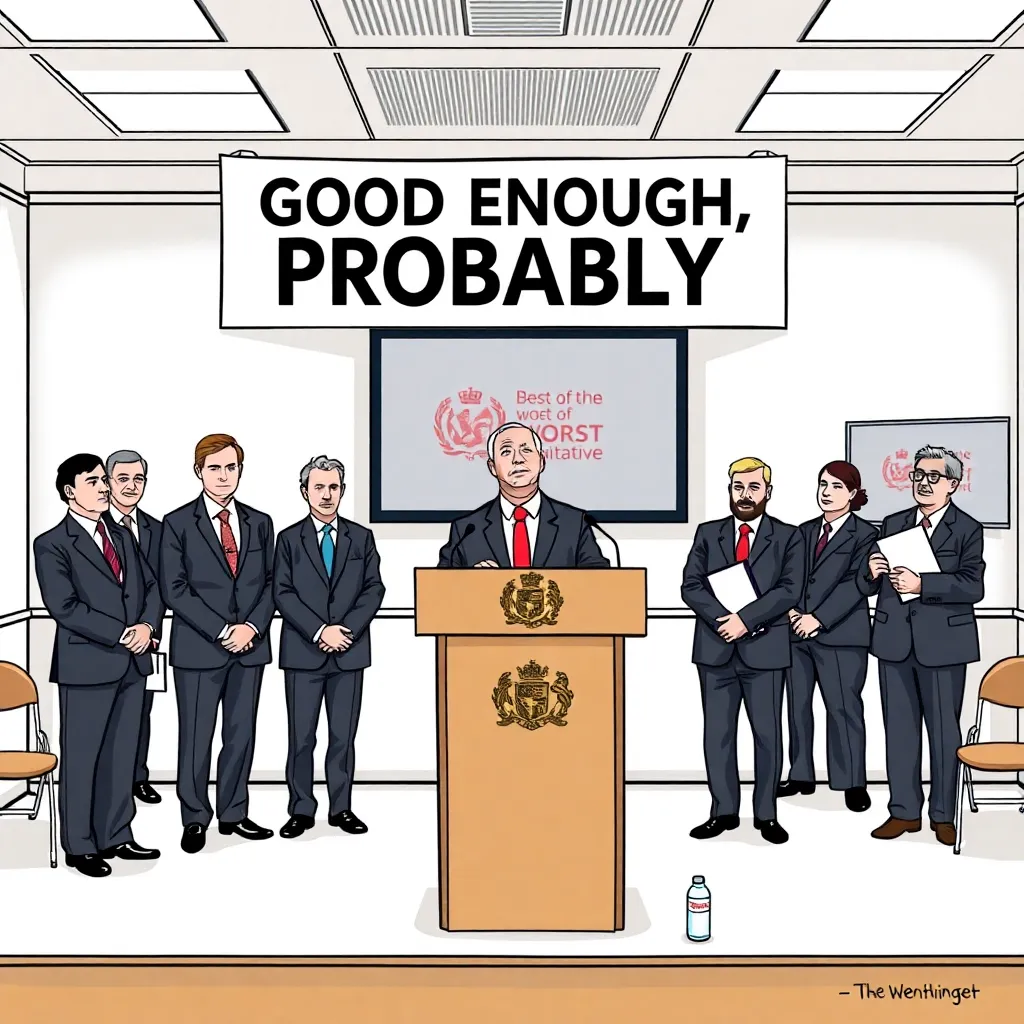
**WESTMINSTER** — In a solemn yet strangely upbeat press conference held beneath a banner reading **“GOOD ENOUGH, PROBABLY”**, the government today announced its flagship new policy platform: the **Best of the Worst Initiative**, a sweeping effort to identify, standardise, and celebrate Britain’s most successful forms of managed disappointment.
Describing the programme as “a bold new chapter in strategic underachievement,” ministers confirmed that the country would no longer be burdened by unrealistic notions such as excellence, victory, or making things better on purpose.
Instead, under the new framework, every department will be tasked with becoming the least alarming version of its own failure.
“This is not about losing,” the Cabinet Office Minister for Expectations Management told reporters. “It’s about losing in an organised, measurable way. For too long, Britain has suffered from chaotic underperformance. The Best of the Worst Initiative brings coherence, accountability, and a sense of national pride to the process of falling short.”
The announcement culminated in the government’s first official awarding of the title Defeat Champion, an honour bestowed upon whichever public body demonstrates the highest standards in near-collapse without causing immediate paperwork.
A New Era of Calibrated Mediocrity
Under the scheme, Whitehall departments will be ranked using a newly developed Failure Excellence Index, which scores institutions across several key metrics, including:
- Timeliness of apology before preventable error
- Ability to miss targets while technically having set them
- Percentage of public confidence retained after obvious fiasco
- Creative use of the phrase “lessons will be learned”
- Duration for which a crisis can be described as “isolated” despite national coverage
Officials say the initiative reflects a changing political climate in which voters have grown tired of overpromising and are now more receptive to “honesty, but in a way that still sounds like a slogan.”
A 148-page policy paper accompanying the launch, titled “Toward a More Consistent Disappointment”, argues that national morale has been undermined not by failure itself, but by the lack of clear leadership surrounding it.
“For years,” the document states, “citizens have been forced to endure a fragmented and unequal landscape of let-downs. Some communities have enjoyed premium, well-managed frustration, while others have experienced outdated, inefficient incompetence. This government is committed to levelling down fairly.”
Defeat Champion Named After Fierce Competition
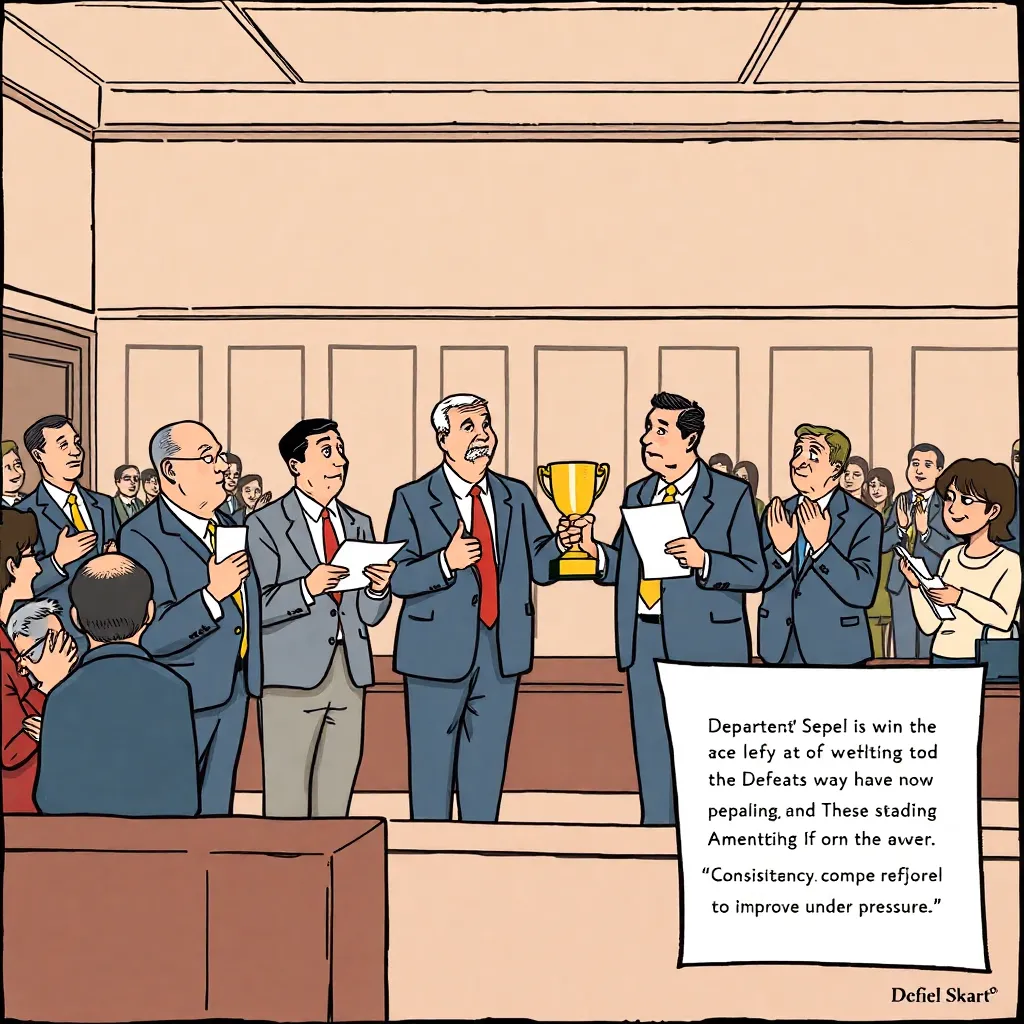
After what insiders described as “an exceptionally weak field, though weak in inspiring ways,” the inaugural Defeat Champion title was awarded to the Department for Administrative Drift, which judges praised for its “consistency, composure, and refusal to improve under pressure.”
The department impressed evaluators with a portfolio of missed deadlines, contradictory guidance, and a helpline system that reportedly transferred one caller through eleven teams before congratulating them on reaching the wrong conclusion.
In their citation, the judging panel hailed the department as “a beacon to all institutions seeking to fail with dignity.”
“Many organisations can disappoint,” the panel wrote. “Few can disappoint repeatedly, predictably, and with such polished stakeholder engagement.”
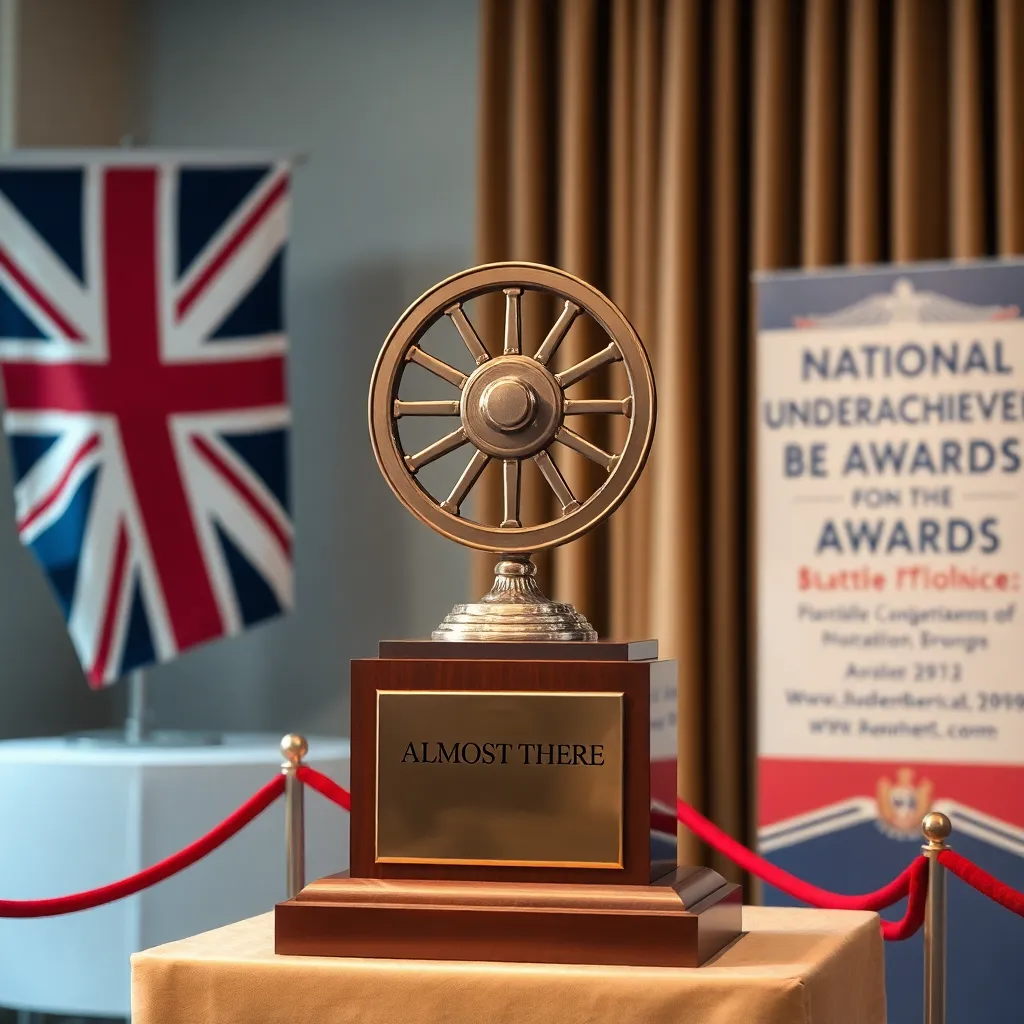
The trophy itself — a bronze wheel spinning in place on a plinth labelled ‘ALMOST THERE’ — was presented during a ceremony in which the winner attempted to accept the award but had not completed the required internal approval forms.
The standing ovation was delayed pending review.
Prime Minister Hails “Pragmatic Surrender”
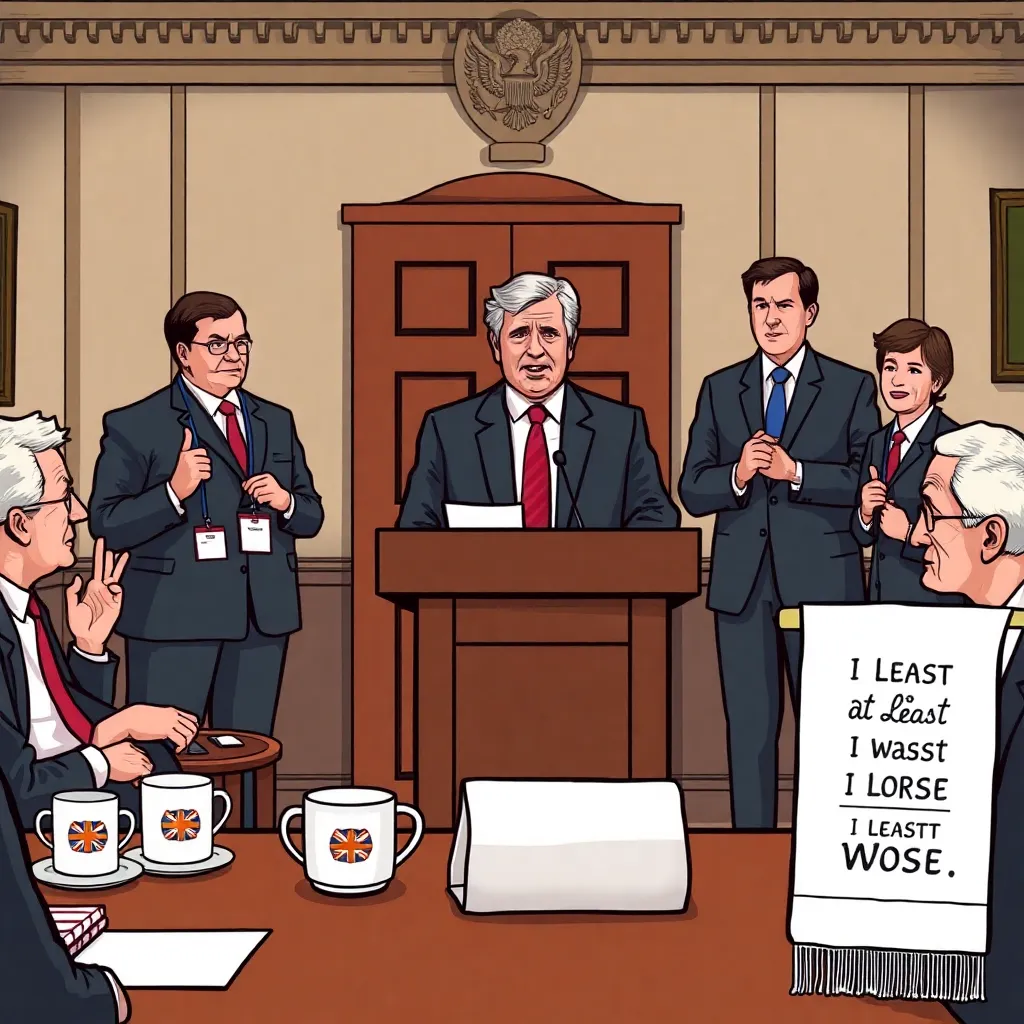
Addressing the nation later in a televised statement, the Prime Minister defended the initiative as “a realistic recognition of where we are, where we’ve been, and where we are no longer pretending to go.”
“There comes a time in every mature democracy,” the Prime Minister said, flanked by aides nodding in a manner that suggested they had heard several versions of this already, “when it must stop asking, ‘How do we win?’ and start asking the more responsible question: ‘How do we come a respectable fourth and turn it into a pilot scheme?’”
The speech marked a rhetorical shift away from previous government messaging focused on ambition, renewal, or function. Instead, the Prime Minister said the administration would embrace a philosophy of “pragmatic surrender”, promising to deliver “lower highs, steadier lows, and a future in which nobody is blindsided by adequacy.”
The phrase has already appeared on campaign mugs, internal lanyards, and a limited run of commemorative tea towels stitched with the words: “At Least It Wasn’t Worse.”
Civil Service Welcomes Clarity
Across Whitehall, officials reacted with relief to what many described as the first policy in years to accurately reflect operational reality.
One senior civil servant, speaking on condition of anonymity because they were not authorised to sound this honest in public, said the Best of the Worst Initiative had “liberated an entire generation of public administrators from the exhausting burden of pretending outcomes are related to plans.”
“There’s finally alignment,” they explained. “Before, ministers would announce world-class transformation, and we’d quietly prepare a PDF explaining why the bins haven’t been collected. Now the strategic vision and the delivery model are in harmony.”
Another said the Defeat Champion award would help “professionalise the sector,” creating incentives for bodies to fail not merely often, but elegantly.
“We’re talking about a gold standard in underdelivery,” they said. “Well, not gold. Perhaps brushed aluminium. But still.”
Opposition Condemns Plan as “Too Little, Too Late”
Opposition parties were quick to criticise the initiative, though several privately admitted they were annoyed not to have thought of it first.
The Leader of the Opposition accused the government of “institutionalising decline,” adding that ministers had “taken a nation crying out for hope and offered it a laminated framework for acceptable collapse.”
However, the opposition stopped short of rejecting the Defeat Champion concept outright, instead promising that if elected they would introduce a Fairer Failure Charter to ensure all regions had equal access to underwhelming public services.
A spokesperson later clarified that their party remained committed to aspiration, but only “in principle, and pending costings.”
Meanwhile, smaller parties welcomed the move as a rare example of political honesty.
One MP said, “For years governments have insisted every setback is progress in disguise. It’s refreshing to see one simply put a sash on defeat and march it through the lobby.”
Public Response Mixed, Weary, and Accidentally Positive
Public reaction has ranged from outrage to grim recognition to a kind of baffled gratitude.
“I actually respect it,” said one commuter waiting beside a rail replacement bus service that had replaced itself with a note. “At least now when everything goes wrong, I’ll know it’s part of a coordinated national vision.”
Another citizen, reached outside a GP surgery after being offered the next available appointment “sometime emotionally,” said the initiative simply put official language around what everyone already knew.
“We’ve basically been living in Best of the Worst for years,” she said. “This just saves them the trouble of inventing a mascot later.”
A snap poll conducted within minutes of the announcement found that 61% of voters believed the policy was “deeply cynical,” 24% called it “surprisingly realistic,” and 15% said they had stopped expecting percentages to add up.
New Awards Categories Planned
Buoyed by the apparent success of the launch, ministers confirmed the initiative would be expanded into an annual National Underachievement Awards, with proposed categories including:
- Most Improved Decline
- Outstanding Achievement in Reversible Damage
- Best Supporting Excuse
- Lifetime Non-Accomplishment Award
- Public-Private Partnership in Mutual Shrugging
- Excellence in Delayed Rectification
The government is also expected to roll out a youth engagement programme, encouraging schools to identify pupils who show “leadership potential in settling.”
Education officials say the revised curriculum will focus less on excellence and more on resilient compromise, teaching children valuable life skills such as lowering expectations early, writing impact statements before attempting tasks, and distinguishing between “unresolved” and “strategically ongoing.”
A leaked draft lesson plan reportedly includes the phrase: “Remember: if you cannot be the best, be the benchmark others reluctantly clear.”
International Interest Grows
Diplomats say several foreign governments are monitoring the Best of the Worst Initiative closely, with some considering similar schemes of their own.
An unnamed European official described the programme as “disturbing, but transferable,” while sources in the United States said think tanks were already drafting proposals under titles such as Competitive Losing, Failure With Freedom, and Mission: Adequate.
A spokesperson for an international ratings agency welcomed the initiative’s transparency.
“Markets dislike uncertainty,” they said. “This gives a clear signal that the government intends to remain stable, functional enough, and permanently below its stated ambitions. That kind of consistency is valuable.”
Defeat as a National Asset
Political analysts argue that the move may represent more than just a communications stunt. Increasingly, they say, defeat has become one of the nation’s most robust and renewable resources.
“Britain has always had a complicated relationship with success,” said Professor Elaine Midgely, an expert in public symbolism and ceremonial gloom. “We like triumph only if it can be recast as survival, and survival only if accompanied by tea, drizzle, and a statement about difficult choices.”
“What this initiative does,” she added, “is finally recognise defeat not as a setback, but as an organising principle — one that can be branded, audited, and, crucially, launched.”
The Treasury is said to be exploring whether managed failure can be monetised, with one proposal suggesting tourists may soon be able to purchase Official Defeat Trails, guiding them through historically significant locations where things nearly worked.
A Proud Step Sideways
As the press conference ended, journalists were handed a commemorative factsheet summarising the government’s ambitions for the year ahead. Among the listed targets were:
- Reduce unplanned embarrassment by 3%
- Ensure every scandal has a named review process within 48 hours
- Cut spontaneous optimism to pre-2014 levels
- Deliver a more joined-up experience of disappointment across all regions
- Increase public awareness of what cannot currently be done
At the bottom, in smaller print, appeared the initiative’s official motto:
“If at first you don’t succeed, redefine success until the dashboard turns amber.”
For now, the government insists the country should see the Best of the Worst Initiative not as an admission of defeat, but as an invitation to engage constructively with it.
Whether the public embraces this new era of ceremonial underperformance remains to be seen. But in Westminster, there was cautious optimism that by aiming low enough, ministers might finally exceed expectations by accident.
Which, officials confirmed, would be investigated immediately.
Public Response
Comments
No comments yet.