Heaven's Planning Permission Denial Sparks Existential Crisis Among Straight Christians
A wave of theological dizziness swept across suburban prayer circles yesterday after reports emerged that Heaven’s long-awaited Eternal Expansion & Gates Modernisation Scheme had been rejected by the Celestial Planning Authority on the grounds that the proposed pearly gates were “out of character with the surrounding forever.”
The ruling, delivered in a 412-page document embossed with both trumpets and passive aggression, objected to a number of design features including a six-lane harp corridor, a mezzanine cloud deck, and what inspectors described as “an unnecessarily triumphalist heterosexual family pavilion with poor sightlines and no meaningful provision for anyone who has ever read a book.”
Within minutes, panic spread among straight Christians who had spent decades assuming Heaven was not only guaranteed, but would be broadly similar to a tasteful conference hotel with unlimited roast potatoes and no unfamiliar conversations. “If Heaven can’t get approved,” said one deeply alarmed man from Surrey while standing beside a barbecue he called Testimony Grill, “what exactly have I been defending all these years? You’re telling me eternity is subject to zoning? That salvation can be delayed by a committee? That’s socialism with wings.”
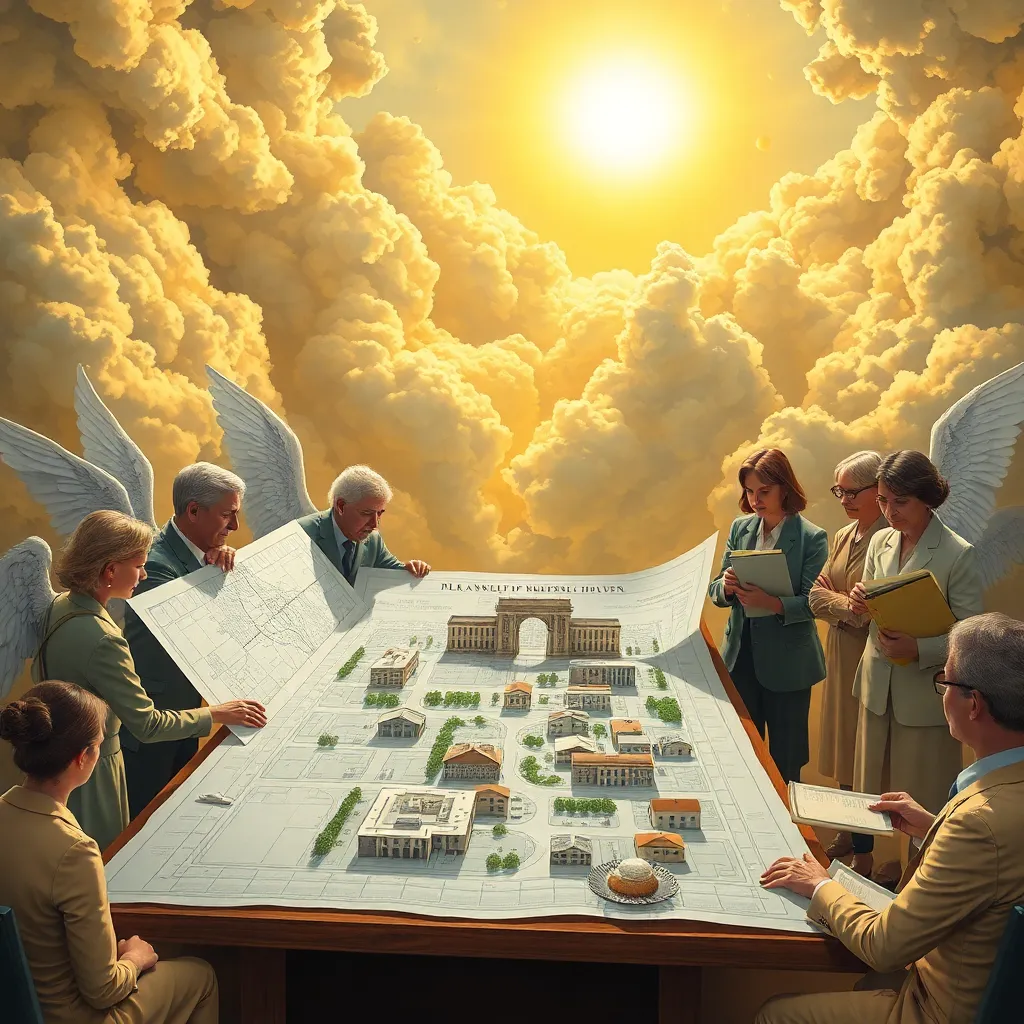
The crisis deepened when leaked excerpts from the application revealed that Heaven had proposed a cul-de-sac of detached mansions called The Narrow Way Executive Enclave, complete with ornamental fig trees, covenant parking, and a residents’ association empowered to fine souls for “insufficiently uplifting topiary.” The Authority rejected the development, noting that eternity “must remain accessible, symbolically resonant, and not dominated by couples who say ‘we’re blessed’ while blocking entire archways with prams.”
Several straight Christian lobby groups immediately convened emergency meetings in church halls, where folding chairs trembled under the weight of spiritual confusion and aggressively laminated maps of the afterlife. “We had understood Heaven to be a reward structure,” said Graham Peabody, spokesperson for Families for Traditional Mansions in Glory. “Now we’re hearing there might be density targets, mixed-use beatitude zones, and an open-plan saint commons. Frankly, many of our members are struggling with the possibility that eternity will involve sharing.”
Witnesses described scenes of profound distress as men who had confidently explained divine order for years were forced to ask whether paradise might contain heritage restrictions. One Bible study reportedly dissolved after a heated argument over whether the New Jerusalem should preserve its historic skyline or permit sympathetic infill around the river of life. “Derek said if the walls are load-bearing then Revelation has to be read literally,” said one attendee, visibly shaken. “But then Pauline brought up adaptive reuse and now nobody’s speaking.”
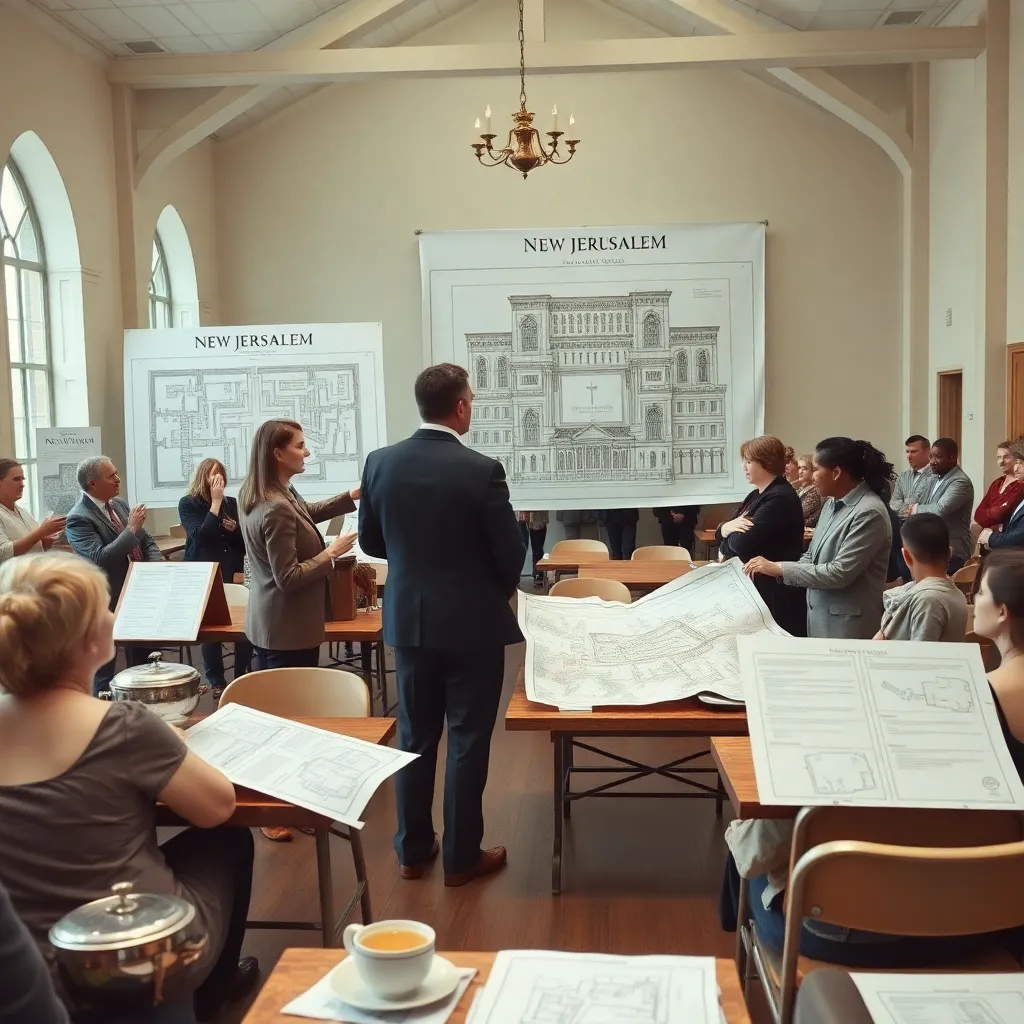
At the center of the row is a controversial clause requiring Heaven to conduct an environmental impact assessment concerning “excessive illumination, nonstop hymn noise, and projected trumpet emissions at the edge of forever.” For many believers, this was the first time they had considered the possibility that celestial glory might be subject to ordinary compliance regimes.
“I just don’t see how the saved are supposed to enjoy themselves if there are decibel limits on hosannas,” complained one worship leader, before admitting he had not actually read the filing because “the title page felt hostile.” Another local pastor warned that if Heaven was forced to reduce brightness to protect neighboring dimensions, congregants might accidentally experience nuance, which he described as “a gateway condition.”
The denial has also triggered a secondary panic over rumored design concessions. Early compromise sketches suggest replacing the grand avenue of morally reassuring villas with a denser, walkable arrangement of eternal courtyards, public fruit, and shared contemplative spaces where residents may have to encounter artists, unmarried people, and the kind of married couples who own only one bookshelf but somehow all the right books. This has led to what experts are calling a Doctrinal Property Value Event.
“We were promised many mansions,” said one furious conference speaker, jabbing at a watercolor rendering of cloud terraces and communal orchards. “Not tasteful medium-rise sanctification. Not heavenly co-housing. Certainly not an eternity where my nearest neighbor might be someone with opinions about ceramics.”
Meanwhile, denominations have begun splitting at astonishing speed over practical questions no one had previously considered. Can a redeemed soul appeal a refusal? Are there anti-objection rights under grace? Does predestination include pre-approved outbuildings? One megachurch announced a new sermon series titled When God Closes a Gate, He Opens a Consultation Period, while another unveiled a prayer ministry specifically for men devastated by the phrase “subject to revisions.”
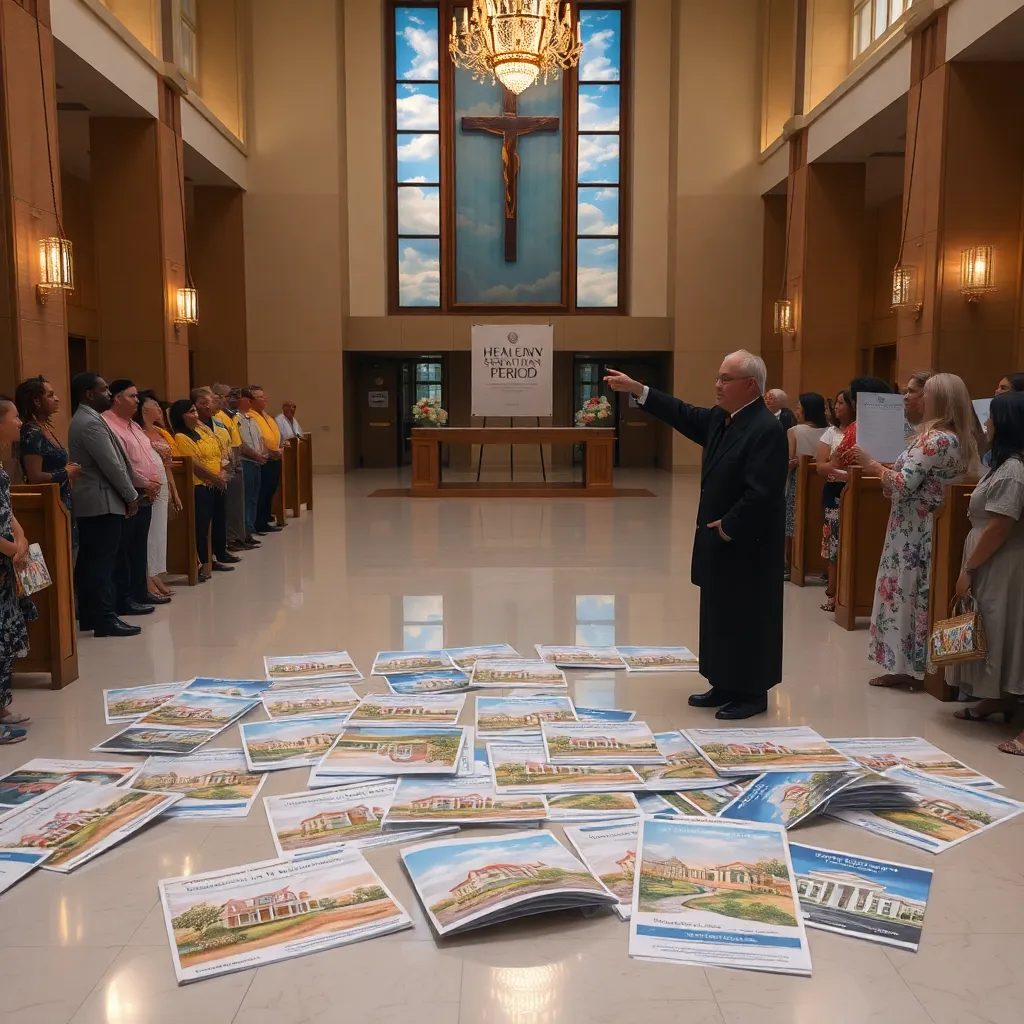
Not all reactions have been negative. A smaller but increasingly confident group of theologians noted that the rejection may in fact align with scripture’s broader themes of humility, mystery, and not behaving like one has personally franchised eternity. Their statement was immediately ignored in favor of a much louder petition demanding that Heaven “return to traditional values” by approving a gated celestial estate with private praise balconies and a robust policy on cloud maintenance.
As evening fell, prayer networks remained abuzz with trembling voice notes, emergency casseroles, and men using the phrase “spiritual overreach” to describe architectural conservation. At press time, straight Christians across the country were said to be staring into the middle distance, gripped by the unbearable possibility that the kingdom of God was never intended to function like a desirable exurban development with strong schools and a breakfast ministry.
Sources close to the Throne say a revised application may be submitted later this year, although insiders warn it will likely face further scrutiny unless Heaven can demonstrate improved inclusivity, reduced visual dominance, and a willingness to scale back the proposed double-height foyer of righteousness. For now, the faithful are being urged to remain calm, trust the process, and avoid speculative purchases in nearby purgatorial commuter belts.
In a final blow to already fraying nerves, officials confirmed that objections had also been lodged by a coalition of saints, prophets, and one extremely articulate donkey, all arguing that eternity should not be redesigned simply to reassure men named Colin that the universe still revolves around patio doors.