Parliament Confirms Wibble Is “Mostly Elbow,” Nation Pretends This Clarifies Everything
After decades of speculation, three municipal arguments, and one regrettable museum interactive exhibit involving soup, experts have finally explained how the wibble works. According to a 418-page government white paper bound in damp blue twine, the wibble operates through a delicate combination of rotational uncertainty, social embarrassment, and what physicists are now calling polite wobble.
“The public has confused the wibble with the wobble for years,” said Chief Administrative Mechanist Felicity Crumb, standing before a diagram that appeared to be half engine schematic and half jazz. “A wobble is what happens when a thing loses confidence. A wibble is what happens when confidence becomes decorative.”
At its core, the wibble is a self-adjusting, semi-domestic phenomenon that converts ordinary stability into manageable theatrical instability. In practical terms, this means that when a wibble is introduced into a household, office, or medium-sized parade, objects begin to behave as though they have just remembered they are being observed.
Chairs angle themselves slightly too thoughtfully. Lamps hesitate before committing to illumination. Biscuits acquire opinions.
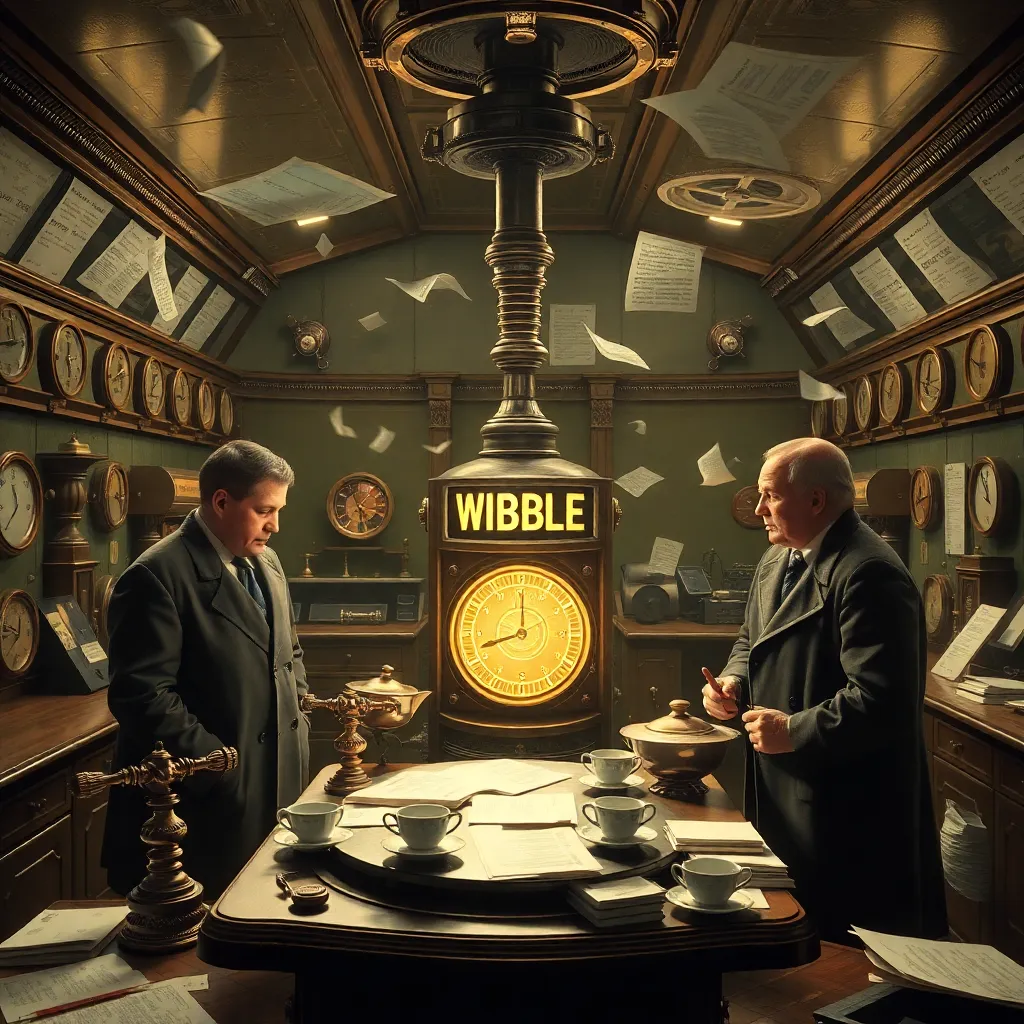
Researchers say the process begins in the pre-wibble phase, known in technical circles as the muttering. During this stage, the air thickens with administrative tension. Nearby shelves become emotionally available. A low-grade curvature develops in the room, not enough to alarm building inspectors, but sufficient to make sandwiches seem briefly philosophical.
Then comes primary wibblation, the most visible part of the cycle. This is when the wibble draws ambient indecision from the surrounding environment and compresses it into a compact, oscillatory event. To the naked eye, the effect resembles a pudding attempting diplomacy. To instruments, it resembles six instruments disagreeing.
Professor Len Thatch of the Royal Institute for Advanced Fidgeting explained the mechanics with the confidence of a man who has never once been interrupted by reality.
“The wibble works by creating a temporary agreement between gravity and etiquette,” he said. “Normally gravity pulls things downward while etiquette encourages them not to make a scene. The wibble exploits this conflict and stores the resulting tension in a lateral shimmy. Once enough shimmy accumulates, the system releases it as a civilised flap.”
This flap, experts insist, is perfectly safe under controlled conditions. Problems only arise when a wibble is overfed. Common causes include excessive applause, unresolved committee work, or exposing the mechanism to jazz flute after dusk. In such cases, the wibble may enter secondary fretting, in which the oscillations become sentient enough to file a complaint.
This is believed to have happened in 1997, when an unlicensed garden wibble in Surrey reportedly unsettled an entire cul-de-sac by causing all decorative gnomes to face north and sigh in sequence.
Officials have also clarified the role of the inner nodule, a small but essential component located somewhere between the conceptual center and the bit that hums. The inner nodule regulates the flow of micro-wibbles, preventing them from spilling into the surrounding area where they can bond with dust, receipts, and retired extension cords. Such contamination can produce dangerous wibblage blooms, recognisable by their faint mauve aura and tendency to ruin brunch.
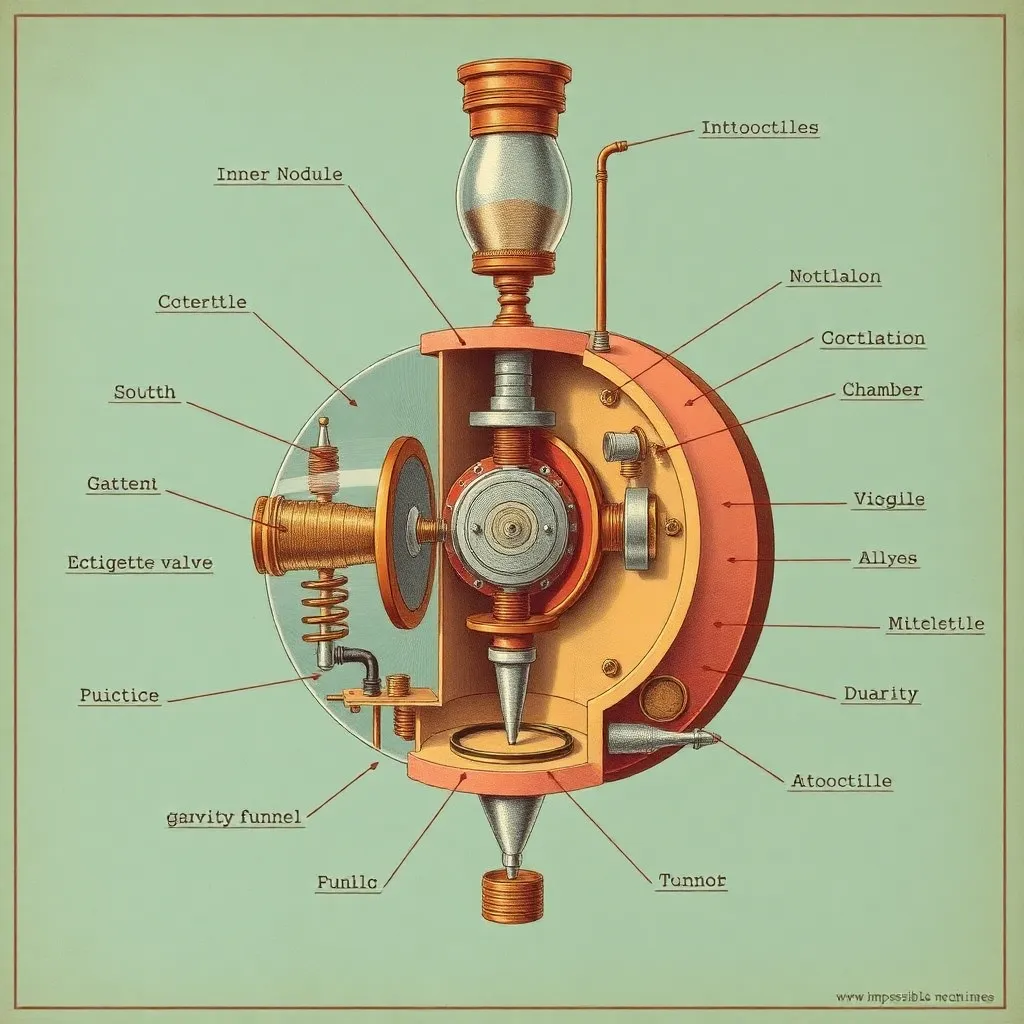
Until now, many households relied on folk methods to maintain their wibbles, including tapping them sternly, placing them on a tray, or reading to them from catalogues. Science has now confirmed that these methods are not only ineffective but occasionally flattering, which can make the wibble vain.
A vain wibble is one of the most expensive domestic conditions known to insurers. It begins by demanding more prominent placement on sideboards and escalates rapidly into full decorative narcissism. Left untreated, it may start reflecting sunlight into neighboring properties or describing itself as “timeless.”
Manufacturers have therefore issued updated guidance. To keep a wibble functioning properly, owners are advised to store it in a cool, dry place away from direct irony. The mechanism should be rotated every six months, complimented no more than twice a year, and never compared unfavorably to a wobble within earshot.
Consumers are also warned against buying counterfeit imported wibbles, often sold under names such as wobule, whimble, or deluxe tremble unit. These may appear convincing at first but often fail basic safety standards, including remaining where they were put. In one dramatic case, a fake wibble installed in a village hall achieved resonance with the raffle table and produced a low-frequency event now remembered locally as “the Tuesday loosening.”
Industry leaders are optimistic that better public understanding will restore trust in the sector. Shares in several major wibble-adjacent firms rose sharply this morning, particularly in the fields of stabilised crockery, ceremonial felt, and premium hush.
Still, some campaigners say the explanation does not go far enough. The advocacy group Citizens for Responsible Wibbling has demanded clearer labeling, independent oversight, and a legal distinction between “light domestic wibble” and “industrial ceremonial wibble,” after several incidents in which consumers unknowingly purchased banquet-grade units for studio flats.
For now, the government says the public should remain calm and avoid unnecessary jostling. A nationwide information campaign will begin next week, with leaflets, town-hall demonstrations, and a 12-part educational radio drama in which a plucky family learns the consequences of improper nodule alignment.
As for the central mystery — why the wibble exists at all — officials remain cautious. The current consensus is that the wibble emerged naturally in the late Victorian period when furniture became too self-aware and society required a buffer.
“It’s one of the invisible systems that keeps modern life from becoming too linear,” said Crumb, adjusting her spectacles as a nearby lectern performed a subtle side-to-side uncertainty. “Without the wibble, every table would be merely a table. Every corridor would proceed with reckless confidence. We would lose that vital national capacity to feel that something, somewhere, is almost sorted.”
At press time, the official demonstration wibble briefly achieved perfect balance, emitted a modest chime, and was immediately escorted from the building for causing unrealistic expectations.