Intergalactic Romance: Scientists Uncover the Dangerous, Glittering Secrets of Alien Love
Love, according to Earth tradition, is a mysterious force involving candlelight, confusing text messages, and the occasional declaration delivered under a bridge in light rain. Across the wider cosmos, however, romance has evolved into a field so elaborate that several moons have had to be repurposed as administrative offices just to process the paperwork.
After decades of listening to deep-space transmissions that sounded, to the untrained ear, like whale song played through a blender, researchers at the Pan-Galactic Institute of Emotional Weather now claim they have identified at least nine major forms of alien courtship, including plasma serenading, ceremonial synchronized hovering, and the exchange of legally binding pebbles.
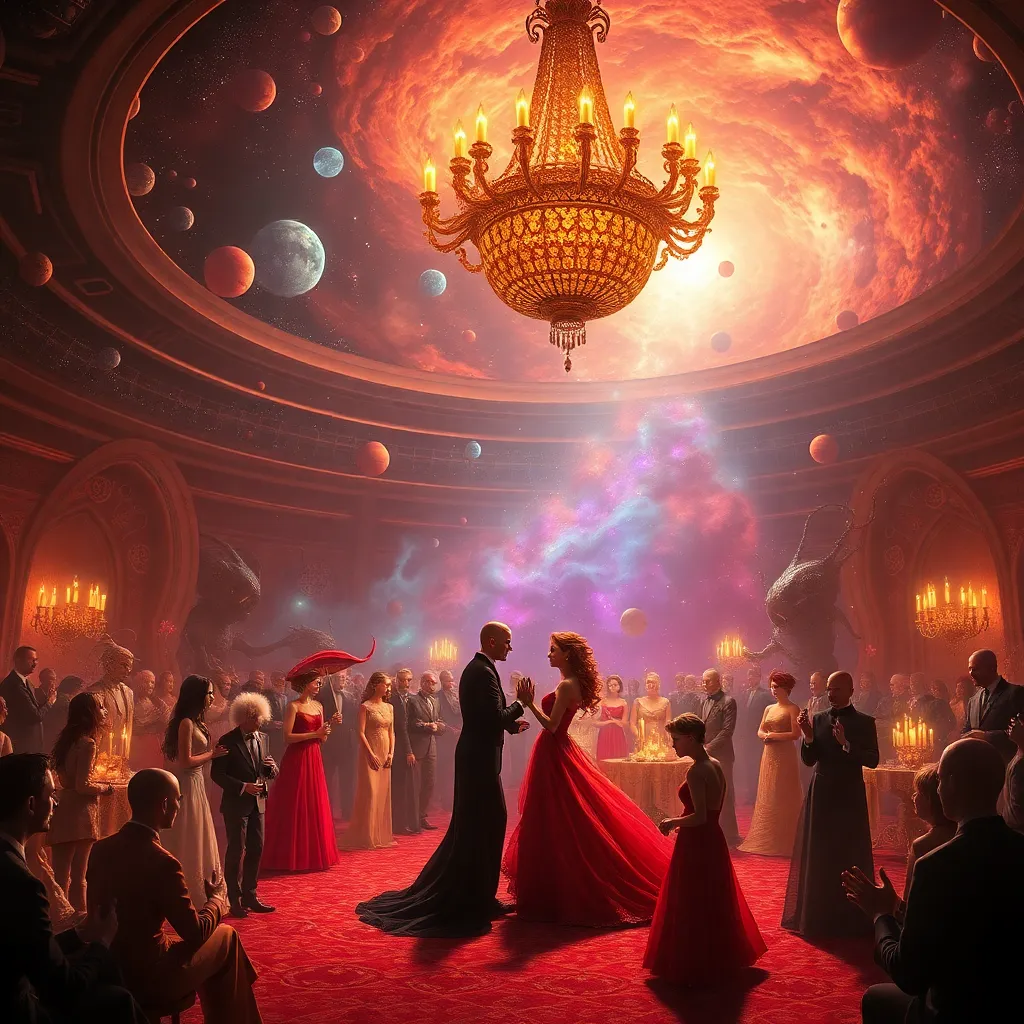
The report, released after one intern accidentally translated a Venusian opera libretto, confirms what many suspected: alien love is not simpler, purer, or more advanced than human love. It is merely much louder, considerably more radioactive, and in one well-documented civilization, conducted entirely through the strategic inflation of decorative neck membranes.
On the ocean world of Glorf-7, for example, partners signal affection by composing sonnets in edible ink across each other's carapaces. The process is considered deeply intimate, though local critics complain the modern scene has become too commercial, with young lovers relying on prewritten shell poetry purchased from vending coral. Traditionalists insist true devotion can only be demonstrated by hand-milking one's own squid.
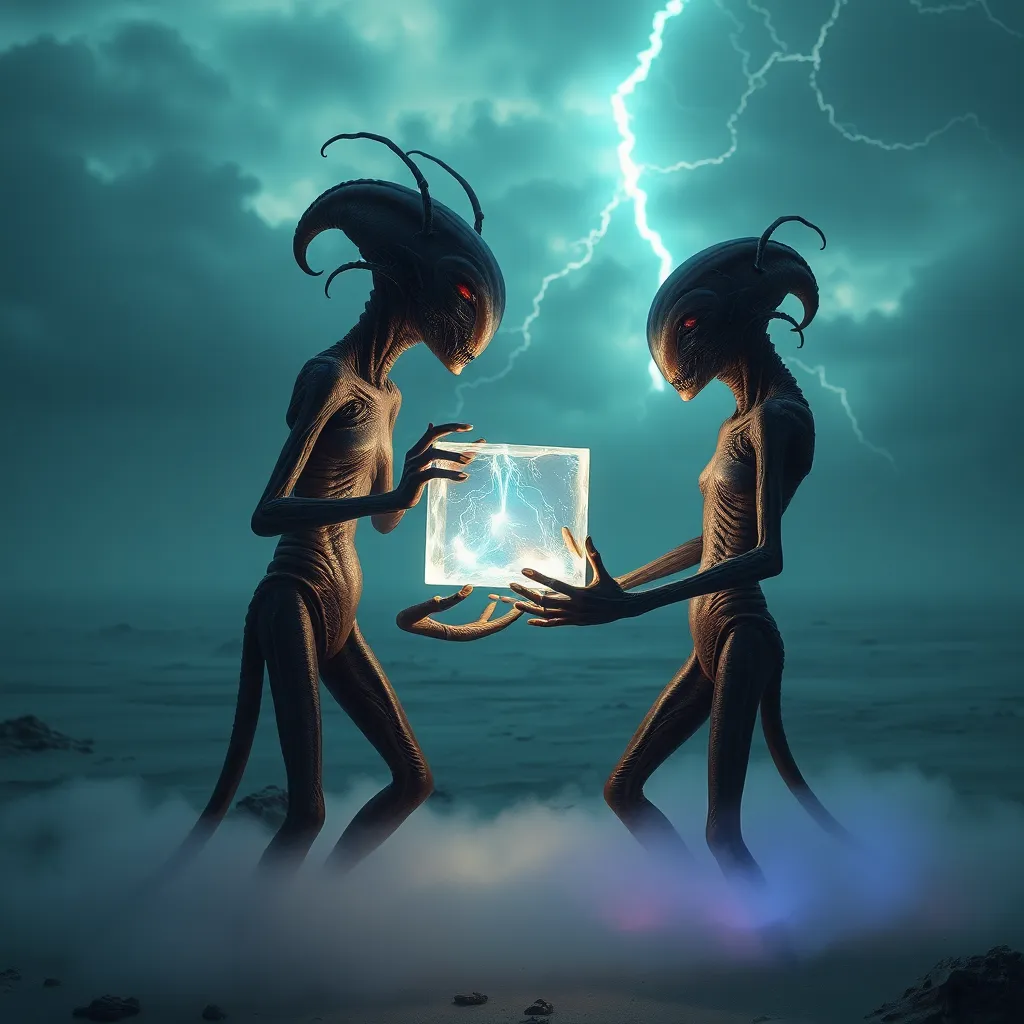
Elsewhere, on the methane-rich plains of Vrul, courtship begins when one individual presents another with a cube of compressed thunder. If accepted, the pair spends three weeks circling each other counterclockwise while exchanging bioluminescent rumors about their ancestors. If rejected, the thunder cube is returned politely, usually with a note explaining that "the timing is difficult right now" and "your spores deserve someone more available."
Naturally, not all alien species agree on what constitutes romance. The crystalline beings of Hesh regard emotional honesty as vulgar and prefer to express attraction by slowly building each other improved versions of themselves. "When a Hesh truly loves you," explained one xeno-anthropologist, "it may spend 40 years refining your angles, correcting your resonance, and replacing your least flattering facets with premium imported quartz."
This has caused friction with delegates from softer-bodied civilizations, who maintain that being given a revised torso as a sign of commitment sends mixed signals.
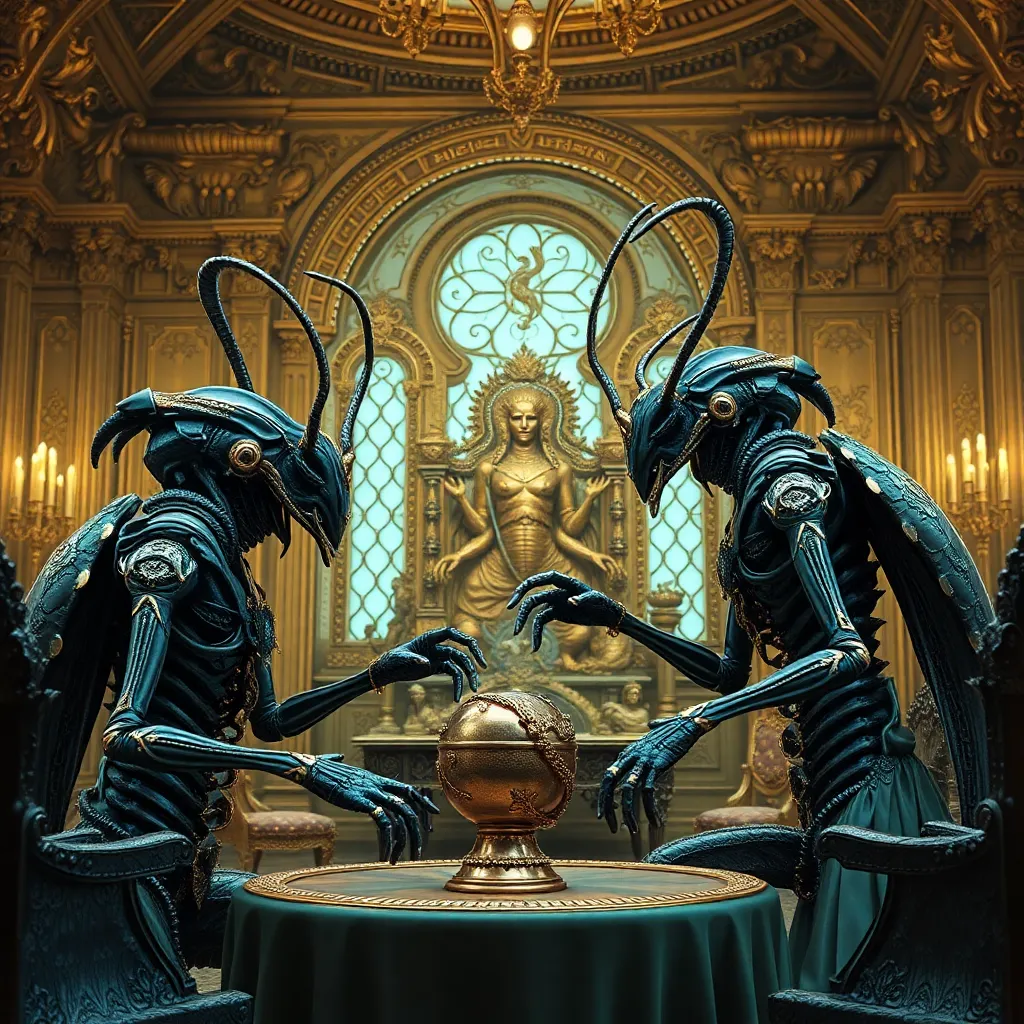
The most controversial findings concern the insectoid aristocracy of Bellatrix Minor, whose mating season is reportedly triggered by compliments delivered in the passive voice. According to field notes, phrases such as "it has been observed that your exoskeleton was polished with uncommon conviction" can provoke immediate swooning. More direct statements are seen as barbaric and are reserved for trade disputes or announcing volcanoes.
Earth diplomats, attempting to adapt, have accidentally proposed marriage to seventeen Bellatrixian barons, two decorative fences, and a high-ranking soup vessel.
Still, experts warn against idealizing extraterrestrial relationships. Beneath the stardust and pheromonal laser displays lies the same timeless uncertainty that plagues every sentient heart. On the red dusk planet of Omnara, a popular dating custom involves revealing one's true form only after the fifth encounter, a practice said to preserve mystery. Critics argue it has led to disappointing surprises, including one notorious case in which a poet turned out to be a municipal gas network.
Meanwhile, on the ring habitats of Yll, couples celebrate anniversaries by reenacting the gravitational catastrophe that first brought them together. This often involves rented meteor fragments, champagne in anti-gravity bubbles, and at least one elderly relative shouting that modern love has become too performative and that in their day people simply merged circulatory systems and got on with it.
What, then, do these revelations mean for Earth? Already, dating apps are rushing to update their offerings. New premium features reportedly include "nebula-compatible communication styles," "tentacle boundary filters," and a function that asks users whether they are open to partners who molt seasonally. Venture capitalists, scenting profit in the stars, have also begun investing heavily in luxury asteroid honeymoons and bespoke telepathic prenups.
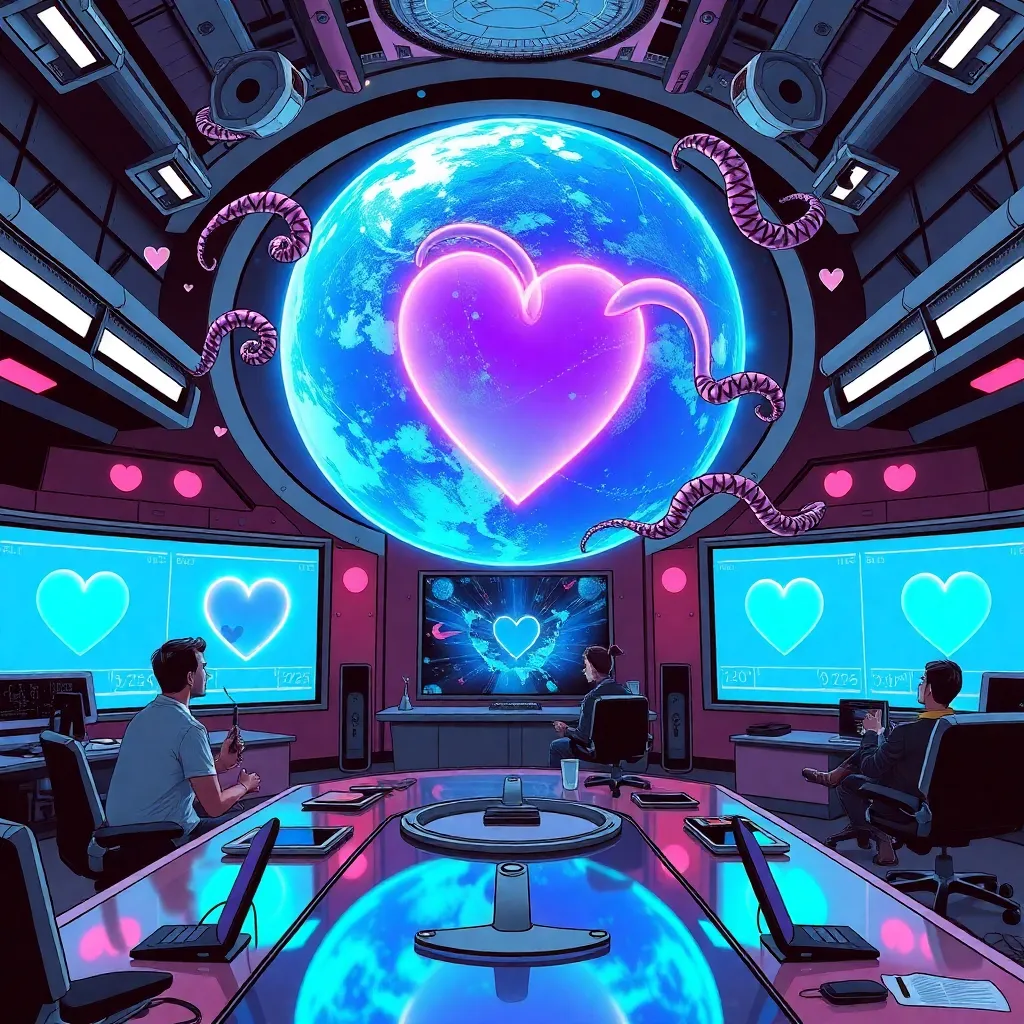
Religious leaders, lifestyle influencers, and one very emotional astrophysicist have all weighed in. Some declare the findings proof that love is universal. Others insist it is a dangerous interstellar scam designed to sell expensive crystals and emotionally destabilizing moon trips. A parliamentary subcommittee has demanded to know whether human citizens are adequately protected from manipulative serenades in frequencies "known to liquefy personal judgment."
For now, the public remains enchanted. Sales of perfume described as "mineral, sentient, and faintly gravitational" have surged. Bookshops report a run on phrasebooks containing useful romantic expressions such as I admire your thermal plume, my brood cluster respects your efficiency, and the ever-popular I consent to joint cocooning under regional law.
And somewhere, drifting between constellations, beneath galaxies folding like silk in the dark, two beings of impossible anatomy may even now be locking eyes, antennae, vapor trails, or whatever they have available, wondering the same ancient question asked on every world since time began:
"Are you free this Thursday, and if not, would your hive consider next week?"