Universal Cereal Bus Rolls Out, Promising Commuters a Balanced Breakfast and Mild Existential Crunch
City transit officials today unveiled the Universal Cereal Bus, a municipal innovation designed to answer one of urban life’s most pressing questions: what if the bus were wetter? Beginning Monday, select commuters will be able to board a fully operational public bus retrofitted with aisle-side grain dispensers, overhead spoon ports, and a “courtesy slurp lane” for riders who insist on treating every red light like brunch.
The pilot program, described by planners as “mass transit with flakes,” allows passengers to choose from twelve cereals upon entry, including practical standards like bran and oats as well as more adventurous offerings such as Marshmallow Tax Audit, Cinnamon Gridlock Squares, and a fiber-dense municipal blend known simply as Route 6. Milk is available in whole, skim, oat, almond, and “whatever that one guy brought in a thermos.”
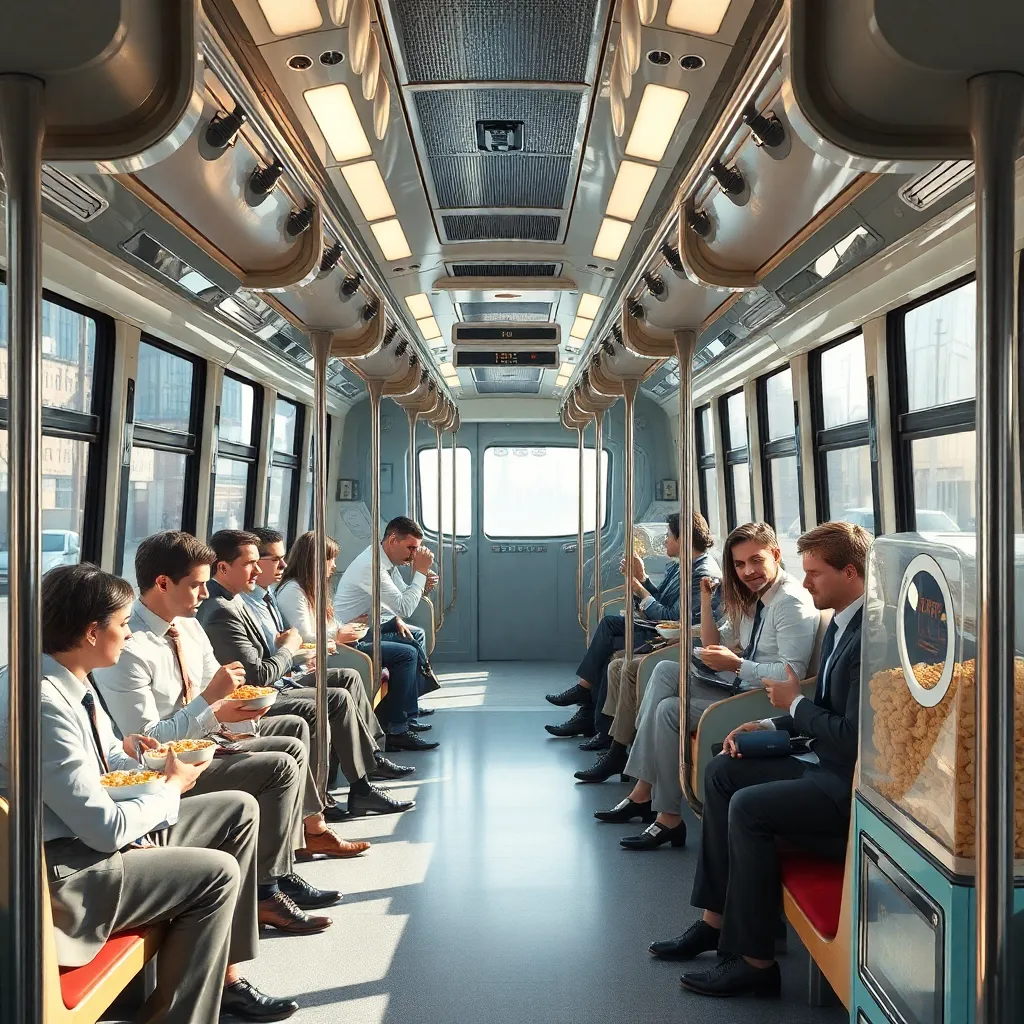
According to the Transit Breakfast Integration Office, the Universal Cereal Bus emerged after a six-month study concluded that commuters were already eating in deeply upsetting ways. “We observed people balancing yogurt on briefcases, dry cereal in hoodie pockets, and at least one gentleman pouring cold brew into granola while merging emotionally into traffic,” said chief mobility nutritionist Dana Pelk. “At some point, government must act.”
The bus itself has been extensively redesigned for the realities of spoon-based travel. Seats are upholstered in wipeable “lactose-resistant” fabric, each stop request cord doubles as a napkin dispenser, and acceleration has been softened to what engineers call gentle porridge mode. A reinforced bowl dock at every seat helps reduce splash incidents, though officials admit the phrase “helps reduce” did considerable work in testing.
Riders who prefer a more dynamic experience may stand in the Crunch Corridor, where cereal can be consumed in stemmed commuter goblets while holding an approved rail. Peak-hour etiquette signs remind passengers to “cover your sneezes and your raisins,” “let riders exit before adding bananas,” and “please do not yell ‘more milk!’ at the driver under any circumstances.”
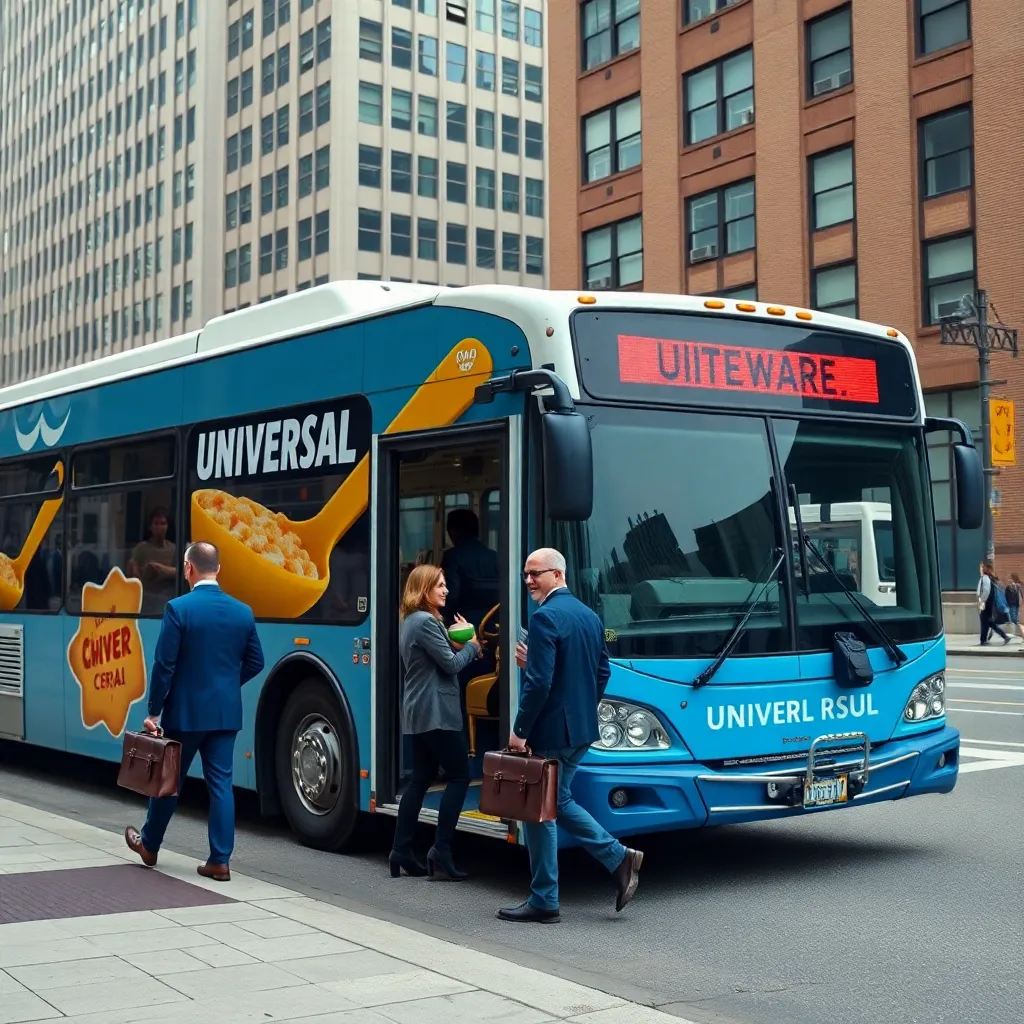
Public reaction has been mixed, energetic, and occasionally sticky. Some commuters hailed the service as a triumph of integrated urban planning. “This is huge,” said local accountant Priya Menon while carefully fishing a strawberry from her scarf. “Before this, I had to choose between being on time and having soggy flakes in a container shaped like disappointment. Now I can have both at once, but publicly.”
Others expressed concern about the logistics. “I just don’t think anyone should be allowed to carry warm milk around corners,” said one rider at the central station, moments before being handed a sample of Honey Infrastructure Clusters by an unusually persuasive transit intern wearing a hairnet and reflective vest.
Officials insist safety remains the top priority. Every Universal Cereal Bus comes equipped with anti-slip cinnamon dust control, emergency bib deployment, and a dedicated Marshmallow Evacuation Protocol for situations in which sugary pieces accumulate near the rear doors and begin behaving like weather. A trained breakfast marshal rides each route to settle disputes over spoon clinking, banana slicing, and whether granola counts as “loud.”
The fare structure has also been updated. A standard ticket includes one bowl and two approved toppings. Premium riders may upgrade to First Splash, which offers ceramic service, priority ladling, and access to the secluded Silent Muesli Section at the back of the bus, where talking is forbidden and chewing is expected to be inward, reflective, and brief.
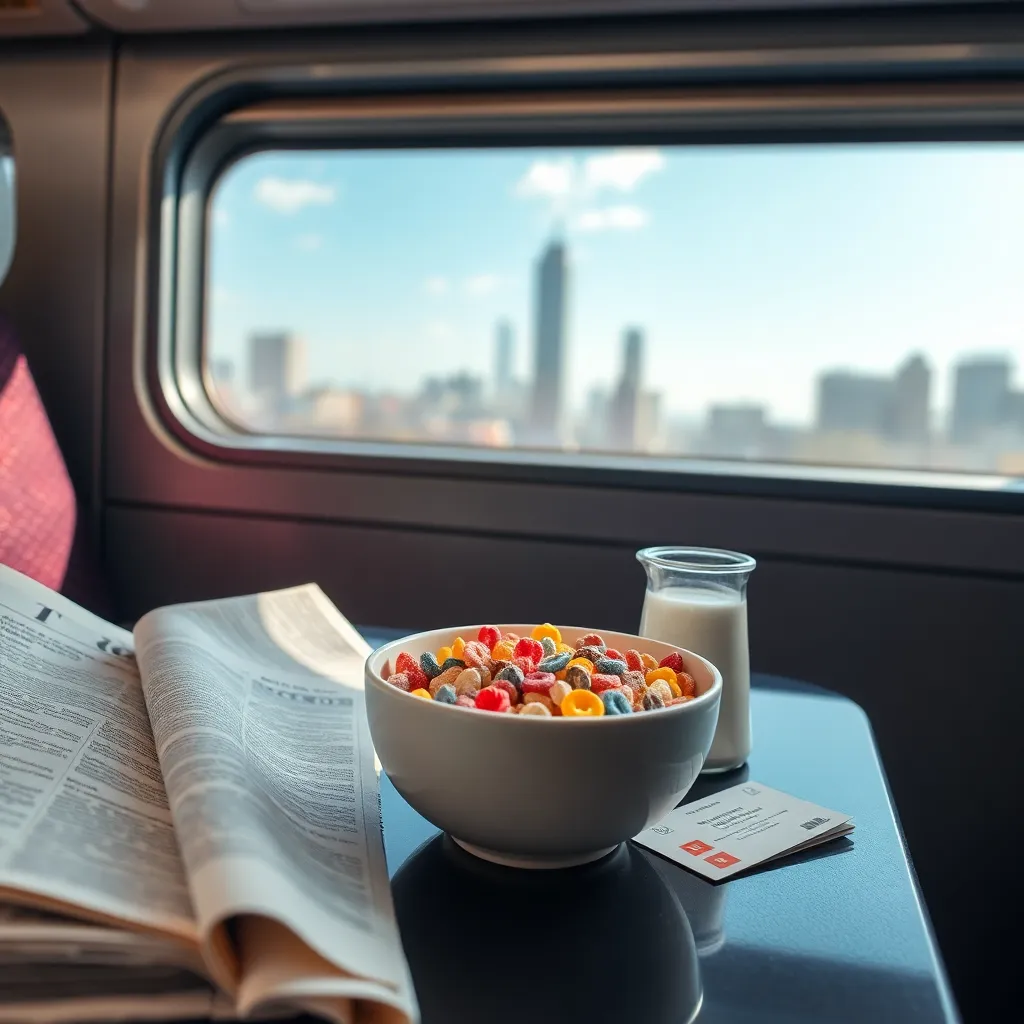
Though critics have called the plan “unnecessary,” “damp,” and “the final administrative collapse of boundaries,” city leadership remains confident. The mayor, speaking from a podium flanked by oversized spoons, declared the Universal Cereal Bus a model for the future. “For too long, breakfast and transportation have remained trapped in separate silos,” he said. “Today, we break those silos open, pour them into a bowl, and hit every stop between downtown and human progress.”
Transit agencies in three neighboring cities are reportedly watching the rollout closely. One has already commissioned a feasibility study for a Pancake Tram, while another is said to be quietly testing soup ferries after 6 p.m. Experts warn that if the cereal model succeeds, commuters may soon be expected to perform all meals in motion, raising the prospect of the deeply feared “municipal fondue corridor.”
For now, the Universal Cereal Bus will operate on weekday mornings, serving the downtown loop, the university district, and several office parks where breakfast has long been conducted under conditions best described as clerical. Riders are encouraged to arrive early, hold their bowls securely, and avoid sitting in the splash zone directly behind anyone who says, with confidence, “I can totally do this standing up.”
The city has also issued one final note to passengers: while all cereals are welcome in spirit, outside milk remains subject to inspection. This follows last month’s pre-launch incident in which a commuter attempted to board with a gallon of kefir and what witnesses later described as “the energy of a man who had mistaken public infrastructure for destiny.”