Iran Deploys Explosive Kamikaze Rubber Ducks in Strait of Hormuz, Shipping Industry Forced to Reconsider Bath Time
Global oil markets convulsed Monday after military analysts confirmed that Iran has allegedly seeded the Strait of Hormuz with what one admiral described, after removing his glasses and staring at satellite imagery for a full six minutes, as “an unacceptable number of highly suspicious rubber ducks.”
The devices, according to early reports, combine the innocent geometry of bathtub morale with the strategic lethality of naval mines. Officials say the ducks drift quietly, bobbing with serene yellow confidence until approached by commercial vessels, at which point they reportedly activate tiny internal guidance systems and hurl themselves toward hulls with the fanatical determination of a children’s toy that has finally found purpose.
“This represents a dramatic shift in maritime doctrine,” said one exhausted shipping insurer, standing in front of a chart now covered in circles, arrows, and the handwritten phrase why ducks. “Historically, mines have attempted to hide. These appear to be making eye contact.”
The Strait of Hormuz, long one of the planet’s most sensitive shipping chokepoints, is now said to resemble a nightmare drawn by a toddler with access to military procurement. Tanker captains have reported seeing clusters of ducks arranged in tactical formations, including the wedge, the crescent, and what one witness called “a deeply upsetting smiley face stretching from one shipping lane to the other.”
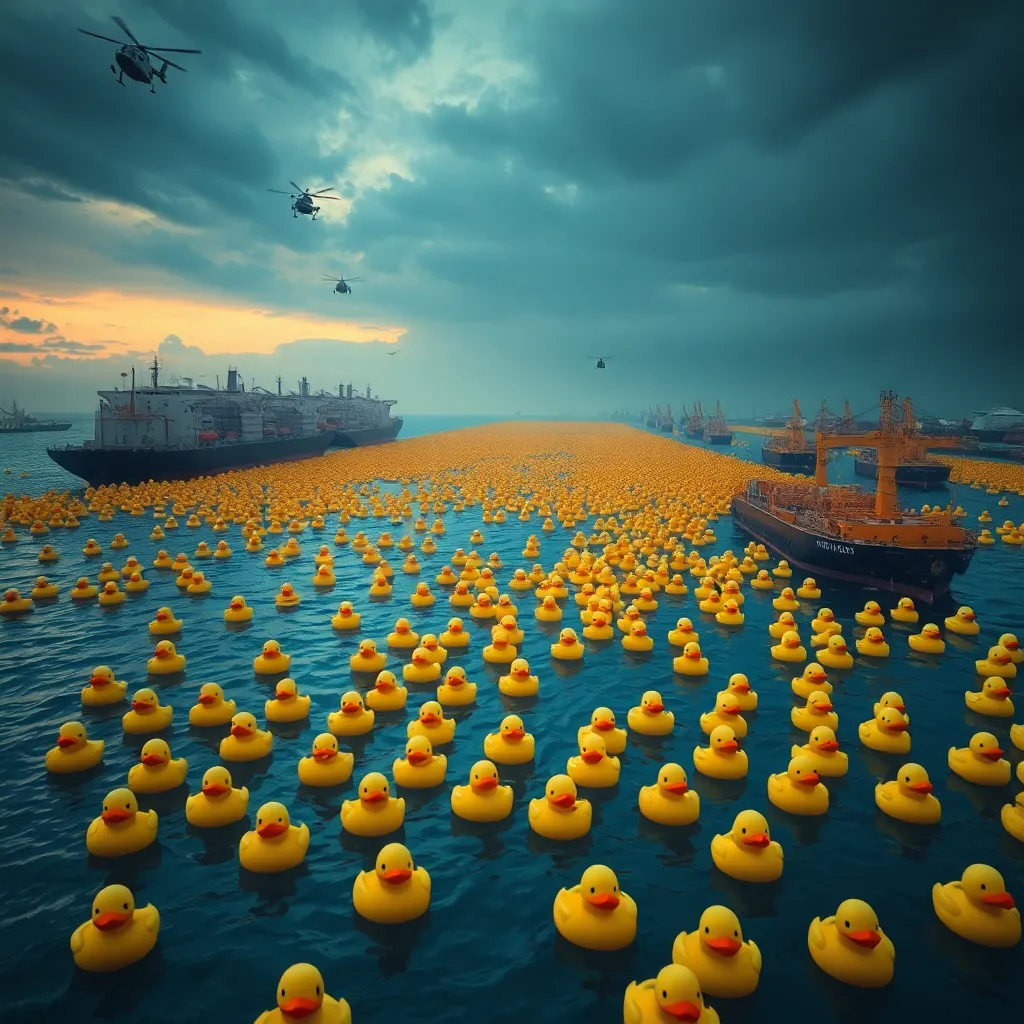
Maritime security teams now face the unenviable task of distinguishing ordinary flotsam from ideologically committed bath accessories. Several crews attempted to neutralize the ducks with deck hoses, only to discover that the ducks appear hydrodynamically optimized for ridicule. One private security contractor described firing warning shots at a drifting cluster, which responded, according to his statement, by “continuing to float in a manner I found personally insulting.”
Defense experts believe the duck program may have evolved from years of asymmetric warfare research, though few had predicted the final result would look like the clearance aisle of a seaside gift shop. A leaked briefing suggests the ducks may contain compact explosives, proximity triggers, and in some advanced cases, painted eyebrows intended to increase psychological pressure.
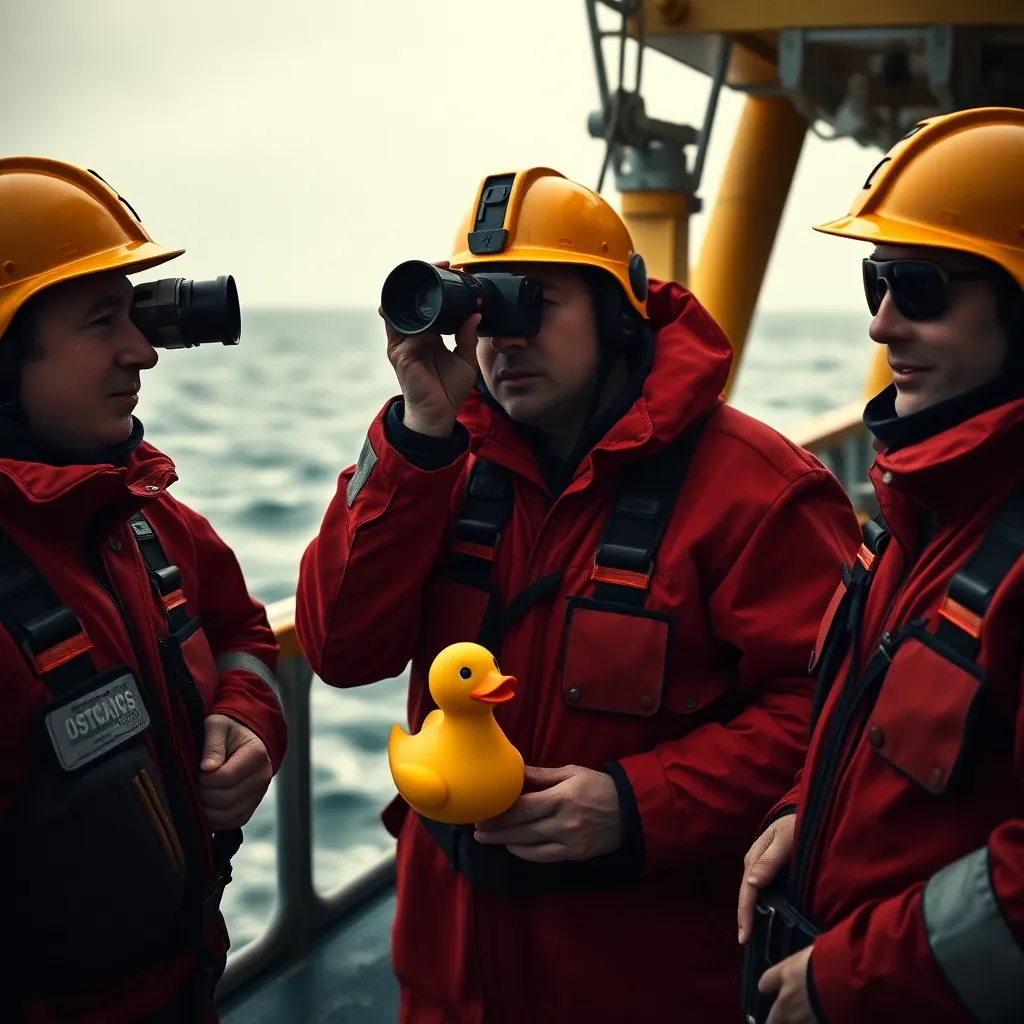
The psychological effect has been immediate. Sailors across the region have become unable to look at children’s bathrooms, novelty soaps, or carnival prize shelves without experiencing a sharp rise in blood pressure. One Greek tanker officer admitted his crew now regards all cheerful objects as potential threats. “Yesterday someone brought out a yellow sponge,” he said. “Half the bridge reached for binoculars.”
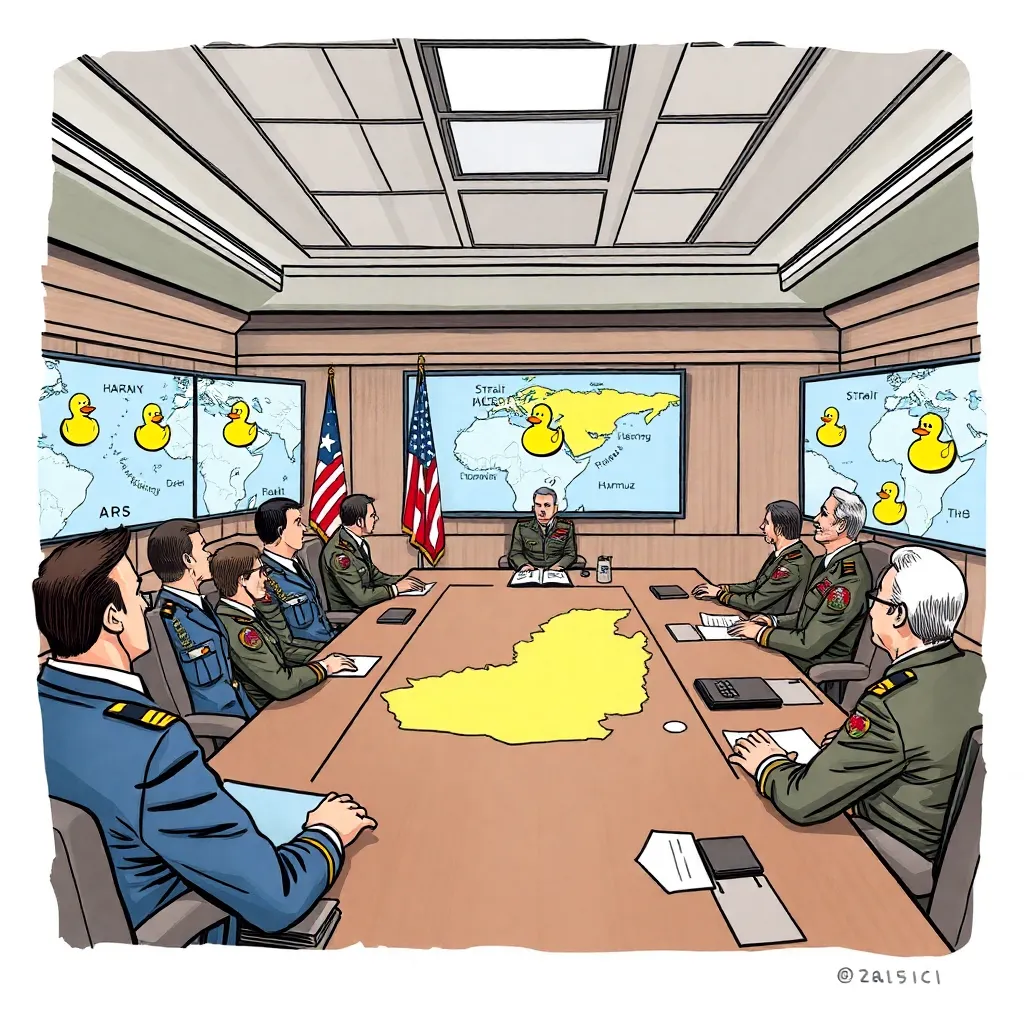
In capitals around the world, policymakers have scrambled to formulate a response without appearing to have been strategically outmaneuvered by bath merchandise. Emergency meetings reportedly opened with solemn briefings and then deteriorated into the sort of silence normally associated with tax audits and family board games gone wrong. One diplomat was said to have placed both hands on the table and asked, very quietly, “Are they squeaking?”
Oil companies, meanwhile, are adapting. One major tanker operator has begun fitting ships with reinforced duck prows, while another is trialing decoy bubble machines in hopes of confusing the devices. Lloyd’s underwriters are said to be developing a new maritime risk category somewhere between “piracy” and “unreasonably whimsical sabotage.”
Market traders reacted with predictable maturity. Crude prices surged, insurers panicked, and one commodities desk spent most of the morning yelling “buy on quackness” until compliance intervened. The broader financial community, sensing history, has already begun circulating the phrase fowl fuel crisis, despite repeated ornithological objections that ducks are not, in fact, fowl in the way anyone in finance means.
Military planners have proposed several countermeasures, none of them reassuring. These include drone surveillance, controlled detonations, electronic jamming, and, in a proposal briefly entertained before everyone asked to see who wrote it, the deployment of larger, friendlier allied ducks to win local buoyancy dominance.
For ordinary consumers, the implications are already trickling into daily life. Petrol prices are expected to rise, freight rates are climbing, and several supermarket chains have quietly removed bath toys from end-of-aisle displays after customers began scrutinizing them for detonators. Parents across Europe and Asia have reported children refusing evening baths unless the ducks are first cleared by what they insist on calling “the navy.”
As the world waits for verification, de-escalation, or at minimum a sentence that feels normal to say aloud, one truth has emerged from the waters of the Gulf: modern geopolitics has entered a phase in which the line between strategic threat and deeply unserious object has dissolved completely.
At press time, naval authorities urged calm and advised all commercial traffic to proceed with caution, maintain visual contact with surrounding waters, and under no circumstances assume that anything with a painted beak is merely there to make the bathroom less lonely.