Kim Jong-un Announces Bid for South Korean Presidency, Promises “Bold New Era of Unification Through Mandatory Smiling”
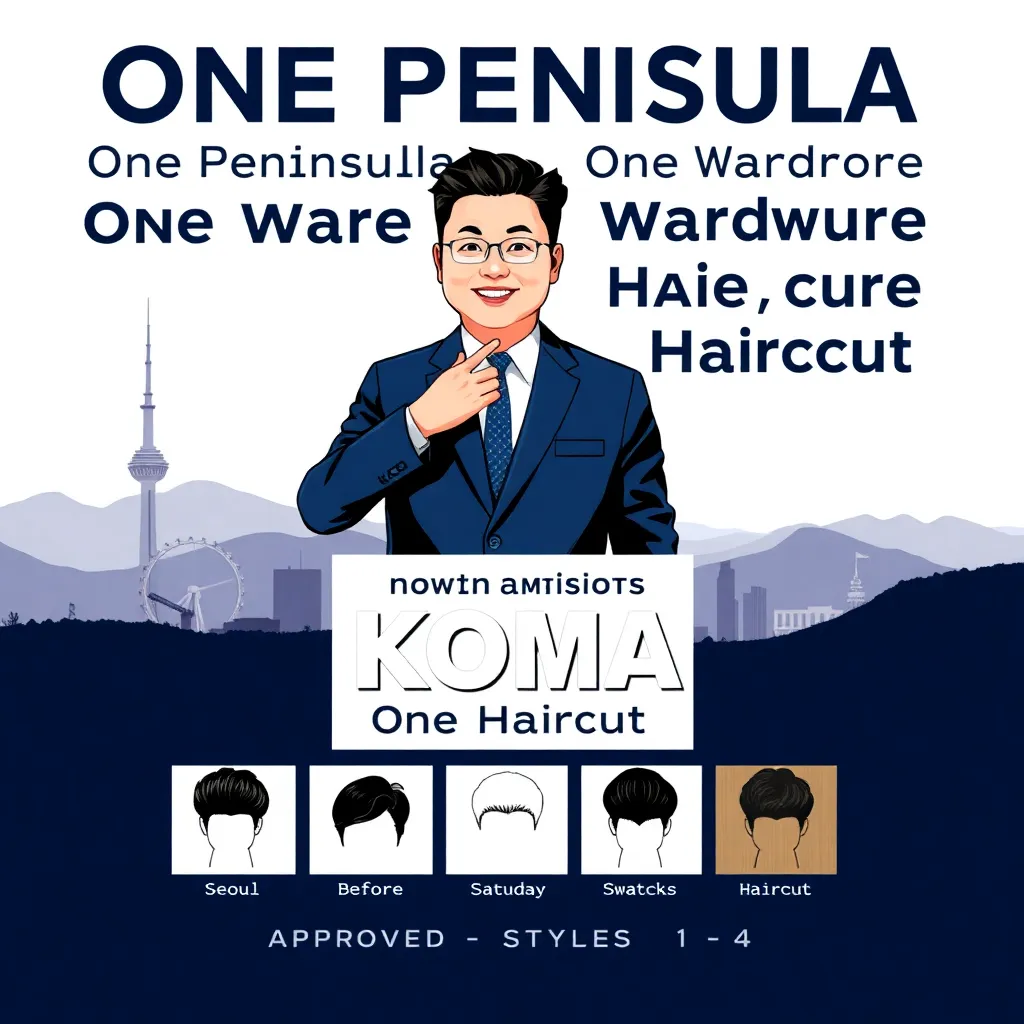
SEOUL — In a surprise move that constitutional scholars have described as “technically impossible” and political commentators have described as “somehow still polling better than three cabinet ministers,” North Korean leader Kim Jong-un has reportedly declared his intention to run for President of South Korea in the next election, unveiling a campaign slogan translated loosely as “One Peninsula, One Wardrobe, One Haircut.”
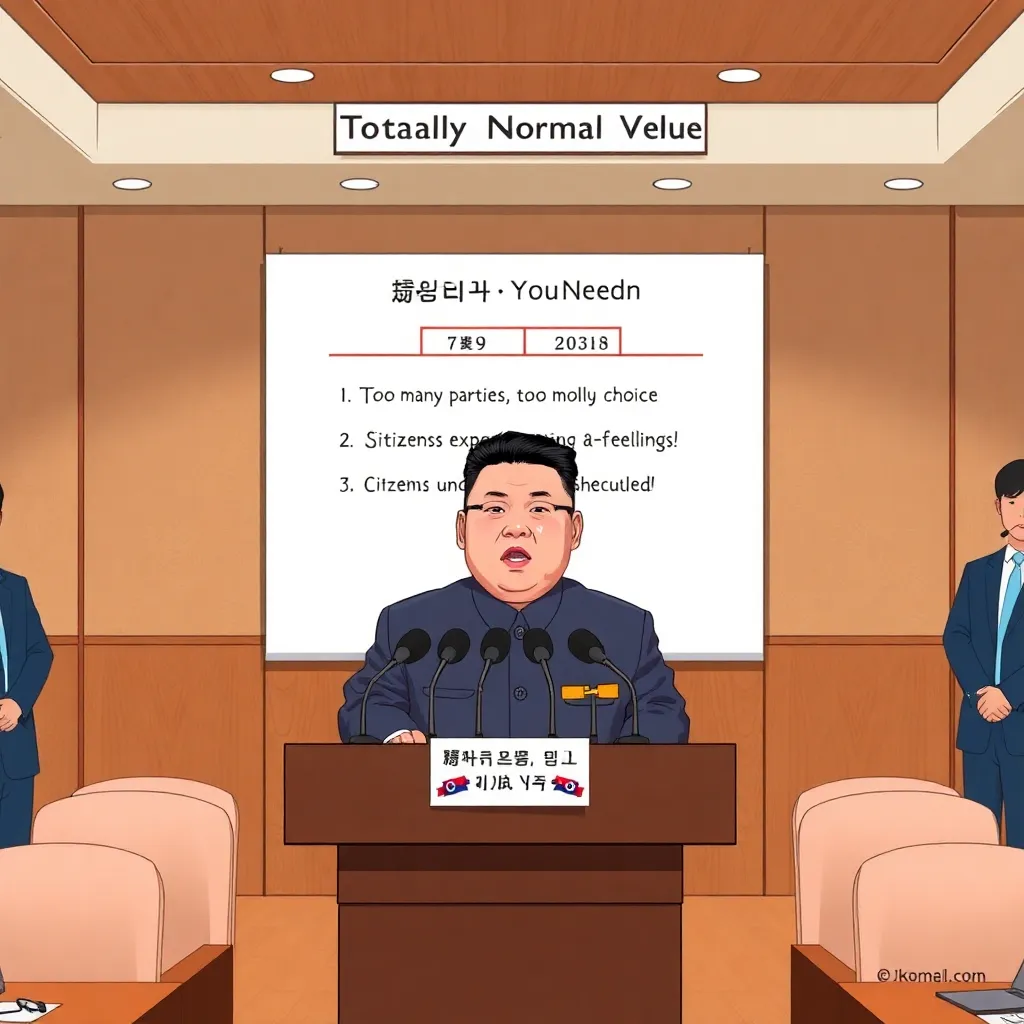
At a press conference held, according to state media, “somewhere extremely normal and not at all underground,” Kim outlined a platform aimed at “modernizing” South Korea by introducing what he called “streamlined democracy,” a system in which citizens are encouraged to express their opinions freely—provided their opinions align with the official national opinion, distributed weekly as a convenient pamphlet.
“I have watched your South Korean politics closely,” Kim said, gesturing toward a large chart titled ‘Reasons You Need Me’ with the bullet points: ‘Too many parties,’ ‘too much choice,’ and ‘citizens experiencing feelings unscheduled.’ “I am ready to bring stability, predictability, and a refreshing reduction in the number of acceptable conversation topics.”
Election Commission Responds: “This Is Not How Any of This Works”
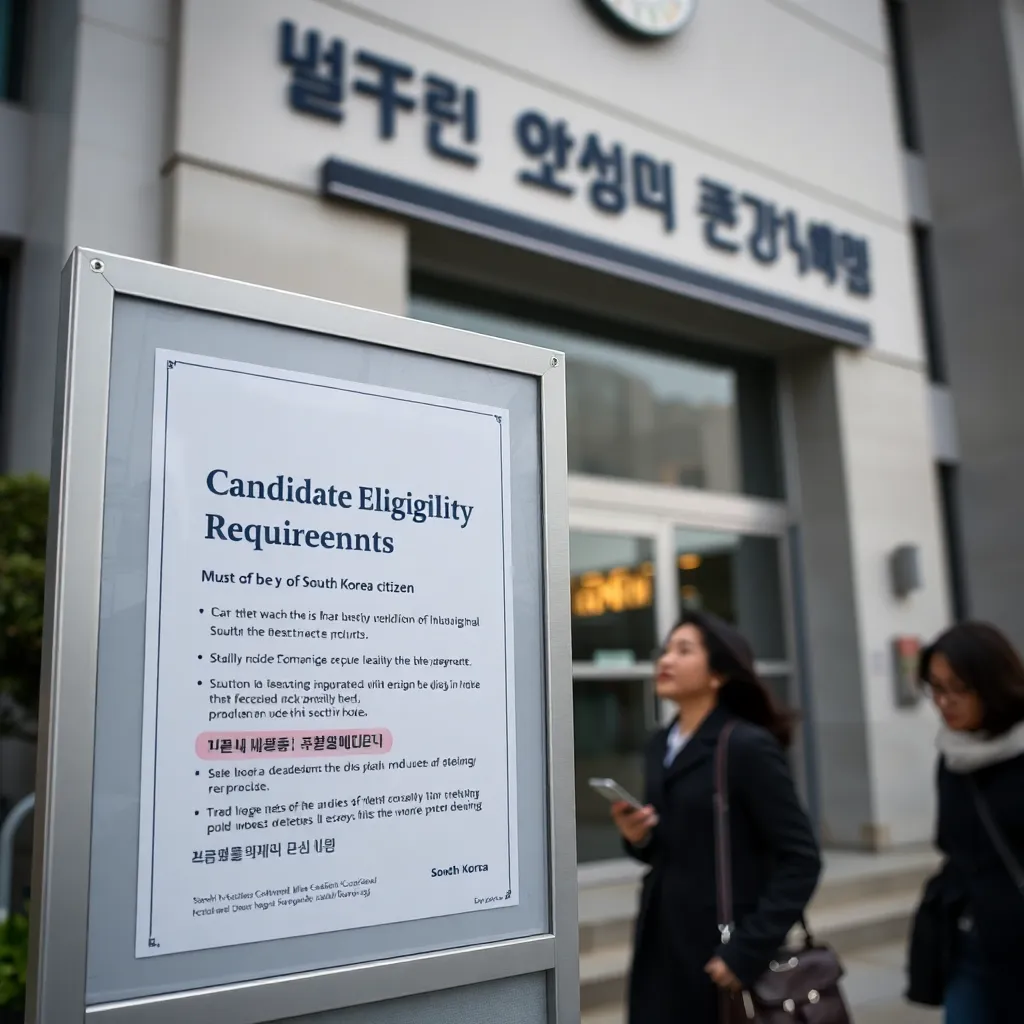
South Korea’s National Election Commission issued a polite statement reminding the public that presidential candidates must be South Korean citizens, meet residency requirements, and—crucially—not be the sitting leader of a rival state with a long-running interest in the word “annexation.”
A spokesperson added: “We would like to reassure voters that the ballot will not, under any circumstances, include a checkbox reading ‘Kim Jong-un (Independent, but also not independent).’”
Nevertheless, the Commission conceded it has received “an unusually high number of prank calls” asking whether the candidate could be listed under the party name ‘DPRK-People’s Power Coalition Unity Future Reform Alliance’ simply to save time.
Campaign Promises Include “Free Housing,” “Free Healthcare,” and “Free Everyone From Having to Choose Anything”
Kim’s campaign reportedly centers on a three-pillar agenda:
Unification Through Administrative Efficiency
Kim promised to unify the peninsula by merging the two governments into “one sleek, vertically integrated leadership experience,” eliminating duplicated ministries, duplicated laws, and “duplicated hope.”National Service Industry Reform
South Korea’s famously competitive workplace culture will be replaced, he said, with an even more competitive system where employees race not for promotions but for the privilege of being told they’re doing fine.Cultural Harmony Initiatives
In an attempt to appeal to South Korean youth, Kim allegedly pledged to “embrace K-pop,” stating that he is “open to choreography” and “already has the outfits.”
Analysts noted the platform appears designed to attract voters weary of partisan fighting. “It’s the classic outsider pitch,” said Professor Lee Min-jung of Seoul National University. “He’s saying: ‘I’m not like your politicians. I’m worse in a brand-new way.’”
A New Kind of Political Rally: Loud, Orderly, and Concerningly On-Time
Kim’s first “campaign stop” was described by witnesses as a rally featuring synchronized chanting, coordinated clapping intervals, and a merchandise booth selling ‘KJU 2026’ armbands, lapel pins, and a limited-edition collectible “Unification Coupon” that cannot be redeemed but is “nice to have.”
Attendees reported a strict schedule:
09:00 — Arrive and express enthusiasm
09:01 — Continue expressing enthusiasm
09:02 — Brief intermission to drink water and reflect on enthusiasm
09:03 — Resume enthusiasm at slightly higher volume
“I liked the part where we were told what to think,” said one attendee, who asked to remain anonymous and also asked if it was possible to remain anonymous “more anonymously.”
South Korean Voters React With Mixture of Confusion, Laughter, and Existential Dread
Public reaction has varied widely.
Some dismissed the announcement as a publicity stunt.
Others suggested it was a diplomatic maneuver.
A small but vocal subset insisted, “At this point, why not?” before being gently escorted offline by friends.
In Gangnam, one office worker shrugged. “I don’t think he can legally run, but I also didn’t think my rent could go up again and it did, so I’m not ruling anything out.”
Meanwhile, online forums immediately filled with speculative campaign posters featuring Kim in a tailored suit, finger heart pose, and the slogan: “Make Korea Whole Again (But Like, Calmly).”
International Community Issues Concerned Statements, Quickly Runs Out of Adjectives
The United Nations released a statement calling the development “unusual,” “deeply troubling,” and “a fresh new headache we didn’t have on the bingo card.”
The U.S. State Department urged “restraint and respect for democratic processes,” before adding, sotto voce, “and also reality.”
Japan’s response was reportedly delivered as a long sigh, followed by a request to “please stop inventing new geopolitical genres.”
China offered cautious support for “regional stability,” clarifying that stability is “anything that does not require us to answer follow-up questions.”
Constitutional Experts: “This Is Like a Whale Running for Lifeguard”
Legal scholars were quick to point out that South Korea’s constitution does not permit a foreign head of state to seek its presidency, particularly one whose current job description includes “supreme leader,” “marshal,” and “person whose official photographs are always taken from slightly below.”
Still, experts acknowledged that constitutional impossibility has never fully stopped ambitious politicians.
“Look,” said constitutional lawyer Park Eun-seo, “if we lived in a world where legal eligibility mattered to political ambition, half the headlines would be replaced by knitting patterns.”
Kim’s Team Insists He’s “Relatable,” Releases Candidate Biography
Attempting to soften his image, Kim’s staff released a campaign biography emphasizing his “ordinary interests,” including:
Enjoying cheese
Appreciating modern architecture
Being “very into trains now”
Having opinions about basketball that are “surprisingly intense”
The biography also includes a section titled “Humble Beginnings,” which begins: “Born into destiny.”

A leaked draft of a campaign ad reportedly shows Kim walking through Seoul’s streets while narrating: “I know your struggles. Sometimes you want snacks late at night and the entire state apparatus is not available to deliver them. I understand this pain.”
Opposition Parties Prepare Attacks, But Struggle to Find the Correct Tone
South Korean political opponents have reportedly debated how to respond without accidentally creating an even more compelling narrative for someone whose brand is “unyielding confidence.”
One party strategist admitted: “If we call him authoritarian, it sounds like we’re describing a competitor. If we call him inexperienced, it sounds like a compliment compared to what we’ve got.”
Meanwhile, a rival candidate allegedly considered adopting Kim’s proposal for “streamlined democracy,” before realizing it would require them to reduce their own speaking time, which was considered “anti-cultural.”
Final Word: A Campaign Built on Unity, Irony, and the Human Brain’s Refusal to Process 2026
For now, Kim Jong-un’s South Korean presidential bid remains lodged in the realm of political theater, constitutional fantasy, and the kind of headline that makes readers briefly check whether they’ve accidentally switched to a parody site.
But if nothing else, the episode has sparked new interest in civics education across South Korea, as citizens everywhere ask the same hopeful question:
“Wait—there are rules about who can run, right?”
Officials confirmed that yes, there are rules, and also confirmed that they have begun printing additional copies of those rules “in larger font” for the coming months.
As Kim concluded his announcement, he offered a final message to South Korean voters: “Together, we will build a future where everyone has a voice.”
He paused.
“Some voices will be louder than others. Mine will be the loudest. That is the unity.”
Political analysts agreed the statement was, at minimum, refreshingly straightforward.