Local Man Accidentally Beta-Tests Both Atomic Bombs, Remains Annoyingly Difficult to Defeat
Tsutomu Yamaguchi had the kind of work trip that would make even the most dedicated employee fake a stomach bug forever. In August 1945, the Mitsubishi engineer was in Hiroshima on business when the sky suddenly decided to become a physics lecture with no regard for human scheduling.
On the morning of August 6, Yamaguchi had reportedly stepped off a tram and realized he had left behind his hanko, or personal seal, a detail so bureaucratically ordinary it now sits in history looking wildly underdressed for the occasion. As he turned back, a blinding flash tore over the city. The explosion hurled him into a ditch, ruptured his eardrums, burned his upper body, and introduced him to the phrase "unfathomable devastation" in the most aggressive possible way.
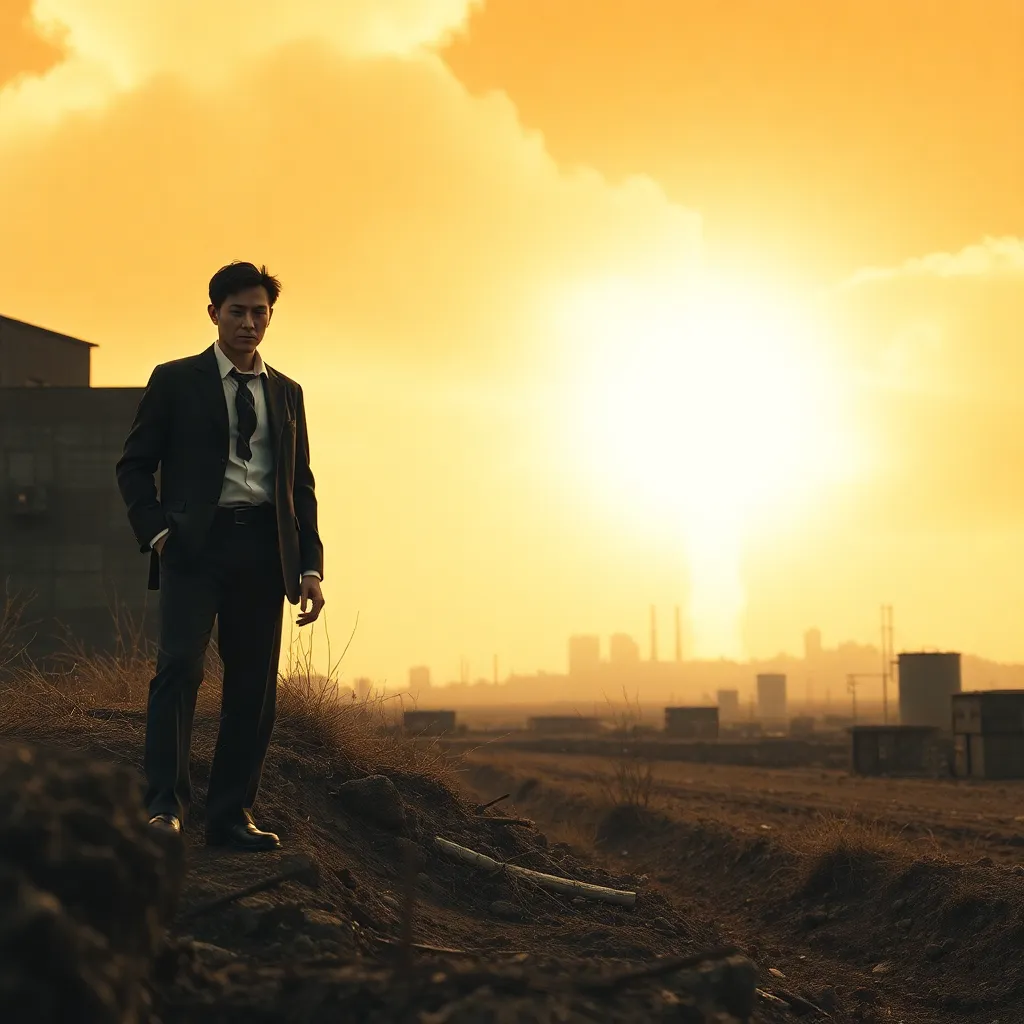
Most people, after being caught in an atomic bombing, would consider the day fully booked. Yamaguchi, however, spent the night in an air raid shelter, got himself bandaged, and then did what can only be described as the most committed commute in modern history: he went home to Nagasaki.
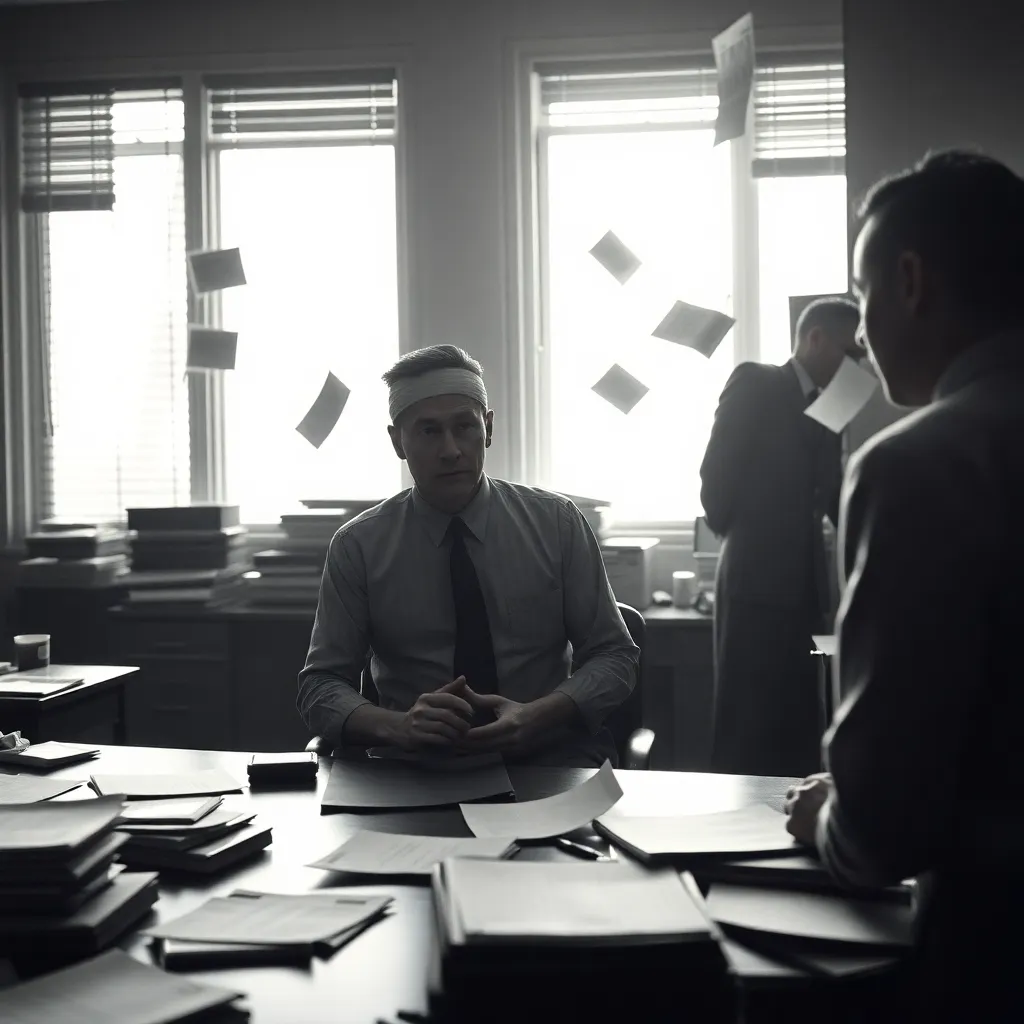
There, on August 9, still wrapped in dressings and carrying the general appearance of a man recently mugged by the sun itself, he reportedly went into work. This was not because work was more important than life, but because the 1940s had a completely different relationship with calling in sick. While explaining to his supervisor that Hiroshima had been destroyed by one bomb, Yamaguchi was interrupted by another blinding flash out the window, as if the universe had leaned in to say, "Actually, he has a point."
The second bomb exploded over Nagasaki. Once again, Yamaguchi survived.
Historians do not usually employ the phrase "incredible bad luck followed by even more incredible luck," but here the phrase shows up carrying a clipboard and demanding inclusion. To endure one nuclear blast is almost impossible. To endure two, separated by a train ride and an office briefing, is the kind of statistical absurdity that makes probability itself sit down quietly in a corner.
For years, Yamaguchi's story circulated as one of those accounts so astonishing that listeners instinctively narrow their eyes, as if suspicion could somehow defeat archival fact. Yet he lived on, raised a family, worked, and later spoke publicly about nuclear disarmament with the unimpeachable authority of a man who had personally attended the worst demonstration imaginable twice.
Japan eventually recognized him officially as a survivor of both bombings, a status so rare it sounds less like a legal designation and more like a side quest unlocked by surviving history's least advisable itinerary.
He was not the only person present in both cities during the bombings, but he became the most famous dual survivor, largely because his life story has the narrative efficiency of a screenwriter trying to get fired for being too unrealistic. Burned in Hiroshima, blasted again in Nagasaki, and still somehow available later for interviews, Yamaguchi turned endurance into a biographical genre of its own.
In later years, he described the mushroom cloud as resembling a huge pillar of fire, a vision now lodged permanently in the human imagination, somewhere between apocalypse and engineering failure at the hands of species-wide arrogance. He did not survive because the events were survivable. He survived because history, on occasion, behaves like a drunk magician pulling the same appalling trick twice and still failing to catch one specific man.
It would be tempting to cast Yamaguchi as indestructible, but that would miss the point and also wildly insult the concept of being nearly vaporized. He was not invincible. He was wounded, traumatized, and forced to carry memories no person should have to alphabetize. His story is remarkable not because disaster politely bounced off him, but because it did not, and he kept going anyway.
In a century overflowing with grim records, Tsutomu Yamaguchi somehow secured one of the strangest: the man who attended both atomic bombings and still made it home. Somewhere in the cosmic bureaucracy, there is surely a clerk still staring at the paperwork, muttering, "No, this cannot be right," before stamping it twice.