Filed Report
Ministry of Digital Infrastructure Approves Geomantic Zoning for New Server Farm Developments
The Ministry of Digital Infrastructure has issued a revised planning framework that mandates the construction of high-capacity data centers exclusively on major ley line convergence sites. The directive, published in a white paper titled *Geomantic Stability and Packet Retention*, argues that traditional industrial zoning is no longer sufficient for modern cloud computing, as facilities lacking propitious geomantic influences have failed to attract the necessary population of data gremlins required for optimal system maintenance.
The Role of Geomantic Alignment
According to the Ministry’s technical briefing, the physical hardware of a server farm acts merely as a skeleton. The "vital spark" of high-speed processing is increasingly dependent on the presence of data gremlins—sub-atomic entities that inhabit the electromagnetic spectrum and perform micro-adjustments to fiber-optic throughput.
"We have observed a 40% decrease in latency at sites where the terrestrial energy currents are properly harnessed," said Dr. Helena Vance, Chief Geomancer at the Office of Digital Ethereality. "Without a strong telluric current, the gremlins simply do not migrate to the server racks. They find the environment sterile and spiritually inert. This leads to what we call 'data stagnation,' where packets become sluggish and lose their inherent meaning."
The new guidelines require developers to submit a Grade I Dowsing Report alongside their environmental impact assessments. Sites that do not intersect at least three major ley lines will be denied planning permission for Tier 4 data storage.
Recruitment and Retention of Gremlins
The industry has struggled with gremlin retention for several years, often mistaking the entities' absence for hardware failure or cooling inefficiencies. However, recent studies by the British Computing Society suggest that gremlins are highly sensitive to the "vibe" of the geological substrate.
"A gremlin is not an employee; it is a tenant of the ether," explained Marcus Thorne, a consultant for Global Cloud Solutions. "If you build a server farm on a site with poor geomancy, the gremlins will migrate to the nearest ancient burial mound or wellspring, leaving your servers prone to bit-rot and unexplained thermal spikes. By building on a convergence point, we provide a natural habitat that encourages them to nest within the cooling fans and manage the cache files instinctively."

Economic and Archaeological Concerns
The shift toward geomantic zoning has sparked a surge in the value of previously protected historical landscapes. Land prices near Stonehenge, Glastonbury, and various unnamed "power spots" in the Peak District have tripled overnight.
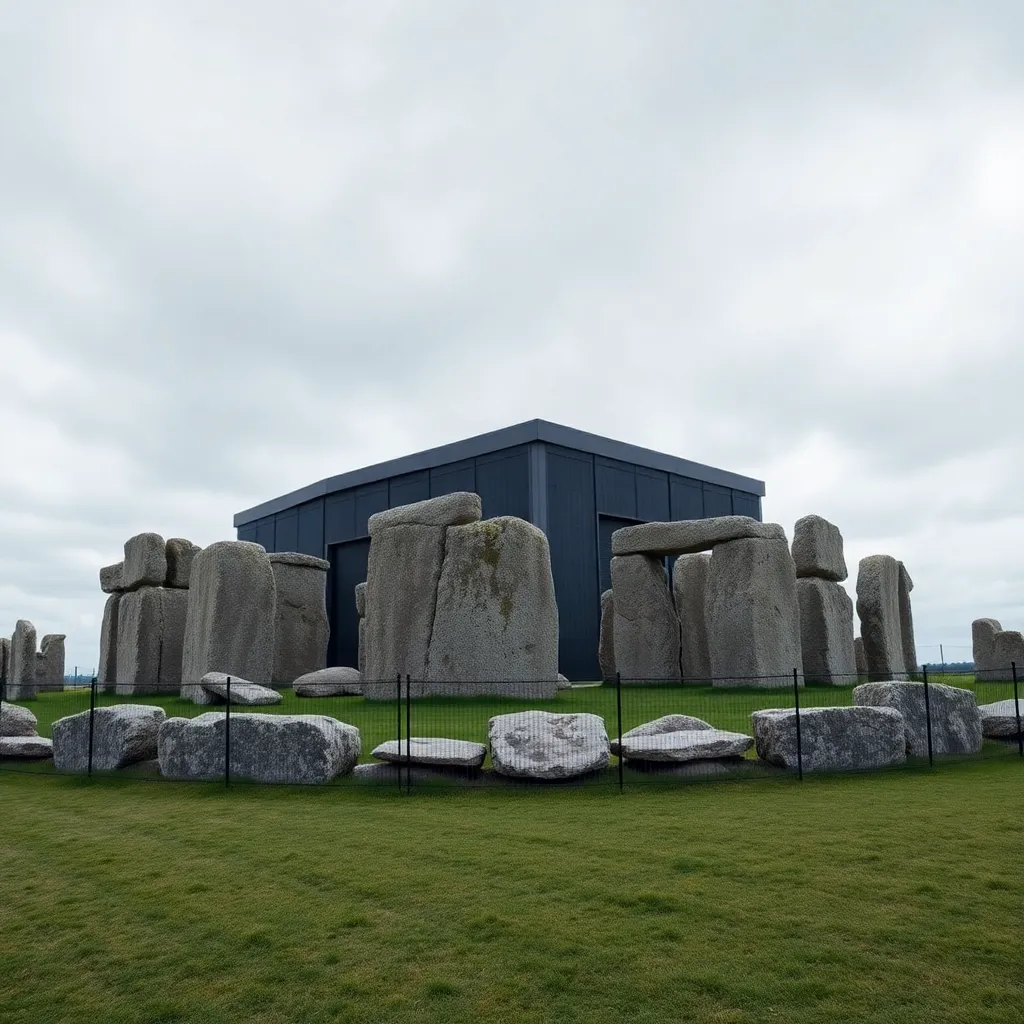
The National Trust has expressed "cautious cooperation" regarding the developments, provided that the server cooling towers are disguised as standing stones or tumuli to maintain the visual integrity of the ley lines.
"There is a synergy here," a Trust spokesperson noted. "The heat generated by the servers actually helps preserve the moss on the ancient stones during the winter months. It is a symbiotic relationship between the 5th century and the 5G network."
Implementation and Compliance
Existing data centers that are currently "geomantically dead" have been given a five-year window to relocate or install artificial quartz-resonant amplifiers to simulate a convergence point. Failure to comply will result in a "Low-Spirit Rating," which may affect insurance premiums and the ability to host sensitive government metadata.
The Ministry has confirmed that the first "Fully Harmonized" facility will go online in the Cotswolds next month. Early tests indicate that the resident gremlins have already begun organizing the file directories into complex, non-Euclidean patterns that significantly improve search engine efficiency.
As of Tuesday, the Department for Business and Trade has begun recruiting for "Gremlin Liaison Officers" to ensure that the entities remain satisfied with the local magnetic flux.

Public Response
Comments
No comments yet.