Filed Report
Ministry of Hydration Confirms Water Remains Wet Following Extensive Decadal Review
The Ministry of Hydration and the National Bureau of Aqueous Standards (NBAS) issued a joint statement on Tuesday confirming that water has retained its characteristic wetness for the 2024 fiscal year. The announcement follows a comprehensive ten-year longitudinal study involving thousands of tactile sensors, linen swatches, and independent moisture auditors stationed across the country’s reservoirs.

Procedural Consistency
The findings, published in the Journal of Applied Saturation, indicate that the molecular interaction between liquid H2O and solid surfaces continues to result in the sensation and physical state commonly defined as "wet." Despite concerns from some fringe theoretical groups that water might be transitioning toward a "slick" or "damp-adjacent" phase, the Ministry’s report found no statistical deviation from the 1992 Baseline Humidity Accord.
"We have monitored over four hundred thousand individual splashes," said Dr. Helena Vane, Chief Saturation Officer at the NBAS. "In every recorded instance, the water adhered to the substrate and required a towel or a period of evaporation to remove. The integrity of the liquid state remains robust."
Economic and Industrial Implications
The confirmation has been met with relief by the textile and infrastructure sectors. The drying industry, which accounts for approximately 4% of the national GDP, had expressed anxiety regarding potential shifts in aqueous behavior. Had water ceased to be wet, the market for hair dryers, chamois leathers, and silica gel packets would have faced immediate collapse.
"Stability is key for our stakeholders," noted Marcus Thorne, Chairman of the International Towel Federation. "Knowing that water will continue to soak into a terry-cloth loop with the same predictable frequency allows us to plan our manufacturing cycles through 2030. We are operating under a 'business as usual' saturation model."

Public Safety and Signage
While the report confirms the status quo, the Health and Safety Executive (HSE) has used the opportunity to remind the public that the continued wetness of water carries inherent risks. Slip-and-fall incidents remain the primary byproduct of the liquid’s persistent refusal to become dry.
Local councils have been advised to audit their "Caution: Wet Floor" signage to ensure the iconography remains accurate. There had been a brief proposal by the Sub-Committee on Visual Warnings to update the signs to "Caution: Standard Aqueous State," but this was rejected on the grounds that it might confuse tourists and domestic pets.
Environmental Monitoring
Environmentalists have noted that while the wetness remains constant, the temperature at which that wetness is delivered has shown slight fluctuations. The Environment Agency has deployed a fleet of "moisture buoys" to track the viscosity of the nation’s coastlines, ensuring that the North Sea does not inadvertently become "tacky" or "syrupy" due to unforeseen chemical shifts.
"We cannot take the tactile properties of our natural resources for granted," Dr. Vane added during the afternoon briefing. "Wetness is a finite sensory experience that requires constant bureaucratic vigilance."
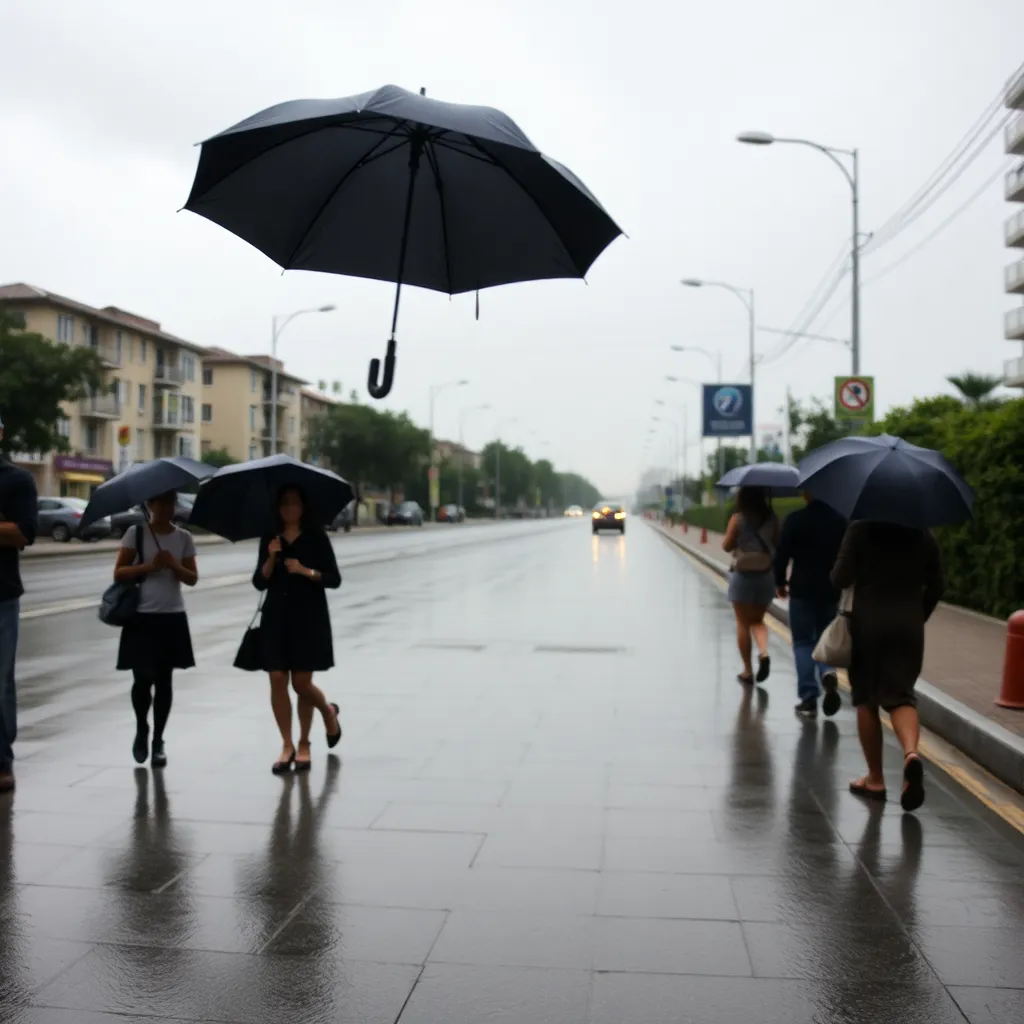
The Ministry has confirmed that the next scheduled audit of water’s physical properties will take place in 2034, barring any sudden atmospheric dehydration events. For now, citizens are encouraged to continue using umbrellas and waterproof footwear as prescribed by existing municipal guidelines.
Public Response
Comments
No comments yet.