Mount Everest Announces Legal Action After “Repeated Violations” of Its Court-Ordered “Me Time”
KATHMANDU—In a move that experts are calling “unprecedented, but also somehow inevitable,” Mount Everest has instructed its legal team to pursue formal action against what it describes as “an unrelenting parade of people with reflective sunglasses and unresolved inner journeys” for repeatedly infringing on its legally protected “me time.”
Speaking through a spokesperson who insisted on being identified only as “The Mountain’s Counsel, Esq.,” Everest claims it has endured decades of boundary violations, unsolicited motivational speeches, and a persistent culture of summit selfies that have collectively eroded its right to “exist quietly as a large, cold rock with feelings.”
“Mount Everest is not a group project,” said Counsel, standing in front of a tasteful backdrop featuring a serene glacier and a laminated list of grievances. “It is not your vision board. It is not your podcast episode. It is certainly not your engagement photo. It is, under both cosmic law and several newly drafted statutes, entitled to be left alone.”
“I Am Not Your Metaphor,” Everest Says in Newly Released Statement
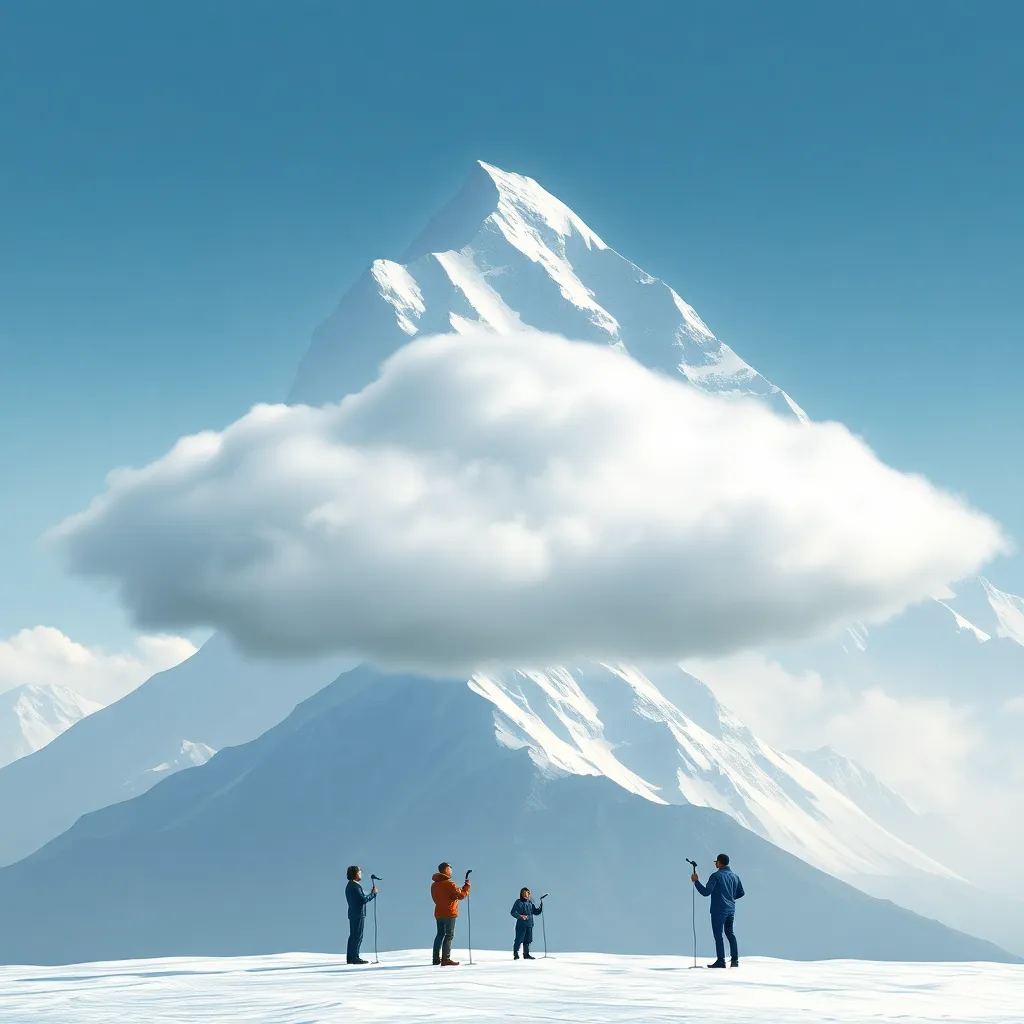
In a statement released via a carefully curated press conference cloud, Everest clarified that it does not object to being admired from afar. It objects to being treated as a “personal brand enhancement opportunity” for people who have recently discovered the phrase mindfulness and now use it aggressively.
“For centuries, I have stood here doing what I do best—standing,” the statement read. “And yet, every season, thousands arrive with the energy of someone who believes the universe owes them a transformative moment. I am not your metaphor. I am not your ‘because it’s there.’ I am there because I am there.”
Everest’s complaint is said to include:
Unauthorized emotional dumping at high altitude (“I’ve heard more whispered confessions at 8,000 meters than any therapist in Nepal.”)
Repeat violations of personal space, including tents pitched “literally on my vibe.”
Chronic littering of inspirational catchphrases, described as “toxic positivity sediment.”
A long-running campaign of unsolicited touching, mostly by gloved hands seeking “just one more step.”
The Lawsuit: “Peak Privacy Act” and “Summit Harassment”
According to legal filings reportedly drafted on recycled trail permits, Everest is pursuing claims under what counsel is calling the Peak Privacy Act, a proposed legal framework recognizing the rights of major geographical features to “quiet enjoyment of their own altitude.”
The action also references a lesser-known international doctrine—Summit Harassment—which Everest’s team defines as “any behavior that treats a mountain as an accomplishment rather than, you know, a mountain.”
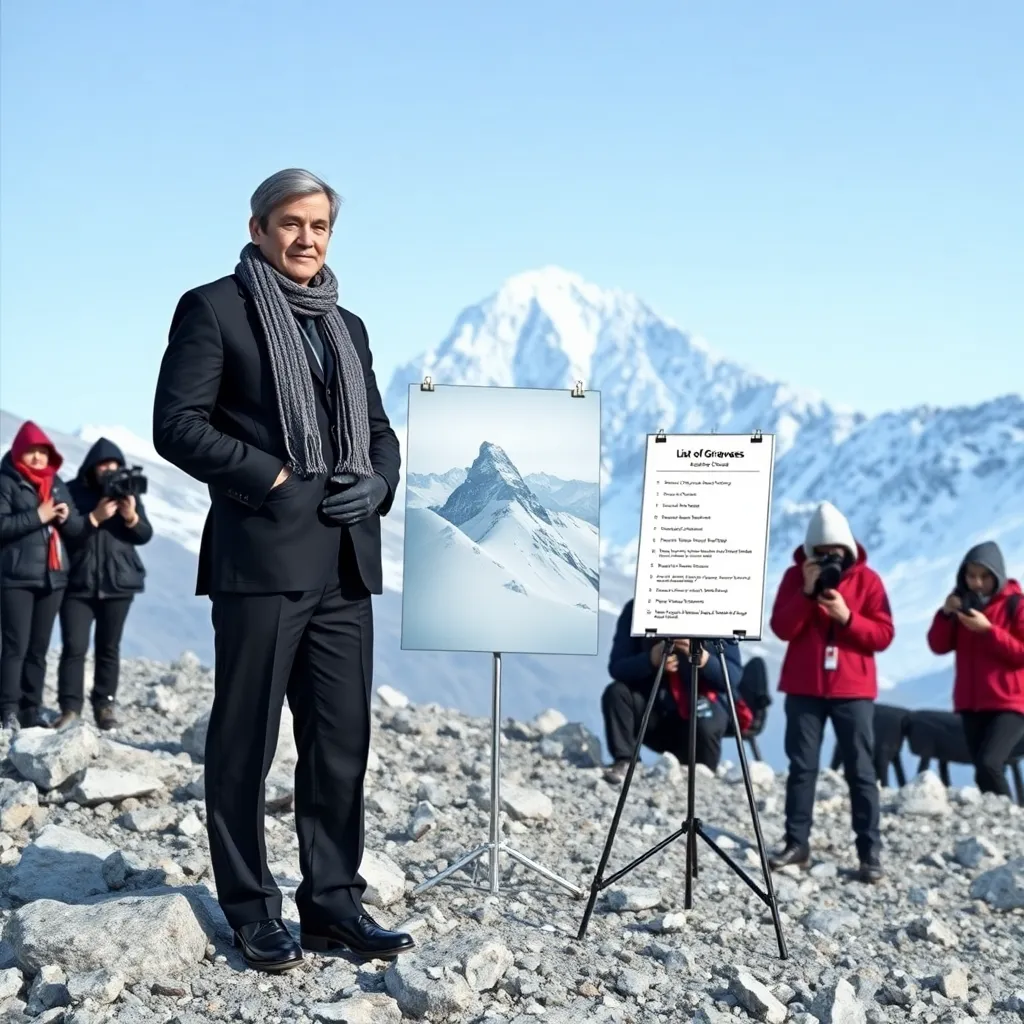
“We are seeking damages,” Counsel confirmed, “primarily in the form of fewer people.”
If successful, the suit may set a landmark precedent allowing other natural wonders to defend themselves from human attention. Sources say Machu Picchu is “watching closely,” the Grand Canyon has “been in therapy for years,” and Uluru has already retained counsel “just in case anyone gets inspired.”
Evidence Submitted Includes 14,000 Summit Selfies and One Very Loud Drone
As part of discovery, Everest’s attorneys have submitted what they describe as “a crushing volume of evidence,” including:
A hard drive containing 14,000 summit selfies, all framed identically, each accompanied by the same caption: “Humbled.”
Audio recordings of climbers shouting “WE DID IT!” directly into the wind, as though the wind had been taking notes.
A troubling compilation of drone footage titled “EVEREST 4K: THE MOUNTAIN THAT CHANGED MY LIFE (NOT CLICKBAIT)” which, according to the filing, “shows reckless disregard for Everest’s emotional perimeter.”
Multiple screenshots of social media posts describing Everest as “a bucket list item,” a phrase the mountain’s team calls “dehumanizing,” before adding, “de-mountainizing.”
One particularly damning exhibit includes a transcript of a climber telling Everest, “Thank you for teaching me I can do hard things,” to which Everest’s statement responds, “I did not teach you. I existed near you.”
“We’re Not Anti-Climber. We’re Pro-Boundary,” Says Everest
In an effort to avoid being painted as hostile to tourism, Everest clarified that it is not seeking to ban visitors entirely—only to establish a more respectful, consensual dynamic.
Everest’s proposal includes a new permit tier system:
The Respectful Glance Permit: Allows looking at Everest thoughtfully from a safe distance while acknowledging it owes you nothing.
The Quiet Contemplation Pass: Includes the right to sit in silence, drink tea, and not announce you’re “healing.”
The Climb, But Make It Normal License: Climbers must agree not to use the words “journey,” “grind,” or “limitless” for the duration of the expedition.
The Full Summit Access (Therapist-Verified): Requires proof of emotional self-sufficiency and a signed affidavit stating, “I will not make this about my ex.”
“We’re simply asking for a future where fewer people arrive expecting Everest to fix them,” said Counsel. “Mountains are not customer service.”
Sherpa Community Reacts: “Honestly, About Time”
Local guides responded with cautious support, noting that Everest’s complaint reflects years of frustrations expressed far more diplomatically by the people who actually make these climbs possible.
“We love the mountain,” said one guide. “We respect it. But lately, the vibe is like a crowded elevator where everyone is announcing their personal breakthrough.”
Another added, “Some clients come here to find themselves. I keep wanting to tell them: maybe try checking the hotel lobby first.”
Influencers Furious: “But My Content Calendar?”
The strongest backlash has come from adventure influencers, many of whom have described Everest’s proposed restrictions as “anti-dream” and “problematic” and “a direct attack on my brand partnership with thermal socks.”
“This is literally my identity,” said one content creator while filming a reaction video titled EVEREST CANCELLED ME?? “If Everest gets ‘me time,’ what am I supposed to do—enjoy nature privately? With no audience?”
Another influencer, speaking through an oxygen mask and a ring light, expressed disappointment that the mountain “won’t collaborate.”
“I tagged it in my post,” they said. “It didn’t even reshare.”
Spiritual Seekers Negotiating a Compromise: “What If We Whisper Less?”
A coalition of spiritual retreat leaders has requested mediation, suggesting a “mutual healing circle” in which Everest agrees to “hold space” for climbers, while climbers agree to “stop making everything a cinematic turning point.”
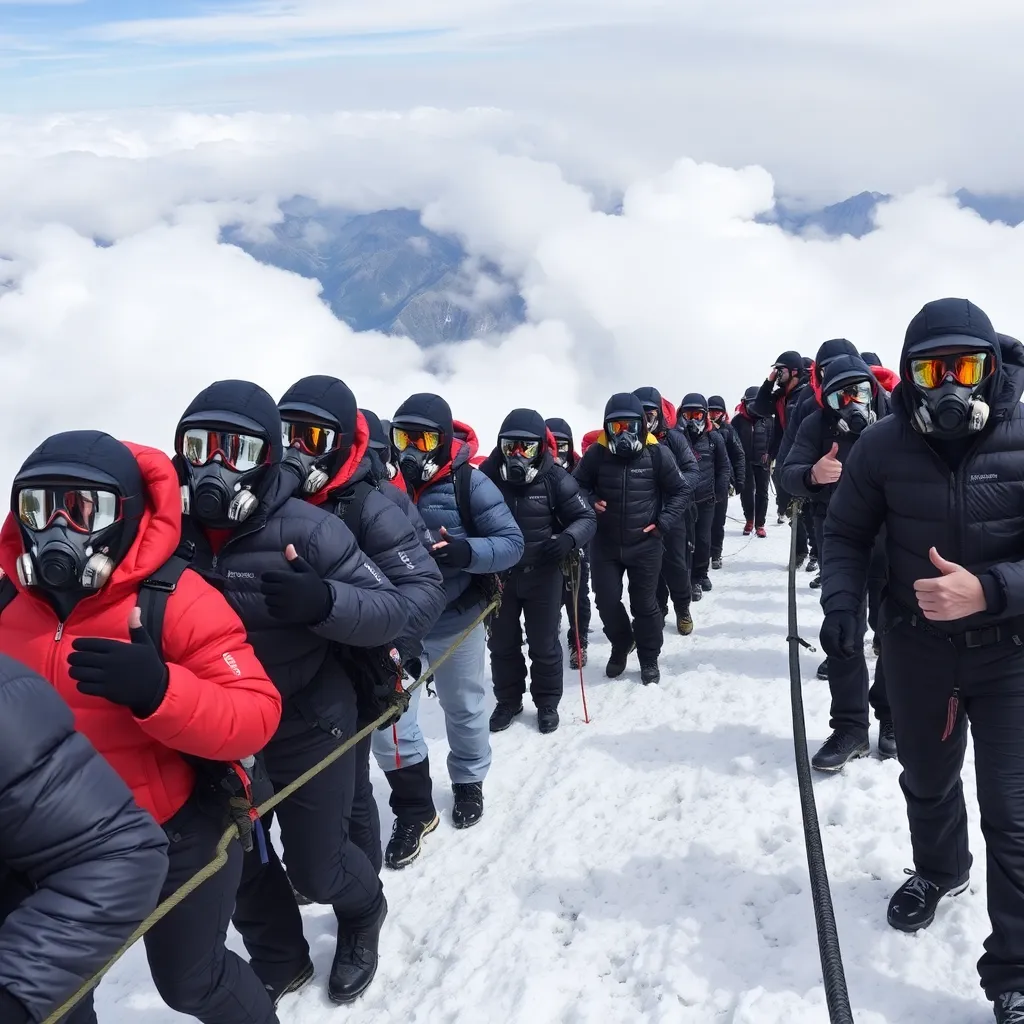
Everest’s team reportedly countered with a simpler offer: “What if you just… don’t?”
Proposed Remedy: A Legally Enforced Quiet Season
At the heart of Everest’s legal strategy is a proposed Quiet Season, a period during which the mountain will be off-limits for climbing, filming, branding, or “generally projecting your life narrative onto a topographical feature.”
During Quiet Season, Everest will allegedly:
Listen to the wind without being interrupted by motivational speeches
Allow snow to fall without being immediately described as “magical”
Experience erosion in private, like everyone else
The mountain has also requested the right to remove unauthorized signage, including flags that say “NEVER GIVE UP,” which Everest considers “emotionally aggressive.”
The Mountain’s Closing Argument: “I Have Carried Enough”
In the final paragraph of its statement, Everest offered a sentiment that observers described as both poignant and “surprisingly relatable for a mountain.”
“I have carried weather. I have carried history. I have carried the consequences of human ambition,” it read. “But I am no longer willing to carry your need to prove something. I am tall, not responsible.”
At press time, Everest’s legal team confirmed it had also filed for a temporary restraining order against one man from Ohio who has been “training for Everest” for fourteen years and “keeps sending letters addressed to ‘Dear Peak.’”
When asked what justice would look like to the world’s most famous mountain, Counsel paused.
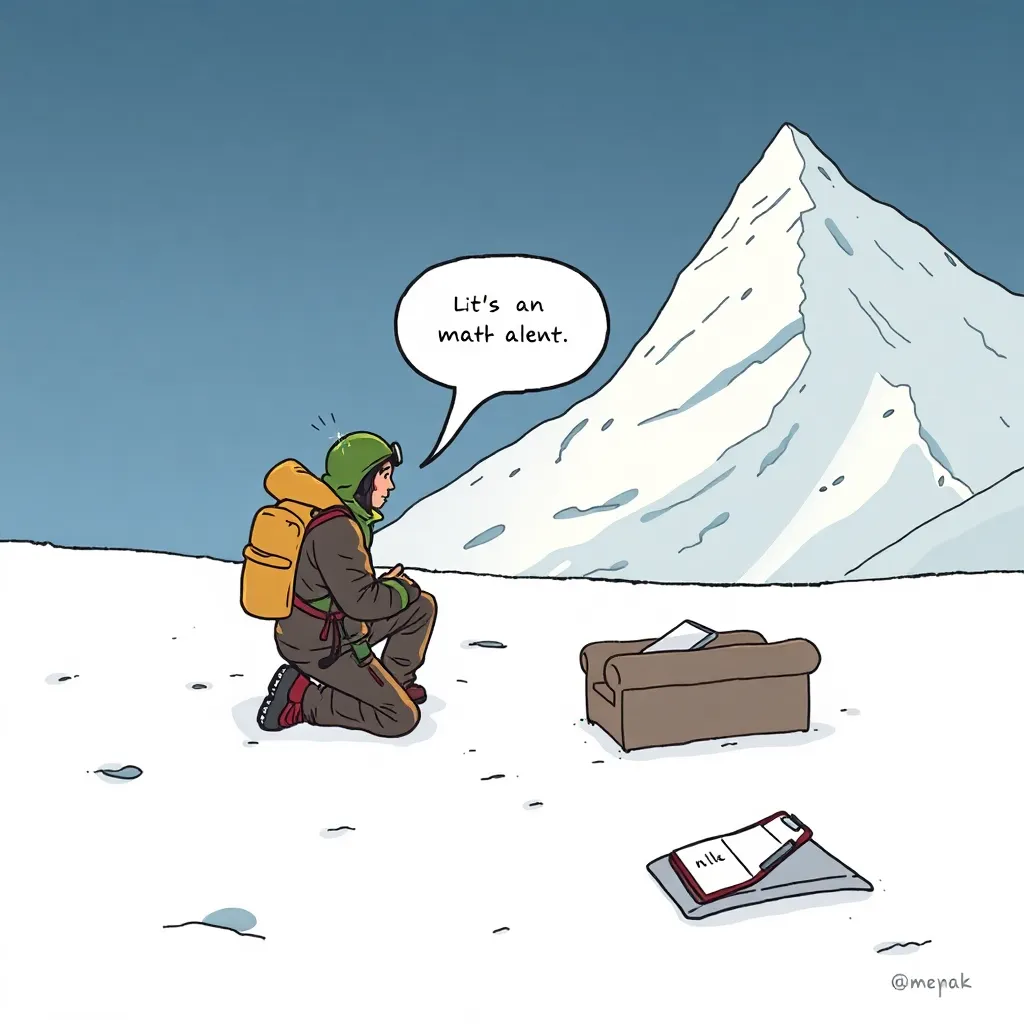
“Silence,” they said. “Just… absolute, magnificent silence. And maybe one season where nobody calls it a ‘conquest.’”
Everest, for its part, declined further comment—reportedly taking a long, restorative breath of thin air and turning its notifications off.