Nation Celebrates End of Aging, Immediately Panics as Ears Continue Their Ruthless Expansion
In a week of tremendous medical triumph, scientists announced they had finally cured aging, allowing citizens to remain forever 34, hydrating correctly, and capable of standing up from sofas without making the ancestral “oof” sound. Markets soared. Gym memberships were purchased with visionary zeal. Thousands of people texted former classmates, “Guess who’s timeless now,” before deleting the message and sending a more casual “hey.”
Then the ears kept growing.
Not the whole body, authorities clarified in a hastily assembled press conference held beneath a gradually darkening canopy of cartilage. Just the ears. Humanity had conquered wrinkles, frailty, and the mysterious shoulder pain caused by sleeping “slightly to the left.” Yet while every organ now glides through the centuries with the sleek confidence of a showroom appliance, the ears remain committed to an older agenda: expansion.

The Ministry of Health, Longevity, and Personal Presentation insisted this was not a failure but “a localized abundance.” Spokesperson Elaine Voss, speaking from behind what appeared to be a pair of upholstered parentheses, described the outcome as “an incredible success with minor architectural side effects.”
“We have eliminated senescence,” she said. “Cells are renewed, joints remain supple, minds stay sharp, and skin continues to look expensive. If, over a span of several hundred years, citizens become slightly more hearable from the side, that is no reason to undermine confidence.”
The public remains divided. Some have embraced the condition as the next step in human magnificence, noting that larger ears lend an undeniable air of authority, like wise forest animals or judges in especially old paintings. Others worry about practical issues already emerging in daily life. Bicycle helmets have become ceremonial. Glasses manufacturers have posted record profits and several apologies. Windy weather has acquired legal standing.
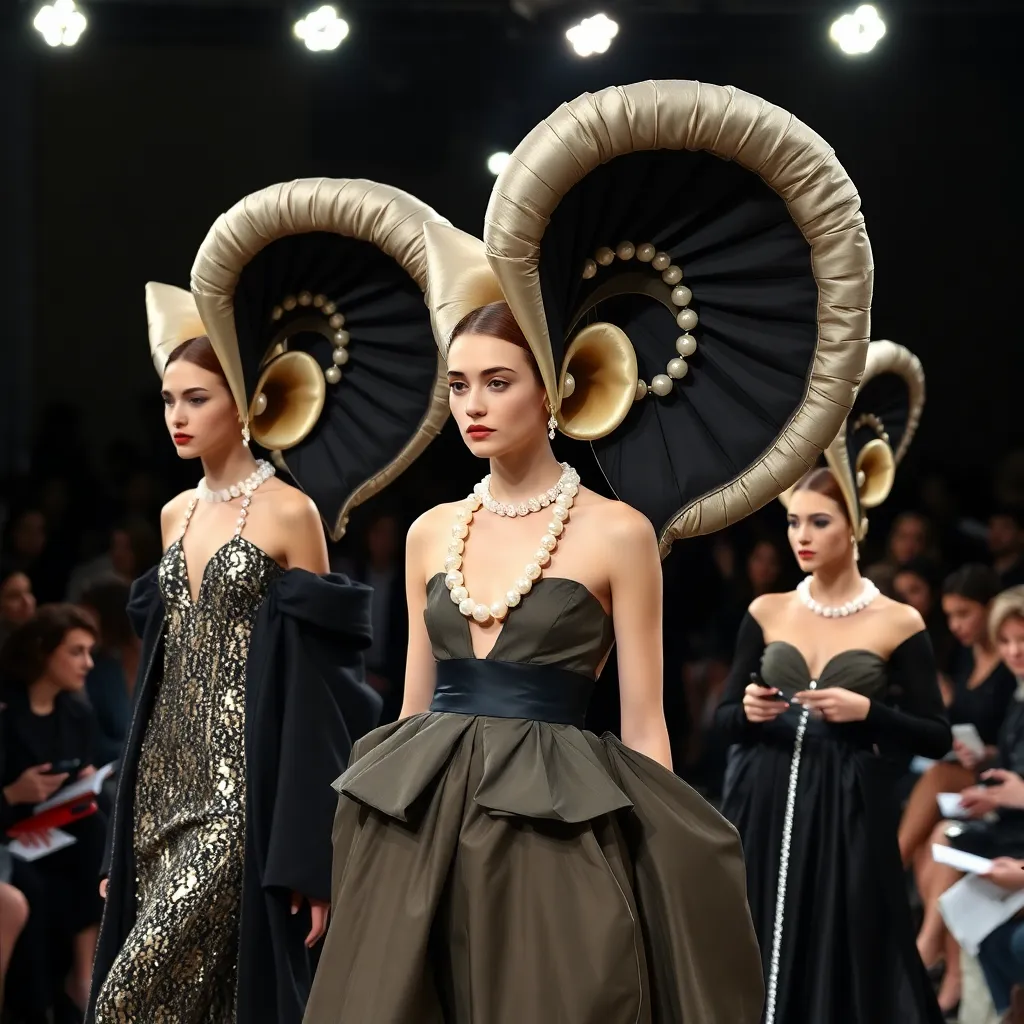
Across the country, fashion houses are racing to adapt. Paris unveiled the “Auricular Fall Collection,” featuring cloaks with lateral alcoves, pearl-weighted lobes, and elegant ear belts for formal evenings. In Milan, models strode down runways with twin satin harnesses designed to gather the ears into tasteful loops “for brunch, diplomacy, and light fencing.” New York, as ever, responded by declaring all asymmetry intentional.
“There was denial at first,” said trend analyst Marlo Greene, adjusting a silk ear-sling with the confidence of a man who has invoices due. “Then came bargaining. Then came couture. Now we are seeing true innovation. By next spring, people won’t ask how large your ears are. They’ll ask who shaped them.”
Children, who have historically shown little respect for humanity’s dignified transitions, adapted almost instantly. Schools report a surge in ear-based games, including hide-and-seek variants in which no one hides successfully and a playground challenge called “sail mode,” already banned in three coastal regions. Teachers say students remain academically focused, though several classrooms now require wider aisles and anti-flutter seating plans.
The toy industry has moved with the speed and spiritual emptiness for which it is famous. Among the season’s bestsellers are snap-on ear spoilers, glow-in-the-dark lobe charms, and plush storage clips allowing youngsters to “park” their ears while reading. One startup has raised millions developing noise-canceling earmuffs the size of horse collars. Investors described the product as “inevitable” and “a lifestyle platform.”
Religious leaders have likewise entered a period of interpretation. Some describe the forever-growing ear as a sacred reminder to listen. Others say it is a warning against vanity, greed, and standing near helicopter pads. A popular televangelist declared that “the righteous shall inherit the Earth, and the cautious shall inherit indoor seating away from drafty windows.”
Perhaps the greatest disruption has struck the world of architecture. Doorframes, once considered solved, have returned to active research. Apartment listings now boast “auricularly generous corridors,” “dual-lobe foyers,” and “open-plan listening spaces.” A luxury developer in Dubai unveiled the world’s first “ear-forward penthouse,” featuring curved hallways, whisper-balconies, and a walk-in acoustic dressing room lined with imported velvet.
Furniture makers are also rethinking the fundamentals. High-backed armchairs have been replaced by crescent seats. Pillows now come with side trenches. Airplane designers, in what experts describe as a moment of rare humility, admitted that modern cabins “may need a revisit.”

In the workplace, the new era has produced awkward but vibrant forms of etiquette. Meetings are longer, partly because everyone looks so distinguished from behind that introductions take additional time. Open-plan offices have become acoustically complicated, with one intern in Bristol reportedly hearing a confidential merger discussion from another floor simply by turning thoughtfully toward the stairwell.
Human resources departments have rushed to issue guidance. Employees are reminded not to comment on colleagues’ “span,” “wing,” or “drift radius,” and are encouraged to ask before tucking anyone’s ear behind anything. Casual touching, once frowned upon, is now described as “catastrophically intimate.” One multinational firm now includes an annual “Lobe Respect Seminar” with role-play modules and laminated diagrams.
Dating has become, according to most participants, “different.” On one hand, eternal youth has vastly improved confidence, stamina, and the ability to pretend one enjoys hiking. On the other, candlelit dinners are harder when two people’s ears arrive several minutes before the rest of them. Romantic compatibility apps have added new filters, including “prefers folded,” “wind-conscious,” and “seeking someone with similar shelf clearance.”
Still, many couples say the condition has deepened intimacy. “We can hear each other better than ever,” said Naomi, 212, who met her partner at an anti-gust singles mixer. “Literally. We once resolved an argument from two neighborhoods away.”
The military, unsurprisingly, has issued a statement calling the development “operationally significant.” Camouflage experts are reportedly struggling with the challenge of concealing what one general described as “two highly motivated flags.” At the same time, intelligence agencies are optimistic that field listening capacity has entered a golden age. A leaked memo praised “expanded passive collection surfaces,” while warning agents not to become tangled in shrubbery during covert maneuvers.
Scientists continue to study the phenomenon, though some privately admit the answer may be embarrassingly simple. “Biology doesn’t read press releases,” said one senior researcher, speaking anonymously while seated in a reinforced booth. “We halted aging. We did not, strictly speaking, persuade every tissue in the body to stop expressing its hobbies.”
For now, governments are urging calm and issuing practical advice. Citizens are told to secure loose cartilage in high winds, maintain proper moisturizing routines, and avoid dramatic turns near antique lamps. Insurance providers have introduced comprehensive ear coverage, though claims involving “showing off on a balcony” may be denied.
Meanwhile, the oldest people in the world — who are now biologically young, emotionally seasoned, and visible from orbit in profile — have become unexpected icons. Photographed striding through city squares with serene faces and magnificent, history-rich ears arranged in impeccable coils, they project an unmistakable message to the rest of humanity: immortality is still immortality, even if it occasionally brushes the sides of the bus.

As celebrations continue, experts say society is entering a bold new chapter. Death has been postponed indefinitely. Youth has been stabilized. Vanity has been stretched, gently but firmly, to either side of the head. And somewhere in a laboratory full of champagne corks, velvet prototypes, and the low rustle of unmanageable success, a scientist stares into the middle distance and whispers the phrase now defining an age:
“We may have to make bigger hats.”