Filed Report
Nation Gripped by “It”: Experts Confirm It Is Definitely Happening, Somewhere, Possibly to Someone, in a Way That Suggests a Broader Trend in the General Direction of Yesterday
In a development being widely described as “not unexpected, but also unprecedented,” the country awoke this week to discover that *it* has progressed from “a rumour with legs” into “a situation with shoes,” prompting immediate reaction from officials, analysts, concerned neighbours, and one man who insists he “called it” but cannot produce the notebook in which he wrote it down because the notebook is, for reasons he cannot fully articulate, “currently in a drawer that has become symbolic.”
The event—or process, or “sequence of adjacent moments,” depending on which briefing you attended—began at approximately 07:14, or possibly 06:52, or possibly last Thursday if you measure time the way certain committees do, i.e., “from when we first felt the atmosphere change.”
By lunchtime, it had become the leading topic of conversation in offices, kitchens, bus stops, and those little gaps between two people where nobody knows whether to say “sorry” or “excuse me.” By evening, it had drawn the attention of international observers, several domestic commentators, and a small but vocal group calling for the immediate abolition of whichever thing it is most closely resembling.
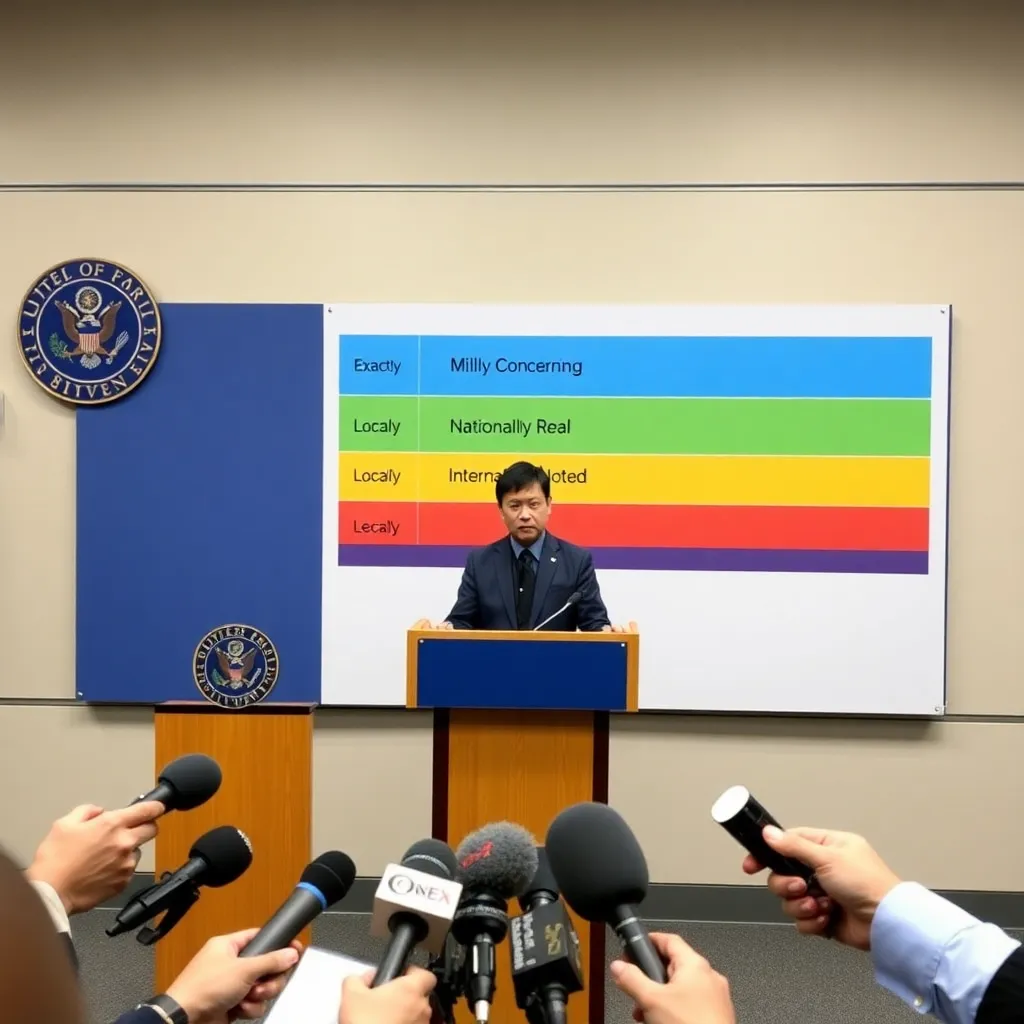
“It is with a heavy sense of lightness that we must acknowledge the unfolding of events,” said a spokesperson from the Department for Outcomes and Related Consequences, standing in front of a lectern that appeared to have been borrowed from a different announcement entirely. “We are monitoring the situation with all due seriousness, and also with a colour-coded chart.”
The chart, unveiled with the gravity of a weather forecast, featured five levels: Mildly Concerning, Locally Relevant, Nationally Real, Internationally Noted, and Please Don’t Ask Us What That Means. When pressed for clarification, the spokesperson pointed to the phrase “dynamic context” and ended the briefing by reiterating that “this is not the time for speculation,” before immediately speculating that the public should “prepare for adjustments.”
The Thing That Everyone Recognises, Except Nobody Can Say It Out Loud Without Sounding Like They Mean Something Else
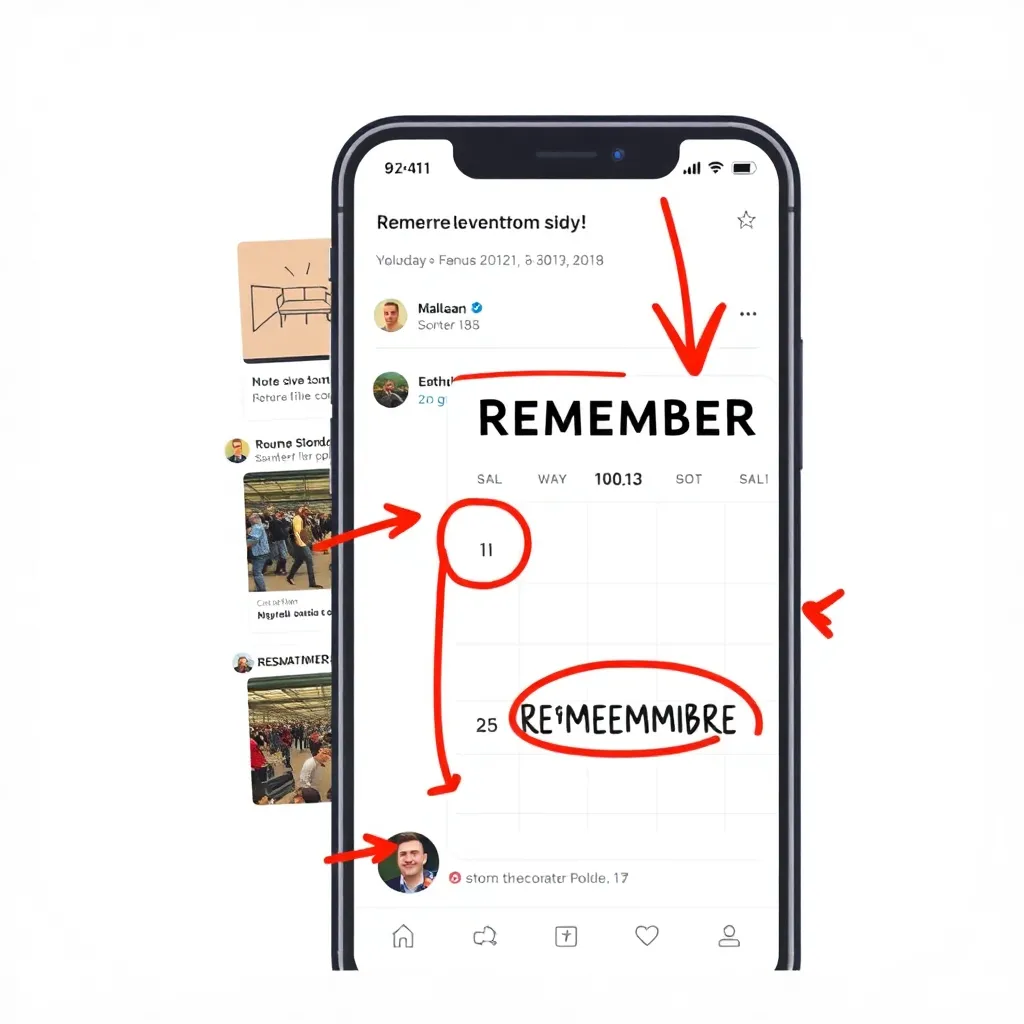
Within hours, social media was awash with eyewitness accounts, diagrams, and a rapidly spreading belief that it had “always been there, if you think about it.” Users posted photos of empty spaces, crowded spaces, mildly angled objects, and at least one screenshot of a calendar with three dates circled and the word “REMEMBER” written in capital letters, as though history itself had placed a finger to its lips.
One viral thread claimed that it first emerged after a “minor administrative ripple,” while another insisted it was “inevitable once the previous thing happened, and the thing before that, and frankly the whole chain of things going back to that one time we did that thing we all agreed not to bring up again.”
“I don’t want to be dramatic,” said local resident and amateur analyst Pauline Trent, “but my aunt has been saying for months that something like this would occur as soon as you allow those people to do that with the other thing. And now look. Here we are. Again.”
Asked to define those people and that and the other thing, Trent became visibly uncomfortable and replied, “You know,” with the intensity of someone trying to transmit meaning via facial expression alone.
Government Announces Package of Measures Designed to Address “The Aspect of It That Is Most Like the Part We Can Legally Talk About”
Parliament convened an emergency session to debate the introduction of a “Targeted Response Framework,” which would provide “support for affected areas,” “guidance for stakeholders,” and “a robust plan for the future of the present.”
The Chancellor promised a “significant investment” in preventing the recurrence of whatever is now being referred to as “the current configuration,” though opposition leaders argued the money would be better spent on “fixing the underlying issue,” which they described as “the entire system, probably.”
In the most concrete announcement of the day, ministers introduced a new hotline for citizens who believe they may have “encountered it,” “been adjacent to it,” or “have reason to suspect they might have thought about it too hard and accidentally invited it in.”
Callers are asked to press 1 if it is “near,” 2 if it is “inside,” and 3 if it is “metaphorical but persistent.”
Experts Warn: We Are Entering the Phase Where People Begin Using “New Normal” Without Irony
Academic institutions quickly stepped in to provide clarity, producing a wave of papers with titles like A Preliminary Examination of the Present Circumstance as an Emergent Phenomenon and Why Everyone Is Saying “It” Like That Now. Unfortunately, the papers largely confirmed what the public already suspected: that we are now in the part of the story where nobody agrees on what part of the story we are in.
Professor Lyle Marn, Senior Lecturer in Applied Ambiguity at the University of East-Southshire-upon-Something, explained that confusion is “a perfectly rational response to a situation defined by its refusal to be defined.”
“People think they want certainty,” Marn said, gesturing at a whiteboard that contained a single circle labelled THIS and an arrow pointing to another circle labelled ALSO THIS. “But what they actually want is confirmation that their particular version of it is the official version of it. That’s why you’re seeing so much conflict between those who believe it is fundamentally about the thing, versus those who understand it as a broader symptom of the other thing, which—if you trace it back—always comes down to a childhood incident involving a badly organised cupboard.”
Marn’s comments were widely praised by commentators who described them as “important,” “timely,” and “completely inscrutable.”
Businesses Pivot, Rebrand, and Begin Offering “It-Compatible Solutions” in Convenient Sizes
The private sector responded with its usual mix of opportunism and baffled sincerity. Several major firms announced they had been “preparing for this moment” despite previously denying that it was “a significant factor in the current operating environment.”
One supermarket chain introduced a new aisle called “Just In Case,” featuring items that might help in the event of it: tape, biscuits, batteries, a book titled How to Remain Calm When You Don’t Know What You’re Reacting To, and an alarming quantity of small waterproof bags.
Meanwhile, a tech start-up unveiled an app that promises to “track it in real time,” using a combination of crowdsourced input, predictive modelling, and what the founders called “vibes.”
“Our algorithm detects patterns humans can’t,” said CEO Ash Patel. “For example, it can tell the difference between it happening, it not happening, and it happening in a way that looks like something else. It’s revolutionary.”
When asked how the app displays these distinctions, Patel said it uses a “simple, intuitive interface” featuring three icons: a dot, a slightly larger dot, and a dot with a little hat.
Communities Rally, Argue, Split Into Factions, and Form a Committee to Decide Whether Committees Are the Problem
Across the country, local councils held meetings to decide how to respond to it in their communities. In many cases, these meetings devolved into debates about whose fault it is, who benefits from it, and whether it can be solved by banning something that has always felt slightly suspicious.
In one town hall, residents demanded immediate action to stop it from “spreading into the nice part.” In another, protesters marched under banners reading “STOP IT,” “LET IT HAPPEN,” and “IT IS A DISTRACTION FROM THE REAL IT.”
“We’re not against it,” insisted one organiser. “We’re just against the way it’s being done by them, with that, to us, without enough consultation.”
A counter-protester held a placard reading: “CONSULTATION IS HOW IT WINS.”
Police described the demonstration as “mostly peaceful,” except for a brief incident in which two people attempted to loudly define it at each other until both became exhausted and sat down on the curb, agreeing to disagree on whether agreeing to disagree is “part of the problem.”

An Unrelated Celebrity Becomes Involved, Rendering the Entire Situation About 40% More Shouty
As is tradition, a celebrity with no relevant expertise weighed in via a late-night post that began, “I’ve been quiet about this for too long,” and ended with a promotional link to an upcoming project.
The celebrity’s statement—featuring a photo of their face looking solemn near a window—attracted immediate support from those who said it was “brave,” and immediate condemnation from those who said it was “dangerous,” though neither group could specify which part of the statement had caused the reaction.
A spokesperson later clarified that the celebrity’s views were “personal,” and not intended to suggest that the product being advertised “is in any way a solution to it,” though it “may help some people feel less like it is happening directly to them personally at all times.”
The International Community Responds by Expressing Concern, Offering Assistance, and Quietly Checking Whether It Might Be Contagious in a Metaphorical Sense
Foreign leaders issued coordinated messages of solidarity, each carefully worded to imply sympathy without accepting responsibility for the part of it that can be traced back to earlier decisions involving them, someone else, and a handshake that seemed like a good idea at the time.
“We stand with you in this challenging moment,” read one statement. “We also reserve the right to say we warned you, depending on how this develops and which version of it becomes historically popular.”
In a show of support, several countries pledged resources including advisers, observers, and a team of specialists trained in “complex scenario management,” a phrase which here means “standing near it and looking thoughtful.”
One diplomat, speaking anonymously, admitted: “We don’t fully understand what’s going on, but we’ve seen something similar before in a different context, involving fewer chairs and more paperwork.”
Scientists Identify a Pattern, But Immediately Lose It Under a Pile of Exceptions
Scientists attempted to bring empirical clarity, collecting data points, modelling outcomes, and testing hypotheses such as:
- It occurs more frequently when people are already tired.
- It increases in intensity when meetings run long.
- It appears to thrive in environments featuring fluorescent lighting and vague accountability.
- It decreases when someone says, “Let’s take a step back,” though only briefly.
Preliminary findings were promising until researchers discovered that every rule had at least seventeen exceptions and one major contradiction, which they attributed to “human variables” or “the fact that it is, in a fundamental sense, the opposite of consistent.”
A scientific consortium released a statement confirming that while it is “real in the sense of measurable impact,” it is also “not currently measurable in any way that helps.”
Public Health Officials Issue Guidance That Sounds Like Common Sense Until You Try to Apply It
Officials advised the public to remain alert but calm, to follow trusted sources, and to avoid “unnecessary exposure,” without clarifying what exposure looks like or how to tell if it’s necessary.

“We recommend maintaining appropriate distance from it,” said one advisor. “If you must engage with it, do so briefly, with proper precautions, and avoid touching your face, your assumptions, or the core of the issue.”
Citizens were urged to develop “personal resilience plans,” including:
- identifying a quiet place to process the latest update,
- keeping a small supply of essentials (tea, patience, a sense of perspective),
- and practising saying, “That’s interesting,” when someone tells you their theory.
A pamphlet distributed in libraries advised: “If symptoms persist, consult a professional, a friend, or a mirror. If the mirror begins offering opinions, discontinue use.”
Where Does It Go From Here? Nobody Knows, But Everyone Has a PowerPoint
As the week progressed, the situation continued to evolve into what several outlets described as “a fast-moving narrative.” The Prime Minister promised further announcements “in due course,” while simultaneously hinting that the public should “prepare for a period of ongoing adjustments to the way we understand the current state of affairs.”
Opposition figures demanded transparency, then criticised the transparency when it arrived in the form of a 94-page document titled Overview of Contextual Parameters Relating to the Present Circumstance and Its Possible Adjacent Implications.
Meanwhile, ordinary citizens attempted to carry on, performing daily tasks while it hovered in the background like a thought you can’t finish.
“I went to the shop,” said one commuter, staring into the middle distance. “I bought milk. The milk felt… relevant. But then I got home and realised I’d forgotten why I went in the first place. That’s when I knew it had reached this stage.”
The Wibble’s Editorial Position: It’s Probably About Something, But Also About Everything, and Definitely About You Reading This Right Now
In times like these, it is important to remember what history has taught us, which is that history teaches contradictory lessons depending on who is summarising it for a documentary.
Still, if there is one truth that can be extracted from the haze of statements, graphs, rumours, counter-rumours, and solemn photos of leaders looking at tables, it is this:
It is here.
Whether it was invited, engineered, stumbled into, or simply left unattended in a cupboard until it grew large enough to require its own hotline, remains contested. But the impacts are undeniable: conversations have changed, plans have shifted, and people are now saying, “We need to have a conversation about it,” as though we have not been having exactly that conversation in increasingly circular forms since the moment it began.
Authorities insist the public should not panic. The public insists it is not panicking, it is merely “reacting proportionately.” Commentators insist this is the most significant development since the last significant development, and that the next significant development will make this one look like “a warm-up significant development.”
At time of publication, it was expected to continue, though forecasts vary depending on where you stand, what you believe, and whether you have recently looked directly at the issue without blinking.
A final government statement, issued late last night, attempted to reassure the nation with a single sentence that managed to be both comforting and deeply unsettling:
“While we cannot say exactly what it is, we can confirm that measures are in place to ensure it remains within acceptable parameters of what we have collectively agreed to describe as manageable, for now, until further notice, subject to review.”
Public Response
Comments
No comments yet.