Nation Gripped by Mysterious Haircut Glyph as Barbers Declare “We Have Never Been More Seen”
The country awoke this morning to find its group chats, office emails, municipal newsletters, and one extremely tense church bulletin overtaken by a single symbol: , repeated with the solemn confidence of a prophecy and the administrative urgency of a parking fine.
No one knows precisely where the glyph originated, though experts have already formed a firm and extremely televised consensus that it is “either a haircut, a cultural pivot, or the end of rectangular thinking.”
At commuter stations, bewildered passengers held up phones displaying long chains of the symbol while pretending not to care. By 8:15 a.m., at least three regional councils had issued statements urging calm, followed by a fourth statement clarifying that calm should not be interpreted as indifference to hair. By 9:00, the Department of Civic Neatness had convened an emergency panel under the banner “What Did It Mean To Be Trimmed, And When?”
Linguists, naturally, have made everything worse.
“Historically, societies invent symbols when ordinary language can no longer contain their feelings,” said Professor Elspeth Crumb of the Institute for Applied Semiotics, gesturing toward a screen filled entirely with . “This one appears to signify bangs, destiny, and a non-refundable appointment at 2:30.”
Her remarks were immediately challenged by rival academics, who insist the symbol instead represents “the pure idea of fringe,” prompting a televised dispute so intense that one historian took off his glasses and whispered, “We are all sideburns now.”
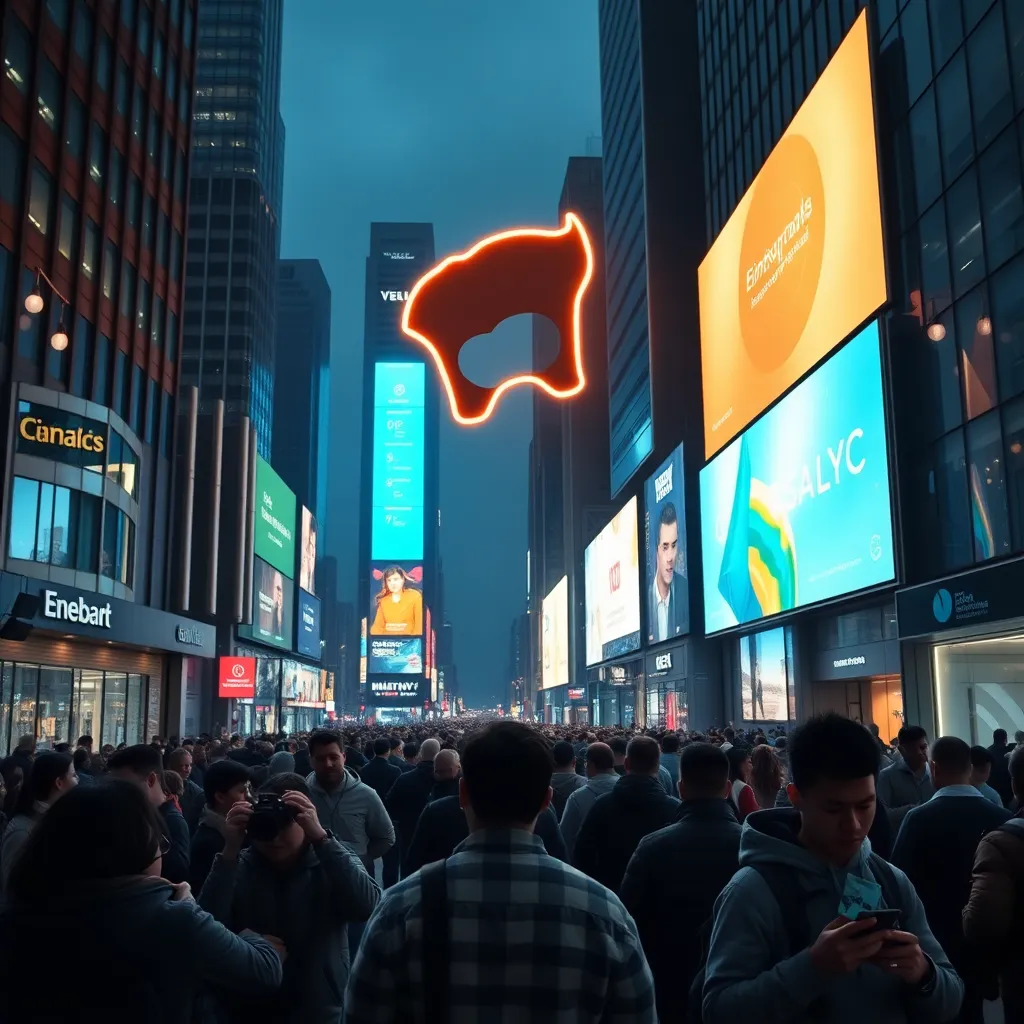
Barbershops, meanwhile, have experienced what analysts are calling a once-in-a-generation validation event.
Outside salons nationwide, queues formed before opening time as citizens demanded to know whether their current style was “still legible in the age of .” Some requested emergency fringe consultations. Others simply entered, sat down, and asked stylists to “do something that says I understand the moment without looking desperate.”
“We’ve trained for this,” said Mauro Bisk, owner of Mauro’s Precision Loft, while wielding scissors with the grave concentration of a surgeon defusing a bomb made of gossip. “For years people laughed when I said haircut discourse would return to the center of civilization. Who’s laughing now? Not the man in chair three. He asked for ‘financially literate volume’ and I’m giving it to him.”
The effects have been felt beyond personal grooming. Fashion houses released monochrome collections inspired by “structural snipping.” Economists warned that if current trends continue, the nation could see a sharp increase in discretionary spending on products described as “texturizing” by people wearing too many rings.
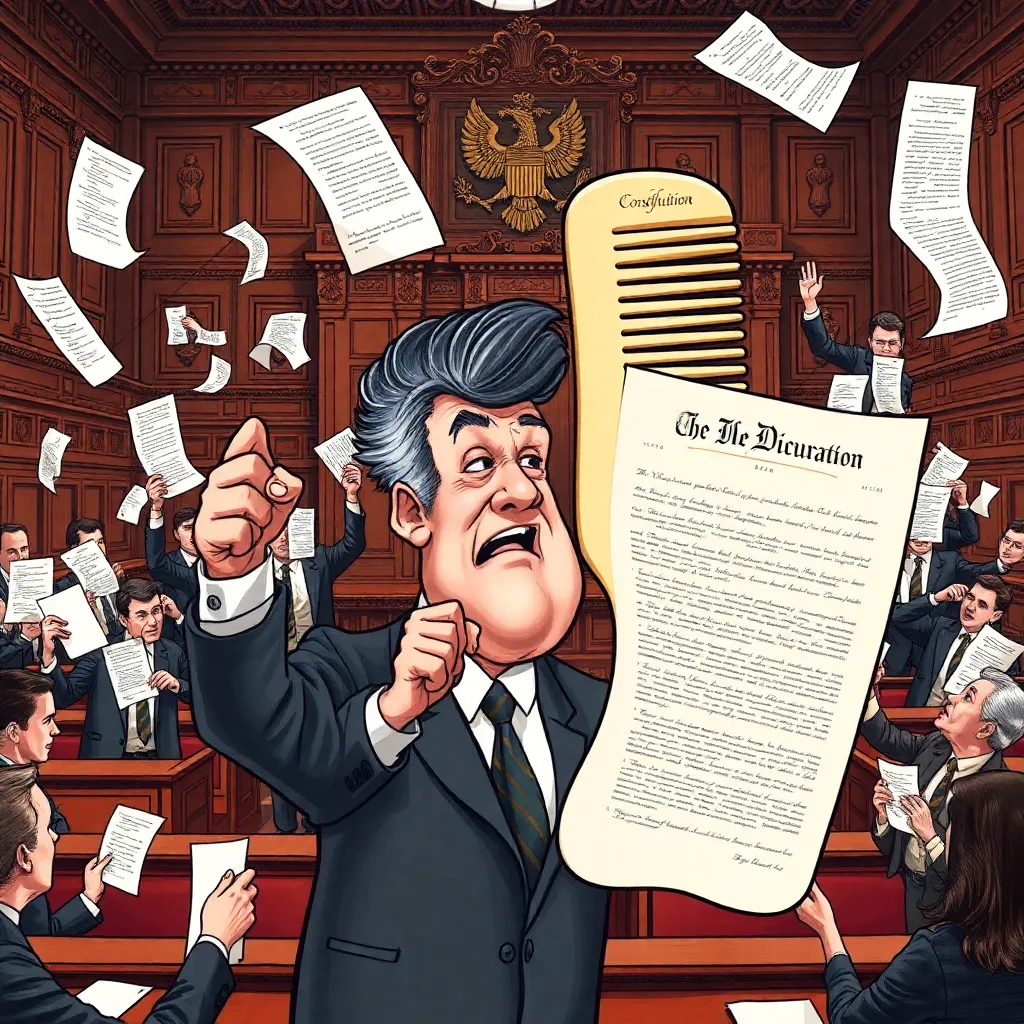
In Parliament, matters deteriorated rapidly. Members spent the better part of the afternoon accusing one another of exploiting the symbol for partisan gain. One senior minister unveiled a five-point plan to make the country “fit for a new era of follicular symbolism,” while opposition leaders countered that the government had ignored the haircut question for decades and was now “arriving with a comb after the storm.”
Markets responded nervously but not incoherently. Shares in salon chains soared. Hat manufacturers dipped, rallied, then dipped again after an unfortunate interview in which a trade spokesperson insisted hats and haircuts were “not in competition,” a statement interpreted by investors as weakness.
Religious leaders have also entered the conversation, cautiously at first, then with the unmistakable momentum of people who have realized a symbol is available.
One cleric described the phenomenon as “a reminder that all earthly vanity is temporary, except perhaps a really successful bob.” Another called for a national day of reflection, quiet grooming, and “mutual respect for whatever is happening on top of everyone’s head.”
In schools, teachers struggled to maintain order as students filled notebooks with endless chains of the glyph, claiming they were “participating in the discourse.” Several headteachers have now banned the symbol from algebra tests after one pupil answered every question with a single, determined and later argued that mathematics itself was “a kind of layering.”
Parents report similarly fraught scenes at home. “My son looked me in the eye at breakfast and said my parting was colonial,” said one exhausted father from Leeds. “I don’t even know what that means. I was just trying to butter toast.”
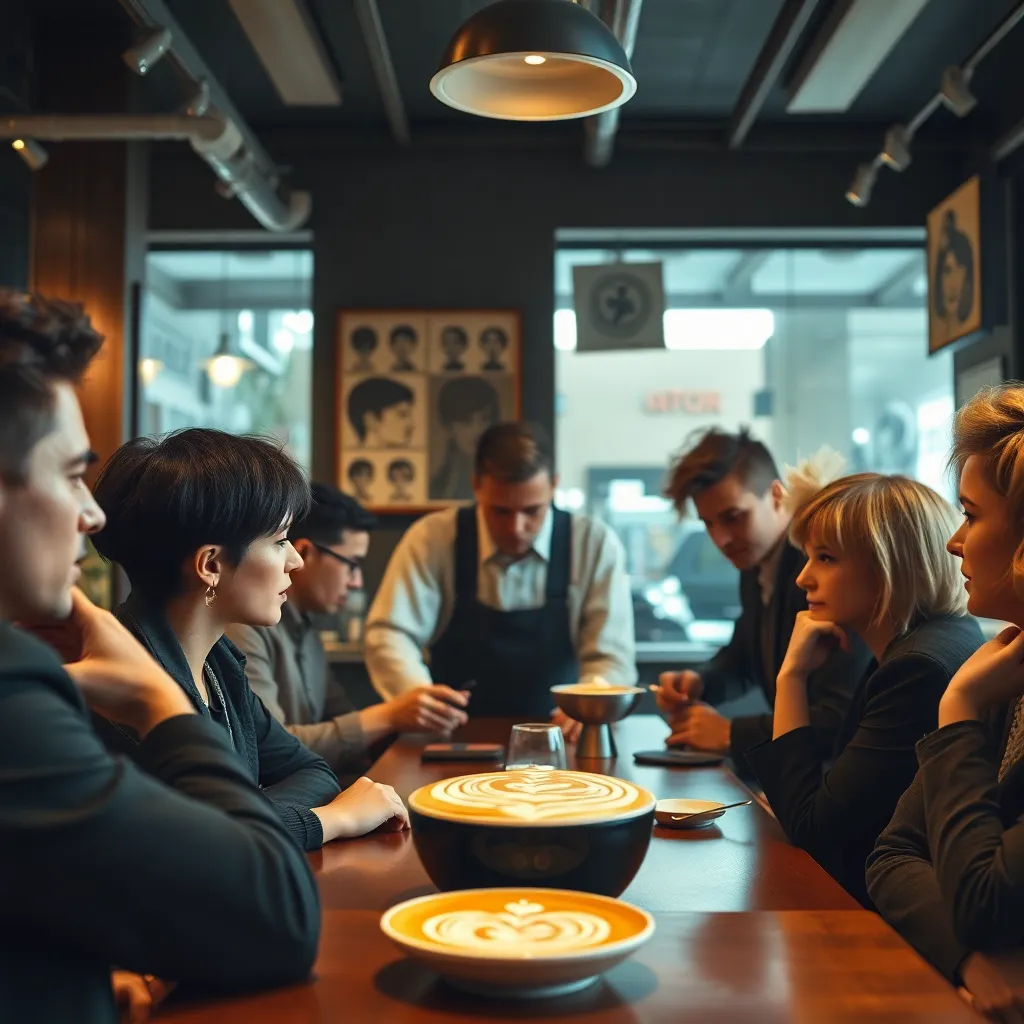
Not all citizens are alarmed. Some have embraced the moment with startling speed. Pop-up “interpretation cafés” have appeared in fashionable neighborhoods, serving drinks such as The Curtain Bang and Flat White but Symbolic. For a surcharge, patrons can sit in a velvet chair while a freelance creative director studies their hair in silence and says, “Interesting. You’re resisting.”
There has also been a surge in amateur prophecy. Across social media, self-appointed haircut interpreters are posting long, breathless analyses explaining that the repeated glyph sequence predicts everything from a celebrity reinvention to a municipal zoning change to “a brief but important return of the wolf cut among men who own impossible chairs.”
For now, authorities are urging the public not to panic, over-style, or make major fringe decisions in a state of emotional turbulence. Emergency services have confirmed they remain fully operational, despite receiving more than 600 calls asking whether the symbol “looked better on someone else.”
As evening falls, the nation remains suspended between confusion and appointment booking. The symbol continues to spread. It appears on chalkboards, bakery windows, bus stop ads, and the side of one surprisingly elegant horse. Nobody can say what tomorrow will bring, only that it may require mousse.
At press time, a final alert was issued by the National Association of Sensible Hairdressers, which asked citizens to breathe deeply, communicate clearly with their stylists, and remember the oldest rule in public life: if you suddenly feel compelled to reinvent yourself because of a symbol no one fully understands, at least wash it first.