Nation Hospitalised After Attempting To Pronounce “Pneumonoultramicroscopicsilicovolcanoconiosis” In One Breath
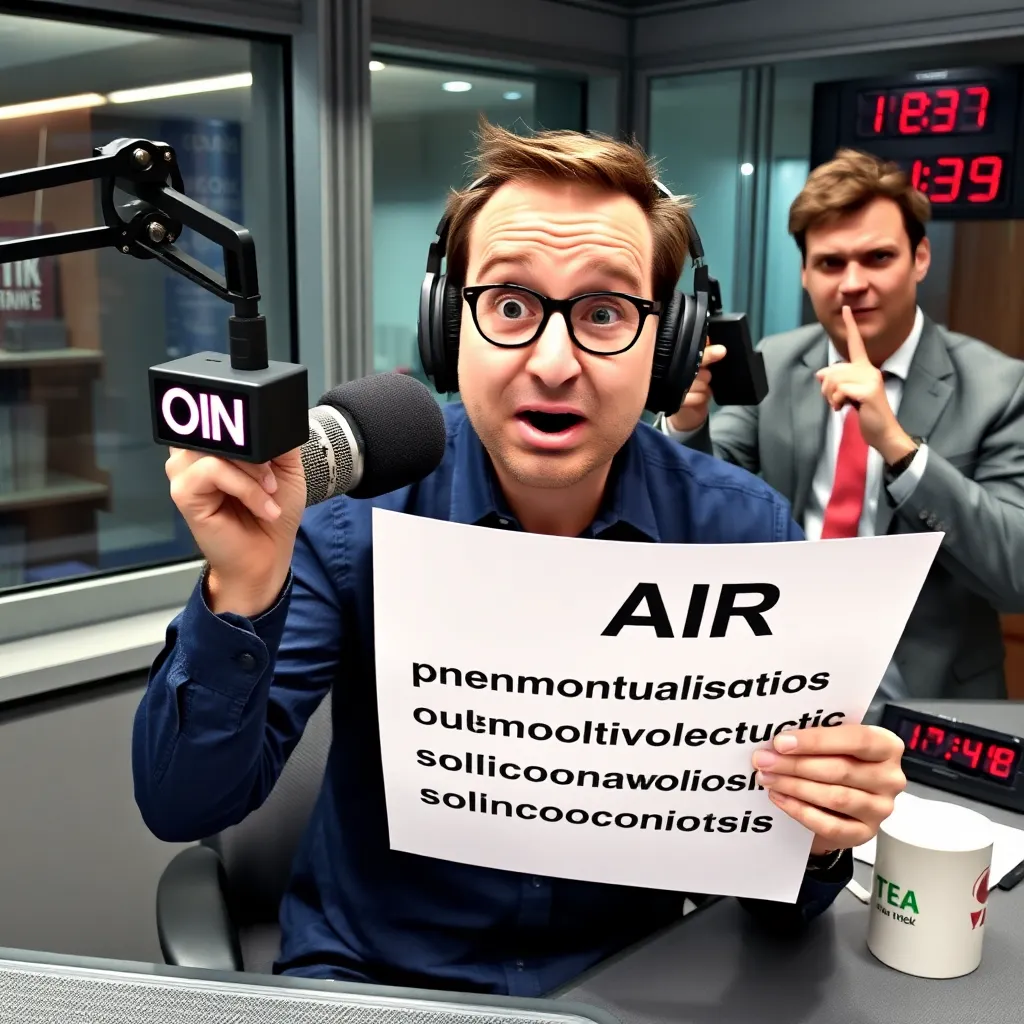
WIBBLE HEALTH DESK — A routine Tuesday descended into a wheezing national emergency this week after a well-meaning radio presenter attempted to pronounce “pneumonoultramicroscopicsilicovolcanoconiosis” live on air “for a bit of fun,” accidentally triggering what officials are calling a mass, self-inflicted respiratory event.
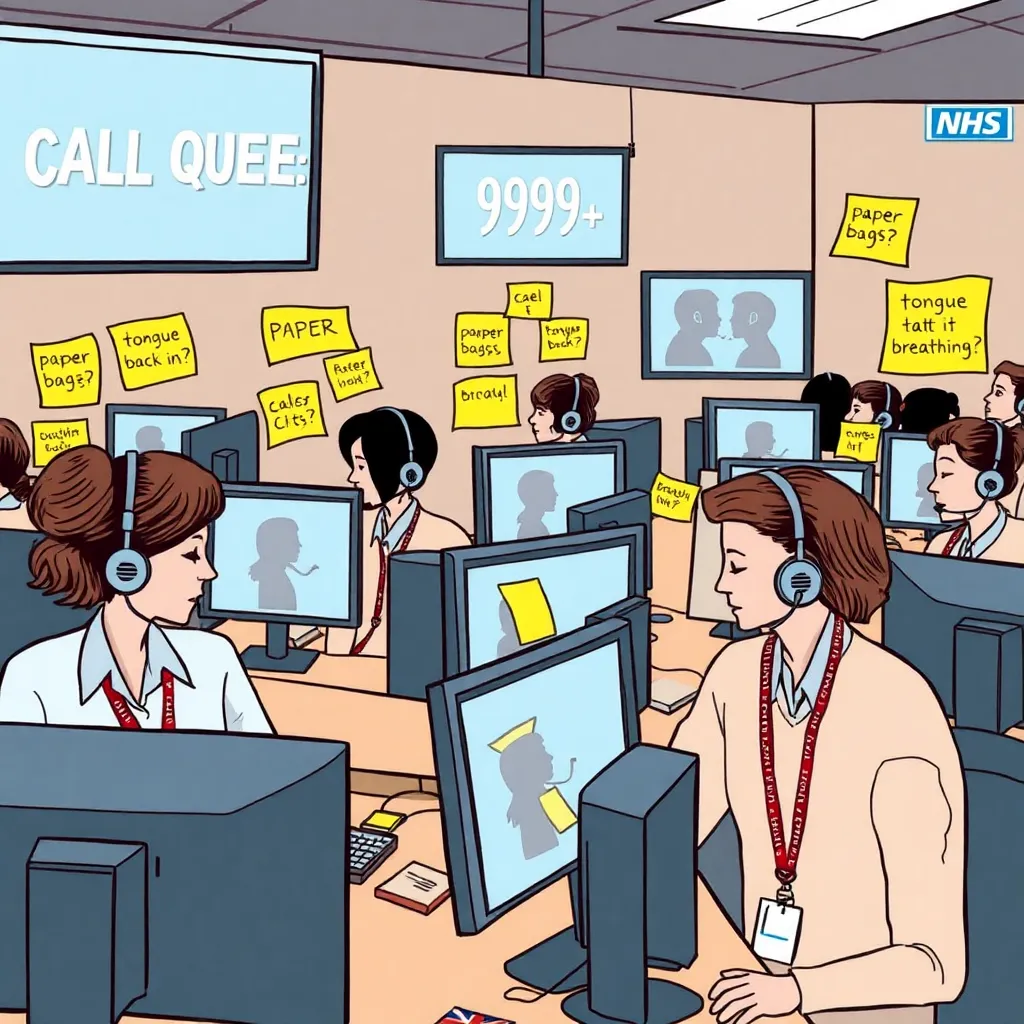
Within minutes, NHS switchboards were reportedly overwhelmed by callers describing symptoms consistent with “having tried to say a very long word while determined to look clever,” including light-headedness, involuntary sobbing, and the sudden conviction that they should have taken up pottery instead.
“I got to ‘pneumono…’ and my soul left my body,” said 34-year-old office worker Gemma H., speaking through a paper bag. “Then I woke up on the carpet being fanned by Sheila from Accounts and someone had googled ‘how to put your tongue back in.’”
Government Announces Emergency Syllable Rationing
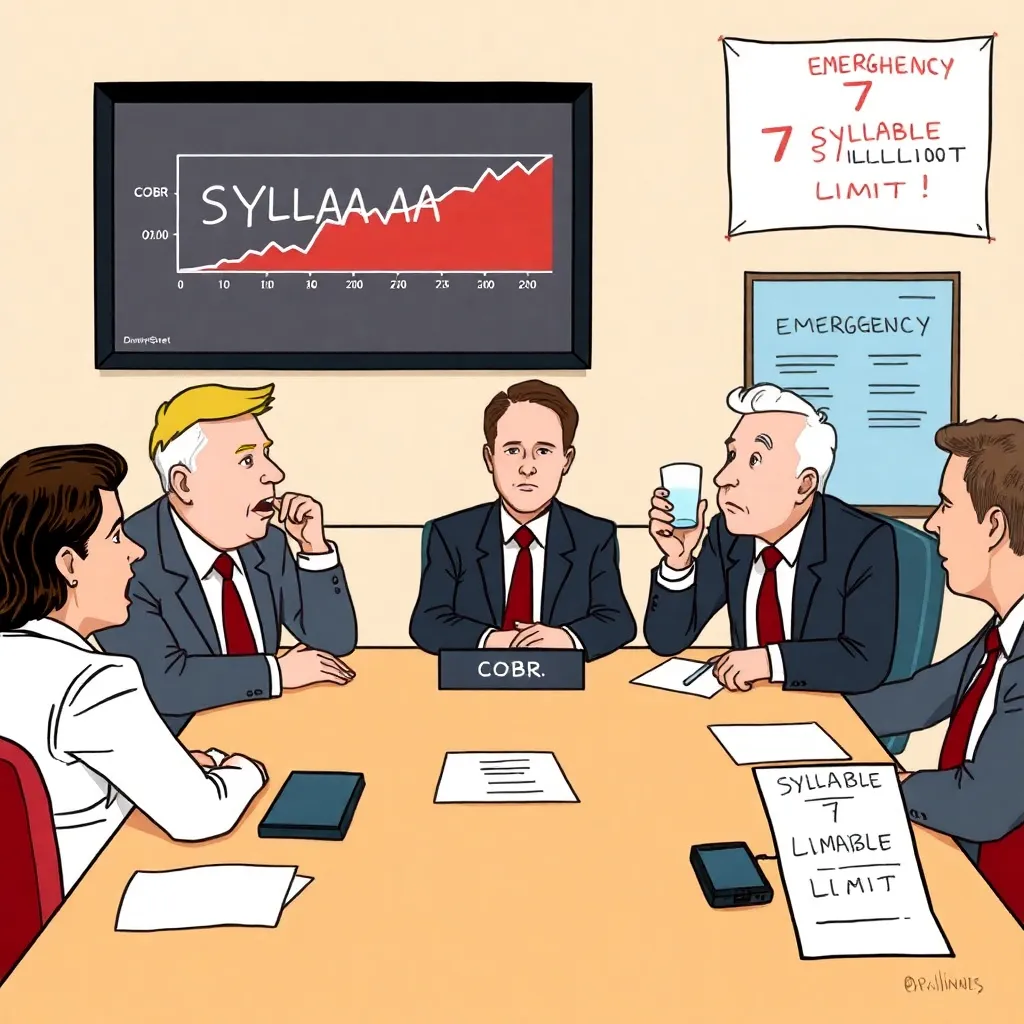
Downing Street responded swiftly, convening COBRA (now reportedly rebranded as COBR-Aaaaaaah) to address what ministers described as “an escalating syllable deficit.”
In a statement delivered with visible caution, a government spokesperson said:
“We recognise the public’s desire to participate in long-word culture. However, we must balance this with our commitment to keeping Britain upright. Effective immediately, citizens are advised to limit themselves to no more than seven consecutive syllables in public settings.”
The spokesperson then attempted to demonstrate safe pronunciation using the word “responsibility” and had to sit down halfway through.
A draft of the proposed Syllable Management and Responsible Enunciation Bill has already leaked. Key measures reportedly include:
A licensing scheme for anyone wishing to say words longer than “unfortunately”
Mandatory training for podcast hosts, who officials insist “cannot be trusted”
Increased funding for regional accents, “as they tend to abandon the middle of words anyway”
A new hotline for families affected by compulsive spelling-bee behaviour
Opposition parties have criticised the plan, with one MP arguing that the legislation “does nothing to address Britain’s core issue: people who say ‘conversate’ with confidence.”
Linguists Confirm Word Exists Primarily To Humiliate Children
The term “pneumonoultramicroscopicsilicovolcanoconiosis” is widely understood to refer to a lung disease caused by inhaling very fine silica dust, often associated with volcanic ash. However, linguists insist its primary societal function is to appear on lists titled “Longest Word In The English Language” and provoke dread in otherwise happy classrooms.
Professor Malcolm Stent, Chair of Unnecessary Vocabulary at the University of East Grumble, explained:
“People think language evolves to aid communication. That’s the myth. Language also evolves to create winners and losers. This word is a carefully engineered trap designed to turn a confident child into a quiet adult who apologises when someone bumps into them.”
Asked whether the word has any practical use in medical settings, Stent replied:
“Doctors would rather die.”
GPs Roll Out New Diagnosis: “Acute Pronunciation Injury”
General practitioners across the country say they are seeing a surge in cases of what they’re calling Acute Pronunciation Injury (API)—a condition characterised by strained facial muscles, damaged self-esteem, and a lingering fear of dictionaries.
“We’ve had patients come in panting, holding their throats, whispering ‘I nearly had it,’” said Dr Anita Goss, who has set aside an entire afternoon each week for “word-related incidents.”
Treatment guidance is straightforward:
Stop trying.
Drink water.
Repeat the phrase “short words are valid” until the symptoms pass.
The British Medical Association has published interim advice recommending that if members of the public encounter the word unexpectedly, they should “remain calm, back away slowly, and say ‘silicosis’ like a normal person.”
Schools Replace Spelling Bees With “Spelling Wasps” For “Less Pressure”
In education, the fallout has been immediate. Several schools have announced they are replacing traditional spelling bees with spelling wasps, which are similar events but involve fewer words and more stinging disappointment.
Headteacher Lorraine Pibble said the change was necessary after a Year 6 pupil attempted pneumonoultramicroscopicsilicovolcanoconiosis during assembly and was last seen “ascending toward the ceiling lights like a deflating balloon.”
“Children shouldn’t have to carry this burden,” Pibble said. “From now on, our most challenging word will be ‘Wednesday,’ and we’ll all agree it’s unfair and move on.”
Meanwhile, one academy chain has opted for a more modern curriculum, replacing spelling entirely with a unit called “AutoCorrect and Self-Forgiveness.”
Tech Companies Offer “Long Word Mode” That Just Gives Up
Not to be outdone, major tech firms have rushed out updates aimed at helping users cope.
One smartphone manufacturer announced Long Word Mode, which detects when a user is typing pneumonoultramicroscopicsilicovolcanoconiosis and automatically replaces it with:
“that lung thing (dust)”
A popular voice assistant has been patched to respond to any attempt to say the word by quietly playing ocean sounds and asking, “Would you like to speak to someone?”
Early reports suggest the assistant is also now offering to book mindfulness sessions for anyone who says “charcuterie” with too much confidence.
Local Man Insists He Can Say It, Immediately Regrets Everything
In what authorities describe as “the predictable phase of any national crisis,” a number of men have begun claiming they can pronounce pneumonoultramicroscopicsilicovolcanoconiosis easily, “actually,” and that they did so “at uni.”
One such man, Dean (surname withheld for legal reasons and mercy), attempted it outside a pub to prove a point. Witnesses say he got as far as “pneumo-no-ultra-micro…” before his body performed what can only be described as a forced system reboot.
“He tried to carry on,” said onlooker Sanjay T. “But at some point it just became aggressive humming, and then he blamed the wind.”
Dean later told reporters, “I could have done it if everyone hadn’t been listening.”
Economists Warn Of Productivity Drop As Offices Descend Into Dictionary Duels
Workplaces have also been affected, as employees abandon tasks to engage in what HR departments are calling “competitive etymology.”
“It started as a laugh,” said one manager. “Now we’ve got two departments refusing to collaborate because someone said ‘it’s Greek’ and someone else said ‘it’s Latin’ and now they’re drawing roots on whiteboards like it’s a crime scene.”

Productivity analysts estimate the UK economy could lose £3.4 billion this quarter due to “people attempting to say the word in meetings instead of just admitting they don’t know what it means.”
A spokesperson for the Confederation of British Industry urged calm:
“If you absolutely must demonstrate intelligence at work, we recommend simply asking a good question, rather than audibly wrestling with the alphabet in front of colleagues.”
The Word Itself Issues Statement, Says It Never Asked For This
In a rare move, pneumonoultramicroscopicsilicovolcanoconiosis issued a statement through its publicist, clarifying that it “never intended to be a party trick.”
“I am a serious term describing a serious condition,” the word said, in a message that arrived as a 14-page PDF. “I did not consent to being shouted into novelty microphones by men named Craig.”
The word also expressed frustration at being treated as “the final boss of language,” adding that it’s “not even that useful” and has been “coasting for decades on pure length.”
Experts Recommend Alternative Ways To Feel Smart
As the country recovers, experts have urged citizens to find safer outlets for intellectual pride, including:
Reading a book and not mentioning it
Knowing where Albania is without making a fuss
Using “fewer” and “less” correctly once, quietly, in your own home
Learning one (1) bird name and sticking to it
For those still determined to tackle pneumonoultramicroscopicsilicovolcanoconiosis, health officials advise warming up with gentle starter words such as “hippopotamus,” “antidisestablishmentarianism,” and “phenomenon,” before attempting the full term only under professional supervision and ideally seated.
At press time, the original radio presenter responsible for the incident had issued an apology, stating:
“I’d like to reassure listeners that I will never attempt a long word again. From now on, my vocabulary will be limited to ‘tea,’ ‘sorry,’ and ‘well, there you go.’”
The nation, exhausted but united, has broadly welcomed the pledge.