Nation Paralyzed After Experts Confirm Everything Is Either Play, Business, Foolery, Nanigans, Fight, or Oonery
A constitutional fog settled over the country this morning after a coalition of behavioral experts, barn philosophers, pub etymologists, and one monkey in a tie released a landmark framework classifying all known activity into six categories: what horses consider play, what monkeys consider business, what Tom calls foolery, what she calls nanigans, what cocks call a fight, and what Buff, with unnerving confidence, calls oonery.
The report, printed on seventeen yards of felt and delivered by wheelbarrow to the capital, has already thrown schools, offices, sports leagues, family dinners, and at least three coast guards into immediate uncertainty. For decades, ordinary citizens believed they could tell the difference between recreation, employment, nonsense, mischief, combat, and that special unnamed energy that arrives shirtless at dusk and rearranges your gate hinges. Now, officials say, the lines have blurred beyond repair.
“This is the most important taxonomy since somebody first separated soup from weather,” said Professor Lorna Pepple, Chair of Comparative Antics at the Royal Institute of Human Carry-On. “We’ve long suspected that categories are observer-dependent. A horse galloping in circles around a bucket is not wasting time. It is participating in elite equine leisure architecture. A monkey pushing a clipboard across a shipping crate, however, is very clearly in middle management.”
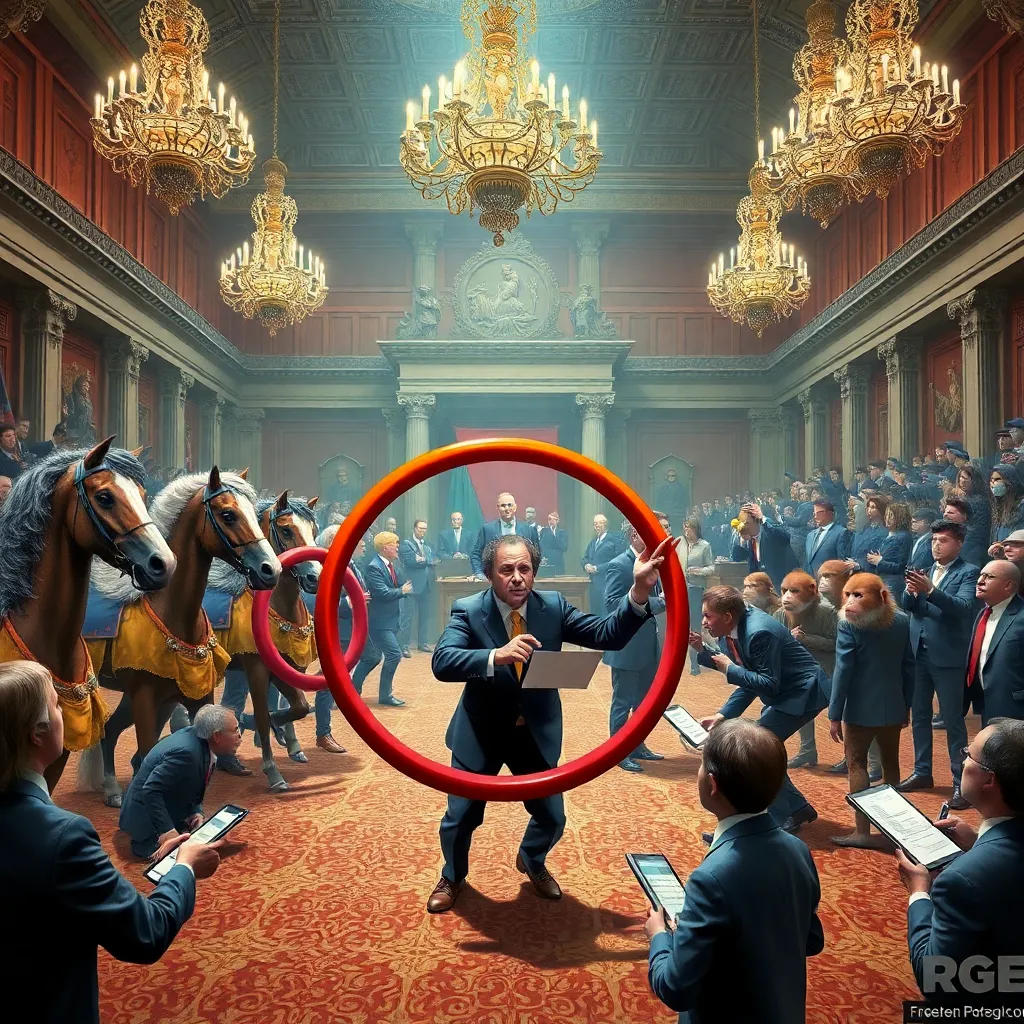
At the center of the crisis is Tom, a man known to neighbors primarily as “that fellow leaning over the fence with conclusions.” Tom has become the accidental face of the movement after repeatedly insisting that nearly all public behavior, from ribbon-cuttings to synchronized paddleboarding, constitutes foolery.
“I’ve seen councils unveiling plaques to celebrate the unveiling of earlier plaques,” Tom announced from outside a garden center, where he had assembled a considerable following of disappointed men in breathable gilets. “If that’s not foolery, then I’ve tragically misunderstood several mornings of my life.”
Markets reacted sharply to Tom’s remarks. Shares in novelty award manufacturers fell 11%, while demand for pointing sticks rose after analysts predicted an era of expanded denunciation. Insurance companies have also begun reviewing whether foolery remains an act-of-God clause or moves into general negligence.
Complications deepened when “she,” identified by officials only as a woman with folded arms and a tone that can stop soup, reviewed the same evidence and reached a different conclusion: nanigans.
This distinction, while subtle to the untrained ear, has become the hottest battlefield in civic discourse. Foolery, according to Tom’s camp, implies visible absurdity, usually involving ladders, improvised slogans, or a man saying “hear me out” near a hedge. Nanigans, by contrast, suggests a more agile and conspiratorial pattern, often featuring suspicious glances, unexplained receipts, and groups suddenly going quiet when you enter the room.
“There is a texture to nanigans,” explained one consultant hired by the Department for Social Murk. “Foolery is broad daylight with a traffic cone. Nanigans is three people in a cul-de-sac pretending they don’t own matching shovels.”
In rural districts, the matter was clarified abruptly by cocks, who declined both labels and categorized most disputes in traditional terms: a fight. Roosters up and down the country spent the morning offering practical demonstrations of their interpretive philosophy, launching themselves into hayyard disagreements with an admirable commitment to reducing theory to chest-first action.
The Ministry of Agriculture issued a calm statement urging citizens not to “adopt rooster standards for neighborhood WhatsApp misunderstandings,” after several parish councils had to be separated with rakes.
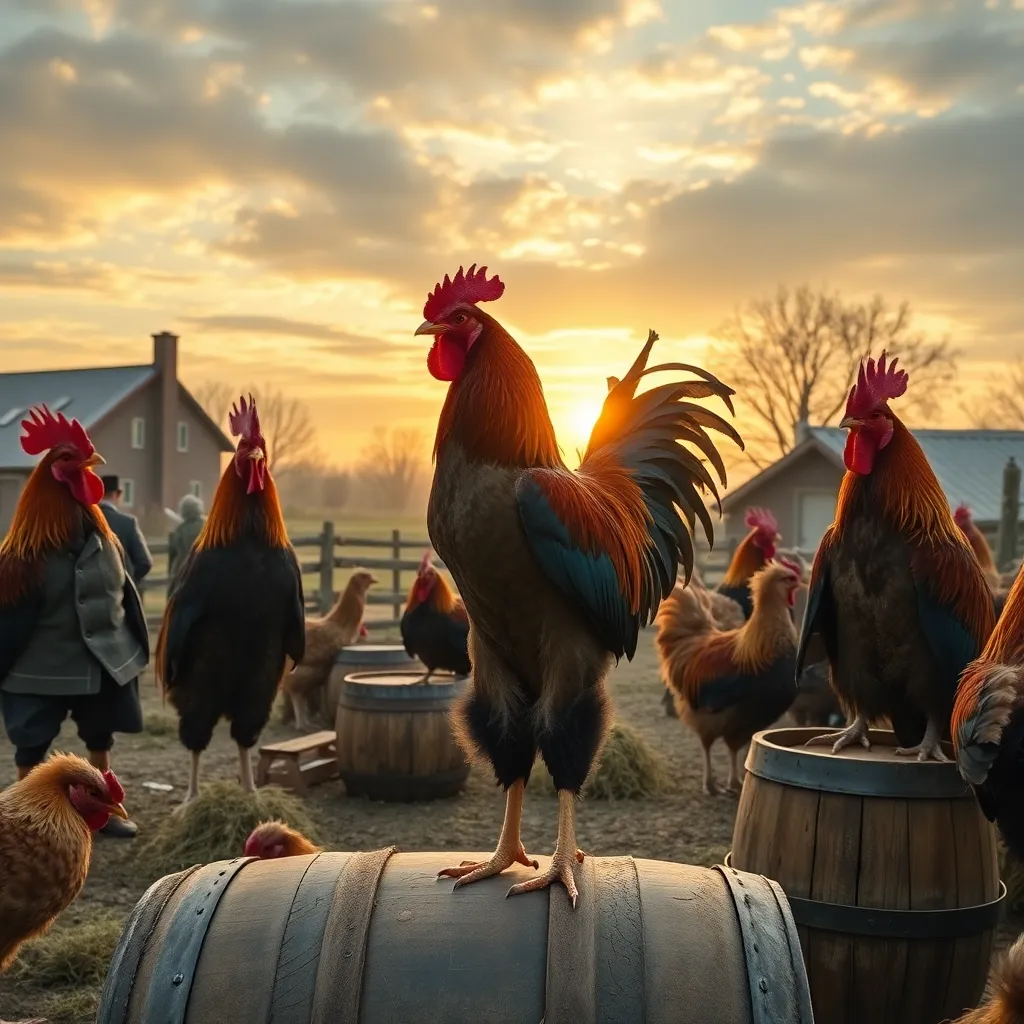
Then there is Buff.
Little is officially known about Buff beyond a troubling consistency of purpose and a reputation for arriving exactly when events become too strange for normal vocabulary. Witnesses describe Buff as the sort of figure who can look at a toppled gazebo, a missing wheelbarrow, a brass band in the canal, and a mayor wearing one boot, then nod once and say, “Oonery.”
This single word, once dismissed as dialect, insult, diagnosis, and possibly a side dish, has now entered mainstream discourse with catastrophic speed. Universities have opened departments for it. Councils have formed response units. One streaming platform commissioned a prestige documentary called The Oonery Among Us, then canceled it after the crew disappeared into a lay-by chasing “unrepeatable energies.”
To understand Buff’s influence, Wibble News visited the village where he is said to have coined the term after seeing a man use a canoe as a stepladder during a brass-heavy wedding altercation. “He didn’t explain it,” said publican Elsie Marr. “He just took off his cap, looked at the horizon like it had personally disappointed him, and said, ‘Pure oonery.’ Everyone knew exactly what he meant, which is upsetting in hindsight.”
The private sector has moved quickly. Consulting firms now offer Oonery Audits to determine whether an organization suffers from low-level nanigans, entrenched foolery, monkey business, or full-spectrum Buff conditions. One glossy brochure promises to “align your horse-play culture with strategic primate outcomes while de-escalating cock-fight adjacent stakeholder events.”
The brochure itself has been classified as both business and a cry for help.
At schools, teachers are struggling to update lesson plans. “Children are asking if lunchtime is horse play or monkey business, and honestly it depends who’s holding the yogurt tube,” said one exhausted headteacher. “Yesterday a Year Five pupil submitted homework labeled ‘Tom says this is foolery but Mum says it’s nanigans.’ It was a fully operational trebuchet made from rulers.”
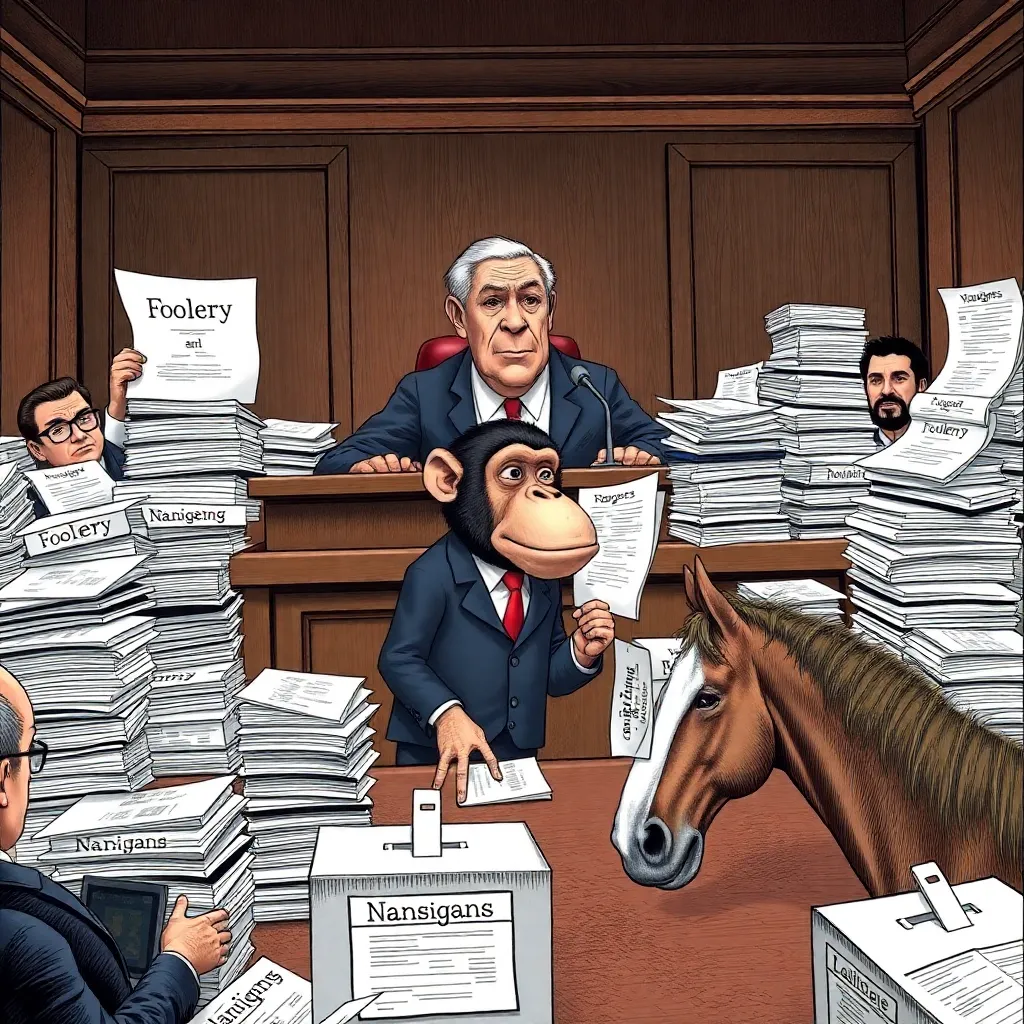
Meanwhile, the legal profession is racing to adapt. Courtrooms nationwide are clogged with difficult questions: Is parking across three spaces a mere nanigan or premeditated foolery? When an uncle appears at a barbecue with his own tongs and unsolicited opinions about flame, is he engaging in monkey business or regional oonery? Can a local election still be valid if the returning officer briefly became a horse and considered the ballot boxes toys?
Senior judges have urged restraint, though one appeal hearing had to be adjourned after counsel for the defense repeatedly described the prosecution’s timeline as “galloping mischief with primate paperwork.”
On the street, ordinary people are trying to cope as best they can. Commuters now routinely classify train delays by species and temperament. Office workers have stopped asking whether meetings are necessary and instead ask the more precise question: “Necessary to whom, and under which creature standard?” Wedding planners have introduced a six-column risk matrix. Gardeners have become frankly unbearable.
“I used to think my neighbor was simply odd,” said Denise Hollow from Crease End, watching a man in the next garden install a birdbath with surveying equipment and a recorder flute. “Now I understand he is conducting monkey business in a horse-play environment that keeps tipping into nanigans. Last Thursday it became unmistakably oonery.”
Government ministers insist the public should remain calm and continue with daily life, though their own briefing did little to steady nerves. Standing beside a chart shaped like a turnip, the Cabinet Office minister attempted to explain that the nation remained “fully prepared for mixed-category incidents” and had stockpiled sufficient cones, clipboards, fencing wire, and lemonade to respond.
He was immediately asked whether this constituted leadership or foolery.
He replied, “That depends entirely on whether Tom is in the building.”
By late evening, the framework had spread internationally. Wall Street described a volatile day of “aggressive monkey business with traces of rooster doctrine.” Paris called the whole thing “administratively naniganesque.” Several Mediterranean governments simply blamed oonery and went to lunch. The United Nations has scheduled an emergency summit at which delegates are expected to sit in species-based blocs and disagree professionally.
As night fell, one truth remained stubbornly clear: every act depends on who is watching. The horse sees freedom. The monkey sees invoices. Tom sees foolery. She sees nanigans. The cock sees a fight. Buff sees the deeper and less governable weather of the human condition, gives it a single impossible name, and leaves everyone else to sweep up.
In villages, cities, offices, parlors, stables, sheds, and suspiciously active roundabouts, people are learning to live with these distinctions. Some will deny them. Some will weaponize them. Some will start podcasts. But across the land, whenever a situation grows too complicated for reason and too specific for ordinary language, there is comfort in knowing a word already exists.
Not a helpful word. Not a legal word. Certainly not a grant-funded word.
But a word.
Oonery.