Parliament Approves Official Collective Nouns After Nation Overwhelmed by “Hey, You Lot”
After centuries of administrative chaos caused by clipboards, awkward pointing, and the phrase “could everyone in the extremely fabulous section please move slightly to the left,” officials have at last unveiled a sweeping lexicon of collective nouns designed to bring order, dignity, and a tasteful amount of drama to public life.
The new classifications, announced from a podium wrapped in six different banners and one inexplicably sequined tarpaulin, establish that a group of queers of all types shall be known as a pride, a group of aces as a deck, a group of aros as a quiver, a group of trans women as a code-camp, a group of enbies as a byte, a group of bi people as a tandem, and a group of pan people as a panic.
Civil servants described the move as “long overdue” and “far easier than continuing to write ‘miscellaneous icons’ on all the forms.”

The announcement came after a three-year inquiry by the Ministry of Language, Vibes, and Situational Precision, which found that society had become dangerously reliant on vague plurals. According to its 800-page report, thousands of avoidable incidents took place each year because people lacked the proper terminology.
In one case, a museum guide was forced to tell visitors, “To your right, you will see several aces,” prompting one tourist to ask, “Several what? Pilots? Tennis professionals? Cards? Tiny sovereign states?” A newly standardized deck now promises to eliminate such confusion while introducing the possibility of someone entering a room and saying, with great reverence, “Behold. The deck has arrived.”
Experts say the term carries both precision and majesty, though there are already concerns that individual aces may start arranging themselves by suit for formal occasions.
Meanwhile, the designation of a quiver for aros has been hailed as a masterstroke of poetic efficiency. Linguists noted that it suggests motion, readiness, and the subtle but powerful sense that everyone involved has already thought this through more carefully than you have. Local councils are reportedly updating park signage to read: “Please do not disturb the quiver while it is enjoying beverages.”
One city has gone further, introducing a ceremonial “Quiver Crossing” at a major intersection, complete with tiny green lights that appear to wink knowingly at pedestrians.
The term a pride for queers of all types received the loudest applause, several standing ovations, and at least one person climbing onto a chair and declaring, “At last, a noun with proper posture.” Analysts described the choice as both intuitive and infrastructurally sound. “A pride moves with purpose,” said one professor of advanced semantics. “It occupies space beautifully and causes nearby architecture to improve itself.”

For a code-camp of trans women, reaction was immediate and deeply enthusiastic, with community groups praising the phrase for capturing a specific blend of camaraderie, brilliance, problem-solving, and the ability to completely redesign the system while holding an iced drink. Tech firms across the country have already begun nervously updating internal memos after discovering that the sentence “a code-camp has entered the building” causes middle management to break into a light but sustained perspiration.
Witnesses at one co-working space reported seeing an entire code-camp transform a broken registration platform, improve the lighting, and give the receptionist life-changing advice before lunch.
The recognition of a byte of enbies has also made waves in legal and scientific circles, where officials say the term is compact, modern, and impossible to underestimate. “A byte may seem modest to the untrained eye,” said one researcher, adjusting glasses with theatrical sincerity, “but it contains multitudes, syntax, excellent jackets, and at least three opinions on typography.”
Emergency planning offices have already amended their preparedness literature. Where previous instructions read “in the event of a gathering,” the updated version now specifies, “should a byte begin organizing, simply step aside and allow efficiency to occur.”
Then there is a tandem of bi people, a phrase now being celebrated for its glorious refusal to travel in only one conceptual direction. Transportation authorities briefly misread the draft and attempted to issue a fleet of ceremonial bicycles, but the confusion has only strengthened public affection for the term. “A tandem implies cooperation, balance, and occasionally someone shouting ‘pedal’ with great conviction,” said a spokesperson from the National Office of Word Logistics.
The spokesperson added that tandems are already believed to be one of the country’s most aerodynamically elegant social formations.
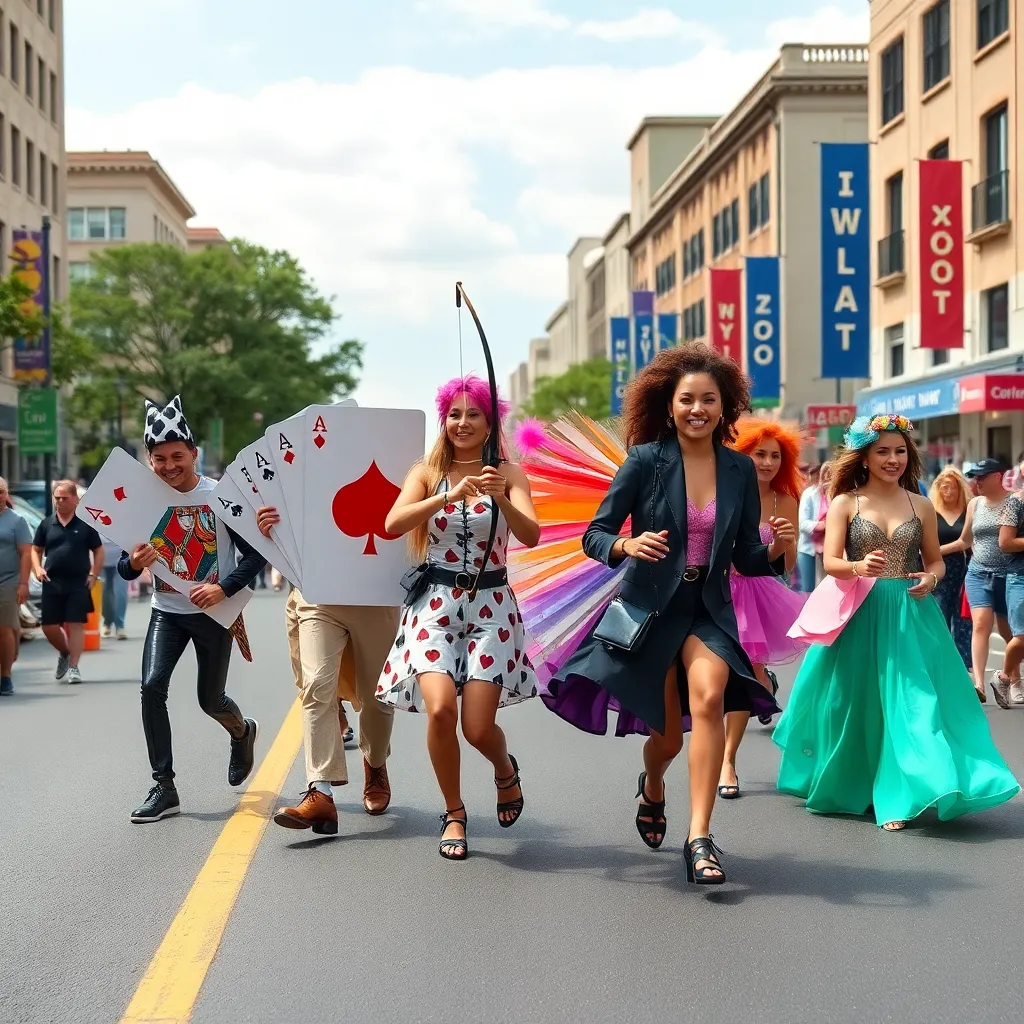
But perhaps no term has generated more delighted commotion than a panic of pan people. Authorities insist the noun is affectionate, accurate, and in no way an operational threat, though several newspapers have had to clarify headlines after readers misinterpreted “panic spotted downtown” as a municipal emergency rather than an exceptionally well-dressed brunch reservation.
Shopkeepers in several neighborhoods report that a panic tends to arrive with tremendous charm, reorder the entire energy of the room, and leave behind the faint sense that everyone should be using more interesting condiments.
Not all sectors were immediately prepared for the transition. Schools have requested training materials after one teacher attempted to explain the new system using animal examples and accidentally informed a classroom that “a murder of crows, a pride of lions, and a panic of pan people are all best observed from a respectful distance if they are discussing where to eat.”
Nevertheless, adoption has been swift. Major dictionaries are expected to update their entries within weeks, and etiquette columnists have already published guidance on proper use. Among the recommendations: never split a deck without consent, do not interrupt a quiver mid-thought, and if invited into a pride, arrive on time and with your finest opinion. In the case of a code-camp, bring snacks and humility. For a byte, be prepared to learn something. With a tandem, match the rhythm. And if welcomed by a panic, clear your schedule.
Street interviews suggest the public is adjusting well. “It’s just more accurate,” said one café patron, stirring foam into a shape that looked suspiciously like policy reform. “Yesterday I saw a byte, then later a tandem, and by evening the whole neighborhood was practically a pride. Language should help us describe reality, especially when reality is wearing extraordinary boots.”
At press time, the Ministry confirmed it is already considering additional collective nouns for future release, but warned that the nation must first absorb the current set responsibly. “These are powerful terms,” an official said gravely, as confetti was swept from the government steps with ceremonial brooms. “You cannot simply hand society this level of linguistic excellence and expect nobody to start speaking with more confidence.”