Pentagon Unveils “Operation Briny Resolve” as Mutant Sea Bass Edge Out Laser Sharks for Strait of Hormuz Duty
WASHINGTON—In a development officials described as “marine-forward,” “cost-conscious,” and “aggressively damp,” the Trump administration is reportedly considering the deployment of ill-tempered, mutant sea bass to help secure the Strait of Hormuz, after an internal Pentagon review concluded that sharks with laser beams remained tantalizingly effective on paper but were still, from a budgeting perspective, “a bit of a battery issue.”
According to several people who have definitely stood near a map, the proposed plan—codenamed Operation Briny Resolve—would establish a defensive perimeter of enlarged, strategically furious sea bass engineered to patrol key shipping lanes, glare at tankers with national purpose, and lunge at suspicious vessels with what one briefing document called “maximum patriotic turbulence.”
The sea bass, while not traditionally viewed as instruments of maritime deterrence, reportedly won over defense planners after a series of tests in which they displayed a remarkable combination of territorial hostility, gleaming scales, and complete indifference to conventional diplomacy.
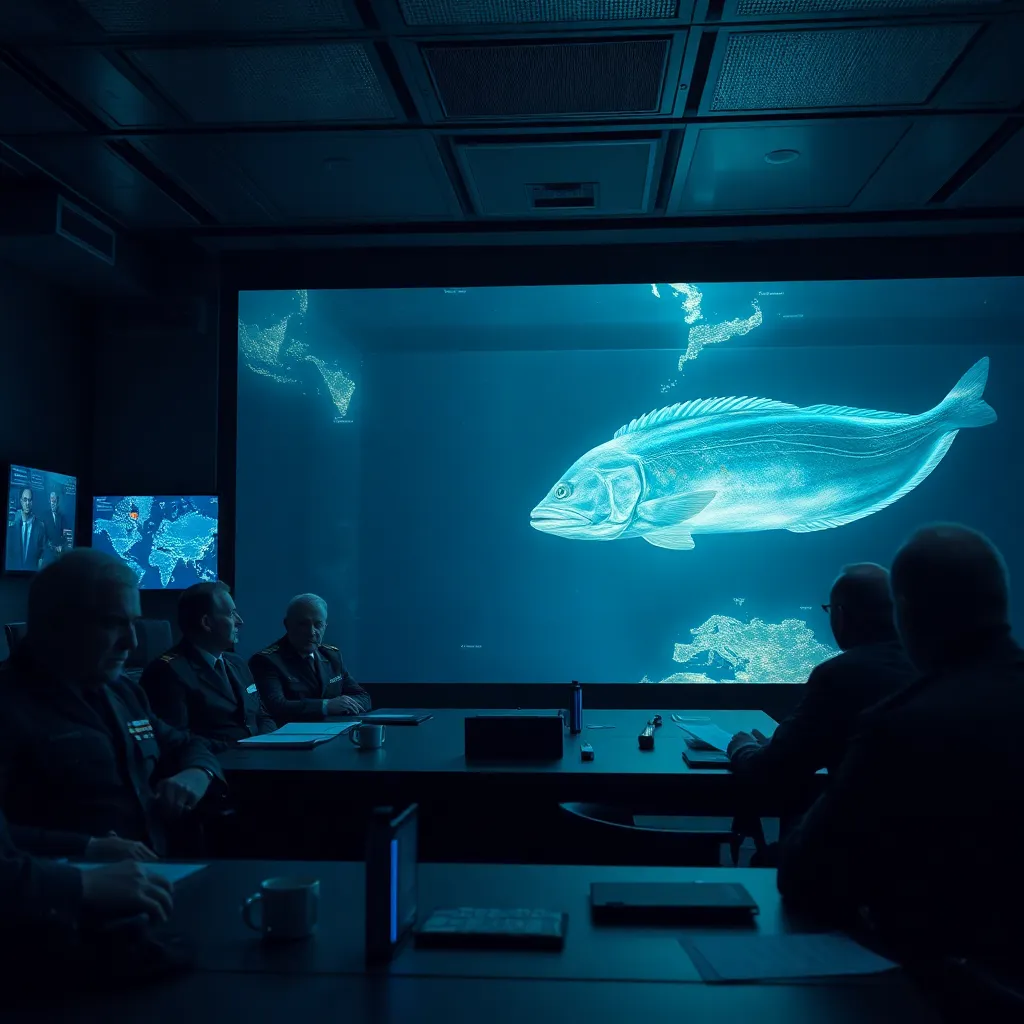
One draft assessment described the fish as “surly, modular, and seaworthy,” praising their ability to operate without runway requirements, radio chatter, or concern for legacy procurement systems. “This is a creature that understands chokepoints,” said one official, tapping a classified folder marked WET ASSET OPTIONS. “It does not ask for fuel. It does not hold press conferences. It simply circles in a manner that tells the region we are serious.”
The administration had initially favored a more cinematic solution involving sharks equipped with laser beams mounted to their heads, a concept that performed strongly in presentations and focus groups but faltered during the practical stage. Engineers reportedly discovered that even the most advanced military prototypes could not solve the core problem of powering the lasers on an animal known primarily for swimming away at emotionally inconvenient moments.
“We looked at miniaturized reactors, dorsal charging ports, inductive undersea mats, high-density tactical lithium packs, and one intern proposed just making the lasers shorter,” said a defense contractor familiar with the talks. “The shark remained stubbornly shark-shaped throughout.”
Officials added that while the shark concept delivered “exceptional menace visuals,” repeated field trials ended with either dim laser output, melted harness components, or sharks expressing a complete lack of interest in strategic objectives. In one test, a prototype allegedly emitted a brief red line onto the side of a buoy before the animal drifted off and headbutted a support kayak.
The sea bass, by contrast, have emerged as a more grounded option. They require no beam stabilization software, no cranial mounting rig, and no awkward congressional testimony about why an apex predator is carrying what appears to be nightclub technology.
Instead, the mutant sea bass would reportedly rely on a doctrine described as deterrence through escalating unpleasantness. The fish are expected to be stationed in rotating schools near sensitive transit zones, where they would perform aggressive tail-slaps, sudden coordinated splashes, and prolonged judgmental hovering. If necessary, they could also deploy what planners have termed “kinetic nibbling.”
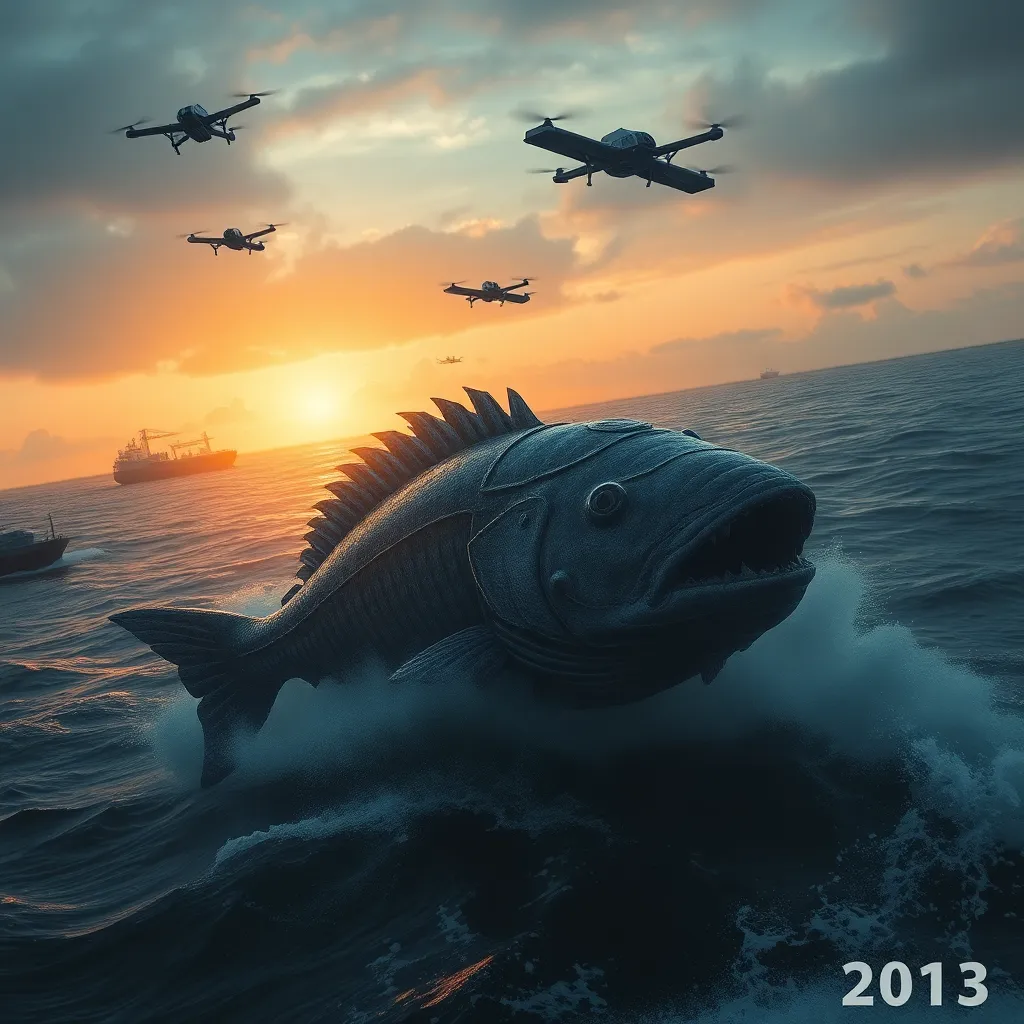
Experts say the choice reflects a broader shift toward unconventional deterrents. “For too long, America has underestimated the psychological value of a fish that looks like it has a personal vendetta,” said one maritime analyst. “A destroyer sends a message. A mutant sea bass sends a message and also ruins your entire afternoon.”
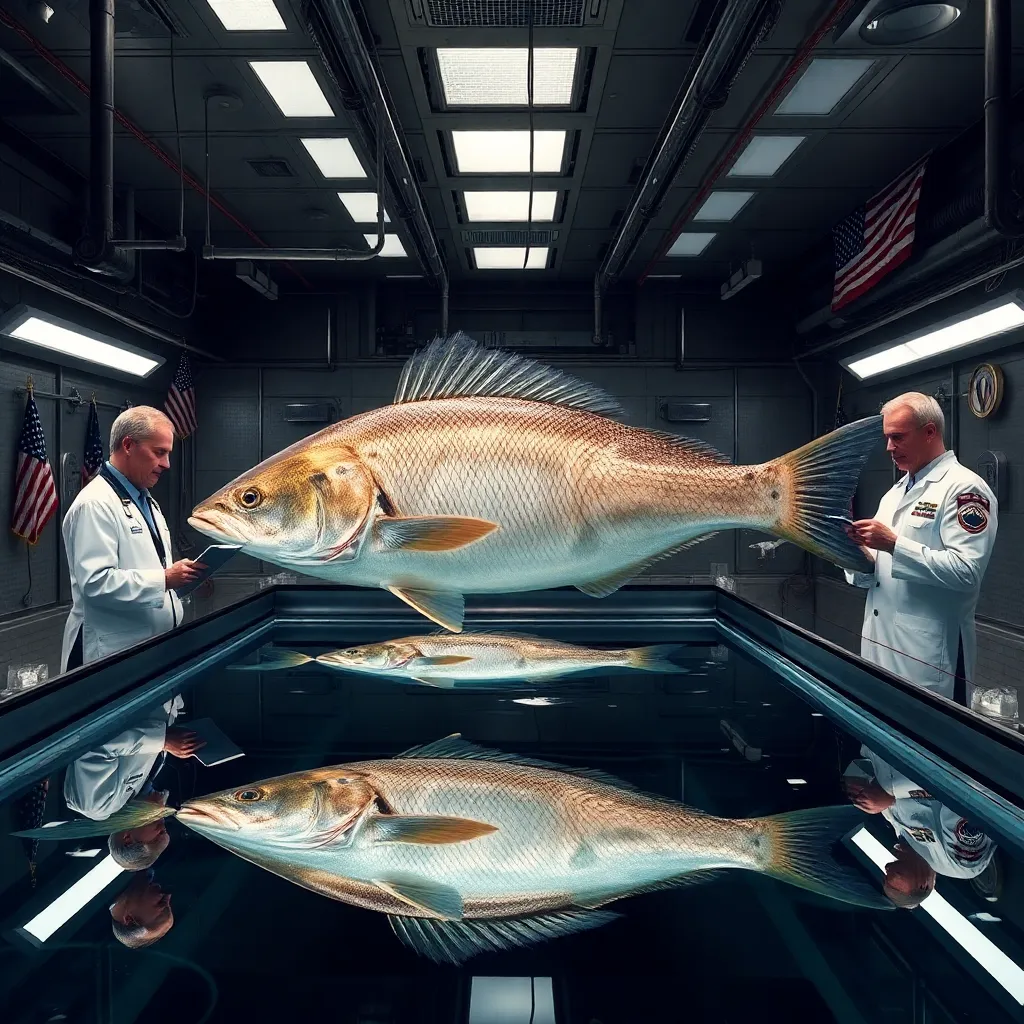
At the center of the proposal is a new Pentagon unit devoted to adaptive aquatic enforcement, where biologists, naval tacticians, and several men who keep saying “nature is the original special forces” are refining the bass program. Sources say the fish are being bred for size, stamina, tactical unpredictability, and the ability to maintain eye contact with helicopter crews for unnervingly long periods.
The animals’ temperament has become a major selling point. Unlike dolphins, which officials dismissed as “too chatty,” and unlike octopuses, which performed brilliantly but kept escaping into ventilation systems, the sea bass offered what one memo called “clean, scalable rage.”
There are, however, some questions about command and control. Early exercises reportedly encountered confusion when the bass pursued a diplomatic launch, a weather buoy, three tourists on rented jet skis, and what appears from satellite imagery to have been a strongly worded patch of sunlight. Pentagon officials insist such incidents are part of the standard maturation process for any new defense platform.
“Every emerging capability has teething pains,” said a retired admiral now consulting on the project. “In this case, the teeth are the capability.”
Supporters of the plan also point to the relative affordability of sea bass compared with traditional naval assets. While a guided missile destroyer can cost billions, a mutant sea bass can reportedly be maintained on a diet of smaller fish, ambient resentment, and whatever falls off the side of a supply vessel. This has made the program attractive to budget hawks eager to slash spending while preserving the option to unleash an enormous offended fish into a geopolitically sensitive waterway.
Reaction on Capitol Hill has been mixed. Some lawmakers hailed the idea as a bold example of American ingenuity, while others questioned whether deploying mutant bass might lead to retaliatory use of equally irritable regional marine life. One senator urged caution, warning of a possible “weaponized grouper gap” if the United States failed to anticipate second-order piscine escalation.
Meanwhile, shipping companies are said to be reviewing contingency protocols in the event their vessels encounter what insurance forms delicately classify as “enhanced fish-related hostility.” Several firms have reportedly requested clearer guidance on whether standard anti-piracy measures apply if the threat is approximately six feet long, heavily muscled, and appears to resent the concept of commerce.
International reaction has been equally brisk. Analysts in Europe described the proposal as “deeply unusual but not technically the strangest thing this decade,” while Gulf observers said much would depend on whether the fish could distinguish between strategic interdiction and random marine tantrums. Oil markets briefly wobbled on news of the plan before recovering after traders concluded that no one, including the people proposing it, was entirely sure how many mutant sea bass would constitute a battlegroup.
Still, administration officials remain optimistic. One senior aide said the president had been briefed on the concept and responded favorably to the phrase “very strong fish,” adding that the creatures were seen as projecting strength without requiring a lengthy runway, expensive hangar, or a pilot capable of understanding maritime law.
As planning continues, defense officials have quietly shelved the laser shark program, though several prototypes are rumored to remain in storage, occasionally blinking weakly at passing technicians like cursed aquatic desk lamps. For now, the future of Gulf security may belong not to sleek machines or traditional fleets, but to a squadron of enlarged sea bass with difficult personalities and a constitutional suspicion of nearby hulls.
If approved, the deployment would mark a new era in strategic doctrine—one in which the balance of power rests, however uneasily, on the broad, glistening back of a fish that seems permanently fifteen seconds away from starting something.