Putin’s Pudding: A Power Play in Pastry
Diplomatic analysts were left clutching their teaspoons this morning after reports emerged that Vladimir Putin has shifted significant attention from conventional displays of power to a more unnerving arena: pudding. What began as a quiet dessert appearance at a state banquet has now escalated into a full-spectrum geopolitical event, with the Kremlin unveiling what insiders describe as “strategic custard capability.”
Witnesses say the pudding itself entered the room before anyone else. Carried on a silver trolley the size of a modest submarine, it reportedly shimmered under chandelier light with the sort of confidence usually reserved for cavalry, bear statues, and men who enjoy being photographed while looking at forests. By the time the first spoon struck the surface, several ambassadors had already revised their public positions on sanctions, simply to avoid being seated too close to the trifle flank.
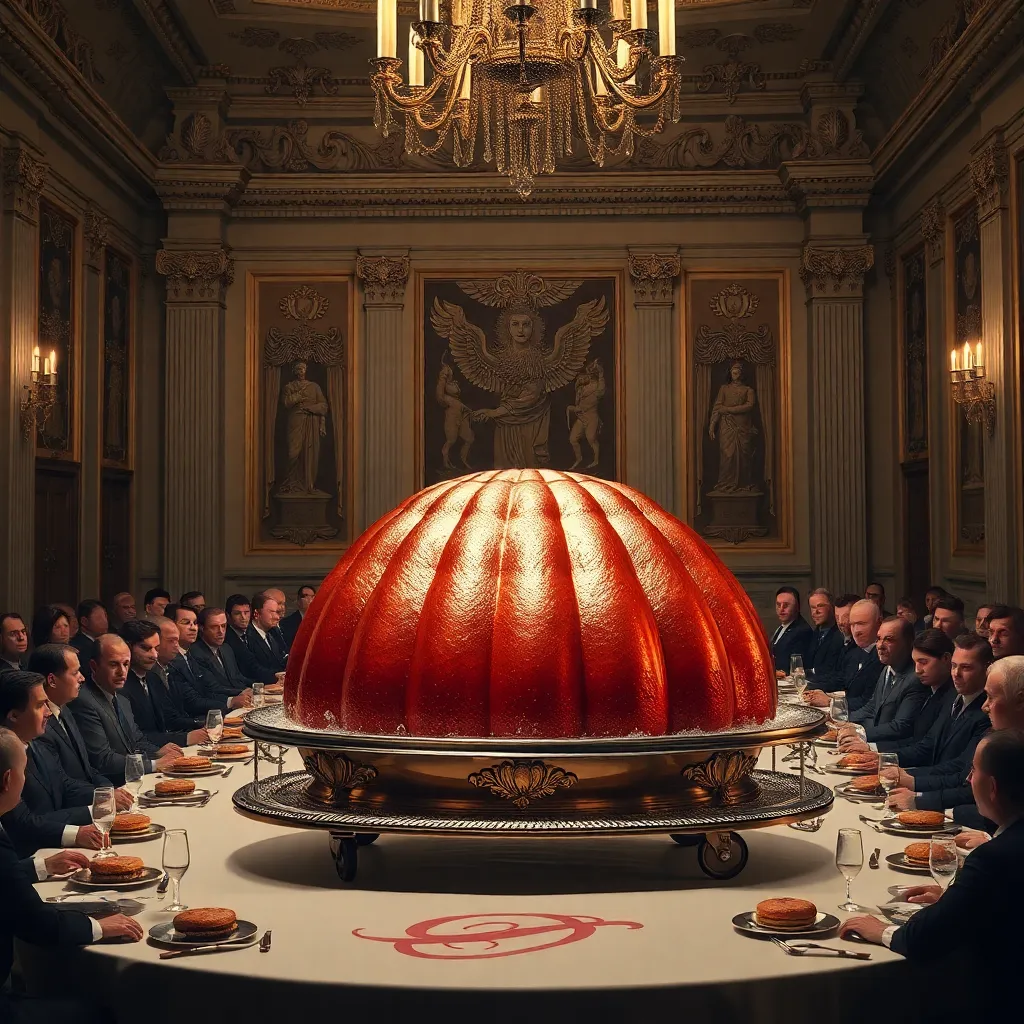
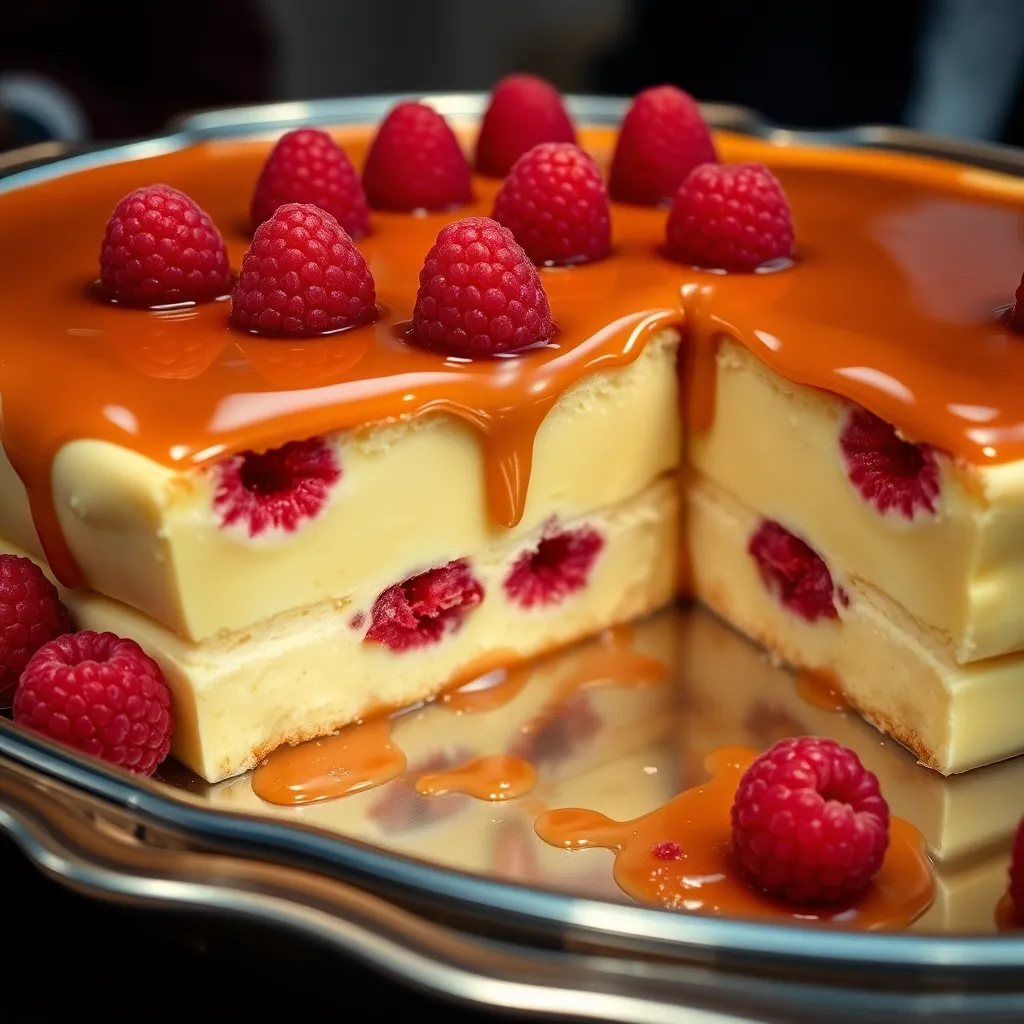
According to pastry intelligence sources, the dessert was no ordinary pudding. Layers of sponge, custard, jam, whipped cream, and inscrutable intent suggested a carefully calibrated message to the international community. One Western official described it as “too soft to classify as a weapon, too deliberate to classify as a snack.” Another, visibly sweating into a linen napkin, called it “an escalation in all but name.”
The pudding doctrine appears simple: while tanks can cross borders, a well-timed dessert can cross minds. In strategic circles, this is being referred to as soft power with a harder topping. A leaked briefing note allegedly outlined the logic in blunt terms: “Why invade territory when one can dominate the post-dinner conversation?” Experts in symbolic intimidation agree this marks a new phase in 21st-century influence, one where nations may be measured not only by GDP and military spending, but by wobble radius.
At the center of the story is the now-famous garnish arrangement. Twelve raspberries, placed in an unnervingly precise ring, have been interpreted by commentators as either a coded statement of regional ambition or the work of an unusually disciplined chef. The uncertainty has only deepened tensions. Markets dipped briefly after televised analysis of the berry geometry, before recovering when a retired colonel insisted on air that “cream speaks louder than rhetoric.”
Ordinary citizens, meanwhile, have responded with a mixture of dread, admiration, and recipe requests. Bakeries across Europe reported sudden runs on gelatin, custard powder, and maps. In Brussels, a summit on collective dessert resilience ended after seventeen hours with a joint statement affirming the bloc’s “shared commitment to freedom, stability, and appropriately proportioned servings.” France proposed a tart-based deterrent. Britain, after several meetings and one unfortunate incident involving blancmange, promised to “monitor the pudding situation closely.”
There are also murmurs that this could be part of a broader Kremlin culinary strategy. Rumors persist of tactical éclairs, deniable profiteroles, and a classified strudel program known only as Layer Cake. Intelligence services are said to be reassigning personnel from cyber operations to patisserie interpretation, a move one exhausted official defended by saying, “You tell me the difference between a threat vector and a laminated filo deployment at this stage.”
For now, world leaders remain on alert. Satellite imagery reportedly shows unusual levels of activity near several industrial kitchens, while think tanks scramble to publish papers with titles like Custard and Consequence and Authoritarian Dessert in the Multipolar Era. Whether the pudding was intended as a warning, a flex, or simply an aggressively memorable finale to dinner, one thing is certain: the age of plausible deniability has given way to the age of plausible dessert.
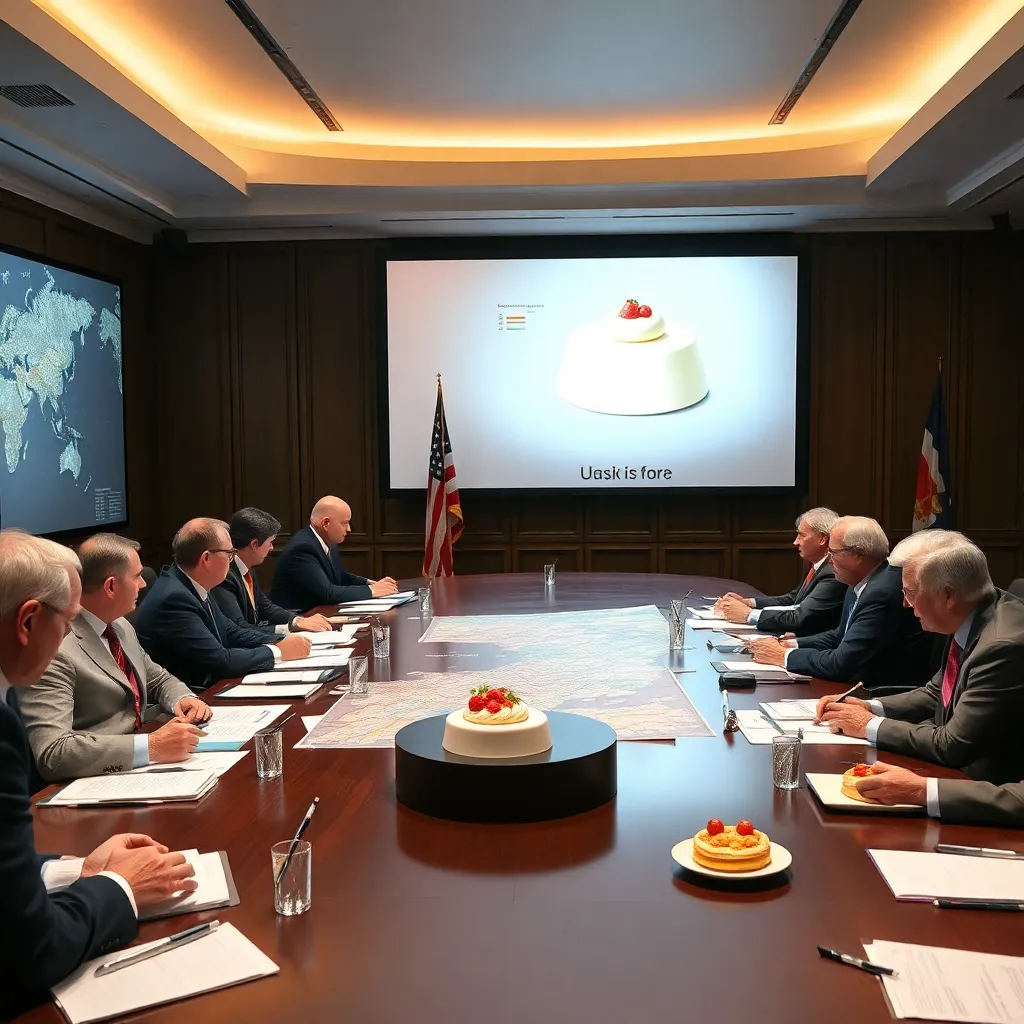
As the final servings were distributed under conditions of extraordinary tension, no one could say where the evening ended and doctrine began. The spoon hovered, the room held its breath, and history acquired a skin on top.