Schools Ban Bible for “Excessive Sex and Violence,” Students Told to Stick to “Age-Appropriate” Dystopias Instead
BLOOMINGTON, ANYWHERE — In a sweeping victory for educational consistency and mild hypocrisy, a coalition of school districts across the country has announced the removal of the Bible from selected classrooms and libraries, citing “graphic sexual content, extreme violence, and a troubling lack of clear lesson plans.”
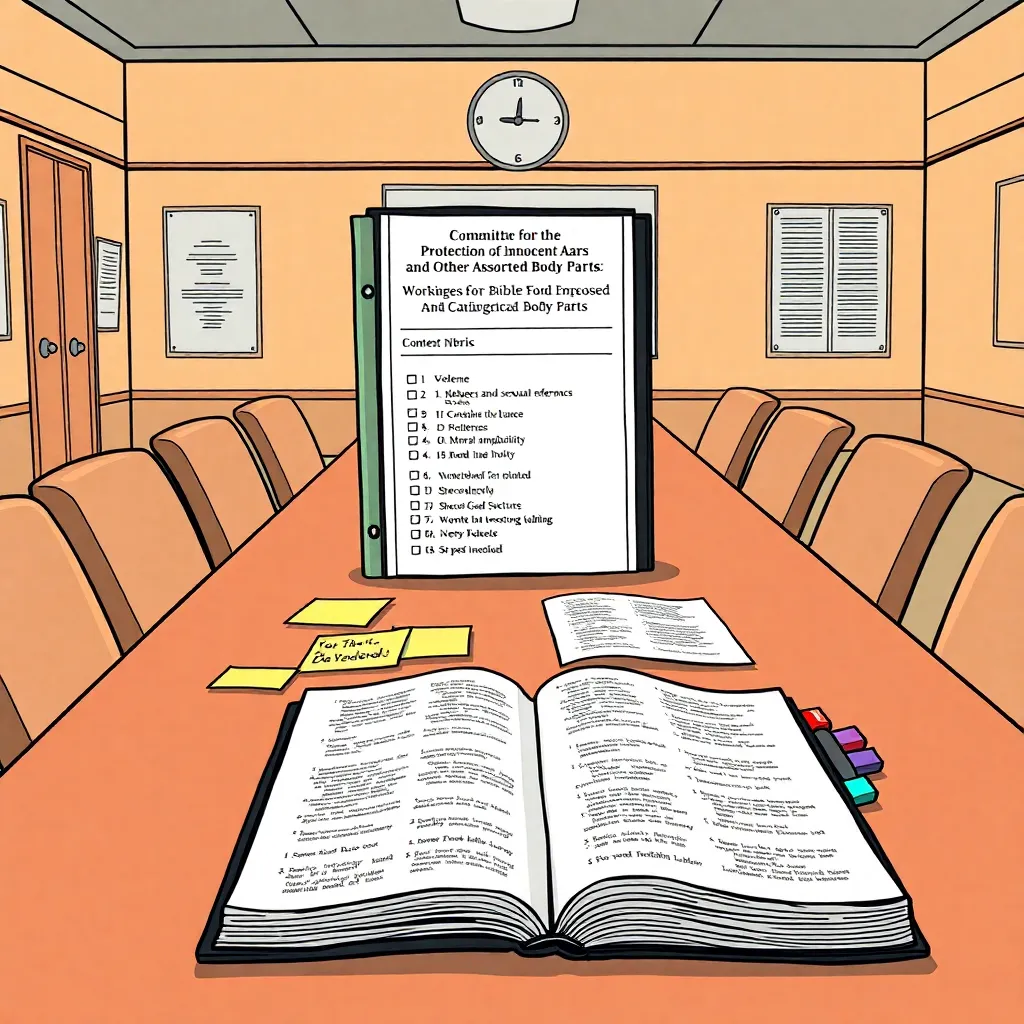
The decision follows a month-long review by the newly formed Committee for the Protection of Innocent Ears and Other Assorted Body Parts, which found that the book contains “repeated depictions of murder, war, incest, polygamy, dismemberment, smiting, and at least one incident involving a donkey that nobody wants to talk about during parent-teacher conferences.”
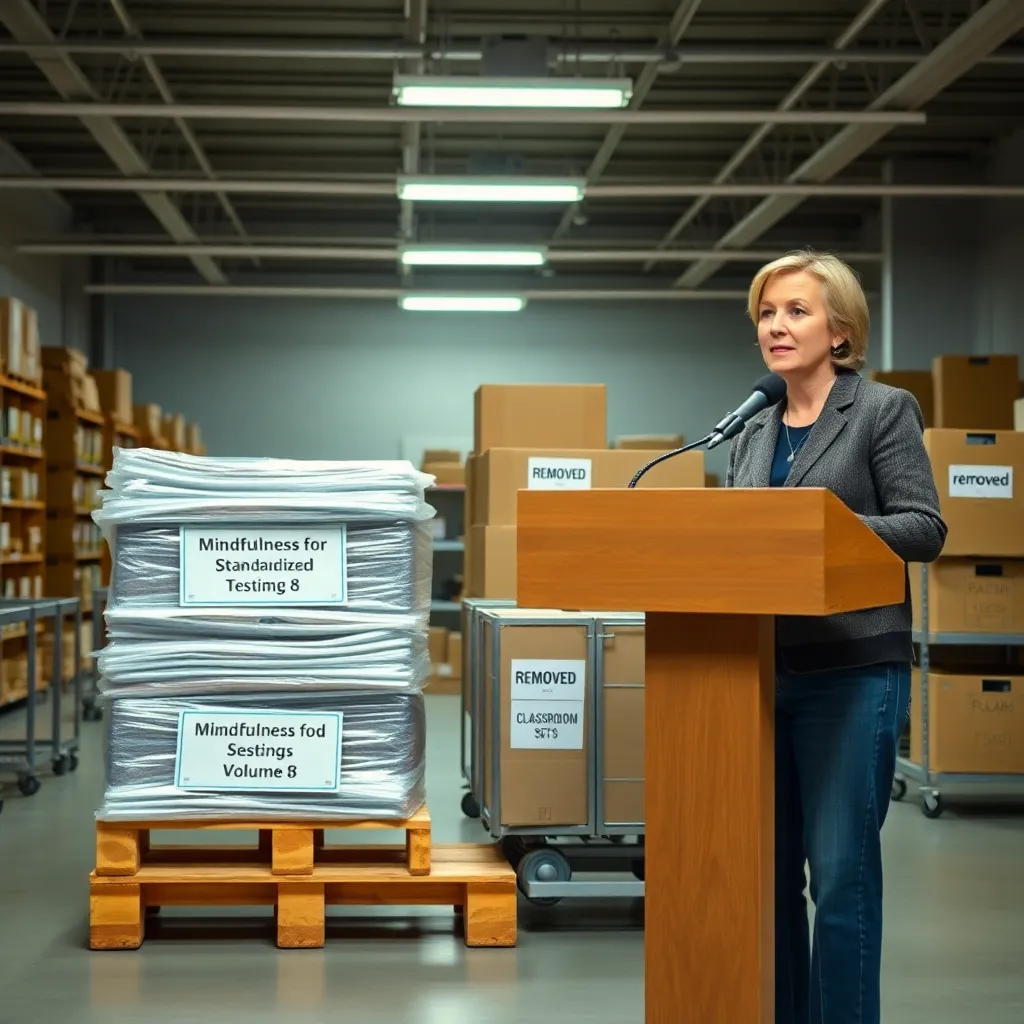
“We’re not saying it’s a bad book,” explained district spokesperson Janine Harbuckle, standing beside a pallet of shrink-wrapped replacement materials titled Mindfulness for Standardized Testing, Volume 8. “We’re saying it’s a book with content that may be inappropriate for students—particularly if they have eyes and can read.”
A Bold Stand for “Traditional Values,” Reimagined Weekly
The policy, described as “common sense” and “definitely not an ironic headline generator,” forbids any text that includes explicit sexual references, gratuitous violence, or depictions of moral ambiguity without a concluding worksheet.
According to the committee’s report, the Bible triggered multiple red flags, including:
Graphic violence, including beheadings, mass killings, plagues, and a general vibe of “war, but make it eternal.”
Sexual content, including adultery, concubines, prostitution, and several family trees that appear to have been designed by a villain.
Questionable consent and “romantic plotlines” that are best described as “historical” in the way that diseases are historical.
Strong language, including repeated use of the word “begat,” which several board members described as “basically pornography in cursive.”
Harbuckle emphasized the district is not banning religion. “Students are still free to practice faith,” she said. “They just can’t do it with a book that, by our own rubric, would be removed if it weren’t already printed on decorative pillows at Hobby Lobby.”
Librarians Asked to “Use the Same Standards, Unless It’s Awkward”
The controversy began when a parent group demanded the removal of various books for being “sexually explicit” and “too violent,” prompting librarians to apply the same criteria across the board.
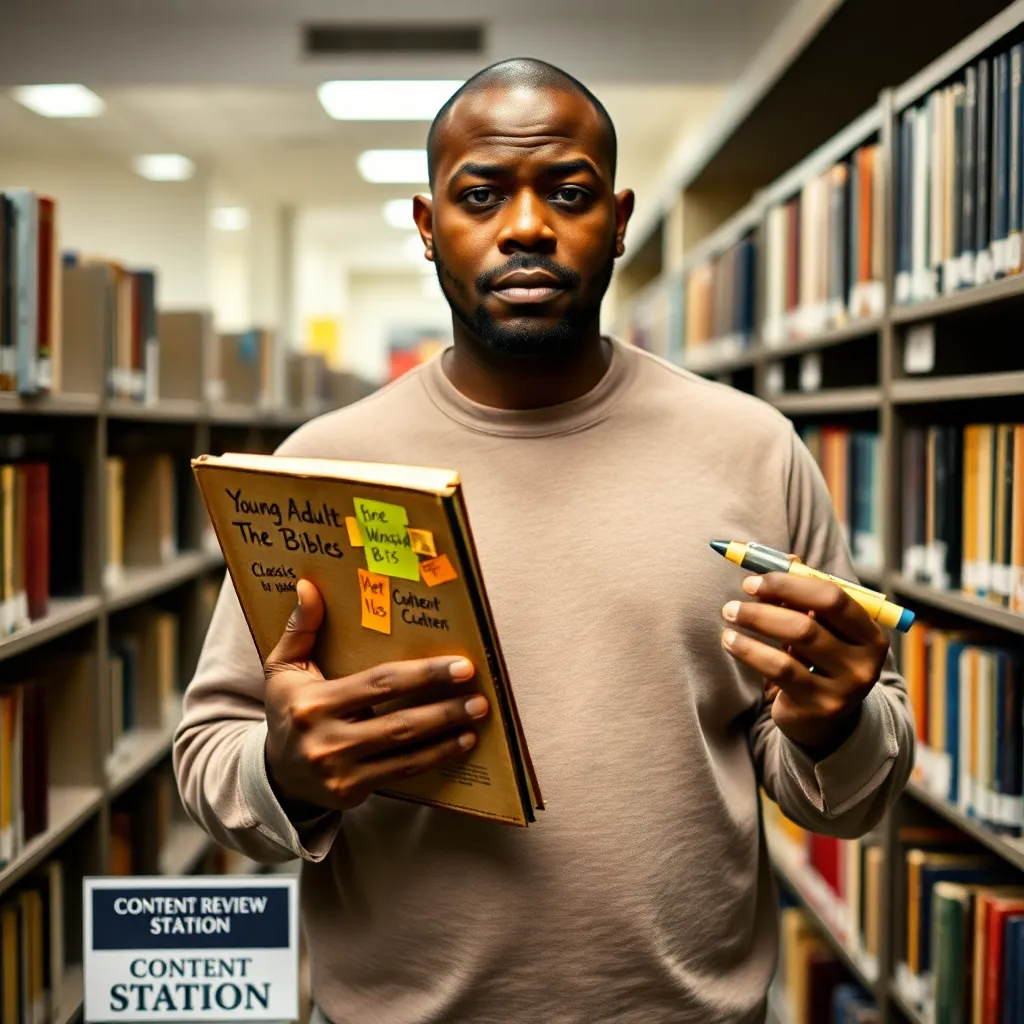
“That’s when someone accidentally read the Bible like it was a book,” said school librarian Marco Ellis, still visibly haunted by the experience. “Not like a symbol, not like a cultural artifact—like a book. Once you do that, you start underlining things. And once you start underlining things, you start realizing half the stories would come with a content warning, a therapist referral, and a hotline number.”
Ellis added that the committee’s process was painstaking. “We did what we do with all books. We checked for depictions of violence, sexual content, and whether anyone turns into salt. The Bible scored very high in all categories.”
Parents Divided: “Protect Our Kids” vs. “Wait, Not Like That”
Reactions from parents ranged from enthusiastic applause to spontaneous constitutional lawyering.
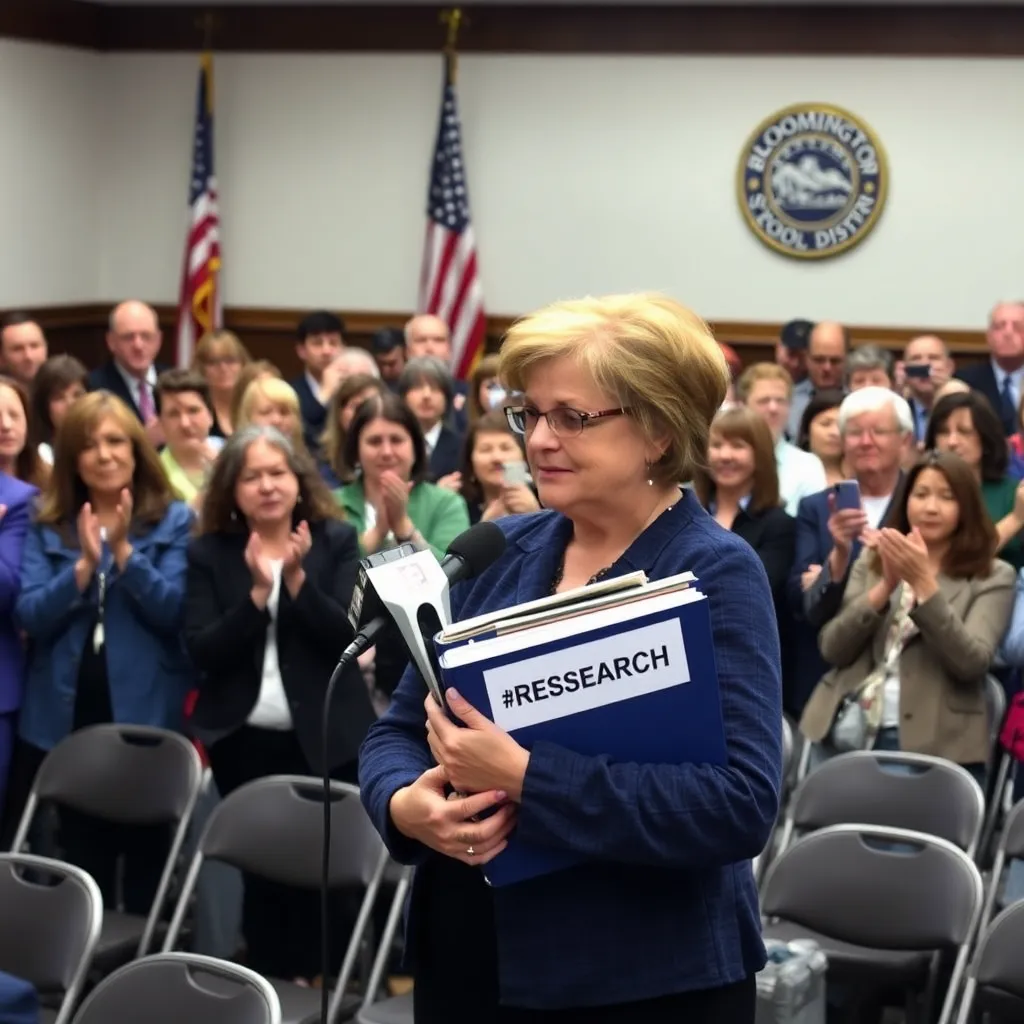
“I’ve been saying for years that schools are pushing inappropriate material,” said local parent Darla Munn, clutching a binder labeled RESEARCH (Facebook). “I just didn’t expect them to go after the Bible. That book is—well, it’s sacred. It’s different.”
When asked how it was different, Munn paused. “Because I said so,” she replied, before requesting the removal of Charlotte’s Web for “promoting talking animals and alternative lifestyles.”
Others welcomed the move as a long-overdue application of standards.
“I’m religious,” said parent Ahmed Rahman, “but I’m also realistic. If my kid brought home a book with that much blood, betrayal, and confusing moral messaging, I’d ask what kind of adult assigned it—and whether that adult needed a nap.”
Students Report Confusion After Being Told Dystopian Violence Is Fine
Students, meanwhile, appeared torn between delight and disappointment.
“I’m just surprised we’re banning the Bible for violence,” said tenth-grader Mia Lambert. “Because we literally read The Hunger Games in class and the lesson was, like, ‘This is society.’”
Another student, Ryan Patel, said the ban was “kind of unfair.”
“Look,” Patel explained, “if you’re banning books for sex and violence, you’re gonna have to ban, like, every mythology unit, half of Shakespeare, and the entirety of human history. Which—honestly—would be fine. I hate reading.”
In response, the district clarified that The Hunger Games would remain because “it contains a clear moral framework, a strong female protagonist, and no genealogical puzzles.”
The District’s New “Approved Texts” List Includes Only Inoffensive, Non-Reflective Material
To ensure students are exposed only to safe, appropriate content, the district unveiled an updated list of approved reading material, including:
A Dictionary (Selected Pages: A–C)
Clouds: A Pictorial History of Sky Lint
Math Workbook: Numbers Without Feelings
The Very Hungry Caterpillar (pending review for “gluttony themes”)
A Pamphlet Explaining That Everything Is Fine
When asked whether banning books might set a dangerous precedent, Harbuckle said the district had taken steps to prevent censorship concerns.
“We are not censoring,” she insisted. “We are simply removing access in a way that feels identical to censorship but is administratively different because we used a spreadsheet.”
Clergy Offer Compromise: “Keep It, But Add a Parental Advisory Sticker”
Local clergy have attempted to find middle ground, proposing that the Bible remain available with an “age rating” system.
“I’m open to a sticker,” said Pastor Reverend Todd Glancy, “something tasteful. Maybe: ‘Contains scenes of violence, mature themes, and occasional confusing metaphors involving livestock.’ That way, students can make an informed choice.”
Glancy suggested additional classroom supports, including:
A glossary of smiting-related terms
Trigger warnings before particularly intense begats
A guided discussion on why bears should not be used to solve disrespect incidents
“This is an opportunity,” he said. “To engage with the text thoughtfully, rather than pretending it’s a gentle book about being nice. It’s more like… a multi-season prestige drama with prophets.”
School Board Promises Further Reviews, Including “That One Book With All the War in It”
At the next board meeting, members signaled that more texts may be reviewed under the same standards, including The Iliad, Macbeth, and “that one book called History.”
“We’re committed to applying our rules evenly,” said board chair Lynnette Crow, “unless it causes us discomfort, in which case we will panic, hold a special session, and blame librarians.”
Crow added that the district remains dedicated to the principle that education should challenge students—just not in ways that lead to emails.
Experts Predict Next Step: Banning Reality
Education policy analysts say the Bible ban highlights a broader issue: when rules are designed for symbolism rather than consistency, eventually someone applies them to the thing everyone assumed was exempt.
“This is what happens when you treat reading like a hazard,” said Dr. Elaine Morrissey, professor of curriculum studies. “You end up discovering that most of the human canon is messy, because humans are messy. If you remove every book containing sex and violence, you’re not protecting children from ideas—you’re protecting them from literacy.”
Asked whether the district might reconsider, Harbuckle remained optimistic.
“We’ll review it again next semester,” she said. “We’re always open to change. Especially if enough people yell.”
At press time, the committee had begun examining a poster of the solar system for “depictions of Uranus.”