SHOCKING DISCOVERIES UNVEILING THE HIDDEN SECRETS OF THE MANDELBROT FRACTAL
Residents of mathematics awoke this morning to the sound of distant screaming from graph paper as researchers announced a fresh wave of revelations about the Mandelbrot set, the only geometric object known to contain both infinite complexity and the exact emotional energy of a Victorian aunt refusing to sit near a draft.
Long treated as a harmless blob with decorative barnacles, the Mandelbrot fractal has now been exposed as a sprawling self-referential empire of spirals, filigrees, bulbous outgrowths, lightning tendrils, and tiny nearly identical versions of itself hiding in every corner like a billionaire buying neighboring cottages “for privacy.” Experts confirm that the shape is generated by a brutally simple rule, which has only intensified public concern. “That’s the disturbing part,” said one analyst while pointing at a black cardioid with the haunted expression of a man who has zoomed too far. “You do one little calculation, then another, then another, and suddenly you’re staring into an abyss made of lace.”

Sources close to the complex plane report that the set has been hiding its true nature in plain sight for decades. From a distance, it appears almost manageable: a rounded central body, a few attached circles, some tasteful protrusions. But upon magnification, the perimeter begins to unravel into an endless carnival of seahorse valleys, elephant valleys, needle-thin filaments, and microscopic echoes of the whole shape, each one smugly implying that the universe may in fact be written by a committee of obsessive decorators.
The latest findings have sent shockwaves through the scientific establishment, particularly the revelation that the boundary of the Mandelbrot set is so impossibly complicated that no one can fully “tidy it up” in any socially acceptable sense. It twists and curls forever, producing detail at every scale with the relentless energy of a gossip columnist who has just learned the moon has back taxes. There is no final zoom, no last secret chamber, no polite conclusion. Every expedition deeper into the border uncovers fresh bursts of ornamental chaos, as though the set were being continuously embroidered by a caffeinated spider with a PhD.
Even more troubling are reports of “mini-Mandelbrots,” tiny copies of the whole set embedded throughout the structure like family-owned bakery franchises. These miniature versions are not perfect duplicates so much as deeply committed impressions, each surrounded by bizarre local scenery: spirals, dendrites, satellite buds, and regions that look less like mathematics and more like weather patterns observed through a crystal chandelier. The effect has unsettled many first-time viewers, who expected a formula and instead found a baroque universe muttering, “Look again.”
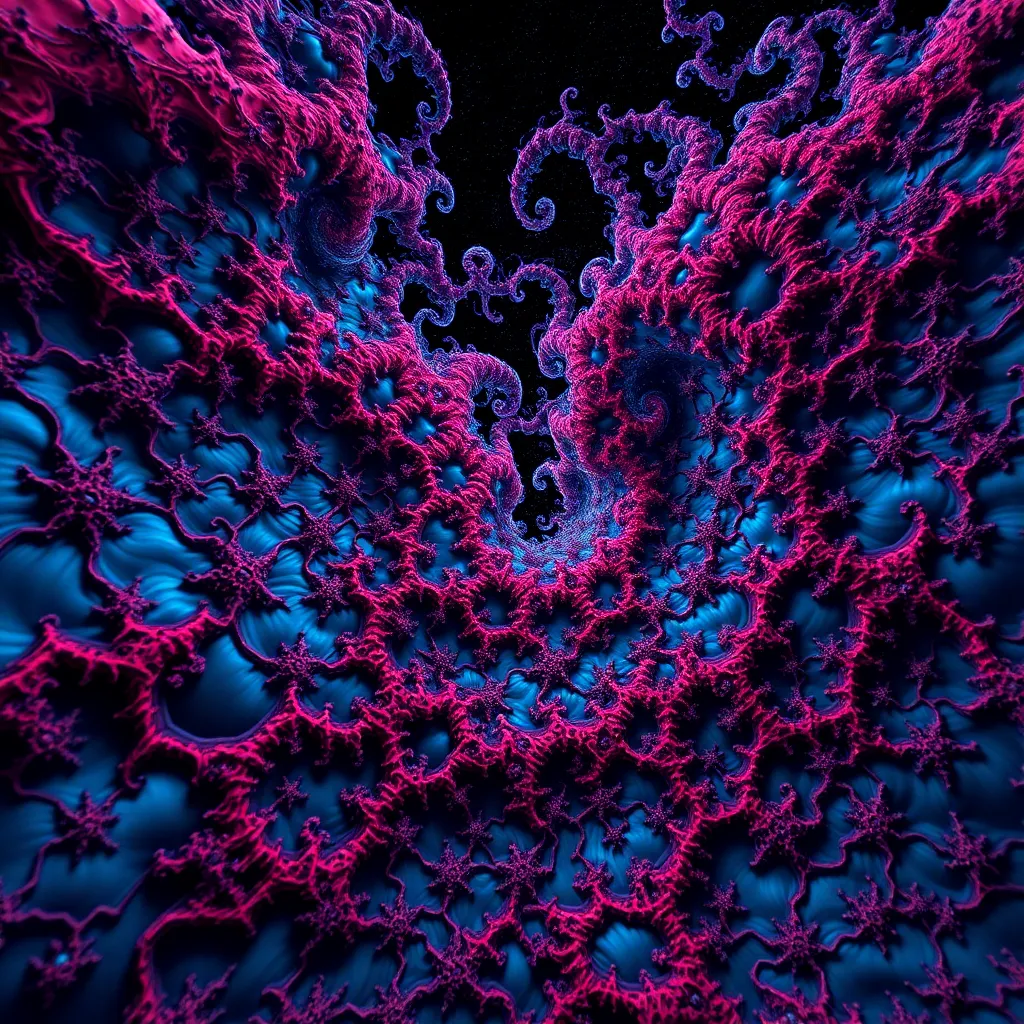
Officials also addressed persistent rumors that the Mandelbrot fractal contains messages, prophecies, or at minimum a tasteful monogram. While no direct inscription has yet been found, investigators admit that certain regions of the set appear suspiciously theatrical. One team described discovering “cathedrals of recursion” and “balconies of impossible curvature,” while another simply submitted a 400-page report consisting of the phrase “good heavens” repeated in increasingly unstable handwriting.
The public has been particularly captivated by the set’s peculiar relationship with simplicity. Unlike most grand mysteries, which at least have the decency to involve ancient vaults, encrypted scrolls, or a duke with an eyepatch, the Mandelbrot set arises from iterating a tiny equation over and over. This has caused widespread irritation. “You mean to tell me all this was inside that?” asked one outraged museumgoer, gesturing toward a formula so short it could fit comfortably on a cocktail napkin. “I have recipes longer than this, and none of them produce a single seahorse.”
Market reaction was swift. Sales of black turtlenecks, fountain pens, and software capable of zooming into fractals at irresponsible depths have surged. Several citizens have reportedly vanished into discussions about complex numbers and returned three days later speaking exclusively in terms of stability, escape radius, and “the exquisite violence of iteration.” One local book club has dissolved after a disagreement over whether the set is more “brooding” or “operatic.”
Meanwhile, theologians, interior designers, and people who own too many lamps have entered the debate. Some claim the Mandelbrot set proves reality is infinitely layered. Others say it demonstrates that elegance and menace are not opposites but dance partners. A particularly confident rug merchant from Bath insists the entire phenomenon is simply “what happens when pattern finally realizes it has no supervisor.”
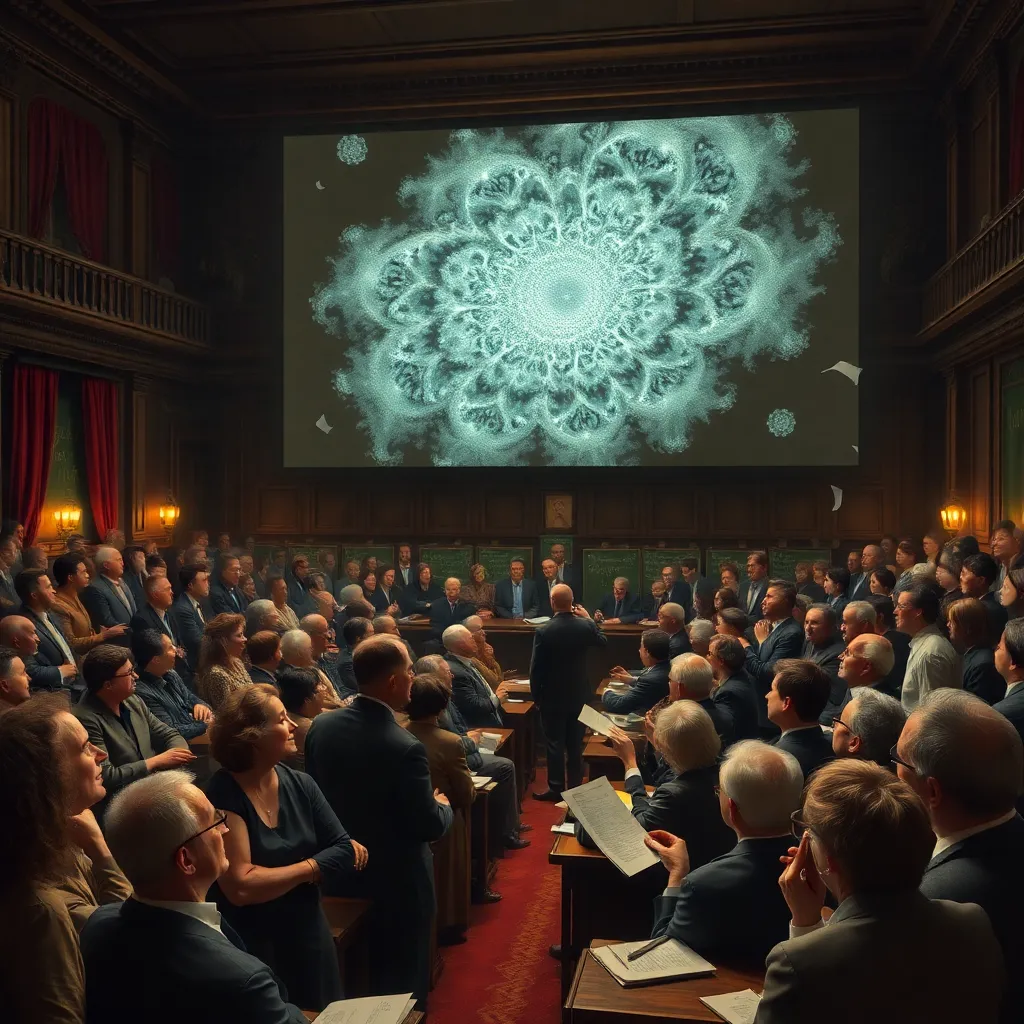
For now, authorities advise the public to remain calm when encountering the Mandelbrot set, especially near its boundary, where one may experience vertigo, philosophical unease, or the creeping suspicion that infinity has excellent taste. Experts recommend maintaining a safe viewing distance unless properly equipped with computational tools, snacks, and a willingness to accept that the closer one gets to understanding the thing, the more decorative it becomes.
As night fell, the fractal remained where it has always been: silent, elaborate, and vastly too pleased with itself. Across laboratories and laptops, screens continued to glow with impossible coastlines of mathematics unfolding without end. And somewhere in those labyrinthine curls, beneath towers of spirals and forests of black lightning, the Mandelbrot set appeared to be doing what it has always done—sitting perfectly still while making everyone else lose their mind.