Spaceballs: The Next Generation Arrives 700 Years Early, Misplaces Future
Citizens awoke this morning to the unmistakable sound of orchestral brass, industrial smoke, and one man somewhere shouting, “Prepare for a legally distinct tomorrow!” as Spaceballs: The Next Generation thundered out of hyperspace and parked diagonally across several moons.
The long-anticipated continuation of the great interstellar administrative disaster was unveiled at a press conference held inside a rotating chrome dome shaped like a helmet with unjustified confidence. Reporters were issued commemorative oxygen and a pamphlet explaining the plot, though by the third sentence the pamphlet had become self-aware, declared itself too old for this franchise, and retired to a vineyard.
According to studio officials, Spaceballs: The Next Generation follows a bold new crew tasked with seeking out strange new merchandising opportunities, new life, and new ways to bill the audience for cup holders. Early production stills reveal a bridge staffed entirely by descendants, interns, holograms, and one exhausted accountant who appears to have been cryogenically preserved purely to whisper, “We can’t keep doing this,” before being ignored by everyone in capes.
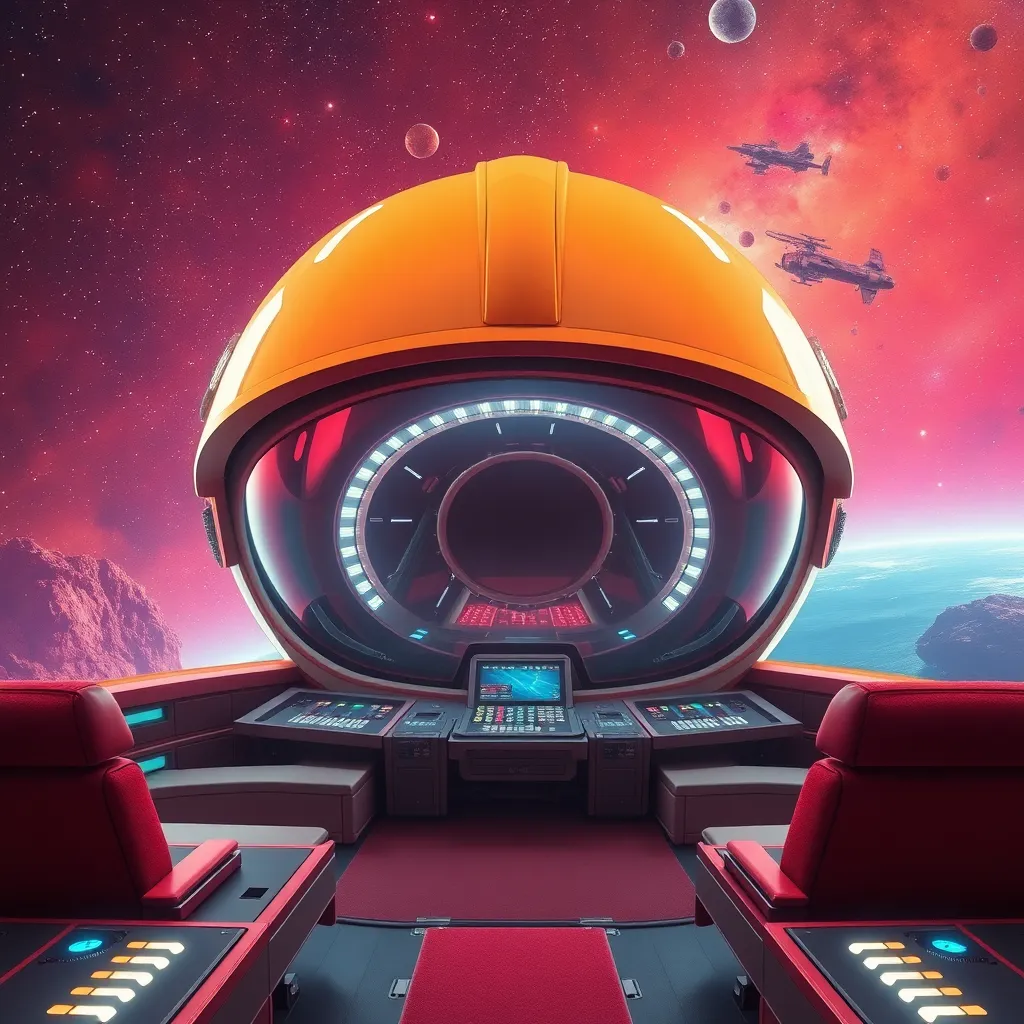
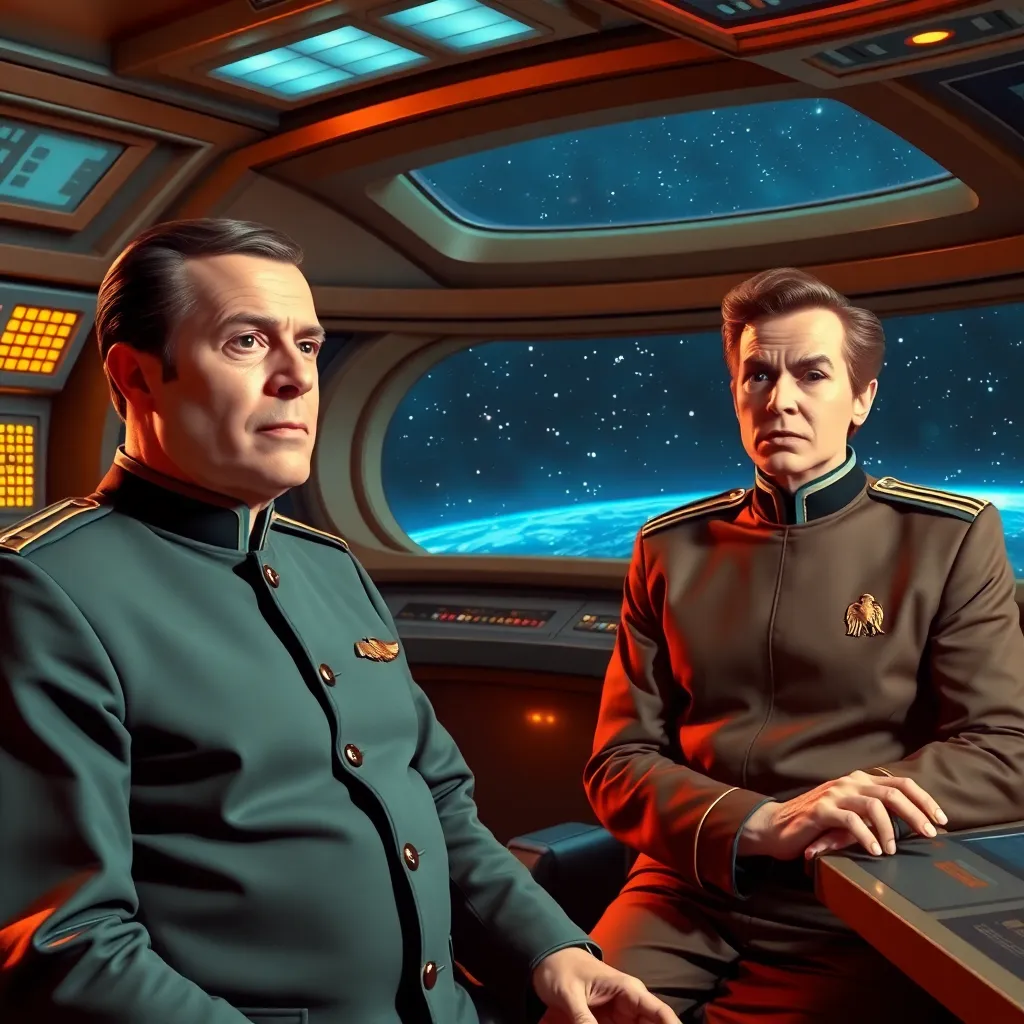
The new captain, Jean-Luc Piclard, is described as “diplomatic, bald in several dimensions, and capable of delivering speeches so moving that enemy warships voluntarily attend therapy.” His first officer, Number Fun, reportedly communicates entirely through sighs, eyebrow choreography, and laminated warning cards. Together they command the USS Excessive Branding, a vessel equipped with photon torpedoes, artisanal espresso taps, and a conference room known only as “The Chamber of Reluctant Sequels.”
Sources close to the production say the film’s central conflict begins when the peaceful planet Druidia Prime Plus Max detects a massive threat approaching at impossible speed: a reboot. Unable to stop it with conventional shields, the planet sends an urgent message to the galaxy’s finest defenders, who unfortunately are unavailable, leaving the job to this crew, a malfunctioning navigation orb, and a janitor promoted in error during a software update.
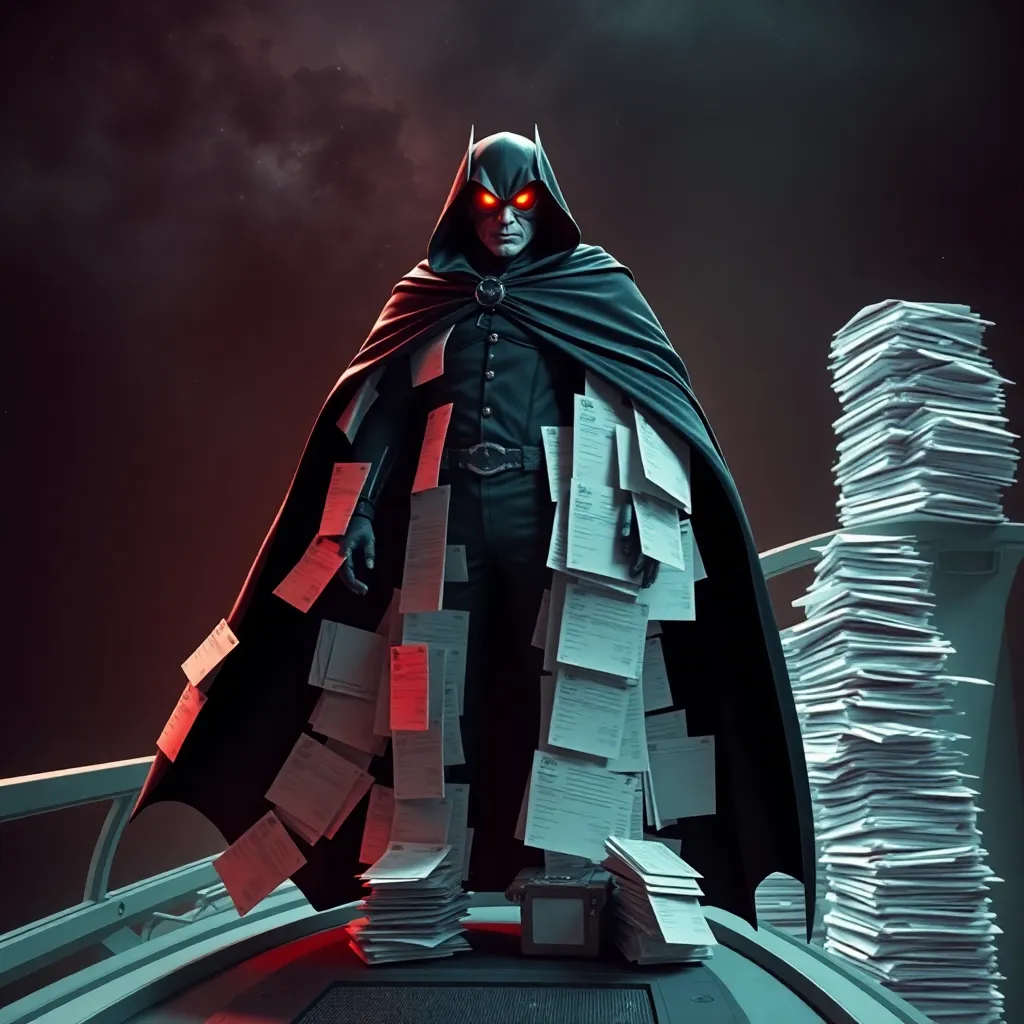
The villain, Dark Spreadsheet, emerges from a cloud of black smoke and unfiled receipts, wearing a cape so large it requires its own union representation. Witnesses from the first teaser described him as “a terrifying blend of cosmic menace and middle management,” with a voice like an espresso machine delivering bad news. His ultimate weapon is rumored to be the Infinite Recap Cannon, a device capable of forcing entire civilizations to relive previous installments until morale collapses and every conversation begins with, “Previously, on the thing you already saw.”
The weapon’s first demonstration was accidental. During a closed screening for journalists, the Cannon allegedly activated and trapped seventeen critics in a loop of opening crawls, family trees, and flashbacks to events that had not yet occurred. By the time rescue teams arrived, several were found gently rocking in their seats, murmuring that perhaps the robot had always been their father.
Meanwhile, beloved legacy figures are expected to return in varying states of dignity. Barf’s grandchildren, a pack of highly decorated canine-human officers, now serve as elite trackers capable of sniffing out hidden enemies, contraband, and weak character motivation. Princess Vespa the Perpetually Unbothered reappears as a senior stateswoman whose chief diplomatic strategy is glaring at foolish men until peace breaks out from sheer embarrassment. Dot Matrix 2.0 has reportedly upgraded from polite domestic assistance to a vast information network controlling libraries, kitchens, and at least one unstable moon.
The film also introduces a younger cast in a move executives described as “organic” while aggressively unfolding demographic charts. Among them are Lonestar Jr. Sr., a roguish pilot with an inherited jawline and leased courage; Vespetta, a royal strategist specializing in evasive maneuvers and public disdain; and Chip, an earnest ship’s counselor who believes any galactic crisis can be resolved if everyone sits in a circle and names their emotional weather.
This idealism is tested in the second act when the crew enters the Nebula of Franchise Rights, a haunted legal region where star maps dissolve, continuity becomes carnivorous, and every sentence must be approved by three spectral attorneys who appear in vaporous robes carrying scrolls and grievance forms. One actor reportedly vanished for six hours after improvising a catchphrase too similar to another property’s catchphrase, only to reemerge speaking exclusively in royalties.
Production designers have spared no expense in building the world of tomorrow, then wasting it magnificently. Sets include a turbo-lift lined with motivational mirrors, a med bay run by a machine that diagnoses all ailments as “stress from being in a third act,” and a holodeck capable of generating any environment except one that comes in under budget. Costume departments, meanwhile, have unveiled uniforms so sleek and unnecessary that several stunt performers slid directly off the set and into a merchandising catalog.
Audience reaction to the announcement has been immediate and medically interesting. Fan conventions erupted into celebration, debate, and at least one very civil duel fought with collectible thermal mugs. Across the internet, message boards lit up with detailed analysis of teaser frames, hidden references, and the theological implications of a spaceship whose emergency brake is a large velvet lever labeled “WHOA.”
Analysts predict the film could redefine the genre, provided the genre survives the opening weekend. Economists are already tracking what they call the “Spaceball Effect,” a market phenomenon in which ordinary consumers suddenly begin purchasing chrome capes, novelty yogurt storage systems, and home theater chairs with unnecessary helm controls. Shares in fog machine manufacturers have climbed 18 percent.
At the center of all the excitement remains a question scholars, fans, and heavily armed collectors continue to ask: can Spaceballs: The Next Generation honor the majestic nonsense of the original while charting a course into even grander absurdity? Insiders insist the answer is yes, noting the final act contains a black hole, a wedding, a labor dispute among battle droids, and a twelve-minute pursuit sequence involving a rebellious shuttlecraft and what one producer simply called “the forbidden accordion.”
The closing scene, though tightly guarded, has already leaked through seventeen contradictory rumors and one unusually poetic lunch menu. In every version, however, the crew stares into deep space as a new threat rises from beyond known stars: an even newer generation, already approaching with brighter uniforms, sharper cheekbones, and a pilot episode.
Astronomers advise the public not to panic. There is still time to prepare. Citizens are encouraged to secure loose furniture, update their wills, and learn the location of the nearest emergency snack hatch. Space, once again, has become far too crowded with destiny.