Jalapeño-Grade Laptop Declared Local Hero After Saving Teen From Avalanche With “Unreasonable Warmth”
Residents of the upper ridge community of Frostwhistle are still processing the moment a so-called “spicy laptop” reportedly saved a trapped teenager from an avalanche by generating enough heat, light, noise, and emotional tension to create what rescue officials are calling “a survivable microclimate of panic.”
The teenager, 16-year-old Milo Fen, had been hiking with friends when a shelf of snow detached from the mountain “like a giant angry soufflé,” according to one witness, and swept him into a drift nearly eight feet deep. Buried but not entirely pinned, Milo found in his backpack the one object adults had begged him not to bring into the wilderness under any circumstances: a gaming laptop known among his classmates as The Skillet.
“It runs three tabs and a weather app like it’s preparing for atmospheric reentry,” said schoolmate Taryn Lo. “If you open a spreadsheet on battery mode, it smells faintly of toasted coins.”
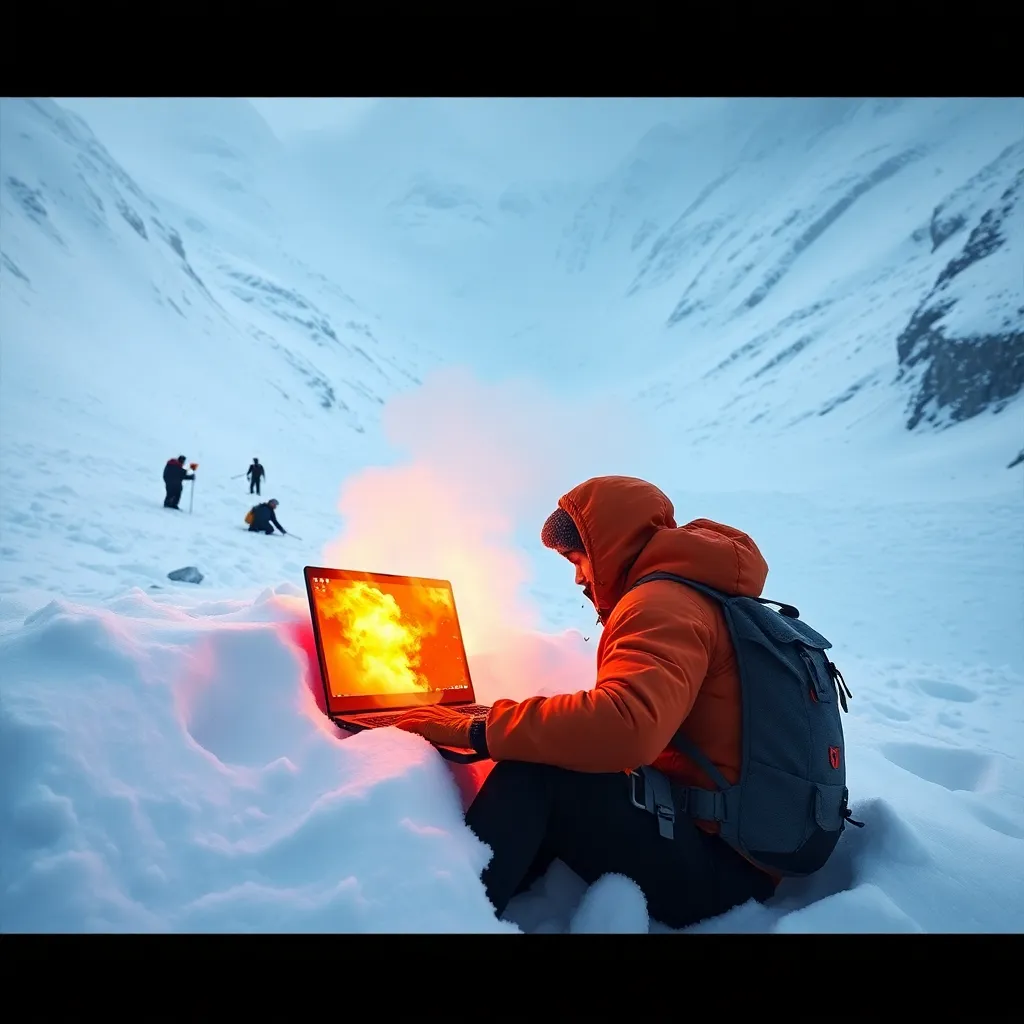
According to rescue personnel, Milo did what experts are now cautiously describing as “the funniest correct decision available.” With temperatures dropping and oxygen limited, he powered on the laptop in an enclosed air pocket, launched a graphically excessive racing game, opened a video editor, began exporting a school project, and, for reasons known only to youth, joined a voice chat with twelve of his friends at once.
Within minutes, the machine entered a thermal state one engineer called “medically significant.”
“The snow around him compacted, then softened, then formed a kind of slushy vestibule,” said Deputy Rescue Chief Elin Marr. “The device also emitted a fan noise that our dogs initially identified as a distressed hovercraft.”
That noise, a high-pitched mechanical shriek alternating with the occasional electronic chirp, helped search crews narrow in on Milo’s location. But rescuers insist the laptop’s greatest contribution was heat.
“We’re not saying people should rely on consumer electronics in avalanche conditions,” said mountain safety officer Bram Nedd, standing beside a caution sign and looking spiritually exhausted. “We are saying this particular machine appears to have the thermal output of a resentful bistro.”
Milo was recovered after 47 minutes, cold but stable, and reportedly annoyed that his battery had dropped to 63 percent.
Doctors at Frostwhistle Regional Medical Center confirmed mild hypothermia, dehydration, and what they classified as “temporary proximity to unacceptable computing temperatures.” Milo is expected to make a full recovery. The laptop, meanwhile, was transported on a metal tray and isolated in a tiled room usually reserved for overconfident fondue experiments.
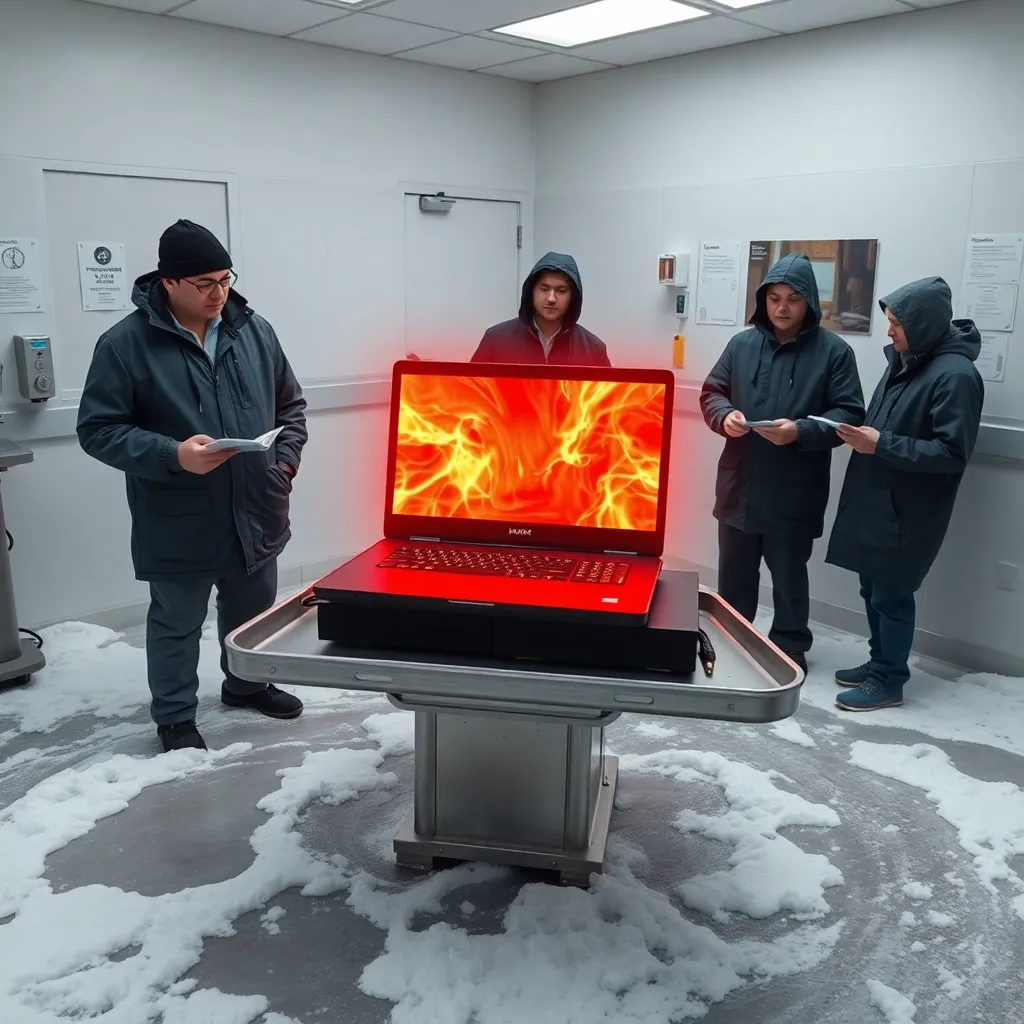
The manufacturer issued a statement noting that the model was “designed for performance-minded users” and “not specifically advertised as avalanche survival equipment, though the team is inspired by recent field reports.” Within hours, the company’s stock rose after rumors spread of a forthcoming rugged outdoor line tentatively titled InfernoBook Alpine.
At Milo’s school, students have already adapted the story into legend. Several now claim they always believed the machine’s dangerous surface temperatures would one day serve the public good. One classmate said the laptop had previously melted a lip balm, softened a geometry protractor, and once caused a desk fern to “reconsider its path.”
Teachers were less enthusiastic. “For two years I have told that child not to render 4K lava simulations during lunch,” said media studies instructor Janie Pike. “Apparently I owe him an apology and perhaps a commemorative plaque.”
Local officials are planning a ceremony in which Milo will receive the Frostwhistle Medal for Unscheduled Ingenuity. The laptop may also be recognized, though organizers are debating whether it is safe to bring indoors. Early plans involve a wheeled platform, heat-resistant gloves, and a respectful distance of twelve feet.
The mountain itself has also changed. The area where Milo was found now contains a curious melted chamber in the snow, smooth-walled and faintly smelling of plastic ambition. Residents have begun leaving flowers, thank-you notes, and small USB drives at the site.
One note, written in marker on the back of a ski pass, read simply: “We mocked your fan noise. We were fools.”
In a brief statement to reporters, Milo thanked the rescue team, his family, and “the engineers who looked at a reasonable temperature limit and decided not to be controlled by fear.” He then asked whether anyone had found his charger.
Investigators say the charger may still be somewhere on the mountain, where, if plugged into anything by mistake, it could begin a whole new chapter in regional geology.