The Illuminutella: A Nutty Conspiracy in the World of Breakfast Spreads
For decades, the public has been told that hazelnut chocolate spread is a simple pleasure: a sweet, glossy paste designed to make toast feel as though it has briefly inherited a trust fund. But beneath the cheerful clink of breakfast knives and the innocent smiles of brunch influencers lurks a theory so sticky, so suspiciously spreadable, that kitchen pantries across the nation are now being treated as active scenes of inquiry.
Welcome to the shadowy world of the Illuminutella, an alleged network of elite breakfast operatives who, according to jar-level investigators, have been quietly manipulating global events through strategic smear campaigns, coded label design, and the weaponization of “just one more spoonful.”
The first clues were hiding in plain sight. Consider the swirl. Why, researchers ask, must every advertisement linger so lovingly on the slow-motion ribbon of chocolate-hazelnut cream folding in on itself like a delicious galaxy? Why is it always glossy? Why does it glisten with the confidence of an organization that knows exactly where all the teaspoons are? Independent breakfast theorists now argue that this is not mere food styling, but a hypnotic symbol meant to lull the consumer into a state of toast-based obedience.

At the center of the theory is the jar itself, described by one whistleblower as “a vault with better branding.” Cylindrical, stout, and impossible to open gracefully, the container has long been suspected of encouraging ritual behavior. First comes the twist. Then the pause. Then the inward nod, as if one has entered an agreement too ancient to be written down. Some claim the very shape of the lid corresponds to planetary alignments visible only from deluxe hotel buffets between 6:30 and 9:15 a.m.
More troubling, however, is the alleged global coordination. The Illuminutella is said to maintain influence through a latticework of brunch cafés, luxury continental breakfasts, and that one coworker who always says, “Have you tried it with strawberries?” Analysts say these people are not merely making suggestions. They are recruiters. Every waffle station, every crepe counter, every suspiciously artisanal mini-pastry may be part of a sprawling recruitment funnel designed to usher ordinary citizens into a life of velvety dependence.
Financial evidence remains murky, mostly because it is difficult to secure grants for “follow the crumbs” operations, but breakfast economists have raised urgent questions. Why, they ask, does one jar vanish in three days despite everyone in the household swearing they “only had a little”? Where does it go? Who is taking these spoonfuls in the night? Is the spread being consumed, or is it consuming us—socially, emotionally, perhaps even municipally?
One former pantry consultant, speaking from an undisclosed farmhouse kitchen, claims he saw internal documents outlining a plan called Operation Morning Dominion. The strategy reportedly involved normalizing chocolate at breakfast so thoroughly that future generations would no longer distinguish between dessert and policy. “First they came for toast,” he said, clutching a banana as though it had legal standing. “Then pancakes. Then croissants. By the time they reached the fruit aisle, nobody remembered how we used to live.”
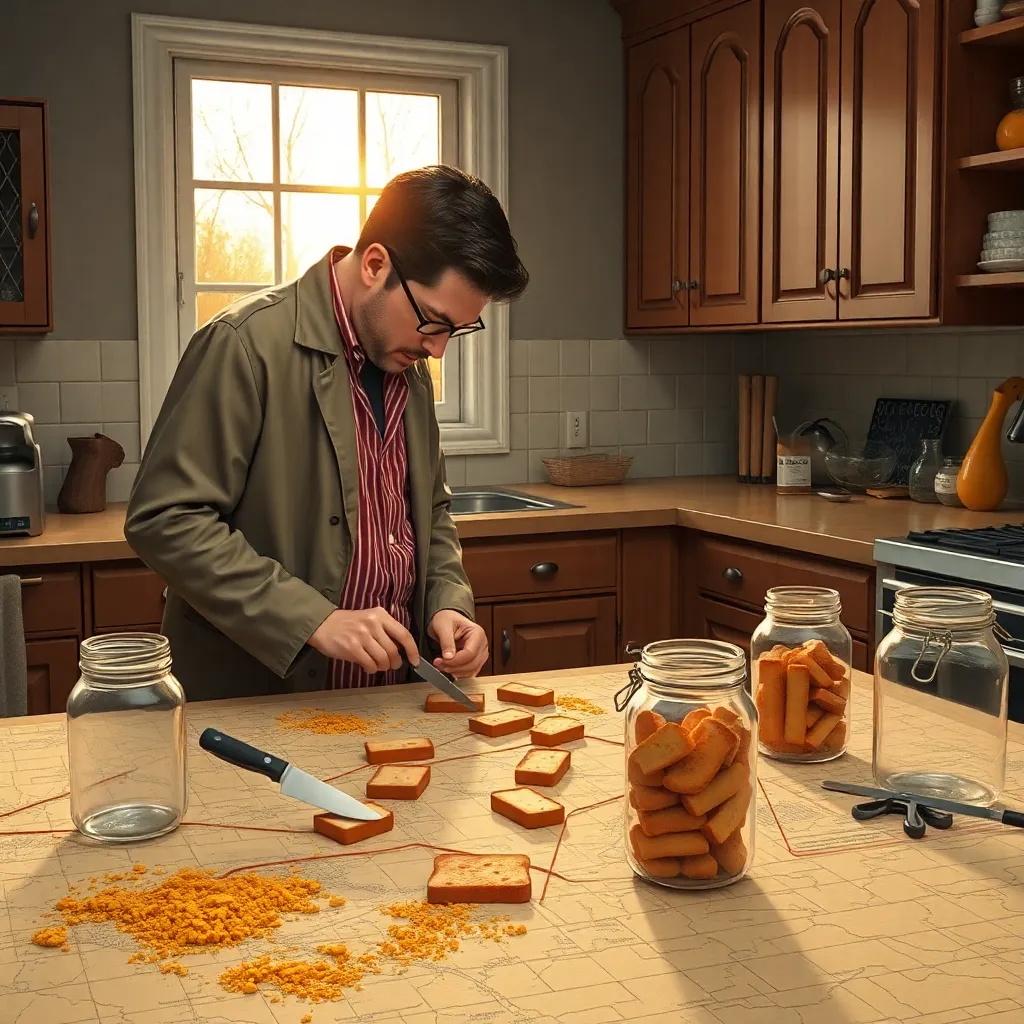
Skeptics insist the theory falls apart under scrutiny, noting that a breakfast spread cannot realistically coordinate geopolitics. But supporters counter with one damning word: palatability. History, they argue, has always underestimated the influence of very pleasant things. Empires have risen on spice, collapsed over tea, and launched entire shipping routes because someone thought cinnamon should travel farther. Is it truly so implausible that a smooth, sweet hazelnut compound might develop ambitions?
The symbolism grows thicker. Hazelnuts themselves, according to fringe cereal scholars, are “the acorns of secrecy.” Chocolate has long been associated with luxury, temptation, and saying “I deserve this” in a voice usually reserved for expensive candles. Combine the two and you have not a snack, but a manifesto. Add sugar, and suddenly the manifesto has funding.
Perhaps the most alarming allegation concerns coded messaging embedded in breakfast behavior. A knife dragged once across toast means hunger. Twice means enjoyment. But three precise strokes, followed by a contemplative stare into middle distance, allegedly signals loyalty to the inner circle. In some cities, residents report seeing brunch patrons gently tapping the rim of the jar before serving themselves, an act experts now describe as “either a superstition or a clearance procedure.”
Government officials have declined to comment, though one regional agriculture minister did appear unusually nervous when asked whether the national stockpile included emergency brioche. Meanwhile, customs officers are said to be monitoring unusual traffic involving oversized waffles, hollowed-out baguettes, and diplomatic pouches that smell faintly of roasted nuts and unresolved power.
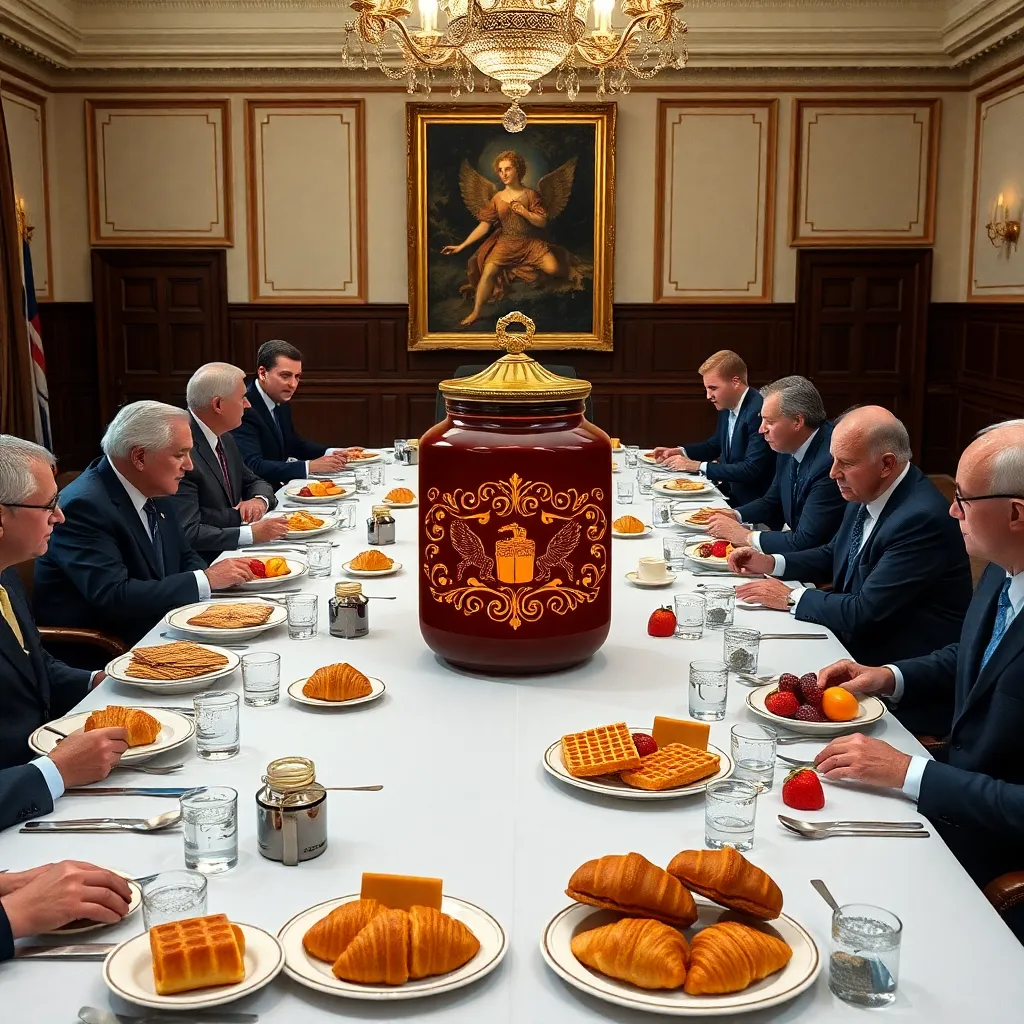
Then there are the children, long considered the soft underbelly of the operation. With one bite, they become tireless evangelists, demanding toast with the fervor of tiny lobbyists. Parents, exhausted and outmaneuvered, surrender. Thus the cycle continues: a new generation raised to believe that bread is merely a delivery mechanism for an agenda smooth enough to pass unnoticed.
Even rivals in the pantry are reportedly on edge. Peanut butter remains gruff and provincial, muttering about protein and authenticity. Jam has adopted the brittle confidence of old money. Marmalade has become impossible at parties. Yet all of them know the truth: none can match the velvety charisma of an organization that arrived wearing dessert and called itself breakfast.
What, then, is to be done? Some activists recommend vigilance. Inspect the pantry. Count the spoons. If you catch yourself eating it directly from the jar under the refrigerator light at 11:47 p.m., ask who benefits. Others advise coexistence, arguing that resistance is futile and, more importantly, delicious. A smaller hardline faction has retreated to dry toast compounds in the countryside, where they live off oats, principle, and an almost theatrical amount of sighing.
As public concern rises, the alleged architects of the Illuminutella remain silent, their silence itself suspiciously silky. No official statement has been released, no manifesto published, no breakfast coup formally acknowledged. And yet every morning, across the world, lids are twisted, knives are dipped, and toast receives its glossy instructions.
Coincidence, perhaps. But in kitchens everywhere, the jars sit waiting—calm, polished, and utterly certain that when the moment comes, humanity will spread exactly as directed.