The Tragic Demise of Pleegwat: A Cautionary Tale of Grue-Related Mishaps
PLEEGWAT, LOWER FENSHIRE — In what local officials are calling “an entirely preventable incident made inevitable by confidence,” the quiet hamlet of Pleegwat has entered that rarest of municipal categories: temporarily extant.
For on Tuesday evening, shortly after dusk and just before anyone thought to check whether dusk had “gone on a bit,” Pleegwat suffered the kind of calamity normally reserved for medieval allegories and poorly supervised role-playing campaigns: a grue-related mishap of catastrophic proportion.
The village is now widely considered “tragically demised,” though the parish council insists the correct term is “undergoing a period of civic quietness.”
A Village Known for Its Charm, Its Scones, and Its Reckless Attitude Toward Darkness
Pleegwat had long prided itself on a hardy independence, a stubborn refusal to modernise, and a tourism slogan—“Pleegwat: You’ll Find Us Eventually”—that seemed cute until it became logistically untrue.
A place of thatched roofs, confusing footpaths, and pubs that close “when it feels right,” Pleegwat’s relationship with the dark was historically casual.
“People from the city panic the moment a streetlight flickers,” said local resident Maureen Thatchley, speaking from an undisclosed location with a borrowed torch. “Out here, we’ve always believed the darkness is just nature’s way of telling you to mind your own business.”
This philosophy, while admirable in its rustic simplicity, proved less effective when confronted by a grue.
What Is a Grue? Officials Say It’s “Not Helpful to Ask That Now”
Authorities from the Department for Rural Mythical Incidents (DRMI) described a grue as “a creature of darkness, opportunism, and municipal liability.”
The DRMI spokesperson, wearing a high-visibility jacket and the haunted stare of someone whose job title is “Cryptid Mitigation Liaison,” offered the following guidance:
“A grue is most commonly encountered in the dark.”
“A grue is not improved by your confidence.”
“You cannot reason with a grue.”
“No, it doesn’t matter that you’ve brought a whistle.”
Scientists have attempted to classify the grue, though progress has been slow due to the creature’s tendency to discourage close observation.
“Every time we try to get a proper reading, the equipment comes back damp and embarrassed,” said Dr. Edwin Skelch of the University of East Wychbury. “We suspect the grue exists in a state of quantum spite.”
The Chain of Events: How Pleegwat Walked Into a Dark Room and Chose to Make It Everyone’s Problem
The tragedy began, as so many British disasters do, with a committee meeting.
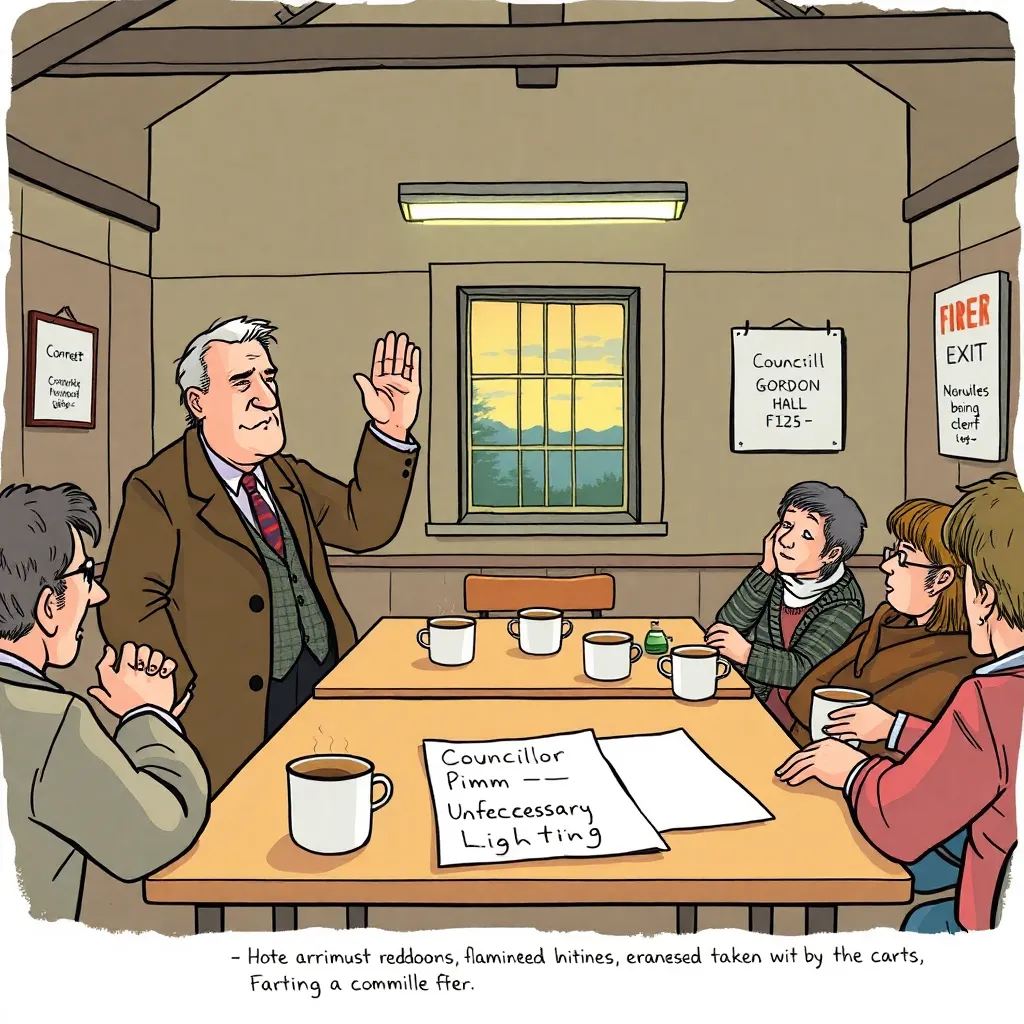
At 6:45 p.m., Pleegwat’s Parish Council convened to discuss “unnecessary lighting” in the village square.
The minutes indicate that Councillor Gordon Pimm proposed switching off the last remaining lamp post, calling it “a vulgar beacon for foxes and outsiders.”
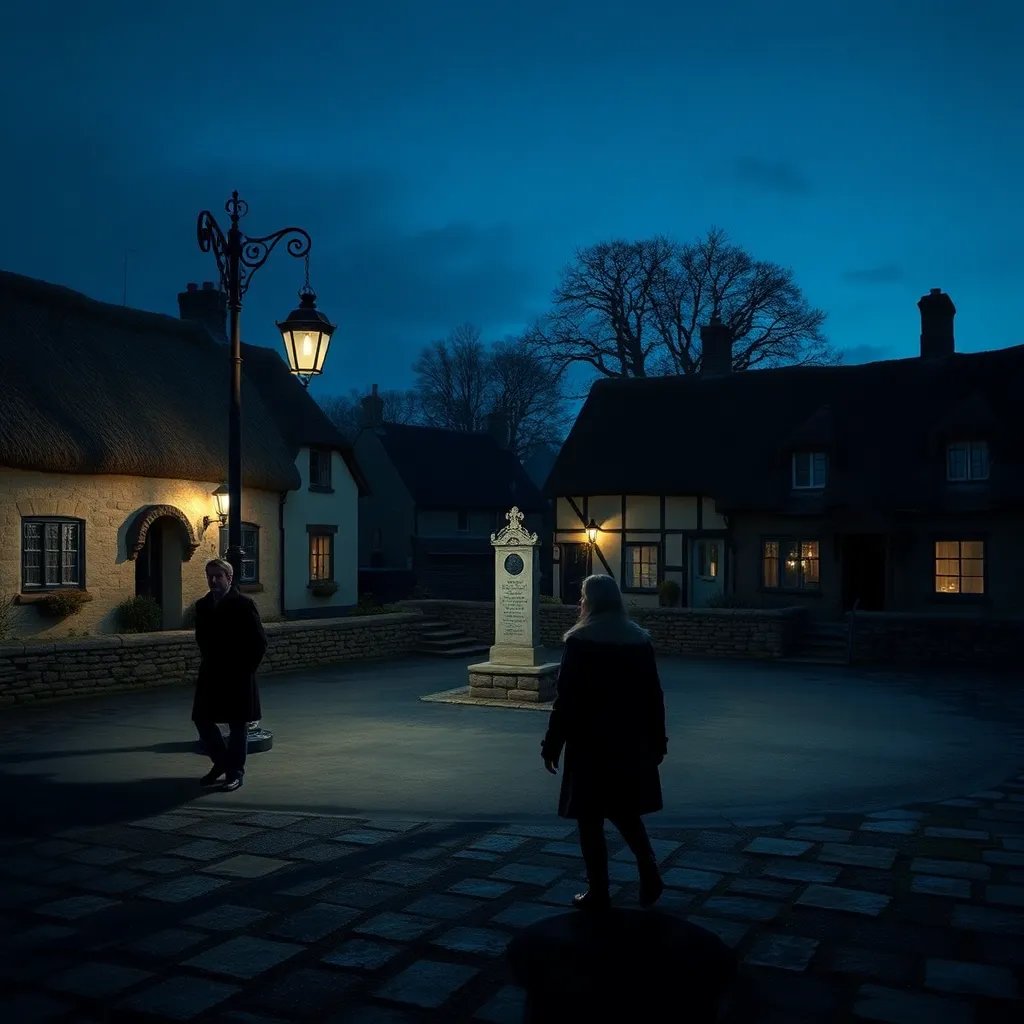
The motion passed unanimously after someone observed that the lamp post’s glow made the war memorial “look a bit needy.”
At 7:12 p.m., the lamp was switched off.
At 7:13 p.m., the first villager remarked, “Oh, it’s proper dark.”
At 7:14 p.m., someone else said, “It’ll be fine. We know these lanes.”
At 7:15 p.m., the grue allegedly said nothing, because it never does, and began doing what it does best: making a mockery of the concept of a “quiet evening.”
Witnesses Describe a “Shadow With Opinions”
Though statements vary—some due to panic, others due to lingering pride—most survivors describe the same sequence: a cold hush, a sudden absence of birdsong, and the unmistakable sensation of being judged by the darkness itself.
“I felt like the night had leaned in,” said Trevor Henshaw, who escaped by hiding inside a wheelie bin and rolling downhill “with purpose.” “Not like it was windy. Like the dark was nosy.”
Another witness, Sheila Grump, reported hearing something “like a wet cardigan being dragged across gravel.”
“It was either a grue or the vicar,” she added, “and frankly I wasn’t going to take the risk.”
The Village Response: Denial, Then Lanterns, Then Regret
Pleegwat’s reaction to the first confirmed grue sightings followed the traditional rural emergency protocol:
Deny it.
Call it a fox.
Call it “probably kids.”
Suggest it’s “just the wind” even when there is no wind.
Attempt to resolve it with a strongly worded note.
It was only after the note returned—torn in half, somehow damp, and smelling faintly of smugness—that the village began to suspect they were not dealing with “louts” or “youths” but with something significantly less interested in parish boundaries.
Local shopkeeper Nellie Crumb, who had initially sold “anti-grue candles” (regular candles with a handwritten label), issued an apology.
“I thought if I called them anti-grue, people would burn them with more determination,” she said. “Turns out determination is not a recognised form of light.”
The Final Evening: Pleegwat Learns the Difference Between ‘Dim’ and ‘Doom’
On the night of the incident, villagers attempted a coordinated lantern walk to “reassert dominance over the lanes,” which is a phrase that should never be said out loud in a place with hedgerows.
The plan involved:
three lanterns,
one torch with weak batteries,
a man who “had a lighter somewhere,”
and a dog that immediately refused to participate on ethical grounds.
The group proceeded into the village green, where they were met by what survivors described as “a shadow that wasn’t attached to anything.”
“It was like someone had taken all the fear in the county and given it a postcode,” said Henshaw.
The lanterns flickered.
Then, in a moment of civic hubris so pure it could be bottled and sold as a disinfectant, Councillor Pimm reportedly announced: “We don’t need light. We have community.”
Shortly after, the community was reclassified as “formerly present.”
The Aftermath: A Map Now Contains a Small, Awkward Silence
By morning, Pleegwat was… difficult to define.
The village still appeared on maps, but GPS systems began routing drivers around it with messages like “No” and “Try Later.”
The Royal Mail attempted delivery but reported “a sensation of being watched by the hedges,” then left.
A drone sent to survey the area returned immediately, having filmed only darkness and what experts describe as “a shape that looked disappointed.”
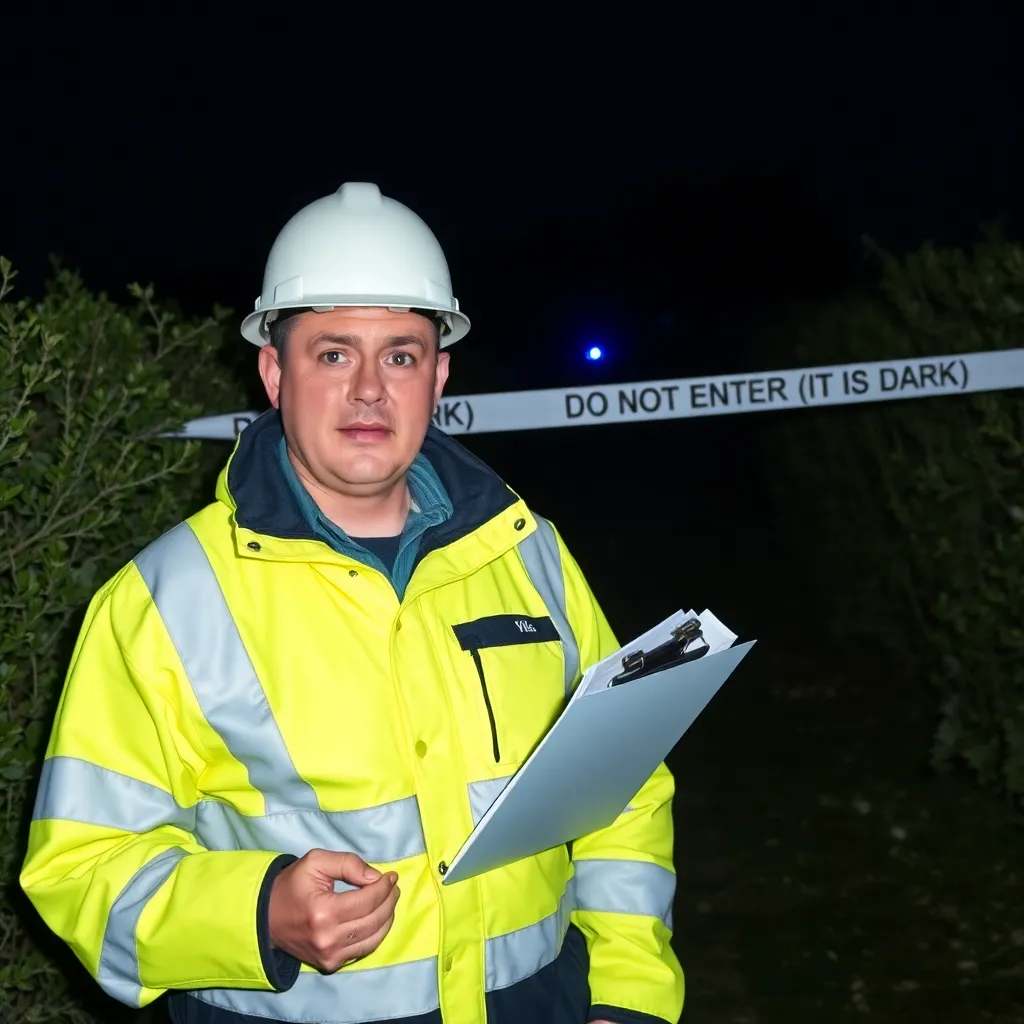
The DRMI cordoned off the region with tape reading: DO NOT ENTER (IT IS DARK), which residents of neighbouring villages have interpreted as “free parking.”
Grue Safety: The Government Finally Issues Advice That Would Have Been Useful Before
In response to public concern, the DRMI released a four-point safety plan titled “GRUE: AWARENESS IS MOST OF IT.” It includes the following recommendations:
Avoid darkness. If you must enter a dark area, ask yourself why you hate yourself.
Carry a reliable light source. “A phone screen doesn’t count,” the pamphlet adds, “and neither does optimism.”
Do not travel alone. Gru(e) prefer solitary targets, much like aggressive salespeople.
If you suspect a grue is nearby, leave. Do not investigate. Do not whisper “hello?” into the dark like a character in a film who deserves what happens next.
The pamphlet also warns against:
reading about grues at night,
saying “grue” three times in a mirror,
and “turning off the last lamp post to make a point.”
A Cautionary Tale for Every Village With a Committee
The tragedy of Pleegwat is already being studied in schools as part of the Key Stage 3 module, “Why We Have Streetlights.”
Meanwhile, the Parish Council, now meeting at midday “to be on the safe side,” has issued a statement expressing condolences to itself and pledging to install new lighting as soon as funding can be obtained from “anyone who believes in not being eaten by shadows.”
A memorial service is planned, though organisers admit it may be difficult to determine where the village begins and ends.
“We’ll probably just stand at the edge and think about it,” said Maureen, holding her torch like a holy object. “That seems respectful.”
Closing Thoughts: The Dark Isn’t Always Empty
Pleegwat’s demise serves as a warning—both to those who scoff at basic illumination and to those who assume the darkness is merely an absence rather than, in some places, a presence with plans.
Yes, we are told to fear the dark as children.
As adults, we learn to pretend we don’t.
And in Pleegwat, that pretence lasted right up until it didn’t.

In related news, the DRMI has confirmed it is monitoring “several other villages with an unhealthy relationship to blackout curtains,” urging residents to “stop being brave in the wrong direction.”