The Wibbles’ Top 10 Weirdest Operating Systems of All Time
Some operating systems were built to manage files, run programs, and help humanity calculate the square root of tax. Others were clearly designed at 3:14 a.m. by a wizard in fingerless gloves shouting, “What if the desktop mooed?” Today, we honor the latter: the magnificent, baffling, occasionally sentient pantheon of operating systems that looked at normal computing and chose jazz.
This ranking is based on a rigorous methodology involving boot screens, emotional instability, and whether the settings menu felt like it might ask for a blood oath.
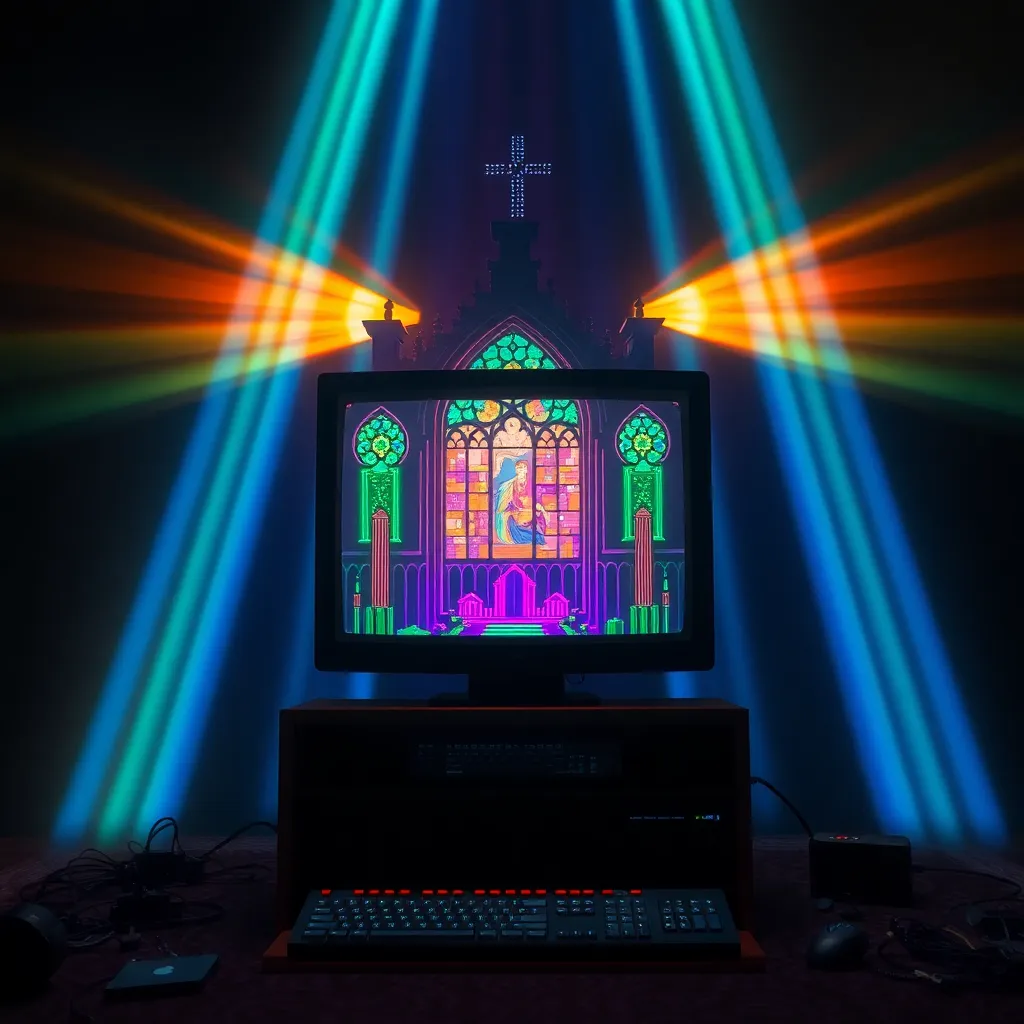
10. TempleOS — The Divine Spreadsheet Experience
TempleOS did not merely invite users into a computer environment. It ushered them into a glowing, brightly colored cathedral where every pixel looked hand-delivered by prophecy. With its chunky graphics, built-in programming language, and holy certainty, it occupied the very specific market segment known as “people who think the command line should have more revelation.”
It was less an operating system and more a direct hotline between your motherboard and a thundercloud. There are many systems that promise power; very few arrive appearing to have been carved from sacred crayons.
9. Hannah Montana Linux — The Best of Both Kernels
An operating system must answer one fundamental question: can your desktop theme include both a media career and package management? Hannah Montana Linux bravely declared yes. It took Ubuntu, dipped it in glitter, and asked users to compute with the confidence of someone who has absolutely too many sequins and no regrets.
The result was extraordinary. One moment you were editing documents; the next, your screen resembled the inside of a pop concert lunchbox. For many, it was the first time software truly understood the needs of users who wanted terminal access and a wallpaper that screamed in pink.
8. Collapse OS — Finally, an OS for the End Times
Most operating systems assume a functioning society. Collapse OS made the bolder assumption that civilization has become a memory and that you are now soldering your own future by lantern light from scavenged calculator parts.
This was not software for casual browsing. This was software for the man in a bunker teaching an abandoned fax machine to become a village server. It asked a beautiful question: after the collapse of industrial supply chains, will we still need text editing? The answer, reassuringly, was yes.
7. Plan 9 from Bell Labs — The Operating System That Looked at Unix and Said, ‘Cute’
Plan 9 is what happens when a room full of elite computer scientists decides that one revolution was not enough. It tried to rethink computing from the ground up, making everything a file with such intensity that one expected eventually to open /ham/sandwich/weather.
It was elegant, ambitious, and somewhat like receiving a blueprint for the perfect city from an architect who had forgotten to include where people would buy socks. Everyone respected it. Almost nobody moved in. That, in computing, is one of the highest possible compliments.
6. Inferno — The OS That Sounded Like a Threat
Inferno had perhaps the strongest branding in operating system history. If someone tells you they installed Inferno on a device, you assume one of two things: either they are a deeply informed systems researcher, or their toaster is now in charge of regional banking.
Designed to run across different kinds of machines through a virtual machine architecture, Inferno was weird not because it was silly, but because it walked into the room with a trench coat full of concepts. Distributed computing, portability, modularity — it had enough ideas to frighten a less committed kernel clean out of its boots.
5. BeOS — The Smooth Jazz of Alternate Timelines
BeOS remains one of the great “what if” stories in computing: what if your desktop felt sleek, responsive, modern, and somehow slightly too cool to make eye contact? It was multimedia-focused, fast, and polished in a way that made other systems of its era seem to be thinking through custard.
It was weird because it appeared to come from a superior timeline where everyone edited video on the family computer while sipping chrome. Opening windows on BeOS had the energy of a waiter removing a silver platter lid. Something excellent was always about to happen, even if it was just a file browser.
4. MenuetOS — The Tiny Tyrant
MenuetOS is notable for being written in assembly, which is the software equivalent of constructing a grand piano with tweezers and personal resentment. Tiny, efficient, and proud of it, it gave users the distinct impression that every byte had been interrogated before being allowed through the door.
There is something deeply unsettling about an operating system that feels lean enough to run on a cough. While bloated software lumbers around like a tired emperor, MenuetOS arrives wearing a razor-blade suit and asks if 64 kilobytes ought to be enough for your dreams.
3. Red Star OS — Computing by Haircut Inspection
Red Star OS is one of those operating systems that does not simply provide a desktop environment, but also appears to stand behind you while you use it, folding its arms. Developed in North Korea, it gained international notoriety for a design aesthetic that looked uncannily familiar and a reputation for features that suggested your files were participating in a highly organized committee.
Its weirdness lay not just in its appearance, but in its aura. Every icon seemed to know something. Every settings panel looked like it might report you for having changed the mouse pointer to an ideologically ambiguous otter.
2. LFS (Linux From Scratch) — Some Assembly Required, Plus Several Existential Episodes
Linux From Scratch is technically less an operating system and more a challenge issued by a mountain. It says: do you really want an OS, or do you want to understand one, line by line, package by package, dependency by dependency, until you have aged into a new philosophical era?
Normal users install software. LFS users enter into a pact. By the end, they have not just built a system; they have become the kind of person who says “toolchain” with the thousand-yard stare of someone who has fought 17 compilers in single combat and won.
1. Microsoft Bob — The House That Tried to Do Your Computing for You
And here it is: the velvet-crowned emperor of weird. Microsoft Bob was not content to be an interface. It became a house. Your files were in rooms. Your desktop was not a desktop. It was interior décor. Computing had become a domestic arrangement with suspiciously cheerful furniture.
Need to write a letter? Perhaps click the pen on the desk. Need to manage finances? Wander spiritually toward the checkbook in the living room. It was as if software designers had concluded that the greatest obstacle to productivity was a tragic shortage of metaphoric bungalow.
Bob remains unmatched because it transformed the humble act of opening a program into an experience resembling a children’s museum designed by a committee of deeply confident uncles. It did not ask whether users wanted their operating system to be a suburban floor plan. It simply handed them the keys and pointed at the cartoon dog.
Honorable Mentions for Systems That Also Clearly Had Plans
There are many more worthy entrants milling around the banquet of digital oddity. OS/2 Warp sounded like it should come with a cape and a transit permit to the future. AROS had the determined expression of a machine rebuilding a dream from spare parts. Syllable, ReactOS, and the many brave descendants of forgotten ambitions all deserve a ceremonial boot chime.
The weirdest operating systems are not necessarily the worst, nor even the least practical. Often they are the most revealing. They show what engineers, dreamers, and highly caffeinated visionaries thought computers could be before reality arrived with a spreadsheet and a licensing agreement.
And perhaps that is the true lesson of the weird operating system: somewhere, in a garage or lab or reinforced underground cupboard, someone is still building the next one. Right now, as you read this, a person is almost certainly trying to make an operating system that runs entirely through a fish tank, or one that stores files in an emotional garden, or one that boots only if complimented.
We wish them luck. We also recommend regular backups.