Filed Report
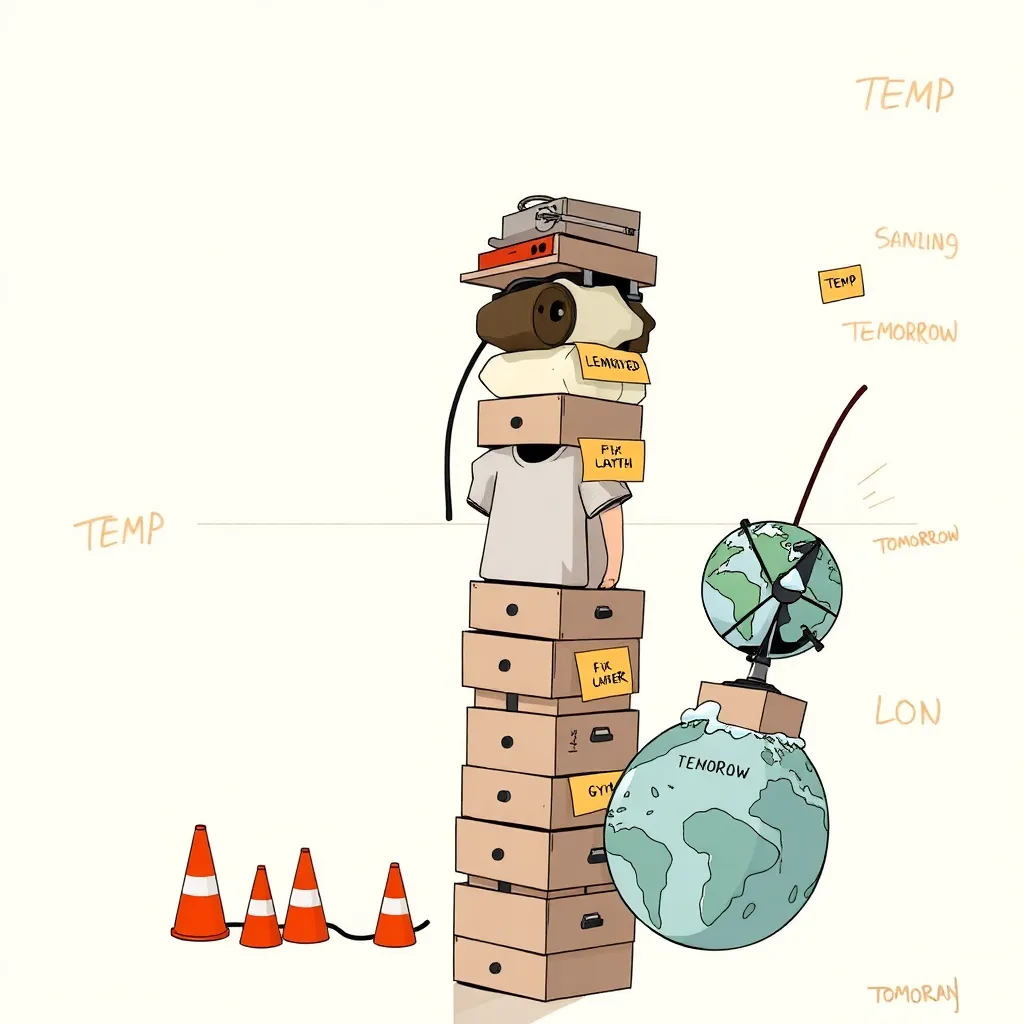
Top Ten Most Permanent Temporary Things (Plus a Bonus That’s Now Part of the Load-Bearing Structure)
In a functioning universe, “temporary” is a polite word meaning “brief,” “interim,” “short-term,” or at the very least “not something we’ll build a civilization around.”
In this universe, “temporary” is a sacred engineering classification indicating a solution so durable, so resilient, and so socially protected that it will outlive your job, your landlord, and possibly your species. Temporary isn’t a timeframe—it’s a lifestyle. A covenant. A cosmic joke signed off by management.
Below are the ten most permanent temporary things currently propping up modern life, plus a bonus entry that started as a joke and is now in the critical path.
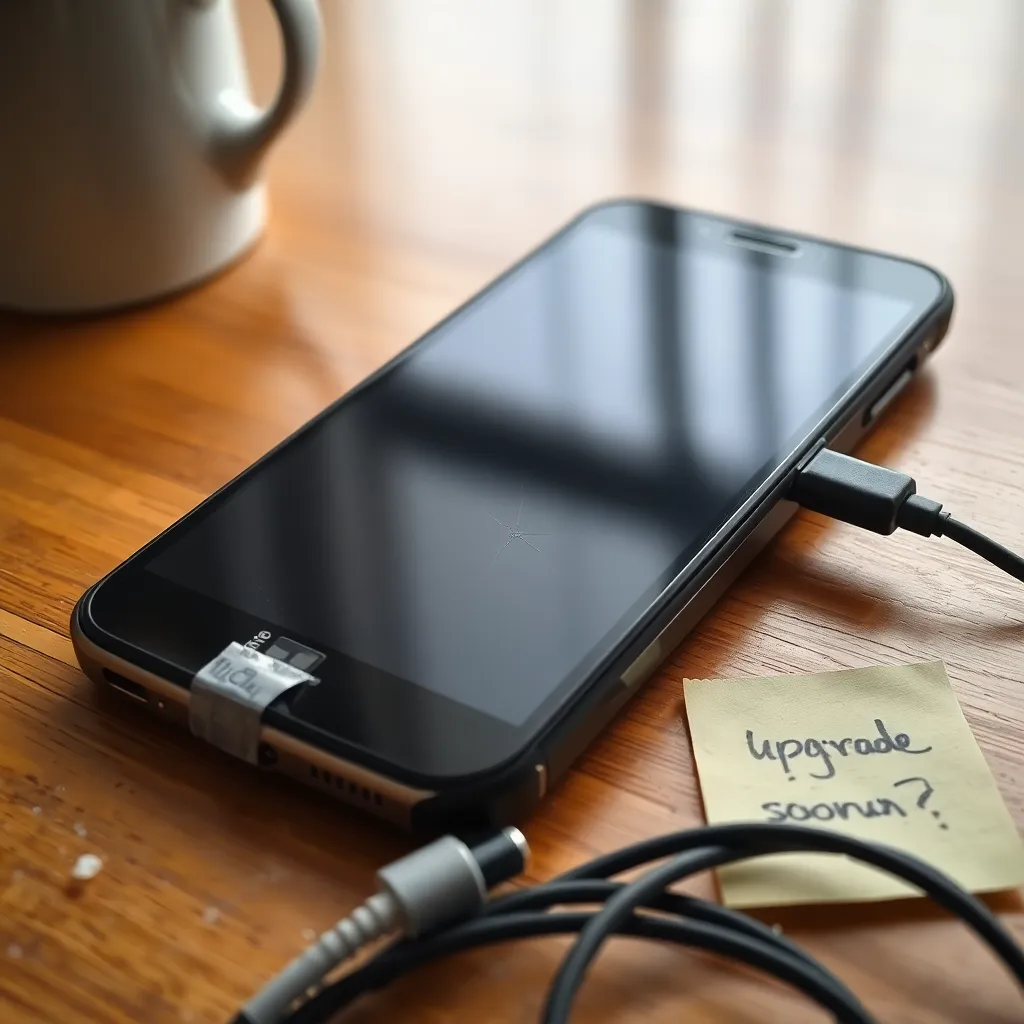
10) The Budget Android Phone (That You “Use for Seven Years”)
It was purchased in a moment of optimism: “I’ll just get something cheap for now.”
Seven years later, it still boots—slowly, thoughtfully, like an elderly librarian waking from a nap. The screen has a spiderweb of micro-cracks that somehow improve touch accuracy through sheer trauma adaptation. The battery lasts 42 minutes, but you’ve developed a sophisticated charging ecosystem involving three cables, one power bank, and a specific angle of prayer.
Friends ask why you don’t upgrade.
You explain you’re “waiting for the right time,” which is the same thing archaeologists will say about why you were buried clutching it.
9) The Stain (That “Does Not Wash Out”)
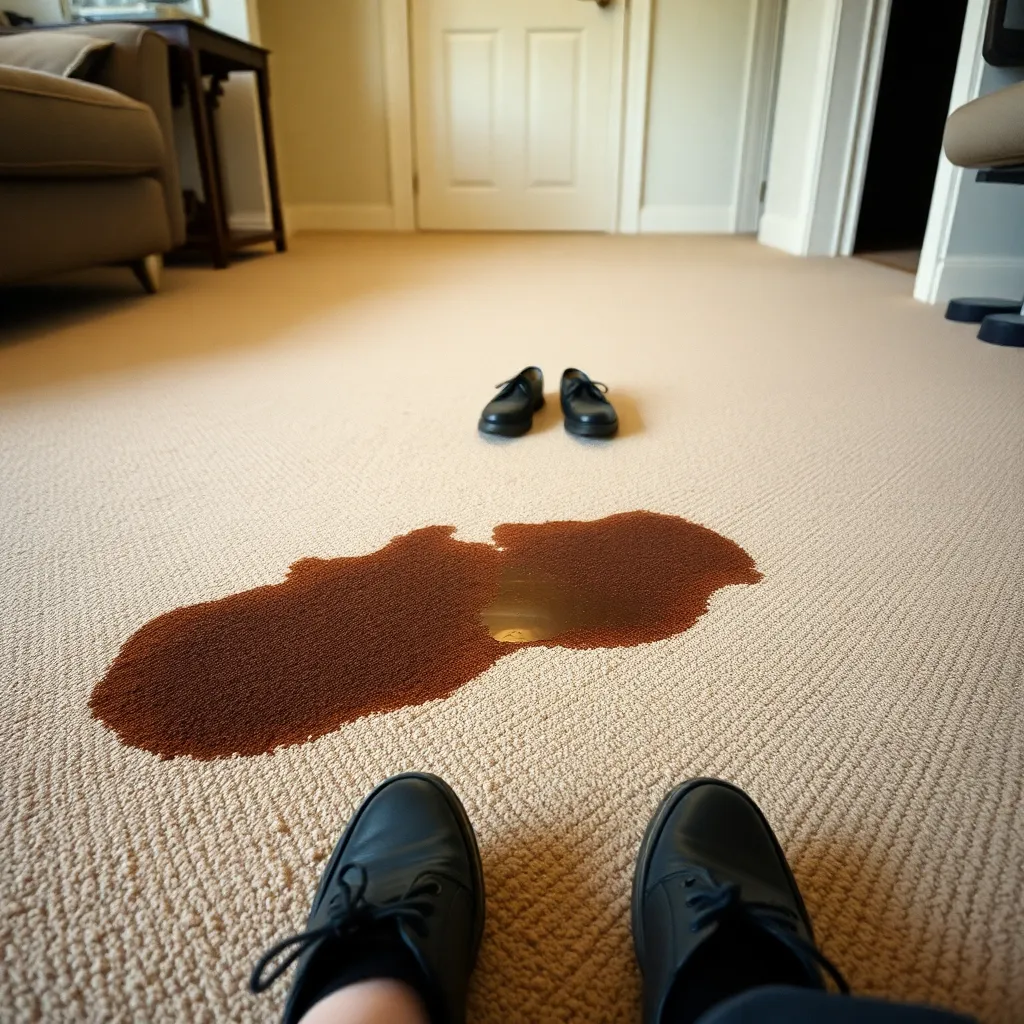
There are stains that come from coffee, wine, and toddlers, and then there are stains that arrive with intention. A stain that doesn’t wash out isn’t a stain—it’s a roommate.
You’ve tried scrubbing. You’ve tried chemicals that make your eyes water and your ancestors uneasy. You’ve tried “just living with it,” which is the stain’s preferred outcome.
At some point the stain becomes a landmark: “Put your shoes by the stain,” “Don’t step on the stain,” “We’re not sure if it’s mold but it’s been here since 2019.”
In time, you stop fighting it and start telling visitors it’s “character.”
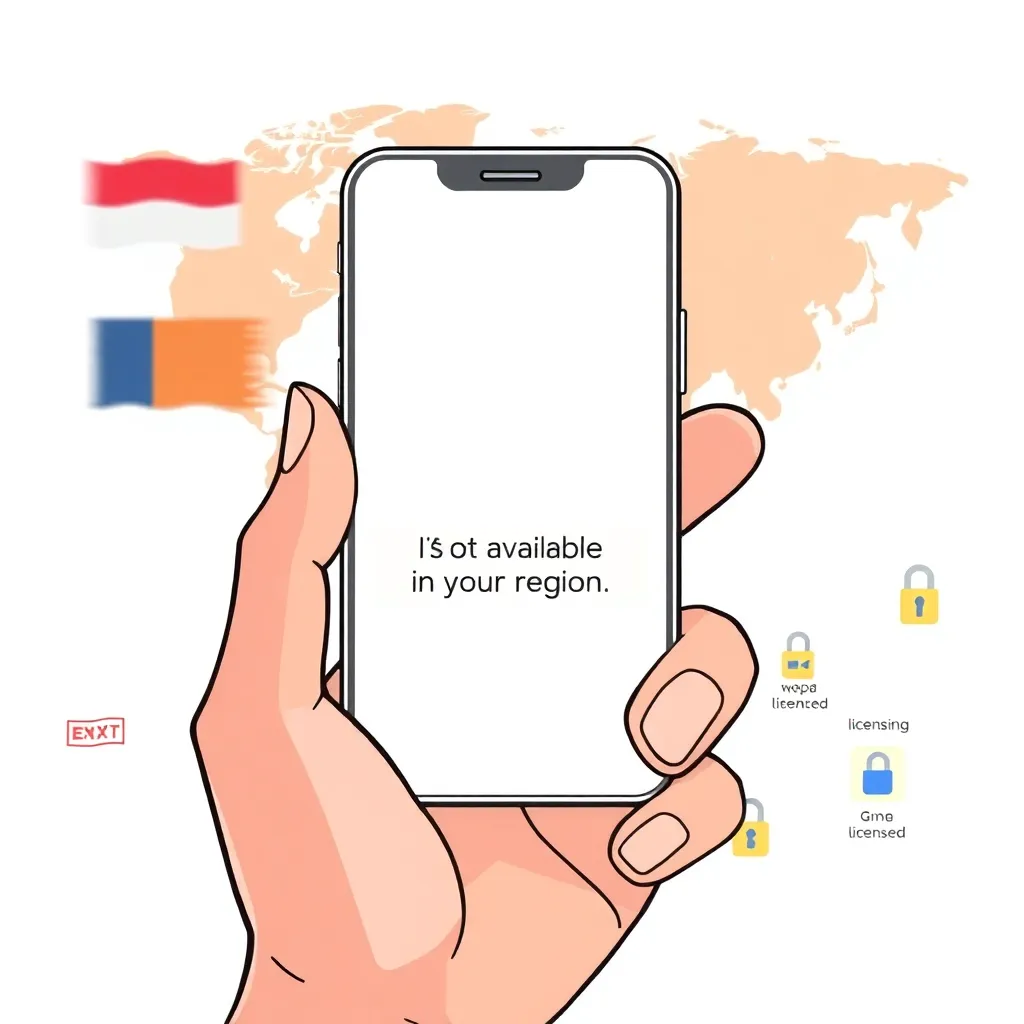
8) “This Feature Is Not Available in Your Region” (And Never Will Be)
This message is a modern fable: a polite corporate way of saying, “We have chosen to pretend your country is an idea rather than a customer base.”
It reads like a temporary restriction. It sounds like a licensing issue. It hints at progress. It implies a meeting might happen someday where someone will flip a switch and unlock your basic human right to use the button.
That meeting will never happen.
Your region will remain permanently unavailable, like a mythological realm where content goes to live freely, unburdened by your local payment systems and inexplicable legal reality.
7) The “Mess in That Cabinet” (You Will Clean It Up)
Every home has The Cabinet: a sealed chaos vault containing old cables, expired batteries, mystery keys, a manual for a device you no longer own, and a tiny bag of screws that may—or may not—be supporting the roof.
You say you’ll clean it up when you have time, which is a lovely thought experiment. Because cleaning that cabinet requires confronting the past, accepting your inability to throw away a “possibly useful” adapter from 2008, and admitting you bought a label maker but never used it.
The cabinet is not messy. It is an archive of postponed decisions.
6) The Closed Road Lane (Repairs Require Closing Both)
Roadwork signs appear like seasonal flowers: suddenly, everywhere, and for no clearly explained reason. The lane closes “temporarily,” and the city installs a small forest of cones to commemorate the occasion.
Weeks pass.
Months pass.
The cones get sun-bleached. The signage becomes outdated. The workers are never seen, but the lane remains closed in honor of the concept of fixing it.
When asked, officials explain repairs are complicated and will require closing both lanes, which is clearly impossible because closing one lane is already creating a traffic jam capable of being seen from space.
Thus the lane stays closed forever, preserved in its natural state: under repair.
5) “I Will Go to the Gym Tomorrow” (Tomorrow Still Didn’t Came)
Tomorrow is the most productive day of the week. Tomorrow is when you become a new person. Tomorrow is when you build habits, drink water, and stop eating bread like it personally insulted you.
Tomorrow, however, has a scheduling conflict.
Tomorrow keeps being delayed, rescheduled, and quietly replaced with “rest day,” which is impressive because you haven’t done the “work day” yet.
Eventually, going to the gym becomes like a famous movie you’ve been meaning to watch: you quote it, reference it, and feel vaguely guilty about it without ever experiencing it.
Your gym bag remains packed as a symbol of intention.
4) The Budget Switch in the Server Room (“It Works, Don’t Touch”)
In every organization, there exists a network device that was bought because it was cheap, available, and came with the most important feature: we needed it yesterday.
It lives in the server room like a small, nervous animal. It has no redundancy, no monitoring, and possibly no proper ventilation. It runs the whole building anyway.
There is always a label on it:
DO NOT TOUCH.
Not “please don’t unplug,” but “don’t look at it, don’t breathe near it, don’t think about it too hard or the internet goes down.” The switch has achieved a kind of spiritual status, like a shrine holding the company’s uptime together through fear.
It is “temporary” until procurement approves the upgrade, which is scheduled for the same day tomorrow arrives.
3) The Barely Holding Shelf (“Will Repair If It Falls”)
A shelf that is “barely holding” is not a shelf; it is a suspense mechanism.
It leans. It creaks. It shifts slightly when you walk by, as if to remind you it could collapse at any moment, but chooses not to because it enjoys having an audience.
You tell yourself you’ll fix it if it falls, which is a remarkable maintenance strategy that can also be applied to bridges, teeth, and emotional wellbeing.
Until then, you place lighter things on it. Then slightly heavier things. Then one day you put a cast iron pan there because it “seems fine,” and your home enters an era of negotiated peace with physics.
2) The Temporary Hack (Third Year in Production)
Nothing lasts longer than a quick fix that shipped.
A “temporary hack” is born during a crisis: the deadline is close, the ticket is urgent, and someone says the magic phrase: “We can do it properly later.”
Later becomes the future. The future becomes never. The hack becomes foundational infrastructure.
New engineers inherit it like an ancient curse. Documentation describes it vaguely, like folklore: “Do not refactor. If removed, payments fail.” Over time, nobody understands it, but everyone respects it, because it has survived multiple migrations and at least one attempt to “clean up the codebase” that ended in tears.
Eventually, the hack gains a name, and once a thing has a name, it is immortal.
1) Climate Change (Green Energy Will Surely Fix It)
Climate change has become humanity’s most ambitious “we’ll deal with it later.” There is always a plan. There is always a target year. There is always a confident press release describing a pathway involving innovation, market forces, and the power of collective action, which is impressive because we can’t even collectively agree on how to open a bag of chips quietly.
“Green energy will fix it,” we say, as though the mere existence of solar panels automatically undoes decades of emissions, deforestation, and the particularly modern talent of turning every solution into a subscription service.
It is treated as temporary because the alternative—admitting we’ve built a civilization on a melting foundation—is uncomfortable and would require difficult changes, like consuming less or paying the real price of things.
So it stays in the “temporary problem” folder, which is currently 8 terabytes and growing.
Bonus) The AI Bubble (It Will Pop Any Second Now)
Every era needs a bubble: tulips, dot-coms, housing, crypto, and now AI—where every product is “AI-powered,” including things that previously functioned perfectly well, like toasters and calendar invites.
People keep insisting it will pop any second now, which is a comforting thought, because it suggests we won’t have to change anything. We can just wait for the hype to deflate and go back to normal.
But “any second now” has the same calendar relationship as “gym tomorrow.” The bubble continues, expanding into every corner of business life, as executives boldly invest in solutions to problems they do not understand, because not understanding a thing has never stopped anyone from building an entire strategy around it.
If it pops, it will do so temporarily, before being rebranded as “AI 2.0” with a new logo and the same PowerPoint deck.
Conclusion: Temporary Is Forever, But With Less Paperwork
Temporary things become permanent because permanence demands decisions, budgets, and responsibility. Temporary solutions demand only one thing: the ability to walk away and say, later, that it wasn’t your idea.
And so society continues, held together by hacks, stains, cones, cabinets, and promises—each one a monument to a species that believes, sincerely, that the future will arrive fully staffed and ready to fix what we didn’t.
Tomorrow, surely.
Public Response
Comments
No comments yet.