Trump Unveils Historic Tariff on Tariffs, Declares “The Taxes Have Been Getting Away With It for Too Long”
In a rose-gold press conference held beneath three bald eagles and what witnesses described as “an aggressively patriotic chandelier,” Donald Trump announced a sweeping new policy to place tariffs on existing tariffs, arguing that America can no longer afford to let taxes “roam free, untaxed, mocking us.”
“Look, a tariff is basically a tax with a necktie,” Trump said, standing in front of a chart labeled TAX THE TAXES in letters large enough to be seen from low orbit. “And if we’re taxing foreign goods, why are we not taxing the tariffs themselves? Nobody’s ever asked that. I asked it. Many people are saying it’s the most important question since ‘what if walls were taller?’”
The policy, immediately nicknamed the meta-tariff, would add a surcharge to any tariff entering the United States economy, on the grounds that tariffs have enjoyed “elite loopholes” for decades. Administration allies praised the move as a bold strike against what one adviser called “the deep state of arithmetic.”
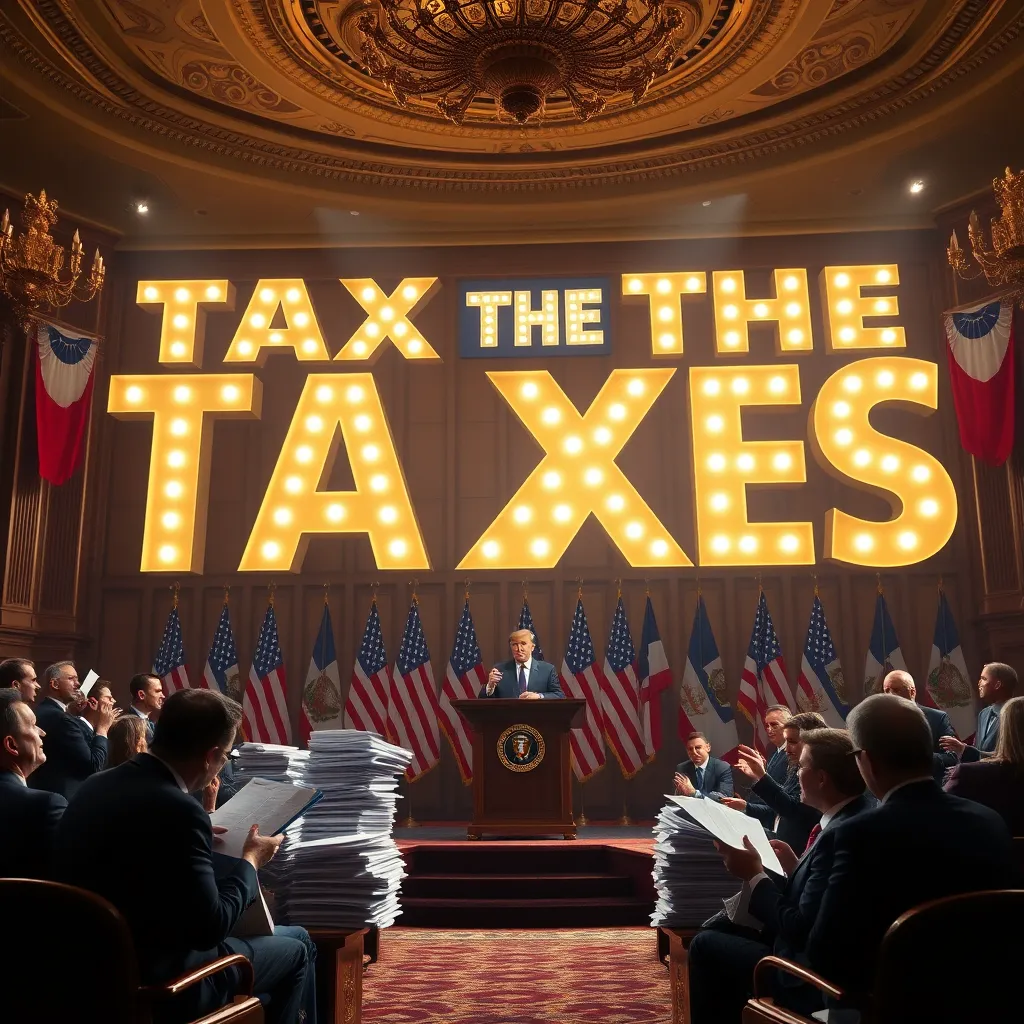
According to documents waved in the air with enormous confidence, the plan would work in stages. First, the government would impose a tariff on all current tariffs. Then, because that newly created tariff would itself be a tariff, it would also be tariffed. This process would continue until “America is winning so much the spreadsheet catches fire.”
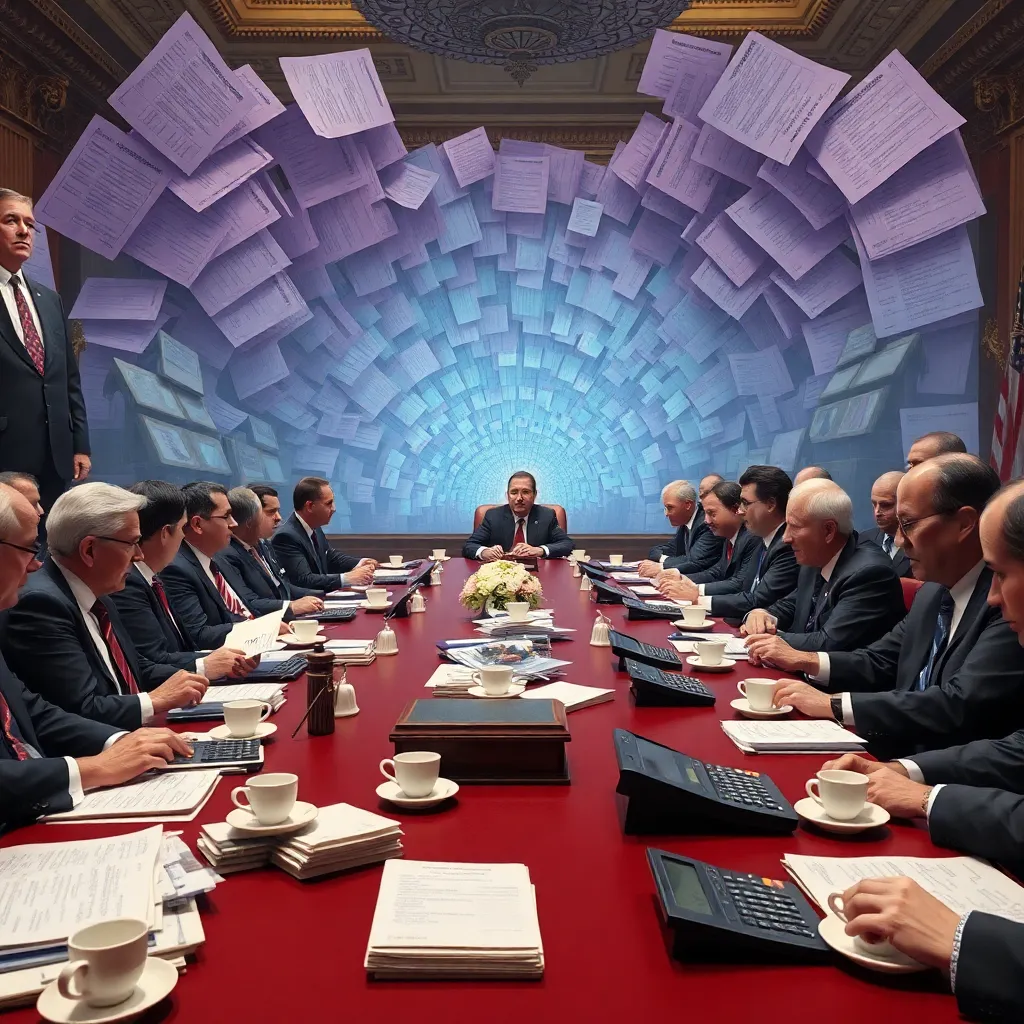
Treasury officials were reportedly seen huddling around a whiteboard at dawn, drawing circles around the word “tariff” until the marker ran dry and somebody whispered, “My God, it’s recursive.” One intern emerged after six hours with hair turned fully silver, muttering that the nation had entered “a fiscal hall of mirrors from which no invoice returns unchanged.”
Markets reacted with the composure of a shopping cart pushed downhill through a fireworks warehouse. The Dow bobbed, weaved, and briefly attempted to classify itself as an agricultural product. Bond traders stared into the middle distance, while several hedge fund managers began billing clients in canned beans, antique spoons, and one highly liquid goat.
International leaders responded carefully, mainly because nobody wanted to admit they understood what had just been proposed. In Brussels, European officials held an emergency summit and concluded that if America taxed tariffs, the European Union might be forced to introduce “a regulatory fee on fees,” followed by “a compliance mechanism for mechanisms.” A spokesman then vanished into a corridor lined with binders and has not been seen since.
China’s response was similarly measured. State media announced that it was “evaluating the strategic implications of taxing a tax for being tax-shaped.” A panel of experts was assembled, then another panel was created to review the first panel’s tariffs, and by evening both had issued tariffs on each other.
Supporters of the measure insist the plan is rooted in common sense, if common sense had been caffeinated beyond all known safety standards. “This is exactly how strength works,” said one enthusiastic backer wearing a flag tie large enough to require structural support. “You tax the thing that taxes the thing. Then you tax that tax for encouraging the first tax. It’s accountability. It’s beautiful.”
Critics, however, warn the plan could produce an endless chain of administrative paperwork, causing the federal government to become a self-licking envelope of economic policy. One policy analyst estimated that by quarter three, every imported toaster could carry seventeen distinct tax layers, including the original tariff, the tariff tariff, the tariff-on-tariff adjustment, and a “patriotic handling surcharge” whose purpose remains mysterious even to its inventor.
Small business owners are already trying to prepare. A hardware store in Ohio has begun labeling products with accordion-fold price tags that spill into the next aisle. A furniture importer in Florida said he now needs “a tax attorney, a mathematician, and perhaps a priest.” Meanwhile, a toy company has started selling an educational doll called Little Miss Compound Levy, who arrives with a tiny briefcase and escalating fees.
On cable news, commentators spent the afternoon trying to explain the policy using fruit, buckets, and eventually a lasagna. One host stacked pancakes to represent tariff layers, only to discover halfway through the segment that the pancakes now required import documentation. Another drew a diagram so complex that viewers assumed it was either economics or a map of the Paris catacombs.
Trump remained upbeat throughout, telling reporters the policy would usher in a “golden age of premium taxation” and perhaps even allow the United States to export tariffs abroad, where they could be taxed by other countries and then taxed again upon returning home “stronger, tougher, and carrying incredible revenue.”
Asked whether there was any upper limit to how many times a tariff could be tariffed, Trump smiled broadly. “Why would you limit success?” he said. “That’s a loser question. We’re looking at tariffs on tariffs, maybe tariffs on tax credits, maybe a luxury tax on deductions. Frankly, the taxes have had it too easy.”

By late evening, congressional staffers were reportedly drafting emergency legislation, though several pages consisted entirely of the phrase “please define tariff” repeated in different fonts. In one committee room, a lawmaker attempted to simplify matters by asking whether this meant the government was now importing taxes from itself. The room fell silent. A clock ticked. Somewhere in the building, a fax machine began screaming.
Public opinion remains divided. Some voters called it genius, others called it incomprehensible, and a substantial bloc said they supported it as long as it made eggs cheaper, though no available evidence suggests that eggs are prepared to enter this conversation.
At press time, officials confirmed they were also considering a tariff exemption for tariffs deemed “particularly American,” though no criteria have been released beyond “strong posture” and “excellent instincts.” Economists warned that if the policy goes into effect, the nation may soon discover the theoretical maximum number of times one concept can be folded into itself before reality applies for bankruptcy.
For now, the country waits, calculators trembling, receipts lengthening, and taxes everywhere glancing nervously over their shoulders, aware at last that the era of untaxed taxation may be coming to a very expensive end.