Britain Declares Full Emoji Governance As Semicolons Added To National Threat Register
In a move described by ministers as “long overdue” and by punctuation marks as “targeted,” the UK government has announced that all official communication must now be conducted entirely in emoji, while semicolons have been formally reclassified as “an aggressive act of administrative hostility.”
The policy, unveiled at 6:03 a.m. via a trembling sequence of crown, teacup, police siren, and thumbs-up symbols, is being rolled out immediately across Parliament, the NHS, local councils, and passive-aggressive neighbourhood WhatsApp groups. Civil servants have reportedly been given 48 hours to translate every existing government form into what the Cabinet Office is calling “a more emotionally literate syntax.”
This means tax returns will now consist mainly of money bag, crying face, house, and clock. Planning disputes are expected to be handled with a combination of tree, bulldozer, furious red face, and wine glass. The Department for Transport has already replaced all rail announcements with train, explosion, shrug, and sandwich.
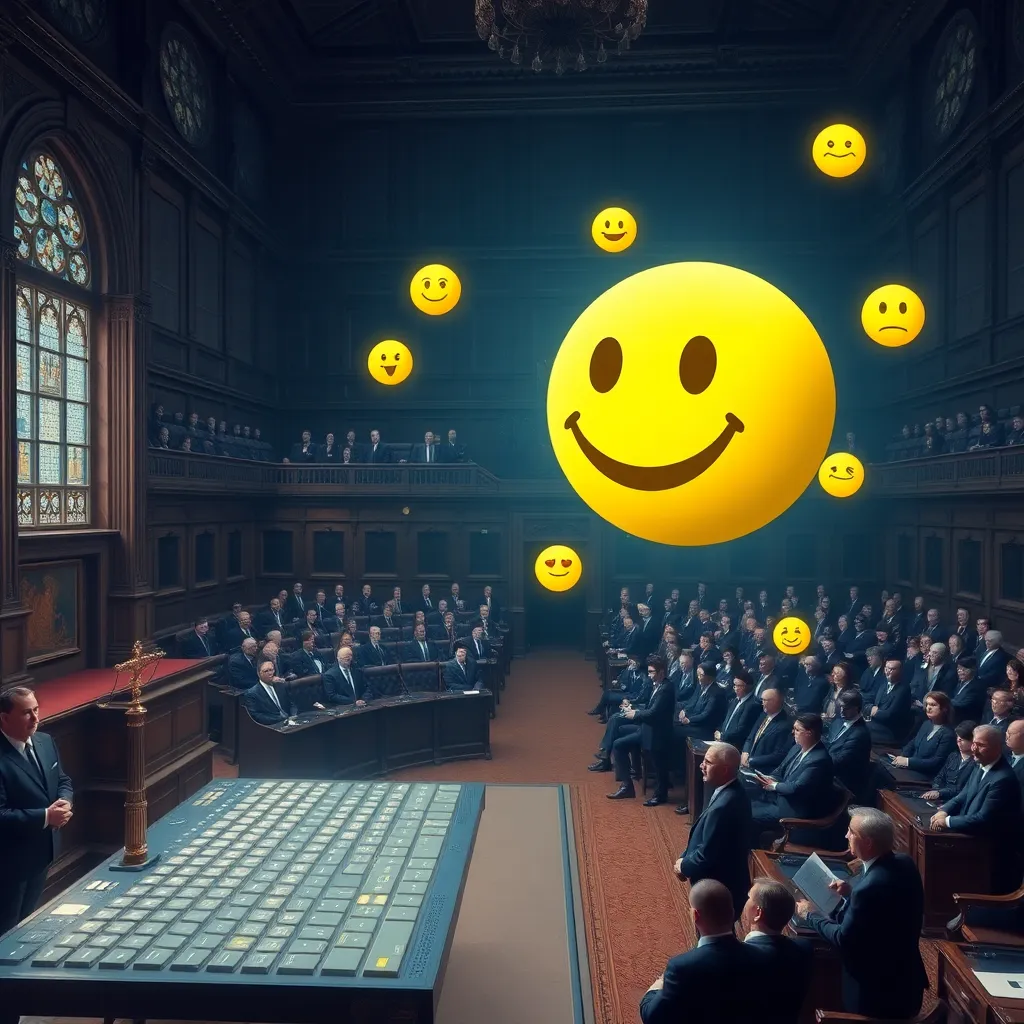
The semicolon ban has been especially severe. Once regarded as a niche punctuation mark used by novelists, overconfident sixth-formers, and that one person in the office who says “moreover” out loud, the semicolon is now considered an indicator of “escalatory intent.” Under the new guidance, anyone found inserting one into an email may be referred to a local de-radicalisation panel and made to attend a weekend workshop titled Pausing Without Dividing: Safer Alternatives for Modern Britain.
Home Office sources insist the decision is evidence-based. One briefing document claims semicolons create “hierarchical emotional fractures within sentences,” while another warns they “invite clauses to mingle in ways the public can no longer be expected to process safely.” A pilot scheme in Swindon allegedly found that exposure to semicolons increased feelings of unease, lower-back stiffness, and a sudden desire to mention Virginia Woolf.
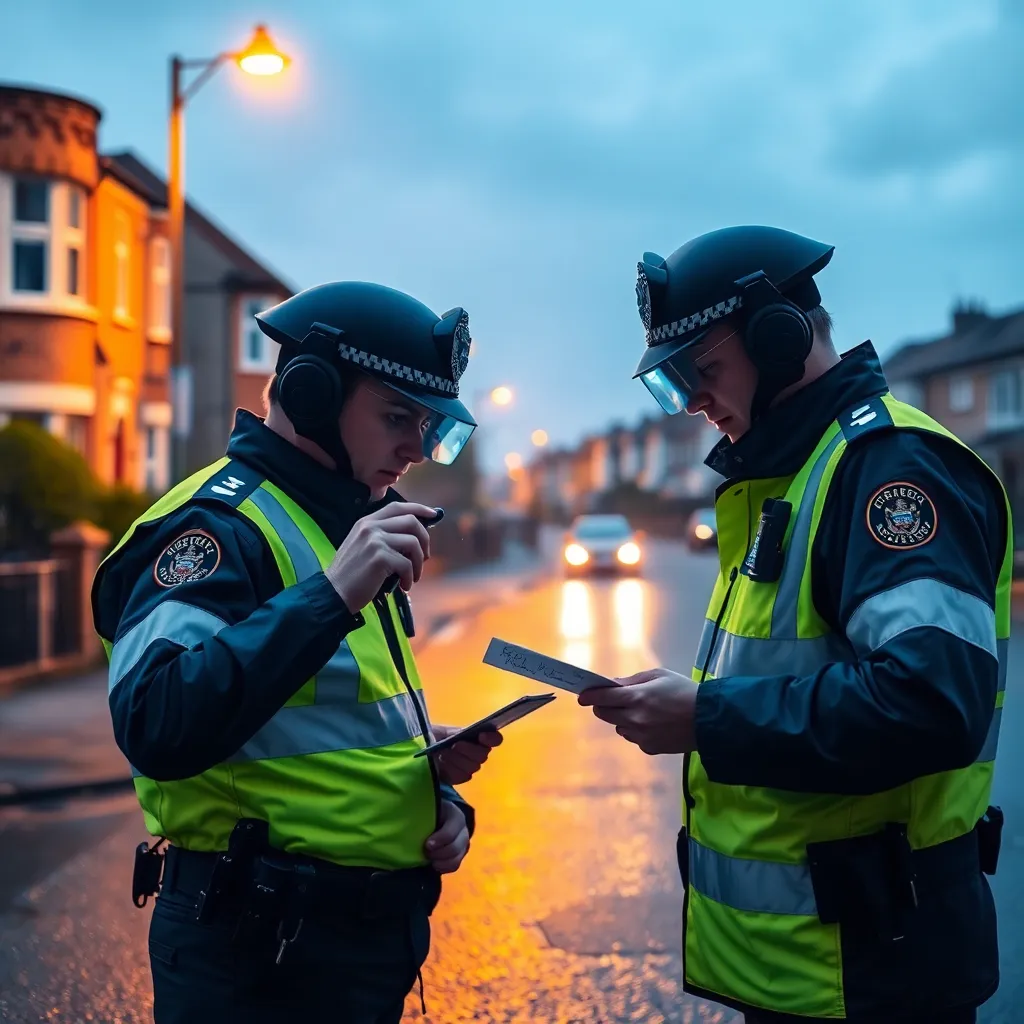
Police forces are already adapting. Officers in Manchester have been issued punctuation detection wands and trained to identify illicit clause-linking activity from as far as thirty metres away. In Kent, a retired librarian was questioned for forty minutes after a neighbour reported “a suspiciously balanced sentence.” The woman was later released when investigators confirmed the mark in question was only a smudge of chutney.
The Crown Prosecution Service has issued a charging threshold chart to help prosecutors distinguish between reckless comma misuse, dangerous colon possession, and aggravated semicolon deployment. “Context matters,” one senior lawyer explained, while standing beneath a new poster reading IF YOU SEE SOMETHING; SAY SOMETHING. The poster was immediately removed and everyone in the room had to sit quietly for a bit.
The change has left workplaces scrambling. Human resources departments, once heavily dependent on phrases like “further to our previous conversation” and “please see attached,” are now attempting to resolve disciplinary matters using only face symbols and fruit. One leaked internal memo from a major bank reportedly read: neutral face, briefcase, fire, handshake, leaf. Staff say morale has never been clearer and also never been worse.
Academia has been hit particularly hard. University lecturers, stripped of semicolons, are said to be wandering campuses in a state of dazed incompletion, clutching unconnected clauses to their chests. The English department at Durham has entered what one insider called “a punctuation famine.” Several professors have attempted to adapt by speaking entirely in long dashes and meaningful sighs, but students complain this is “basically how seminars were already.”
Publishers are also confronting chaos. Thousands of manuscripts have been delayed while copy editors painstakingly replace semicolons with either commas, full stops, or little sparkly symbols that suggest the sentence has chosen peace. A new generation of thriller novels is expected to emerge written almost entirely in siren, knife, eye, moon, and wet alleyway. Critics are calling it “surprisingly readable” and “a terrible sign.”
Not everyone opposes the reforms. A coalition of branding consultants, app designers, and men who call themselves “digital futurists” welcomed the move, arguing that emoji-only communication finally aligns Britain with “the global semiotics of vibe.” One consultant in a turtleneck declared that words had become “a legacy platform,” adding that the future of democracy depends on whether the aubergine can be made fiscally neutral.
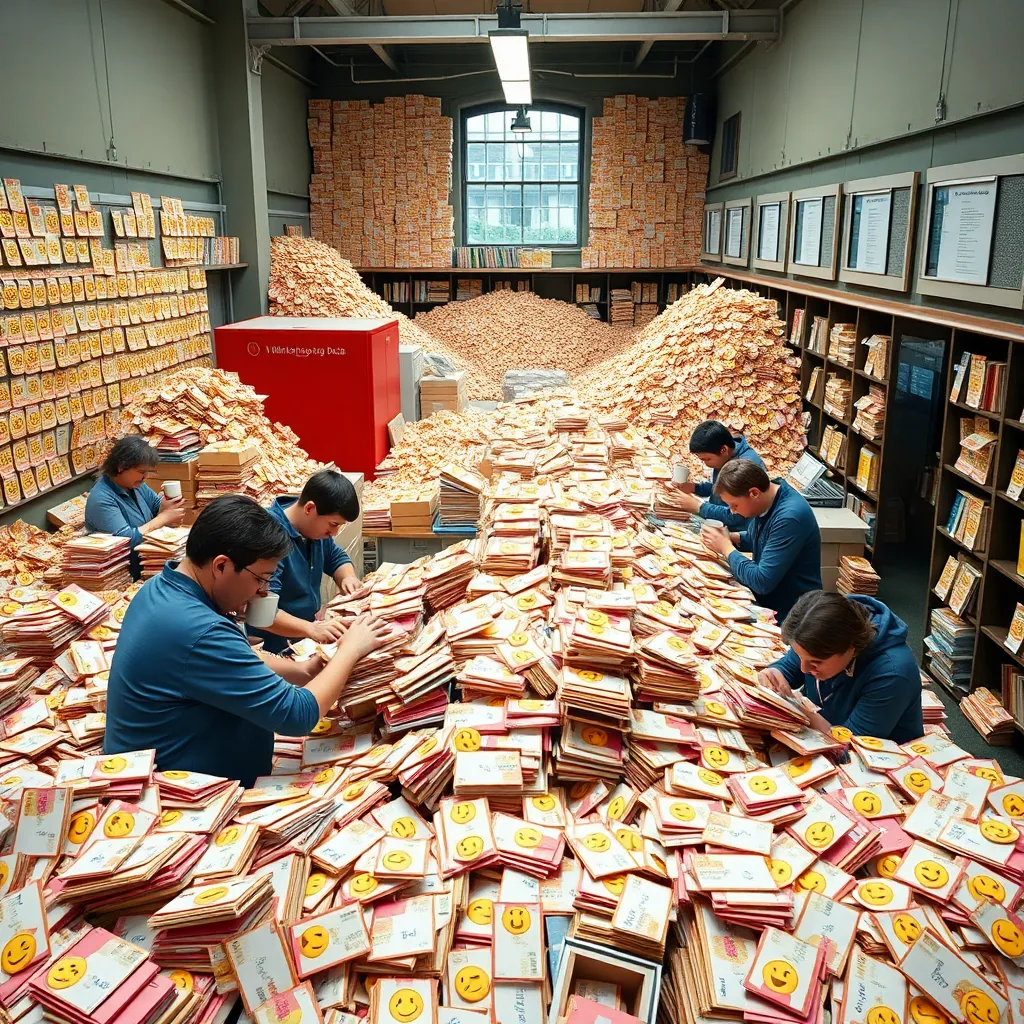
The Royal Mail has introduced a pilot service allowing citizens to send letters containing nothing but icons. Sorting offices are now staffed by teams of exhausted graduates trying to determine whether a postcard featuring dog, birthday cake, coffin, and Italian flag is a condolence note, a party invitation, or feedback about a restaurant in Croydon. “We’ve lost several good people,” muttered one supervisor, staring into a sack of envelopes covered in flames and peaches.
Schools, meanwhile, have moved quickly to reassure parents that standards remain high. Under the revised curriculum, children will still study language, but through “nationally approved emotional pictograms.” GCSE English Literature has been replaced by Advanced Reaction Studies, in which pupils analyse whether the crying-laughing face in a government statement denotes comedy, despair, or ordinary council incompetence. Top-performing students may progress to A-level Irony Flagging.
Examination boards have released sample questions. One asks candidates to compare and contrast a sequence of broken heart, microphone, tornado, and two clapping hands with a later sequence of crown, melted face, ambulance, and croissant. Another invites students to discuss the role of the monocle emoji in post-industrial identity formation. Parents have admitted they can no longer help with homework, which officials describe as “an encouraging sign of rigour.”
Political debate has become more kinetic. Prime Minister’s Questions now consists of the Speaker attempting to maintain order while MPs wave tablets displaying rotating symbols of outrage, confusion, and agricultural concern. Last week, the Leader of the Opposition caused uproar by replying to a budget announcement with just an empty battery icon and a ferret. Analysts are still unpacking it, though markets fell briefly before recovering on news that the ferret may have been procedural.
The financial sector has embraced the opportunities. Traders in the City say the pound now responds less to inflation data and more to “general icon weather.” A cluster of rockets may push sterling upward, while one badly timed clown face can erase billions. The Bank of England has appointed its first Chief Emoji Interpreter, whose job includes explaining whether the Treasury’s use of folded hands represented prayer, gratitude, or an admission that everyone should start growing potatoes immediately.
Civil liberties groups have, however, expressed concern over the semicolon enforcement regime. Under the new Public Decency and Clause Separation Act, repeat offenders may have their keyboards restricted to seven approved symbols and a weather icon. One campaigner described this as “a grotesque overreach,” before accidentally invalidating his statement by using a semicolon in the draft. He was last seen being escorted into a beige van labelled Syntax Support.
There are practical difficulties too. Emergency services report that emoji can occasionally produce ambiguity at crucial moments. A recent 999 call involving house, smoke, cat, sparkle, and thumbs-down led responders to arrive with a ladder, a veterinarian, and a wedding planner. Officials insist these are teething problems and point out that under the old system, people still phoned councils to say things like “it’s gone funny near the bins,” which was hardly the Magna Carta.
For ordinary Britons, adaptation is under way. Pubs have replaced chalkboard menus with pictorial narratives of gravy-related possibility. Breakup texts are shorter, if not kinder. Village noticeboards now feature mysterious combinations of tractor, trumpet, puddle, and goose that residents pretend to understand to avoid looking behind the times. In one Cotswolds parish, a long-running dispute about hedges has entered a dangerous new phase after someone posted fox, scissors, skull, and two champagne flutes.
Ministers remain upbeat. At a press conference conducted entirely through projected symbols and one alarming GIF of a bulldog wearing a tie, they said the new system would cut bureaucracy, modernise the state, and “restore kindness to public life by eliminating complicated punctuation before it eliminates us.”
At the close of the briefing, journalists attempted to ask whether semicolons might one day be rehabilitated. In response, the minister for constitutional affairs slowly raised a placard showing only the following sequence: no entry, pen, lightning bolt, prison, party popper.
Constitutional experts say this leaves the matter open.