Unforeseen Pitch Change: North Korean Leader Hits the High Note
Pyongyang awoke yesterday to a sound no analyst, diplomat, or long-suffering karaoke machine had predicted: a sustained, immaculate high C ringing across the capital like a crystal goblet discovering national purpose. Officials confirmed that the country’s leader, during what had been scheduled as a routine address on tractor output, abruptly ascended several octaves and delivered a note so pure that windows trembled politely and several pigeons reportedly saluted.
State broadcasters immediately replaced their usual orchestral accompaniment with a single stunned oboe.
Witnesses described a transformation of almost geological magnitude. “At first, we believed there was a technical issue with the microphones,” said one observer, still holding a notebook full of crossed-out words like “baritone,” “firm,” and “expected.” “Then he kept going upward. It was as if a mountain had decided, after years of quiet reflection, to become a soprano.”
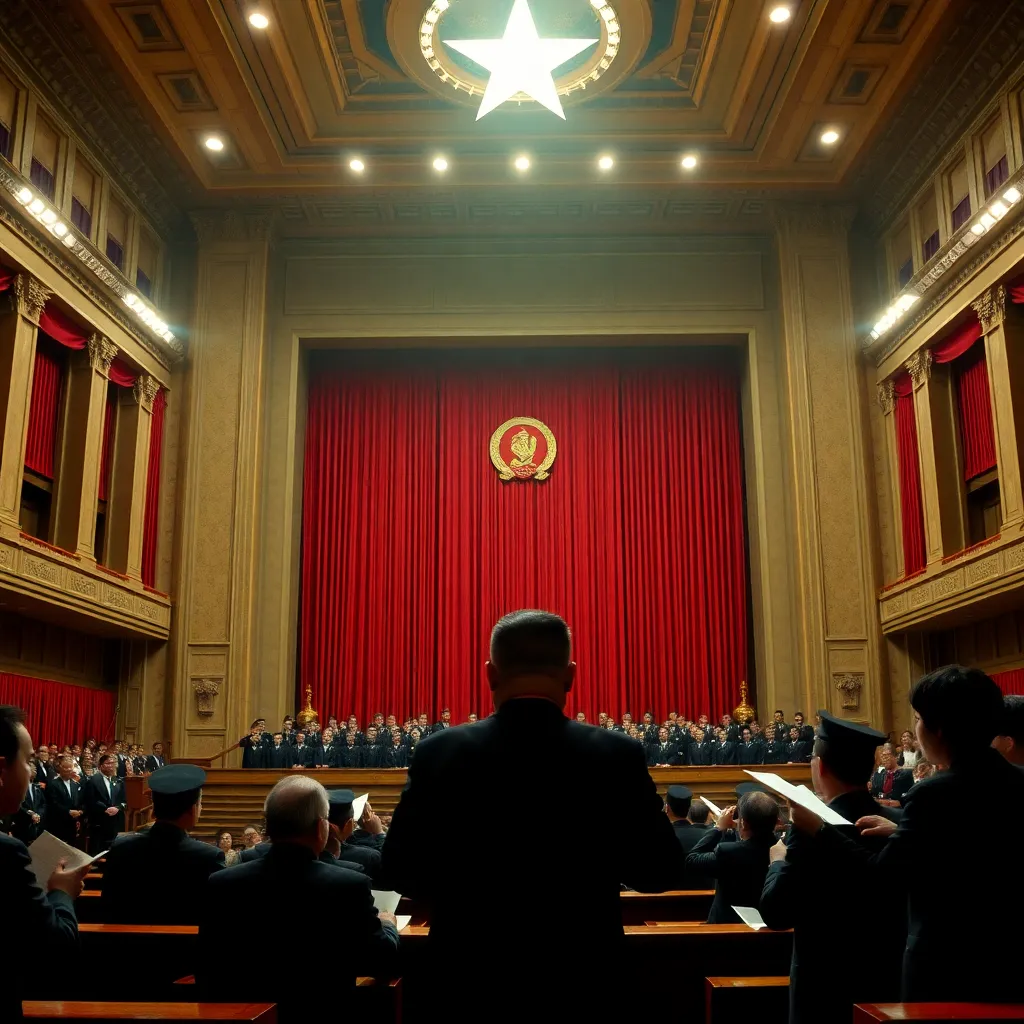
According to insiders, the event began innocently enough. The leader approached the podium, adjusted his papers, cleared his throat, and launched into a sentence on steel production before veering, with almost no warning, into what conservatory experts are now calling “an extremely committed coloratura passage.” By the second minute, several members of the front row had the unmistakable expression of people who came prepared for policy and were instead being gently folded into La Traviata.
Within hours, the Ministry of Culture announced a “minor but glorious recalibration” of the national musical standard. Schoolchildren have reportedly been instructed to revise their understanding of the octave. Pianos across the country are said to be undergoing emergency repainting so that a new upper range can be symbolically added “for morale and agricultural excellence.”
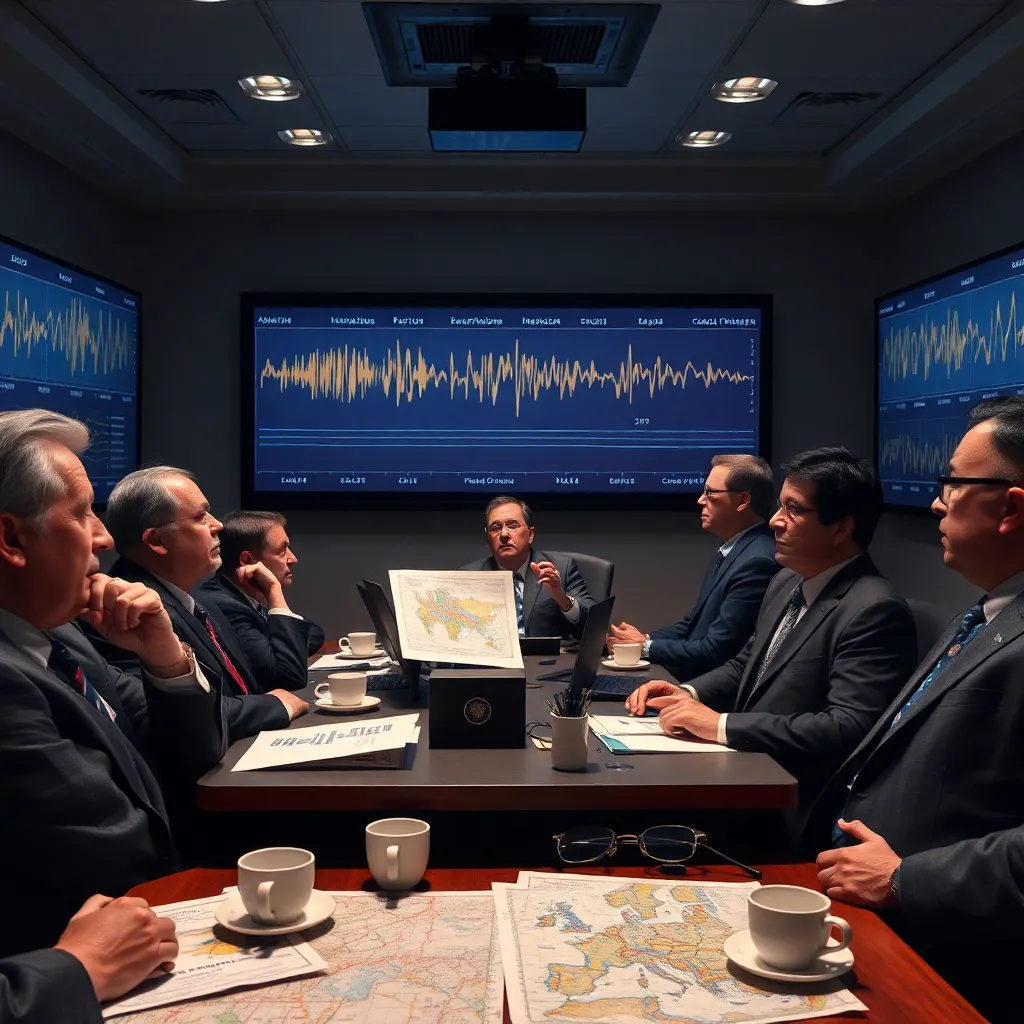
International reaction was swift, confused, and in one case tuneful. South Korean markets fluctuated after traders struggled to price in the strategic implications of vibrato. In Washington, officials held a briefing in which the phrase “unexpected vocal escalation” was used repeatedly, each time with the careful tone of men attempting not to admit they had no chapter for this in any binder. A spokesperson for one European government simply sighed and said, “We had prepared statements for missiles, parades, and stern binocular photographs. We did not have one for an aria.”
Musicologists, denied sleep and possibly peace, were quickly summoned to assess the phenomenon. Professor Emil Hartweg of the Institute for Applied Resonance said the note displayed “startling breath support, excellent projection, and the unnerving confidence of someone who appears to believe the laws of acoustics are optional.” Another expert suggested the performance may have drawn from folk motifs, martial pageantry, and “the deep personal conviction that chandeliers are there to be challenged.”
In Pyongyang itself, ordinary citizens seemed eager to adapt. Street vendors were soon offering commemorative throat lozenges stamped with tiny golden treble clefs. A bakery unveiled a cream-filled pastry called the Supreme Falsetto, topped with spun sugar arranged in the shape of ascending scales. Taxi drivers, never far from history when it requires a sharp turn, were overheard arguing whether the note had been technically a C, a C-sharp, or “something above the map.”
Not all were entirely prepared. One local choir director confessed that her ensemble had spent years cultivating a powerful patriotic unison, only to discover overnight that they were now expected to produce “the sort of celestial shimmer usually associated with nervous angels.” Rehearsals, she said, have become more ambitious. “Yesterday the basses tried to support the sopranos emotionally. That was progress.”
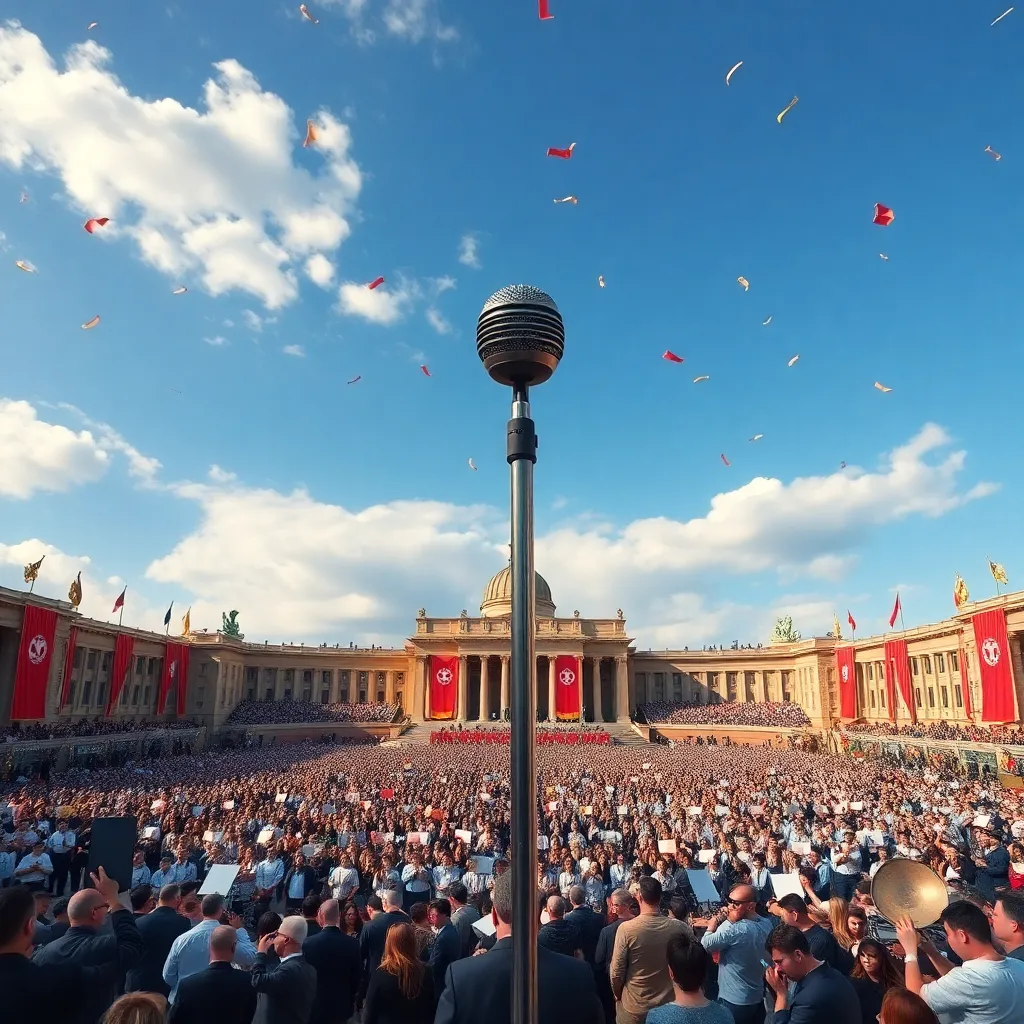
The regime, sensing the moment’s grandeur, moved quickly to build doctrine around it. New posters have reportedly appeared depicting microphones pointing skyward like rockets. One slogan, translated loosely, reads: “If the nation must rise, let it rise in key.” Plans are said to be underway for a mass performance involving 40,000 singers, twelve brass bands, a rotating stage, and a conductor’s baton visible from low orbit.
There are also whispers of practical applications. Engineers are said to be studying whether the note’s vibrational qualities might be harnessed to accelerate concrete curing, improve grain storage, or remove stubborn dust from hard-to-reach monuments. One unnamed official insisted the tone had already increased potato confidence by 17 percent.
As evening fell, the state newsreader, normally the embodiment of immovable composure, delivered the day’s final bulletin with what listeners described as a suspiciously musical cadence. She concluded by praising the performance as “an event of enormous national resonance,” then appeared to hold her final syllable slightly longer than protocol strictly requires.
Abroad, record labels circled with the caution of men approaching a tiger wearing a tuxedo. Streaming platforms reportedly debated which genre would be most appropriate, with early suggestions including “authoritarian bel canto,” “strategic opera,” and “industrial lyric nationalism.” One producer in Milan, speaking anonymously from behind a curtain for reasons he did not elaborate, called the voice “raw, commanding, and almost offensively on pitch.”
For now, the world can only wait and listen. Will this be remembered as a one-time vocal anomaly, a bold cultural reset, or the opening movement in a larger symphony of improbable statecraft? No one can yet say. But in a century already crowded with events that would once have been rejected by editors as too implausible, there is something almost reassuring about a geopolitical surprise arriving not with a bang, but with perfect breath control.
And somewhere in Pyongyang tonight, under a moon that has heard many speeches but few cadenzas, a piano tuner is being asked to go just a little higher.