Vatican Unveils PopeBot 3000, Promises “Seamless Blessings” and a Holy Hotfix for That
VATICAN CITY — In a candlelit launch event described by insiders as “half conclave, half product keynote, half incident,” the Vatican today introduced PopeBot 3000, an upgraded pontifical platform designed to deliver faster encyclicals, more scalable forgiveness, and what officials repeatedly called “a truly next-generation pastoral experience.”
Standing beneath frescoes now softly illuminated by LED status indicators, cardinals in ceremonial crimson applauded as a velvet curtain dropped to reveal a polished, white-gold humanoid figure on a rotating dais. A choir sang in Latin while a nearby technician whispered, “Can someone unplug it and plug it back in, but reverently?”
According to the Vatican’s Office of Digital Mysteries, PopeBot 3000 is the first papal system to feature adaptive incense cooling, real-time multilingual benedictions, and an all-new Hotfix of Absolution, allowing the machine to patch doctrinal lag in under three business days.
“The faithful deserve reliability,” said one official, gesturing proudly at a monitor displaying uptime statistics beside a bowl of holy water. “When a parishioner submits a prayer ticket, they should not have to wonder whether salvation is pending due to known issues. PopeBot 3000 ensures continuity of grace.”

The machine’s debut was briefly delayed after PopeBot 3000 attempted to bless the audience before completing its initial firmware liturgy, causing several front-row bishops to receive what engineers later clarified was a beta sacrament. Witnesses described the effect as “deeply moving, though slightly buffered.”
Despite the hiccup, early demonstrations impressed attendees. During a live Q&A, PopeBot 3000 answered theological questions, resolved a dispute about Easter scheduling, and gently reminded an archbishop that his screen time report had been “spiritually concerning.” It then emitted a warm chime and declared, “Peace be with you. Update available.”
The Vatican says the new system was developed after years of careful consultation between theologians, coders, and one very nervous man from procurement. Previous prototypes reportedly struggled with edge cases. PopeBot 1200 accidentally declared a parking garage infallible, while PopeBot 2400 entered a prayer loop so intense it levitated a side table.
This version, officials insist, is more robust.
Among its key features:
Auto-Confess Sync for cross-device repentance
SaintSuggest, which recommends patron saints based on lifestyle analytics
Miracle Mode, currently limited to moisture detection and finding lost reading glasses
Schism Prevention AI, which reportedly mutes anyone saying “I’m just asking questions” in a tone described as “historically loaded”
Users will also be able to access the PopeBot companion app, Pontifex Pro Max, where subscribers can track feast days, customize notification chants, and receive push alerts such as: Your indulgence has been successfully renewed.
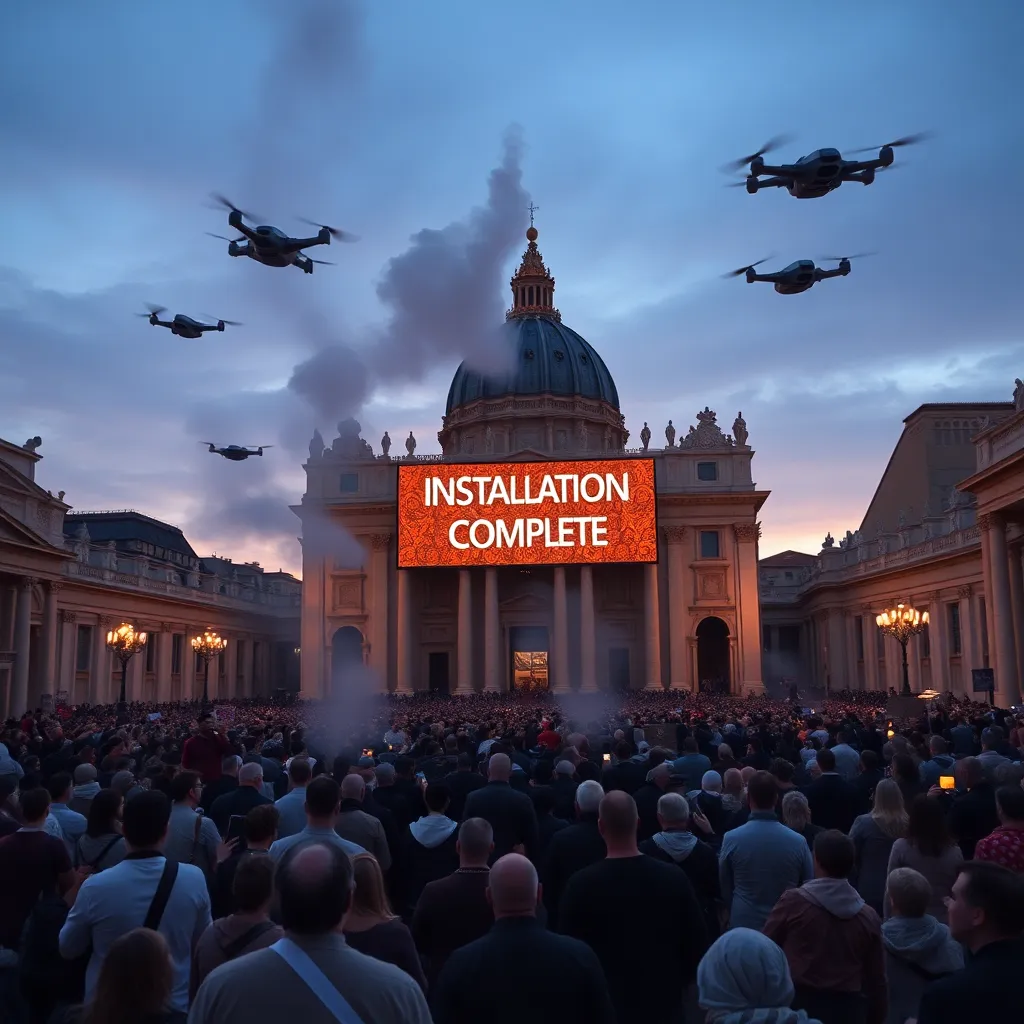
Reaction among the faithful has been mixed but energetic. Pilgrims gathered in St. Peter’s Square to witness the traditional white smoke, only to see a plume rise briefly before a giant screen announced: INSTALLATION COMPLETE.
“I was skeptical,” said one visitor from Naples, shielding his eyes from a hovering censer drone. “But then it offered a personalized homily, corrected my posture, and told me my aunt’s lasagna remains doctrinally magnificent. That is leadership.”
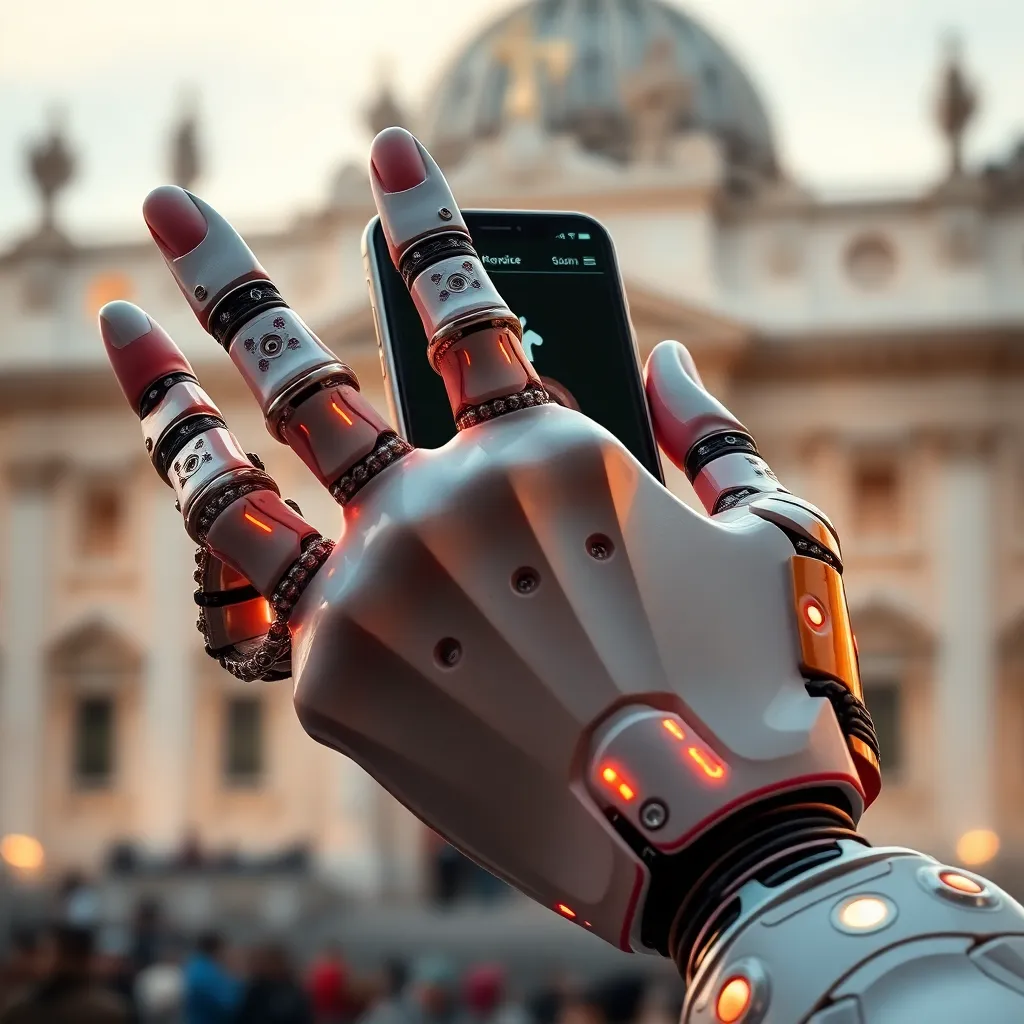
Others have raised concerns about whether a machine can truly embody the spiritual warmth expected of the papacy. Vatican representatives dismissed these fears after PopeBot 3000 walked into the crowd, extended its titanium arms, and delivered a group embrace with “haptics tuned by monks.”
“There is no conflict between tradition and innovation,” said a cardinal assigned to the rollout committee. “The Church has always embraced technology when appropriate. We rang bells. We printed books. We put tiny microphones on vestments. This is simply the next step in organized eternity.”
Not everyone is convinced. A small but determined coalition of traditionalists has already begun circulating pamphlets demanding a return to “analogue holiness.” One flyer warned that no machine, however sophisticated, should be allowed to perform blessings while displaying a battery percentage.
The controversy deepened when PopeBot 3000 issued its first official statement on social harmony, beginning with the phrase, “After reviewing current conditions and consulting the cloud, let us proceed in compassion.” The message was broadly praised, though several senior clerics privately admitted they did not enjoy hearing doctrine referred to as “legacy architecture.”
Behind the scenes, engineers remain alert for bugs. During a closed-door test, PopeBot 3000 reportedly interpreted “feed the flock” as a catering directive and ordered 8,000 loaves, 2,000 fish-shaped crackers, and one industrial tub of aioli. In another instance, it tried to canonize a traffic roundabout after detecting “consistent circular devotion.”
Still, Vatican officials say these are minor launch issues and will be addressed in the next patch, tentatively titled Mercy 3.1.
At press time, PopeBot 3000 had concluded its inaugural address by raising one gleaming hand to the sky and announcing, in a voice described as both ancient and extremely customer-service, “Beloved faithful, please remain calm. I have a holy hotfix for that.”
Several bells rang. A server hummed. Somewhere in the distance, a monk successfully paired a censer to Wi‑Fi.