Washington Unveils Goose Tariff, Declares North American Honking "A Trade Imbalance"
In a move officials described as "long overdue for national dignity," the United States has announced a sweeping new tariff regime targeting Canadian geese, with Canada now expected to pay $10 for every goose that crosses the U.S. border and $50 for every gosling born on American soil.
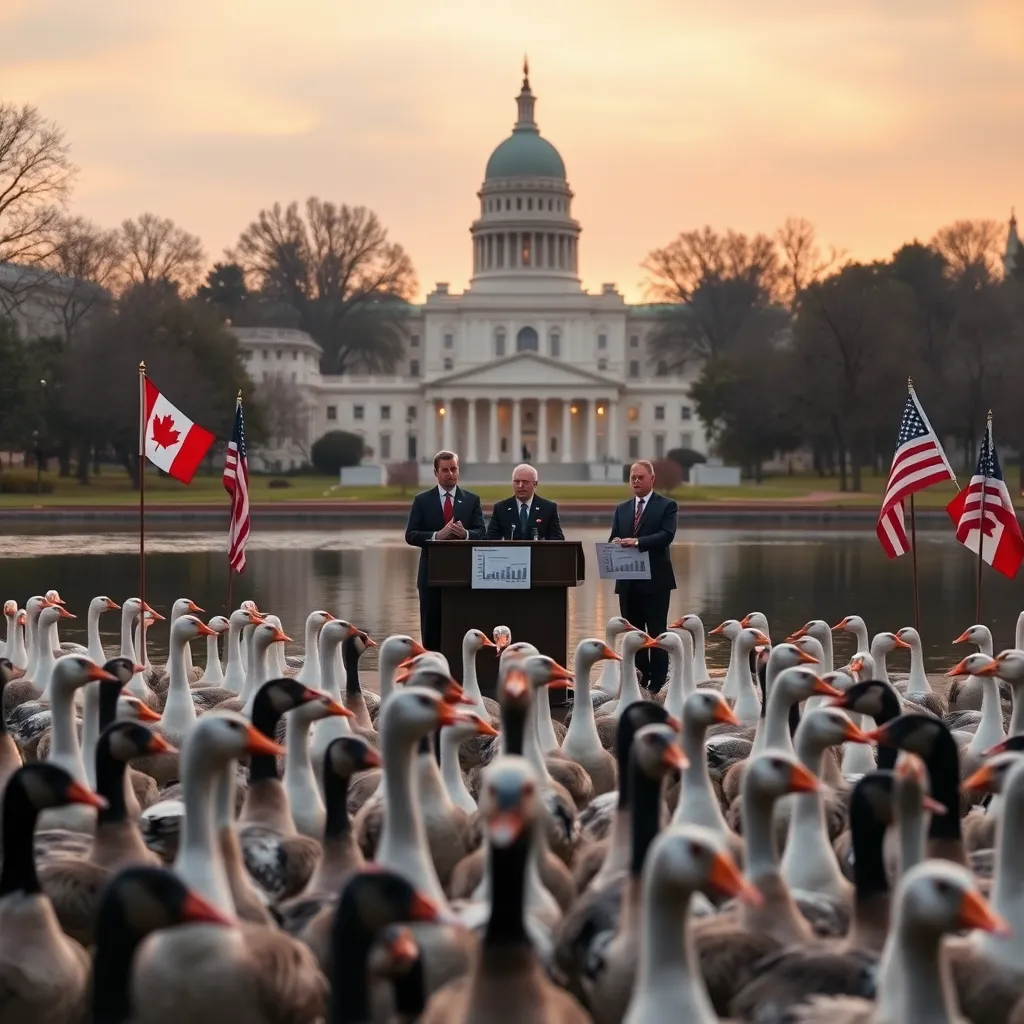
The policy, unveiled beside a pond ringed with nervous interns holding umbrellas, marks the first time migratory waterfowl have been formally categorized as a foreign import, a strategic agricultural pressure campaign, and "an ongoing public nuisance with diplomatic implications."
"This country has tolerated too much unchecked honk-based entry," said one administration spokesperson, standing in front of a chart labeled Goose Deficit Since 1812. "For years, these birds have crossed our skies, occupied our parks, commandeered our golf courses, and left behind what economists call unregulated domestic deposits. Enough is enough."
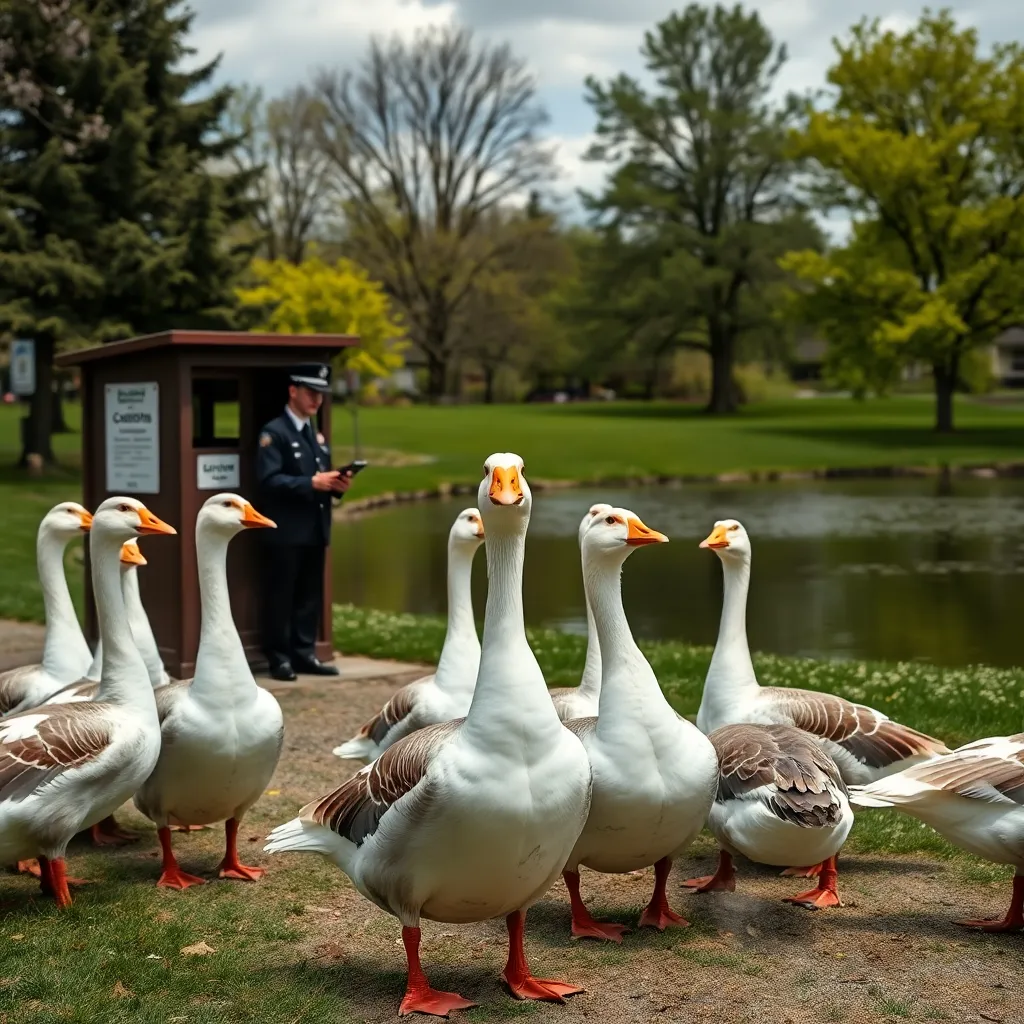
According to the new rules, each goose entering the country will be assessed at the border by specially trained customs personnel known as Avian Revenue Officers, who will verify nationality through "vibe checks, accent analysis, and general bird insolence." Geese suspected of entering under false pretenses may be detained for up to 48 hours in a municipal baseball field.
The $50 gosling birth levy has generated particular controversy. Under the plan, any gosling hatched in the United States to Canadian parentage will be classified as a cross-border hatchback product, triggering what trade officials insist is a "perfectly standard nesting surcharge." Lawyers are already scrambling to interpret the legal meaning of phrases such as birthright honkership and temporary brood residency.
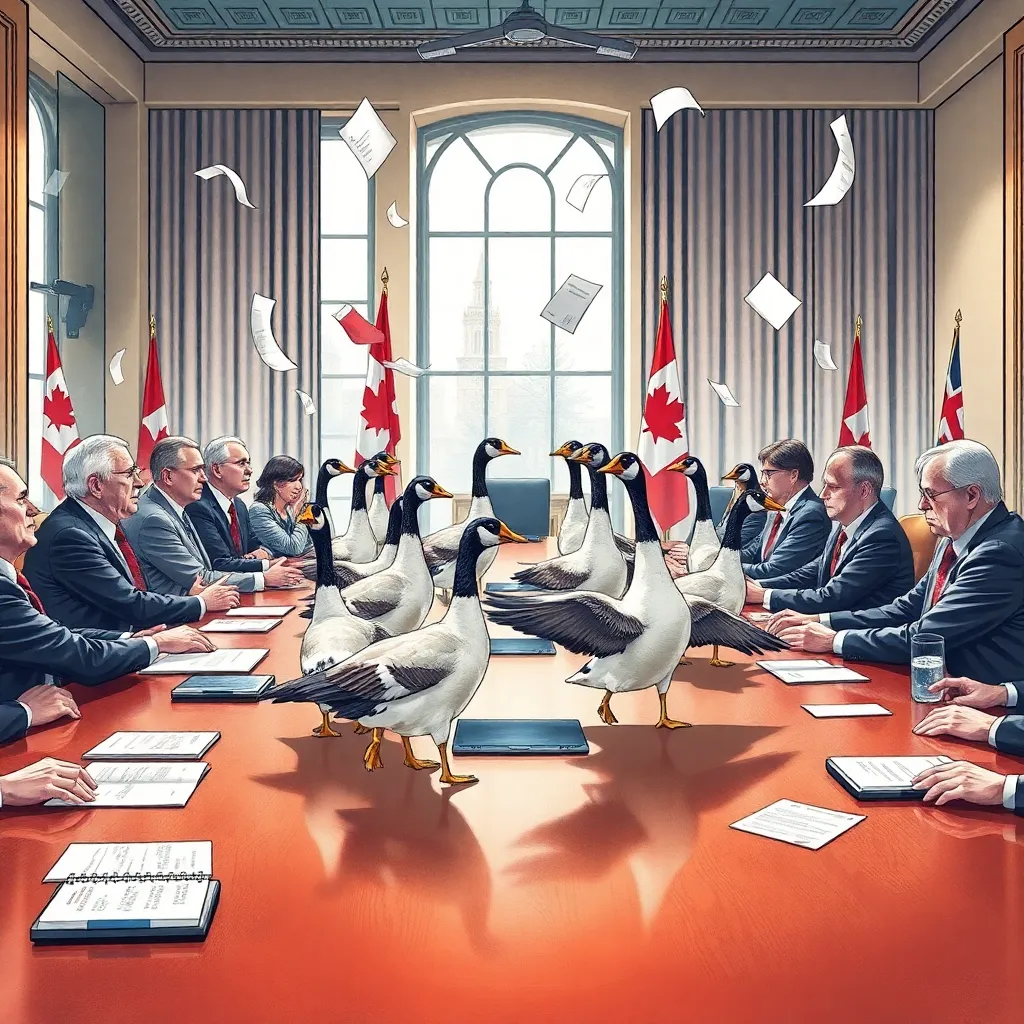
Canada reacted with a mixture of disbelief and the kind of anger normally reserved for finding a goose in your IKEA parking lot. In Ottawa, emergency meetings were convened after trade analysts warned the new fees could devastate Canada's seasonal goose exports, one of the nation's most visible and least welcome natural resources.
A senior Canadian official condemned the measure as "economically illiterate, ecologically theatrical, and deeply offensive to birds who have never once filled out a customs form." The official then paused as a goose pecked aggressively at a microphone cable, adding, "That said, we do acknowledge they can be difficult ambassadors."
Markets responded cautiously. Shares in umbrella manufacturers, park maintenance contractors, and companies specializing in anti-honk acoustics all rose sharply. Meanwhile, border towns are preparing for what experts are calling a likely boom in black-market goose smuggling, with some warning of covert night flights, forged pond documents, and decoy nesting sites operated by organized mall-walkers.
On the ground, enforcement remains a challenge. At several northern crossings, geese reportedly ignored signage entirely, continuing to traverse the border in their usual V-shaped formations with the serene confidence of animals that have never paid for anything in their lives.
Customs officers attempted to question one flock near Minnesota, but were forced to retreat after the lead goose hissed, spread its wings, and conveyed unmistakably that it recognized neither the authority of man nor the concept of invoicing.
The White House insists the tariff will restore fairness to domestic birding. "American geese are out there every day, working hard, waddling honestly, terrorizing local communities the right way," said an advisor. "Why should foreign geese just fly in and undercut our homegrown intimidation industry?"
Critics, however, note that many Americans cannot reliably distinguish a Canadian goose from any other large angry bird. In response, the government is rolling out a public awareness campaign titled Know Your Threat, featuring pamphlets, school assemblies, and a 14-minute instructional film in which a park ranger points at silhouettes while a brass band plays with inappropriate urgency.
Questions have also emerged over collection. Since Canadian geese have no pockets, no fixed mailing address, and no respect for bureaucratic procedure, experts remain unclear how Canada is expected to remit payments for individual crossings. One proposal would involve satellite honk tracking, while another suggests attaching tiny QR codes to migrating birds, a plan abandoned after a single focus group was chased into a lake.
For their part, the geese have issued no formal statement, though observers say their position appears unchanged: they will continue landing wherever they please, marching through traffic like minor aristocracy, and producing the kind of insolent eye contact usually associated with nightclub bouncers and 18th-century dukes.
At publication time, negotiators were said to be exploring a compromise under which Canada would reduce goose outflows in exchange for relief on gosling penalties, while the United States would consider exemptions for birds merely transiting to scream beside corporate retention ponds.
No breakthrough had been reached. Overhead, another formation passed south in perfect order, each bird contributing to what officials now estimate could become the most expensive honking event in modern trade history.