WinRAR Announces New Limitations for Free Trial, Nation Enters Compression Era of Austerity
In a move economists are already calling "the zipening," WinRAR has unveiled a bold new set of limitations for its famously immortal free trial, bringing to an end nearly three decades of a business model widely described as "more of a suggestion than a law."
For years, the WinRAR trial occupied a unique place in digital life: neither fully free nor meaningfully paid, but instead a kind of spiritual membership, renewed every time a person clicked "Close" with the confidence of a medieval peasant ignoring a tax collector made of beige buttons. That era is now over. Under the updated system, users who continue beyond the trial period will encounter a new tier of inconvenience so advanced analysts have had to invent a fresh branch of mathematics to chart it.
The company's statement, delivered in a PDF of intimidating calmness, confirmed that expired trial users may now face "graduated restrictions." These reportedly include slower extraction speeds for files labeled "Final," a mandatory six-second period of personal reflection before opening any folder named "Stuff," and a groundbreaking feature called Ethical Compression, in which the software asks, "Are you really the kind of person who keeps doing this?"

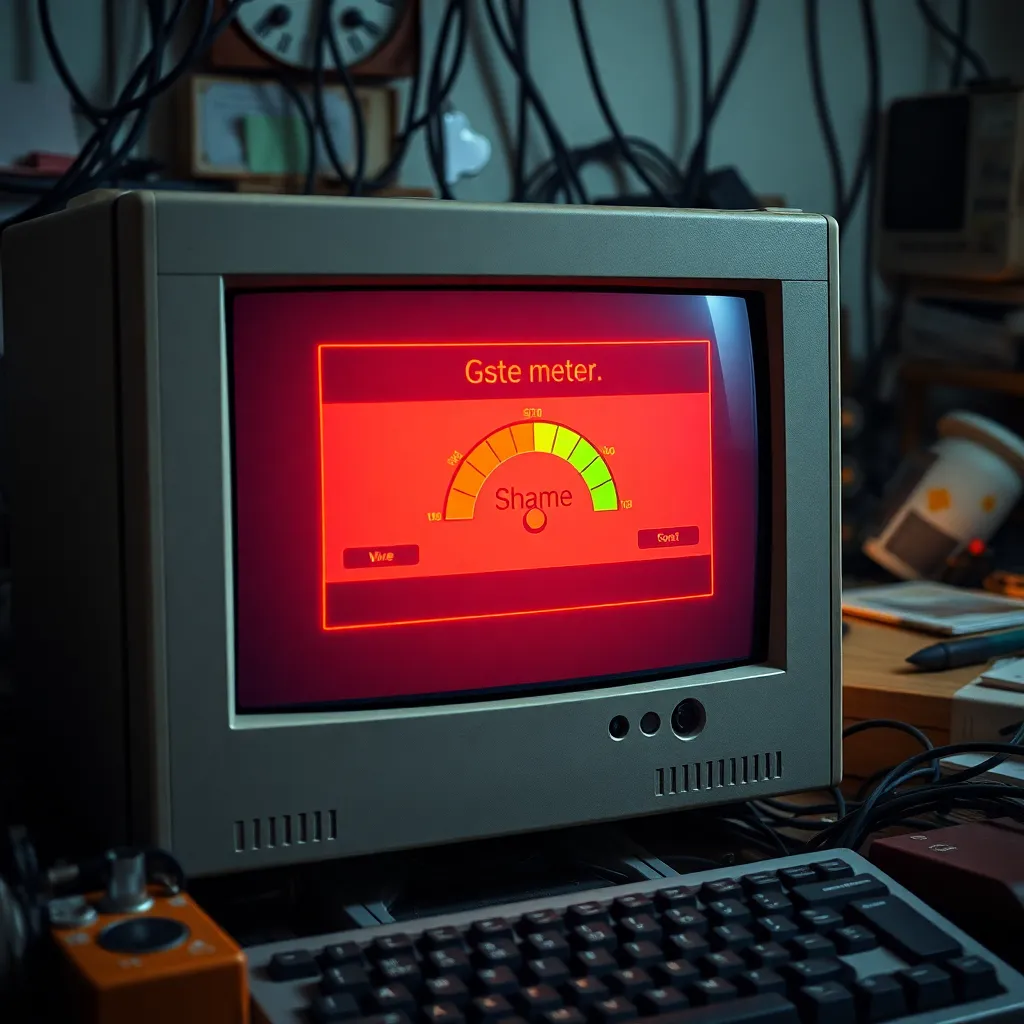
Sources close to the matter say the most controversial change is the introduction of a visible Trial Accountability Meter, a glowing orange bar that measures not legal risk, but shame. According to leaked screenshots, the meter begins at "Understandable" and climbs steadily through "Come On," "This Is Getting Personal," and finally "We Both Know What This Is."
One longtime user, 47-year-old Darren P., said he had never considered purchasing WinRAR because "frankly I thought we were in some kind of arrangement." Standing outside his home office while a folder labeled tax_old_NEW_use_THIS_v2_REAL refused to extract without a brief questionnaire, he appeared shaken.
"It asked me where I see this relationship in five years," Darren said. "I didn't realize software could ask that. It used to just blink at me and let me through. There was trust."
The update also introduces practical penalties. Free trial users will now be allowed to extract only one mystery password-protected archive per calendar month, in an effort to discourage what the company delicately calls "adventure behavior." Multi-part archives will continue to function, but the software may now sigh audibly before reassembling them. On systems with more than 200 desktop icons, WinRAR is authorized to pause operations and recommend a lifestyle review.
Industry experts remain divided. Some argue the company is simply modernizing a beloved relic, while others say the move risks destabilizing one of the internet's oldest unspoken agreements: that everybody knows what WinRAR is, nobody has paid for it, and yet somehow it remains on every third computer like a household ghost that specializes in folders.
A spokesperson defended the changes, insisting the company had been forced to act after discovering some users had been on the "40-day trial" since the Clinton administration. "At a certain point, a trial stops being a trial and becomes a family tradition," the spokesperson said. "We have users who inherited expired WinRAR installations from older siblings. One machine in Eastern Europe appears to have been running the same trial continuously through three operating systems and a divorce."
The spokesperson added that paying customers would continue to enjoy premium benefits, including ad-free extraction, reduced emotional tension, and the right to feel briefly superior in mixed company.
The ripple effects have spread far beyond software forums. In offices across the country, workers are reportedly opening ZIP files with the furtive body language of people microwaving fish. IT departments have begun issuing internal guidance on archive etiquette. One memo urges employees not to "panic-purchase seven alternative compression tools in a single lunch break," while another reminds staff that renaming a .rar file to .zip "remains not magic."
Meanwhile, black market responses have already emerged. In dimly lit group chats, users are sharing techniques for bypassing the new limitations, including clicking the dialog box with "an attitude of innocence," rotating the monitor to confuse the software, and asking a younger relative to handle it because "they know computers." None are believed to work, although one has reportedly been effective on a printer.
Market analysts say the greatest danger is cultural. The WinRAR free trial has long served as a stabilizing symbol, a tiny orange-and-blue monument to the idea that deadlines are negotiable if ignored politely enough. Its transformation into something more assertive has forced millions to confront difficult questions, including whether software can remember, whether it judges, and what exactly anybody thought would happen after year nineteen.

At press time, WinRAR had announced one final concession to users unwilling to commit: the free trial will remain available, but after repeated use, the "Buy Now" button will gradually become more charismatic than the "Close" button, using advanced visual psychology, soft backlighting, and what engineers describe only as "a knowing warmth."
Several users have already admitted they nearly clicked it.
The software, experts warn, has learned patience.