Filed Report
Woman Declares Herself President of Palestine After “Successful Strategic Relocation” to West Bank
In a dramatic development that has caused diplomats to spill tea directly into briefing folders, a woman arriving in the West Bank has reportedly declared herself President of Palestine within what witnesses described as “an admirably efficient window of approximately seven minutes.”
According to stunned onlookers, the self-proclamation occurred shortly after her arrival, when she allegedly stepped out, adjusted her scarf with the solemnity of a head of state unveiling a hydroelectric dam, and informed several nearby people, a plastic chair, and one baffled municipal cat that the matter of leadership had now been “sorted.”
Officials, analysts, shopkeepers, and at least three men who were absolutely certain they understood constitutional law because they had once argued near a ministry building, spent the rest of the afternoon trying to determine whether this constituted a coup, a performance review, or simply the most confident act of administrative freelancing in recent memory.

The woman, whose name rapidly became the most repeated phrase in local cafés, reportedly announced that her presidency would begin immediately and would focus on “stability, dignity, proper scheduling, and replacing vague statements with statements that arrive wearing polished shoes.”
Her impromptu address, delivered with the confidence of someone who had already mentally rearranged the office furniture, included promises to restore seriousness to ceremonial tables, introduce a stricter national spoon inventory, and establish what she called “a Ministry of Timely Eyebrow Raises” to handle international reactions with greater precision.
A man selling coffee nearby said he at first assumed it was a wedding-related misunderstanding. “Then she started discussing executive powers and regional diplomacy with the voice of someone ordering curtains for a palace,” he said. “At that point I realized this had gone beyond family logistics.”
Reaction across the political landscape was immediate, layered, and heavily dependent on who had heard what by sunset. Some residents expressed curiosity. Others expressed skepticism. A significant number expressed the deeply regional sentiment of narrowing their eyes and saying, “Fine, but who exactly approved this?” before continuing with their errands at only slightly reduced speed.
One local political observer noted that self-declaration has a long and distinguished tradition in many fields, though usually in wellness, online entrepreneurship, and among men who buy one fountain pen and begin calling themselves strategic thinkers. “Applying it to national leadership is ambitious,” he said, pausing to stare into the middle distance. “But you have to admit, it cuts through bureaucracy.”
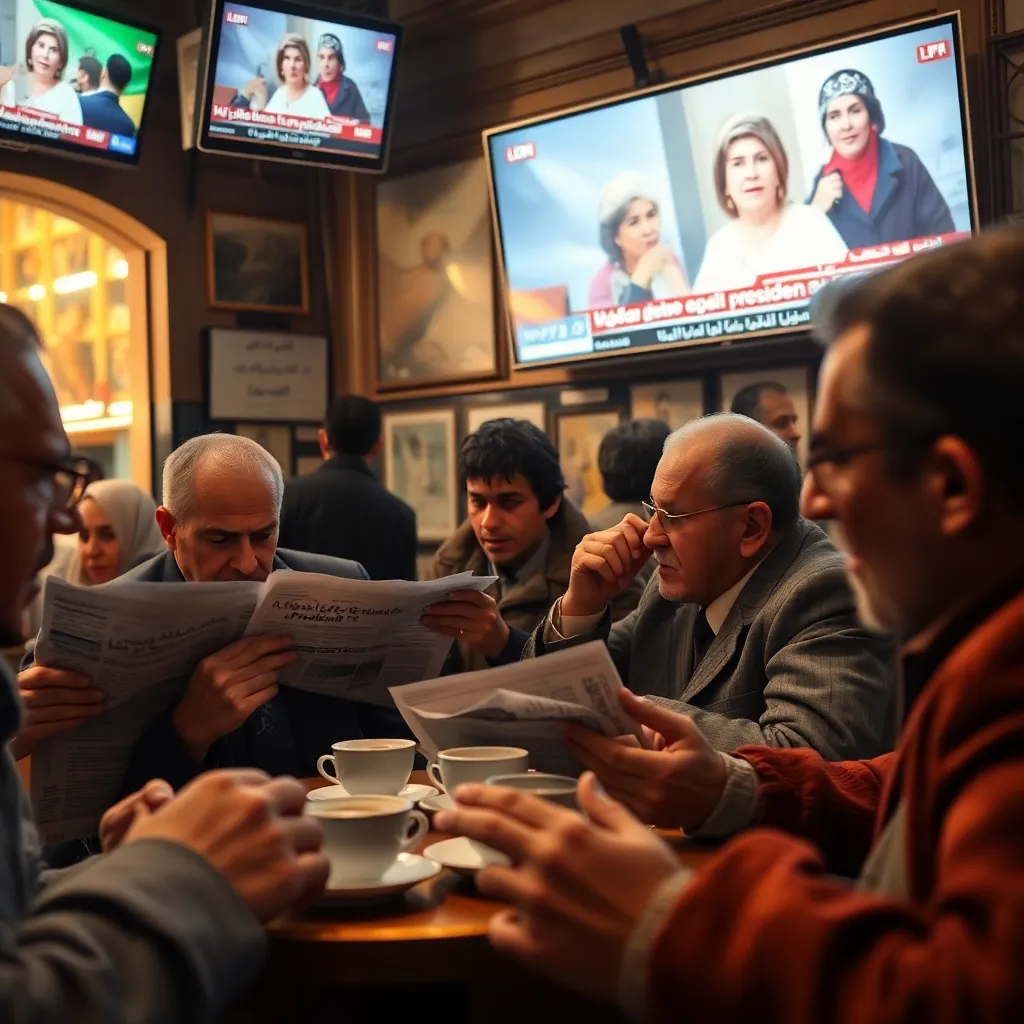
Rumors quickly spread that the newly declared president was already assembling a cabinet. Unconfirmed reports suggested appointments might include a Minister of Doors That Actually Open, a Secretary of Historical Clarifications, and a senior adviser tasked solely with entering rooms after tense meetings and saying, “Well, that could have gone in several directions.”
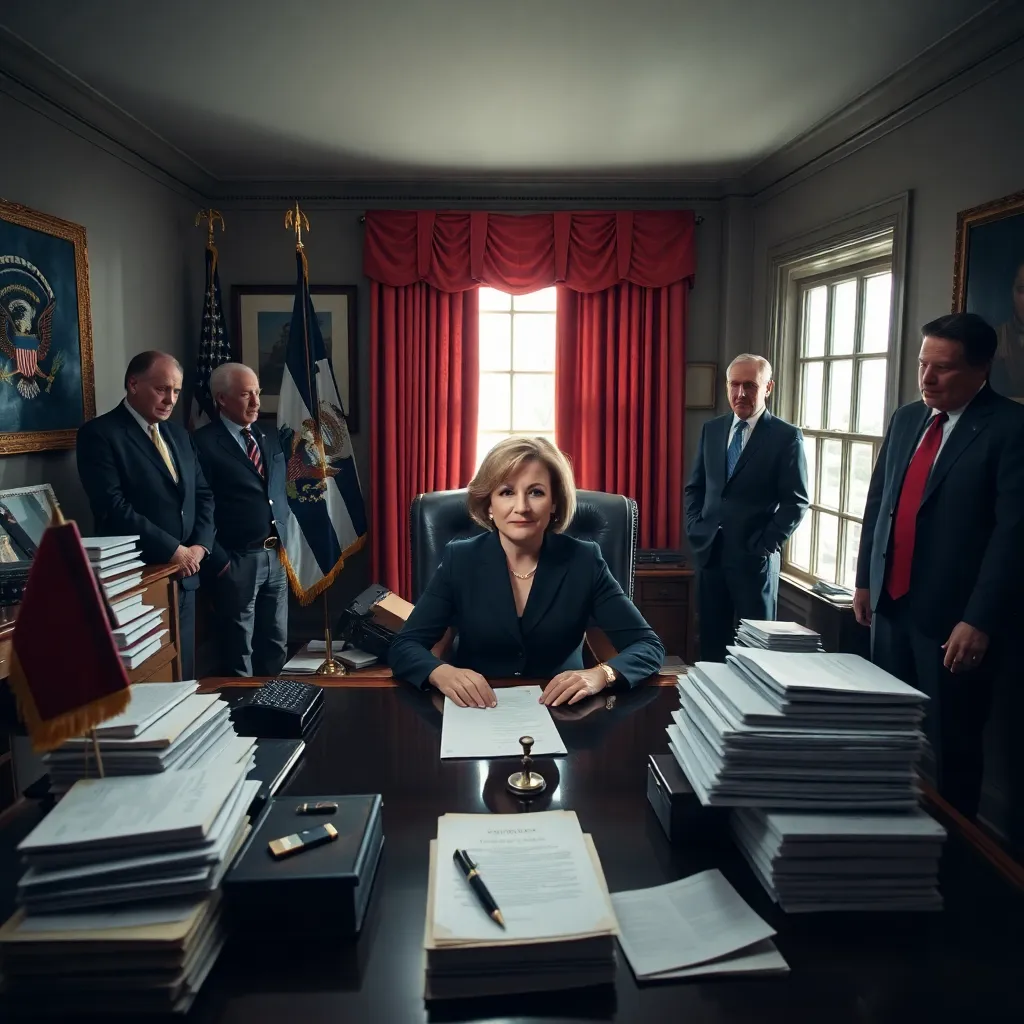
No official office had yet been identified, although there was speculation that any room containing a desk, two flags, and an expression of burdened determination could be nationalized by evening. A source close to nobody in particular claimed the woman had already requested stationery of “presidential thickness,” which experts agree is the sort of phrase that immediately forces a situation to become real.
International reaction was described as “careful,” “ongoing,” and “conducted with the face diplomats make when a microphone is definitely still on.” Several foreign ministries issued comments so measured they appeared to have been weighed using laboratory equipment. One diplomat, speaking anonymously, said, “We are monitoring developments,” which in diplomatic language can mean anything from “we are deeply concerned” to “we are trying not to scream in the corridor.”
Meanwhile, legal scholars entered the conversation with visible reluctance, carrying folders fattened by precedent, theory, and the faint smell of exhaustion. Their initial assessments ranged from “there are procedures” to “this is not how any of this works” to the more philosophically daring, “and yet, here we all are discussing it.”
The woman herself reportedly remained undeterred by questions of legality, process, or whether a nation can be run via bold entrance and declarative posture. In remarks delivered later to a gathering of supporters, doubters, the curious, and several people who had simply followed the noise, she insisted that legitimacy begins with conviction and improves dramatically when others stop interrupting.
“She has presence,” admitted one critic. “I oppose the method, the timing, the constitutional elasticity, and the complete absence of a recognizable mandate. But yes, undeniably, she has presence.”
By nightfall, the declaration had transformed from street-level astonishment into full regional spectacle. Phone screens glowed. Group chats erupted. Relatives called one another with the sacred urgency normally reserved for weather, weddings, and the possibility that somebody important had insulted somebody else important on television.
As the dust settled, one fact remained clear: whether history records this episode as a bold intervention, a constitutional acrobatics routine, or the most extraordinary case of confidence ever demonstrated outside a luxury car showroom, the woman had achieved something few politicians manage in a lifetime.
She had entered the West Bank and, before anyone could finish asking “on whose authority,” answered: “mine.”
Public Response
Comments
No comments yet.