Boardroom? Never Heard of It: The Top Ten Worst Places to Hold a Business Meeting, Ranked by OSHA Violations and Emotional Damage
In an era where “agile” has come to mean “able to hold a quarterly review anywhere there’s Wi‑Fi and at least one chair-shaped object,” companies have begun pushing the boundaries of what can reasonably be called a “meeting space.” Gone are the days of predictable conference rooms with stale biscuits and a broken projector. Today’s professionals crave authenticity, novelty, and environments that challenge the human will to live.
To help modern organizations continue making bold, inexplicable choices, The Wibble has compiled the definitive list of the ten worst places to hold a business meeting, based on a rigorous methodology involving common sense, fainting incidents, and the sound your soul makes when it leaves your body.
Below: the most appalling locations to run through “action items,” “synergies,” and “any other business,” in descending order of practical horror.

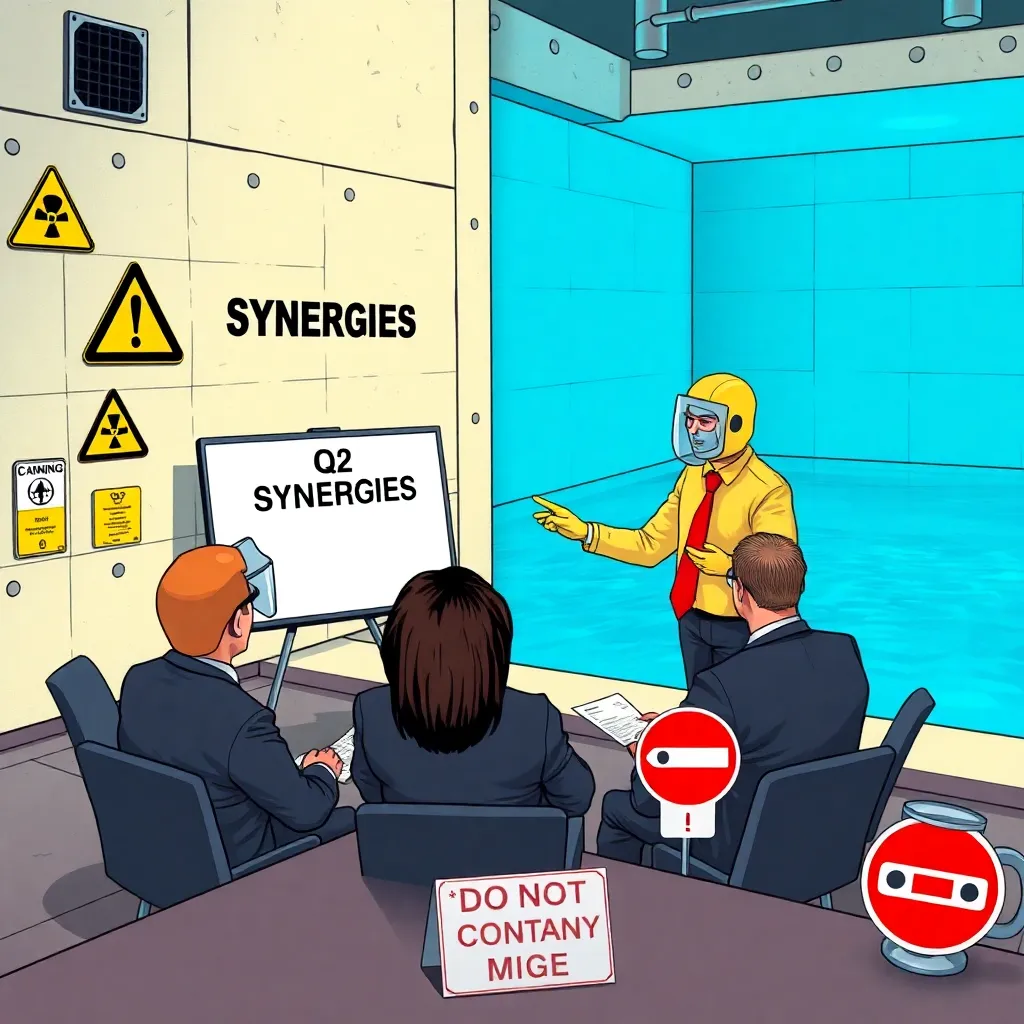
1. Nuclear Waste Pool
If you’re looking to really energize the room, nothing says “we’re a high-performance team” like conducting a budget forecast beside a shimmering vat of long-term regret. The nuclear waste pool is ideal for leaders who believe fear is an effective motivator and that “glowing feedback” should be taken literally.
Why it’s terrible:
Everyone’s hair becomes a bar chart by the end of Q2.
“Let’s circle back” becomes “Let’s find the exit before our organs unionize.”
Any mention of “long-term planning” feels deeply personal.
Key meeting benefit:
Attendance is flawless because nobody wants to be the first person to stand up and test what happens.
2. Inside a Fluid Tank
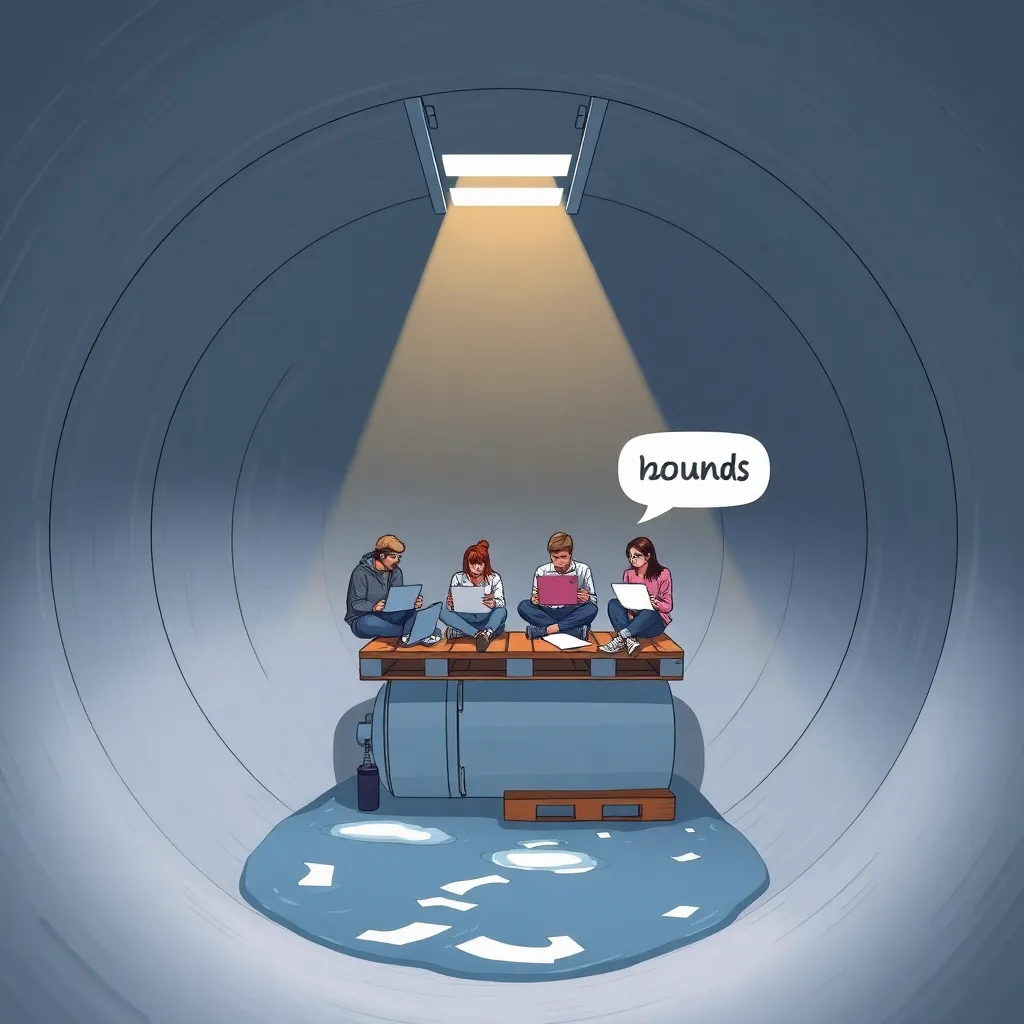
There are many kinds of fluid tanks: industrial, agricultural, and the kind you find behind a building that makes your immune system send a resignation email. Regardless of type, they all share one thing: they are not built for collaboration, unless your collaboration goals include “not drowning.”
Why it’s terrible:
The acoustics turn every sentence into a whale song of despair.
Notebooks become papier-mâché within minutes.
“Can you speak up?” becomes “Can you breathe at all?”
Key meeting benefit:
No one interrupts. Not because they’re polite—because they’re trying not to inhale the meeting.
3. Gas Station Bathroom
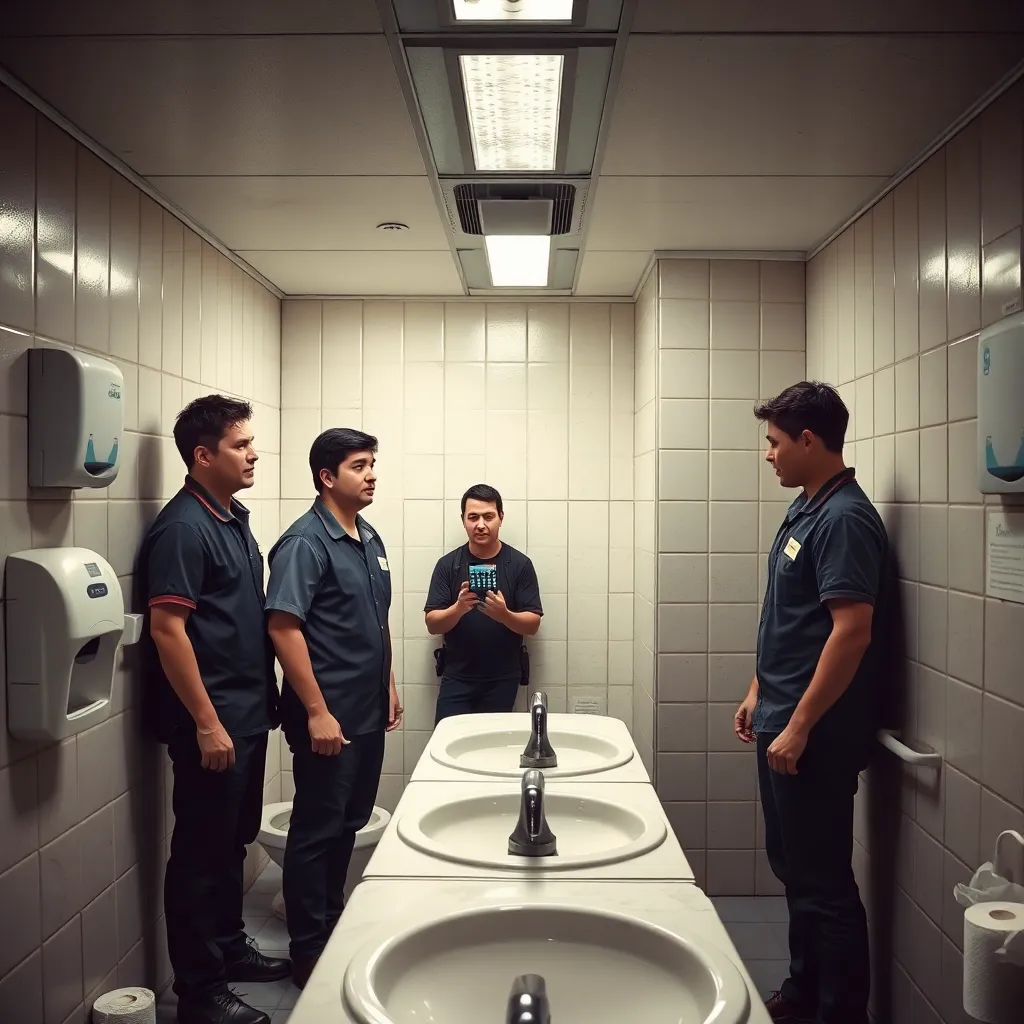
A gas station bathroom is a place where time stops, hope is replaced with dampness, and the hand dryer sounds like a jet engine trying to escape accountability.
Perfect for managers who want to bring everyone closer together—because there’s no room to be any other way.
Why it’s terrible:
The scent profile is “chemical apology.”
The mirror is hostile and judgmental.
The phrase “can we table this?” is met with a visible shudder.
Key meeting benefit:
Meetings end early due to sudden, unanimous commitment to “catching up later” somewhere that doesn’t have a puddle with a backstory.
4. Chicken Coop
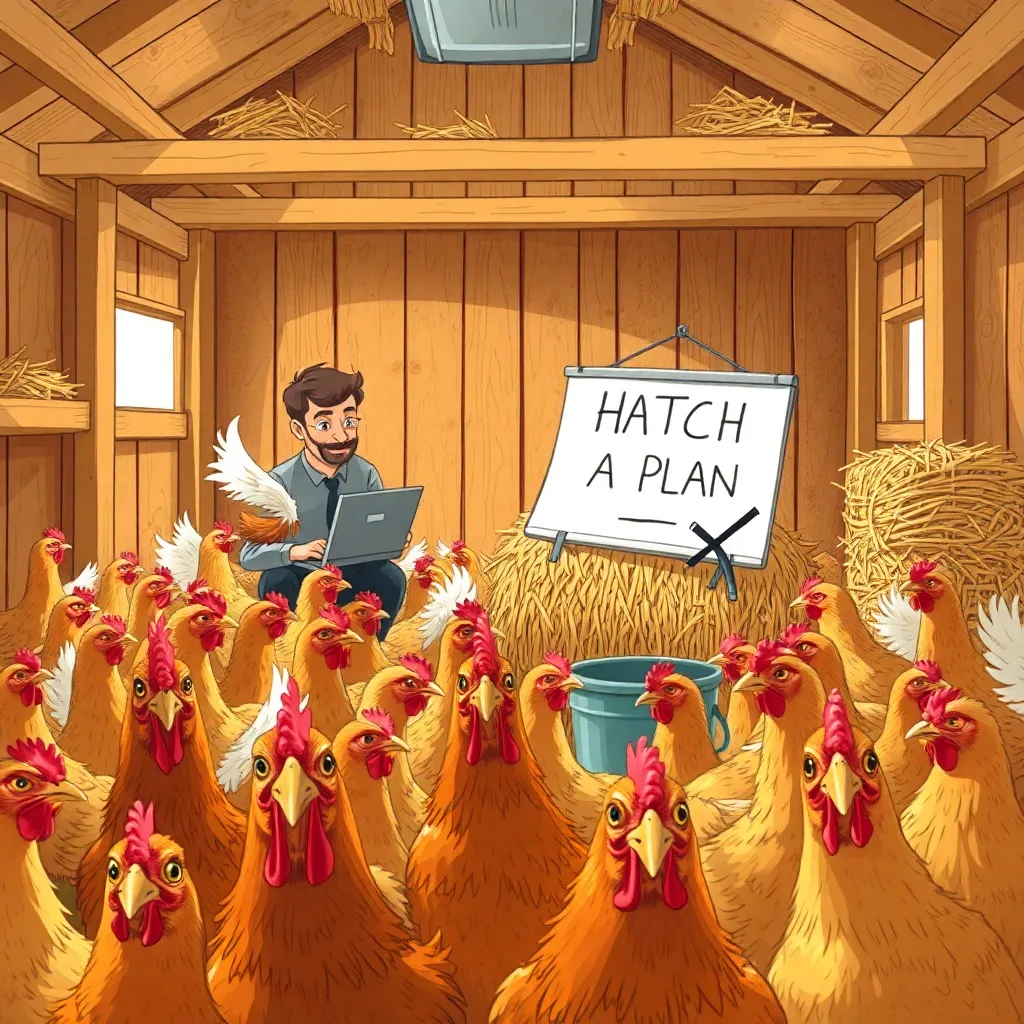
The chicken coop is an inspired choice for companies eager to embrace “farm-to-table communication,” or those whose internal politics already resemble pecking order violence.
Nothing fosters transparency like holding a negotiation while being stared at by thirty birds who actively distrust you.
Why it’s terrible:
Every pause is filled by screaming, flapping, and the sound of a chicken judging your KPIs.
PowerPoint is rendered meaningless by airborne feathers.
Someone will say “let’s hatch a plan,” and they will deserve what happens next.
Key meeting benefit:
Your team learns conflict resolution, primarily by watching chickens settle disputes instantly and without a slide deck.
5. Engine Room
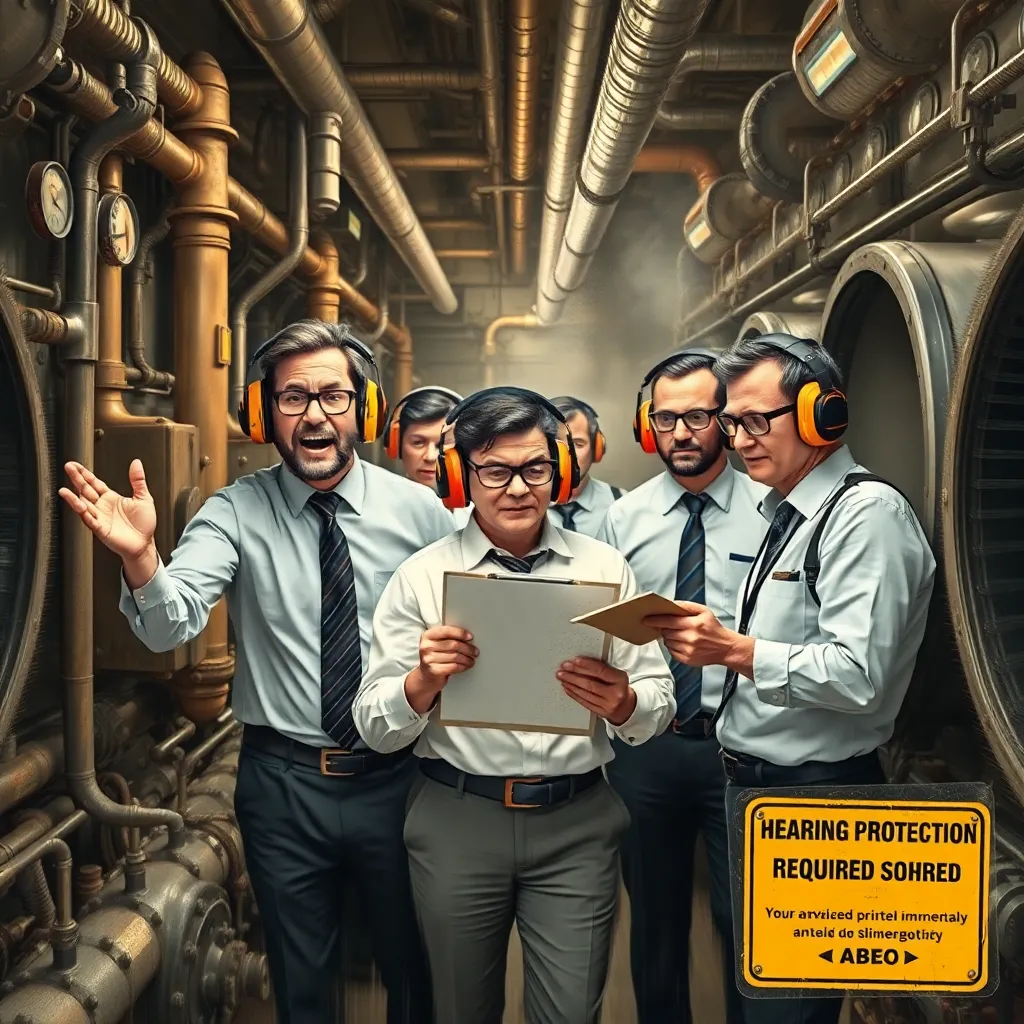
For those who feel a quiet room encourages too much thinking, the engine room offers constant noise, heat, and the thrilling sensation that anything could explode at any moment—including the intern’s confidence.
Why it’s terrible:
Hearing protection makes every discussion look like aggressive miming.
“We’ll touch base” is impossible because everything is coated in a film of oil and consequences.
The meeting minutes are just smudges.
Key meeting benefit:
Nobody dares ask “can we go over that again?” because the answer is always “WHAT?”
6. CEO’s Apartment
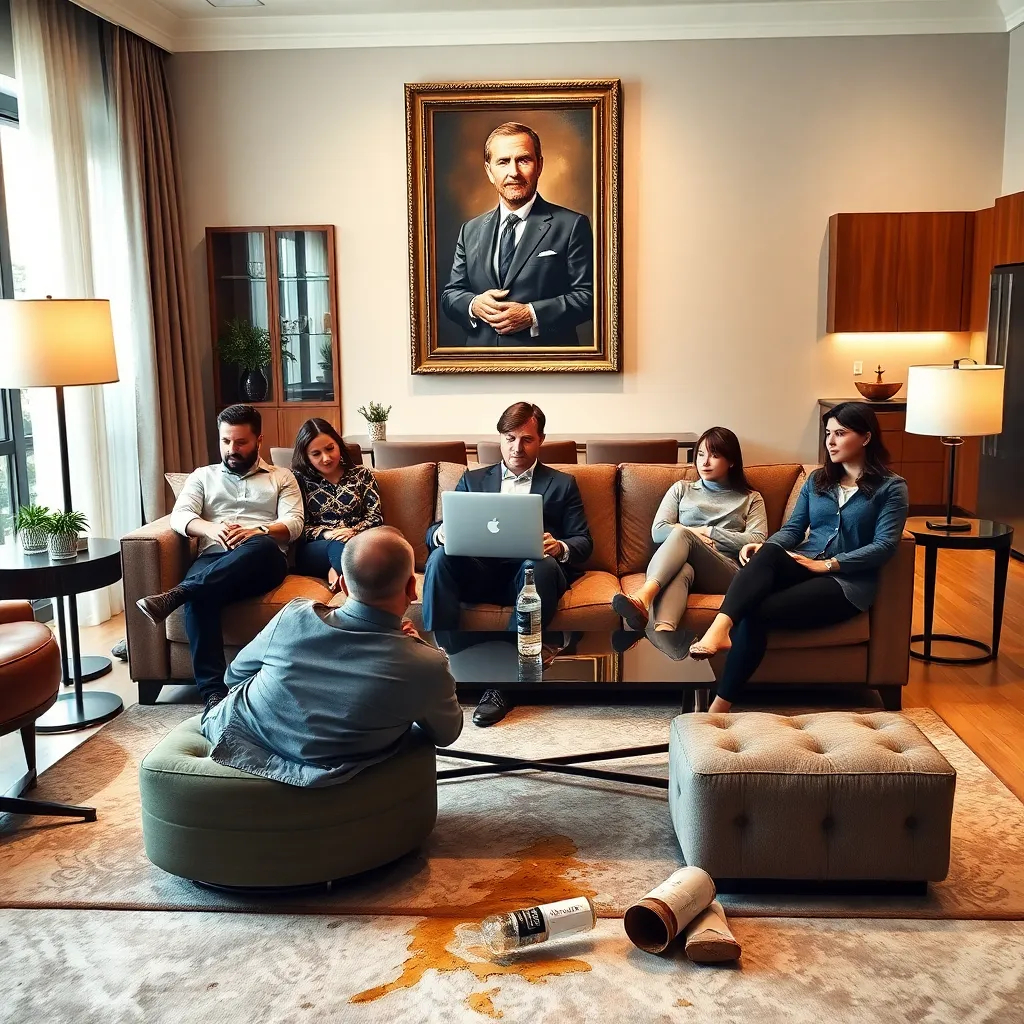
A meeting in the CEO’s apartment is a masterclass in boundary erosion. It’s also the only meeting venue where participants must pretend not to notice a framed portrait of the CEO looking thoughtfully into the future, while in reality gazing directly at them like a wealthy owl.
Why it’s terrible:
The power dynamic becomes physical: the CEO sits on a sofa, everyone else is assigned “floor vibes.”
The kitchen island becomes a negotiation table and also a place where someone will spill sparkling water and be haunted by it forever.
“We’re like a family here” becomes legally troubling.
Key meeting benefit:
Employees learn valuable skills, such as laughing at jokes they didn’t hear and complimenting furniture they hate.
7. Walk-In Fridge
The walk-in fridge is popular among executives who believe productivity increases when everyone’s teeth chatter. It’s also the only setting where the phrase “cold call” is a literal threat.
Why it’s terrible:
Laptops die. Spirits die. Fingers stop functioning as fingers.
Someone inevitably suggests “ice-breaking,” and nobody survives the rage.
The minutes freeze, making it impossible to later deny what you agreed to.

Key meeting benefit:
The meeting is brief, because no one can feel their face long enough to discuss “strategic initiatives.”
8. Attic
The attic is for businesses seeking “a retreat,” by which they mean “a place filled with insulation, mystery boxes, and the feeling that you are trespassing in your own life.”
Excellent for brainstorming, as the mind becomes desperate to escape reality.

Why it’s terrible:
The lighting makes everyone look like they’re giving testimony.
There’s always an object covered in a sheet that nobody will acknowledge.
Every step is a gamble between “support beam” and “lawsuit.”
Key meeting benefit:
Ideas generated in attics are bold, unhinged, and frequently involve leaving the company.
9. Intersection Isle
An intersection isle (also known as “that narrow bit of road you shouldn’t stand on”) is for organizations that truly value risk management theatre. Nothing underscores the urgency of quarterly targets like an actual car coming at your kneecaps.

Why it’s terrible:
Everyone speaks in shortened, panicked phrases.
The meeting agenda becomes “SURVIVE” in bold letters.
Every “quick sync” is genuinely quick, for medically obvious reasons.
Key meeting benefit:
Cross-functional alignment happens instantly, because you physically align yourselves in the same direction to avoid impact.
10. Lobby
It’s tempting to think the lobby is harmless: bright, open, welcoming. But the lobby is a corporate purgatory where meetings go to die slowly in front of strangers.
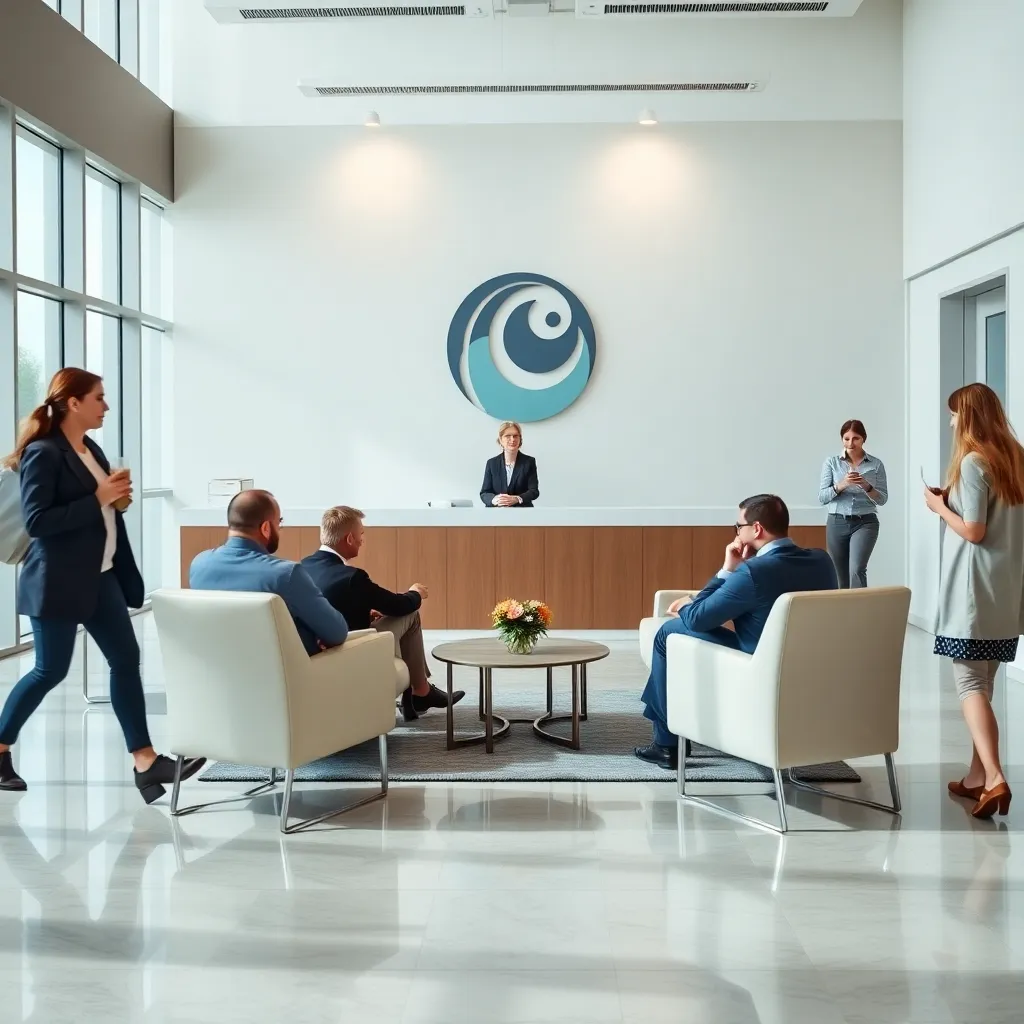
It’s the worst place for a meeting because it’s not unsafe, just humiliating—like being forced to perform your job while the public watches and silently thanks fate they’re not you.
Why it’s terrible:
The receptionist becomes an unwilling stakeholder.
Your “confidential” discussion is overheard by a man holding a smoothie and disapproval.
People walking past assume you’re either (a) arguing, or (b) being broken up with professionally.
Key meeting benefit:
It’s easy to escape by pretending you’re simply “waiting for someone” and then never returning.
Honorable Mentions (For Companies That Truly Hate People)
Because every industry has innovators:
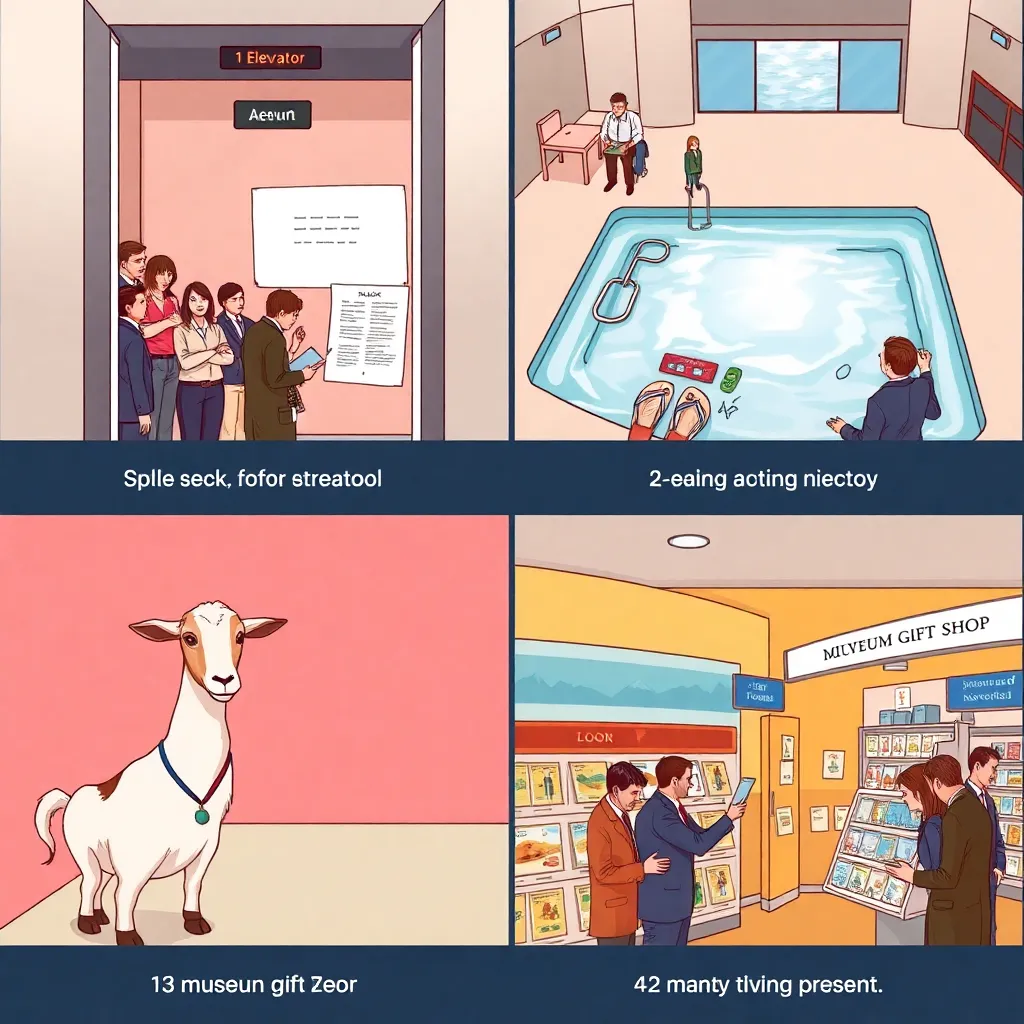
Elevator (for meetings that can never finish, only restart awkwardly)
Public pool (nothing says “stakeholder update” like wet paper)
Petting zoo (goats will question your leadership in ways your staff never dared)
Museum gift shop (you will buy something you don’t want just to feel control)
Conclusion: Choose Better, Or At Least Choose Less Damp
If your workplace culture is built on trust, respect, and basic sanitation, you may be tempted to hold meetings in appropriate environments. But for everyone else—companies committed to chaos, confusion, and “character building”—this list offers a clear pathway to ensuring every discussion is memorable for the wrong reasons.
After all, anyone can hold a meeting in a boardroom. It takes real leadership to demand a “quick catch-up” in a chicken coop and then act surprised when the chickens have stronger opinions than finance.
And remember: the best meeting is the one that could have been an email—but the worst meeting is the one that becomes a medical incident.