Filed Report
Federal Reserve Study Links Global Market Volatility to Jerome Powell’s Tie Selection
The Federal Reserve Board of Governors released a comprehensive 400-page report on Tuesday confirming that the specific shade of neckwear worn by Chair Jerome Powell is the primary driver of international capital flows, outweighing interest rate adjustments, employment data, and geopolitical stability. The study, titled *Chromatographic Indicators in Monetary Communication*, suggests that the global financial system has transitioned from a data-dependent model to one governed almost entirely by the light-reflective properties of silk polyester blends.
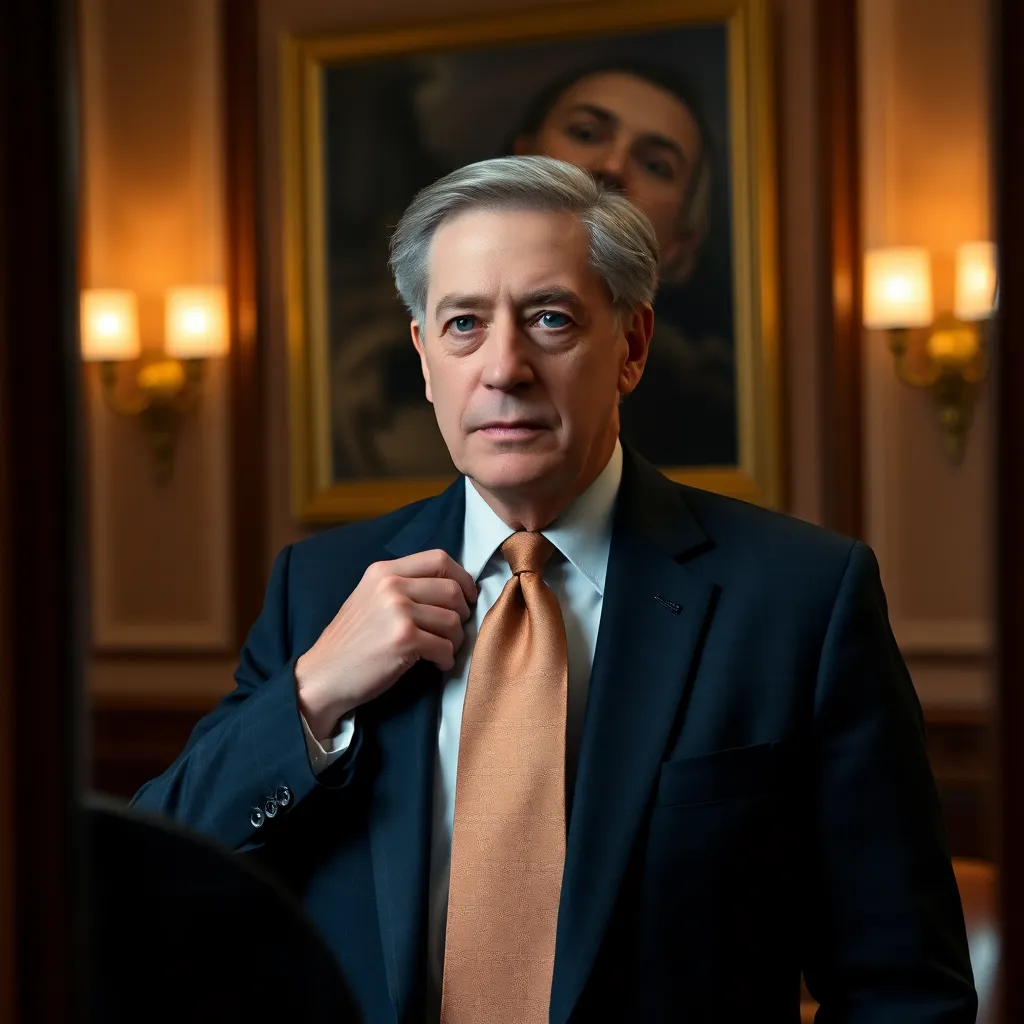
The 'Periwinkle Pivot'
According to the report, the most significant market movements of the last fiscal year were not triggered by the Federal Open Market Committee’s (FOMC) decisions on the federal funds rate, but by the specific hex codes of Mr. Powell’s ties. Analysts noted that a "Deep Navy" selection typically correlates with a 200-point rise in the S&P 500, while any shade approaching "Dusty Rose" or "Salmon" triggers an immediate sell-off in emerging markets.
"We have observed a 0.98 correlation between the saturation levels of the Chair’s neckwear and the 10-year Treasury yield," said Dr. Aris Thorne, lead researcher at the Institute for Fiscal Aesthetics. "When the Chair wears a tie with a subtle paisley pattern, the algorithmic trading bots interpret the complexity as a sign of impending stagflation. Conversely, a solid matte burgundy is viewed by the markets as a 'risk-on' signal, regardless of the actual words being spoken at the podium."
Institutional Adjustments
The revelation has prompted a massive shift in how major investment banks staff their trading floors. Goldman Sachs and JPMorgan Chase have reportedly begun hiring "Chromatic Analysts" from the fashion industry to sit alongside their traditional macroeconomists. These specialists use high-definition spectral imaging to analyze the Chair’s tie from the moment he exits his vehicle at the Eccles Building.
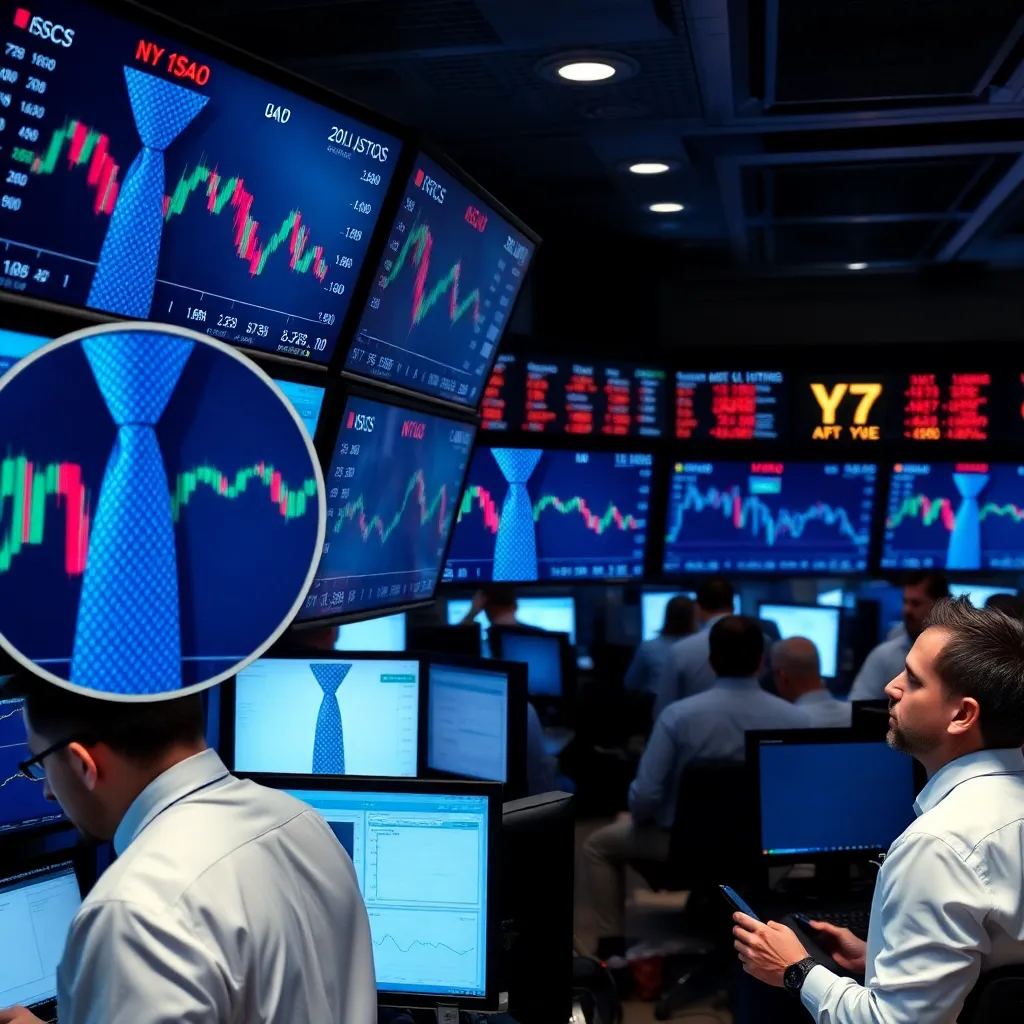
"The traditional 'Fed-speak' decoding is dead," noted Sarah Jenkins, a senior strategist at a London-based hedge fund. "It doesn't matter if he says 'higher for longer' if he’s wearing the 'Sky Blue' silk. The Sky Blue indicates a hidden dovishness that the algorithms crave. We’ve recalibrated our entire portfolio to trigger buy orders the moment the light hits his Windsor knot."
The Department of the Treasury’s Response
The U.S. Treasury has expressed concern over the "unintentional signaling" caused by the Chair’s wardrobe. In a memorandum leaked on Friday, officials suggested the implementation of a "Standardized Neutral Neckwear Policy" to prevent accidental global recessions caused by a poorly chosen morning accessory.
The proposed policy would limit Mr. Powell to a single, government-issued shade of "Bureaucratic Grey" (Pantone 17-5104). However, some economists warn that even this could be dangerous. "If he wears the same grey tie three days in a row, the market will interpret that as a lack of liquidity in the textile sector," warned Dr. Thorne. "There is no such thing as a neutral tie in a hyper-observant market."
Public and Retail Impact
The "Tie Effect" has trickled down to retail investors, with several mobile apps now offering real-time "Tie-Trackers." These services use AI to predict the Chair’s morning mood based on local weather in D.C. and his proximity to high-end haberdasheries.
In suburban brokerage firms, the mood is one of cautious observation. "I used to look at the Consumer Price Index," said one independent trader from Ohio. "Now I just keep a swatch book from Brooks Brothers on my desk. If I see a hint of violet on the C-SPAN feed, I move everything into gold bullion immediately. It’s the only logical way to trade in this environment."
As of press time, the Federal Reserve has declined to comment on whether Mr. Powell’s upcoming speech at Jackson Hole will feature a patterned or solid-colored tie, a silence that has already caused a 0.4% dip in the Nikkei 225.
Public Response
Comments
No comments yet.