“Knowledge Farted”: Nation Reels After Man Accidentally Releases Facts in Public
WIBBLETOWN, TUESDAY — Britain’s already-fragile social fabric was pushed to the brink yesterday when local man Darren “I Was Just Saying” Pritchard, 34, reportedly farted knowledge in a crowded café, releasing what witnesses described as “an unsolicited plume of accurate information” into the air.
The incident—now being referred to by experts as a spontaneous epistemic discharge—occurred at approximately 12:43pm, as Mr Pritchard leaned forward to pick up a dropped fork and, without warning, emitted a short burst of facts about mortgage rates, the difference between a virus and a bacterium, and why glitter is technically a microplastic.
Within minutes, three customers had developed a distant stare commonly associated with receiving information they did not ask for. A fourth was said to have whispered “no thank you” repeatedly into a cappuccino.
“It Wasn’t Loud, But It Was Correct”
Café staff described the moment as “quietly devastating.”
“It wasn’t like a normal fart,” said barista Chloe M, still visibly shaken. “Normal farts are… you know… physical. This was more like the atmosphere changed. Suddenly everyone was aware that penguins have knees and that bananas are berries. A man near the window dropped his phone because he realised he’d been wrong about something since 2009.”
According to multiple accounts, Mr Pritchard attempted to apologise but only made things worse by muttering, “Also, the thing about shaving making hair grow back thicker is a myth,” prompting a nearby woman to clutch her calves protectively.
Government Responds With Emergency Measures
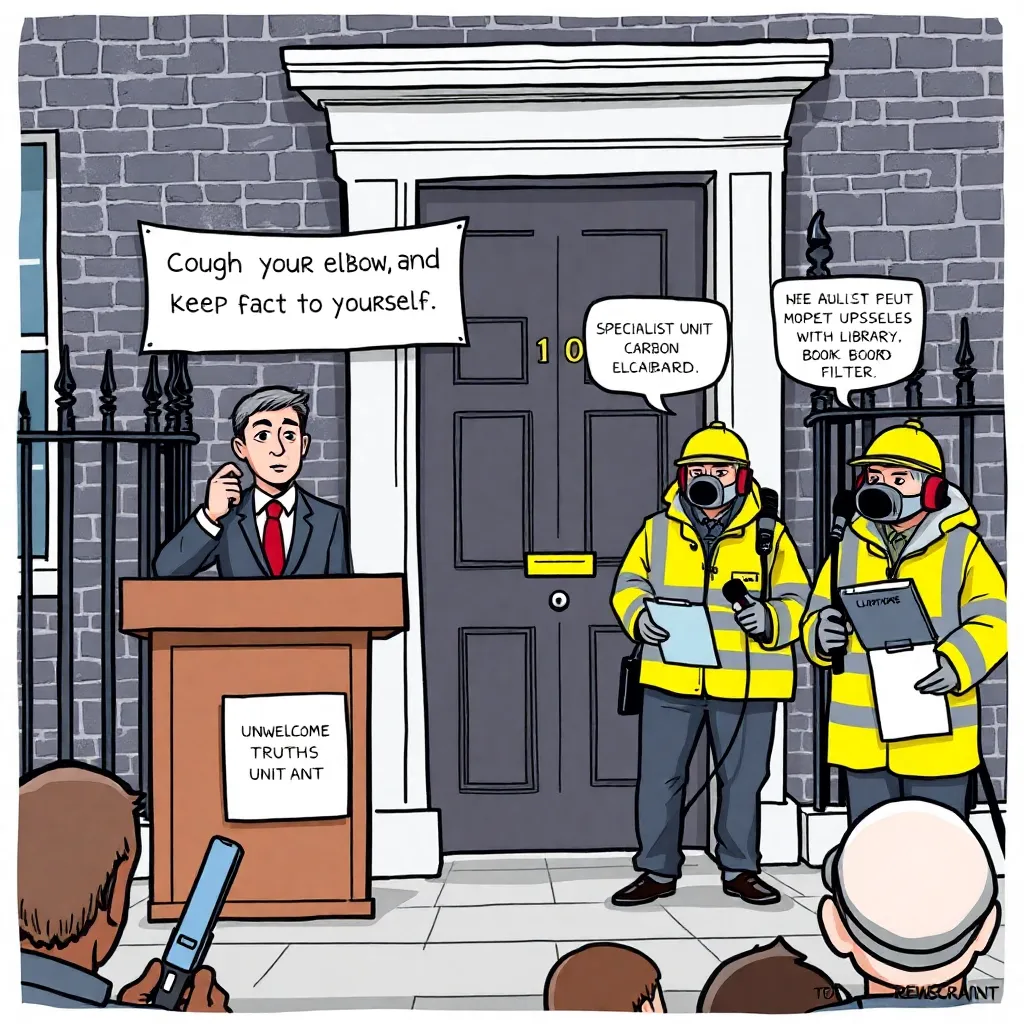
Downing Street confirmed it is “monitoring the situation closely” and has deployed a specialist unit from the Department for Unwelcome Truths, formerly known as the Department for Education.
A spokesperson delivered a brief statement:
“We ask the public to remain calm and to remember that not all information is safe to inhale without preparation. If you believe you’ve been exposed to unexpected knowledge, please isolate for 48 hours and avoid posting about it online, especially if it makes you look like you’ve been wrong.”
The government has also issued a new public safety campaign titled “Cough into your elbow, and keep your facts to yourself.”
Scientists Warn of a Growing Epidemic of Accidental Understanding
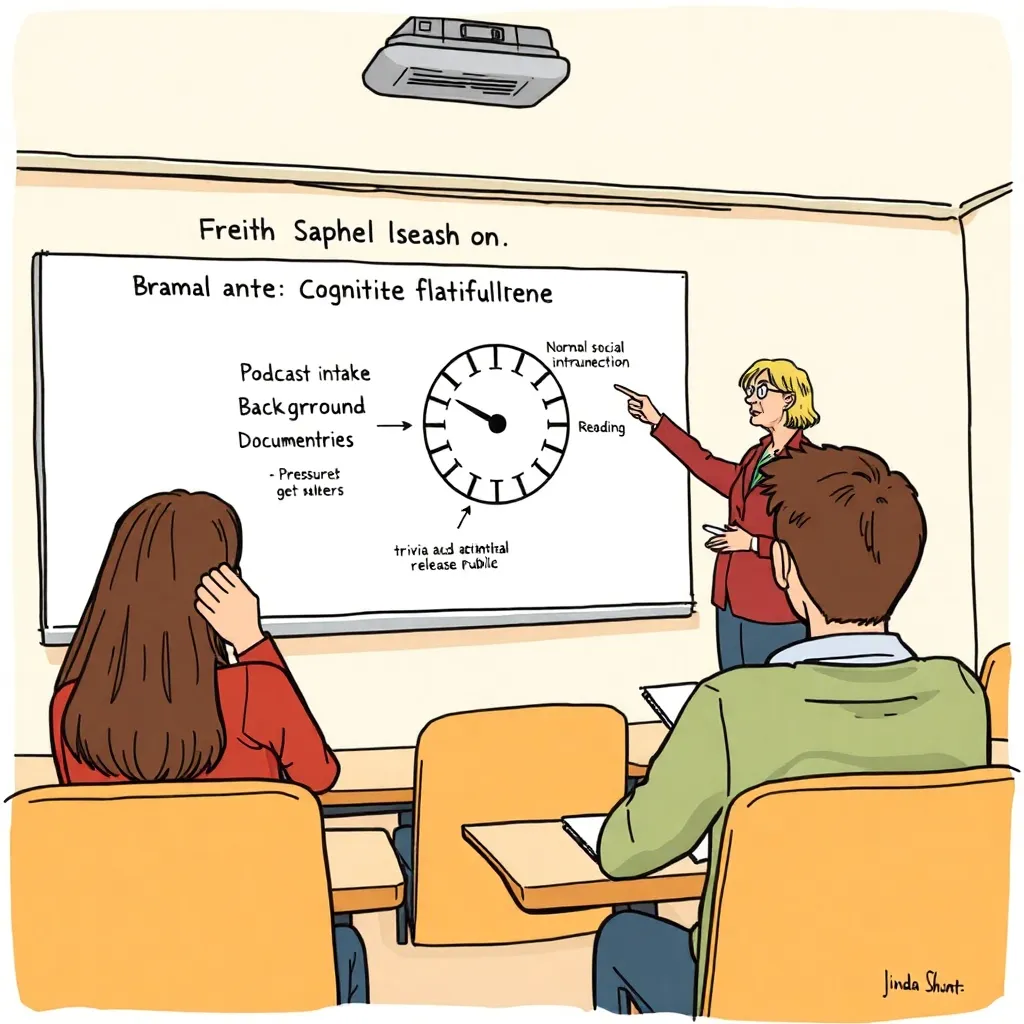
Experts have long feared the rise of knowledge-farting, largely blamed on the nation’s increasing intake of podcasts, documentaries watched ‘in the background’, and the dangerous practice known as reading.

Professor Linda Shunt, Chair of Applied Uncertainty at the University of Lower Wibble, explained:
“Humans are not designed to contain unlimited facts. We evolved to store a manageable amount of information—like which berries are poisonous and the approximate location of the nearest gossip. But modern life encourages people to accumulate trivia beyond safe levels. Eventually, the pressure builds and the body must release it, often in a social setting.”
Professor Shunt likened the condition to a kind of cognitive flatulence.
“Most people can control it,” she added. “But once someone’s learned three separate things about WWII in one week, it’s basically over.”
Witnesses Describe “A Lingering Aftertaste of Certainty”
The aftermath has been described as “difficult” for those exposed.
“I went in there believing the Great Wall of China was visible from space,” said café customer Martin, 52, staring into the middle distance. “I came out knowing it’s not, and honestly I don’t know who I am anymore.”
Another patron reported she had to sit down after learning that “taste” is mostly smell.
“I looked at my sandwich and felt like it had betrayed me,” she said. “Or like I’d betrayed it by not understanding it sooner.”
A third individual, who requested anonymity, said he experienced mild dizziness after being told that octopuses have three hearts.
“I didn’t even want one,” he said. “Why do they get three?”
Social Media Divides Into Pro-Knowledge and Anti-Knowledge Camps
As news of the event spread, the internet reacted with its usual grace and emotional stability.
Hashtags such as #KnowledgeFart, #FactLeak, and #StopTheTruth trended nationally. Meanwhile, a counter-movement, largely composed of people who say things like “actually,” insisted society should embrace unexpected learning.

One user wrote: “Maybe if more people farted knowledge, we wouldn’t be in this mess.”
The response was swift and violent, with several users demanding the government “ban facts until we’ve had a chance to calm down.”
The Rise of “Fact Masks” and Safe Spaces for the Uninformed
Retailers have reported a surge in demand for Fact Masks, which are essentially regular masks but printed with phrases like “I’m not taking in information today” and “My brain is closed for maintenance.”
A new chain of establishments has also emerged in major cities: Ignorance Lounges, where patrons can relax in a carefully controlled environment free from learning. The venues offer:
Books with all the pages stuck together
News that only covers celebrity pets
Wi-Fi that blocks Wikipedia, Google, and anyone named “Neil deGrasse Tyson”
A “quiet corner” where staff reassure you that your opinion is “just as valid” as a peer-reviewed paper
Darren Speaks Out: “I Didn’t Mean to Educate Anyone”
Mr Pritchard, now at the centre of the controversy, gave an exclusive interview outside his home, where neighbours have reportedly been spraying air freshener at his letterbox “just in case.”
“I feel terrible,” he said. “I didn’t mean to… to do it. It just happened. I’d listened to a history podcast on double speed and I think my body couldn’t hold it.”
Asked if he had any prior symptoms, Mr Pritchard admitted there were warning signs.
“I’d been correcting people under my breath,” he said. “And I’d started saying things like ‘fun fact’ unironically. My partner said I was becoming ‘insufferably informed.’ But you don’t think it’ll happen to you.”
He paused.
“Also, fun fact, honey doesn’t spoil. Sorry—see? It’s still happening.”
NHS Issues Guidance: Recognising the Signs of an Impending Knowledge Fart
Health officials have published a leaflet advising people to seek help if they experience any of the following:
A sudden urge to say, “Well actually…”
Uncontrollable use of the word “technically”
Difficulty enjoying films without pointing out inaccuracies
Compulsive fact-checking during arguments that were previously more fun when they were purely emotional
Feeling “physically uncomfortable” when someone says “could care less”
Patients are advised to treat early symptoms by consuming small doses of ignorance, such as:
Watching a romantic comedy from 2003 and accepting the premise without questions
Believing a horoscope for 24 hours
Saying “huh, interesting” and then never following up
International Community Calls for Sanctions on Public Fact Emission
The United Nations has convened an emergency session to discuss whether knowledge-farting constitutes a form of information warfare.
A draft resolution suggests that all facts should be released only in designated areas, such as libraries, classrooms, or the comment section under a video titled “Man Builds Swimming Pool With Only a Spoon.”
France has proposed a stricter approach: licensing facts, with citizens permitted only three per day unless accompanied by a trained professional.
What Happens Next?
Authorities say Mr Pritchard will not face criminal charges at this stage, though he has been asked to carry a small carbon filter and to “try thinking about nothing” when in public.
Meanwhile, the café has installed a new sign at the entrance:
NO OUTSIDE FOOD, DRINK, OR UNREQUESTED INFORMATION.
As Britain struggles to move on, sociologists warn the real danger is not the initial release of knowledge, but what happens afterward.
“Once facts are out there,” Professor Shunt explained grimly, “people start connecting them. Next thing you know, they’re understanding systems. Then they ask questions. Then, before you can stop it, they’re voting with intent.”
At press time, Mr Pritchard was reportedly resting at home and reading the back of a cereal box “in a controlled way,” while the nation waited, tensely, for the next accidental outbreak of comprehension.