Filed Report
Local Council Meeting Unleashes Doomsday Scenario After Misplaced Semicolon
Residents arrived at Tuesday night’s council meeting expecting the usual thrilling agenda of hedge height disputes, parking permit resentments, and a 14-minute presentation titled *“Bins: A New Era.”* Instead, by 8:17 p.m., the chamber had accidentally voted to “initiate total civic reset; remove all barriers to ending roads, bylaws, and, where feasible, the sun,” after a semicolon was discovered lurking in the revised motion on pedestrian bollards.
The punctuation mark, described by one clerk as “smug, intermediate, and frankly too confident for local government,” transformed what should have been a routine statement — “install temporary planters; review access in six months” — into a procedural hydra. By the time the mayor asked whether everyone was “content with the wording,” council had, according to meeting minutes, simultaneously approved flower tubs, dissolved three committees, nationalized a duck pond, and authorized the ceremonial winding down of civilization “subject to procurement.”
Witnesses say the atmosphere changed the moment the semicolon was projected onto the chamber wall in 48-point font. “You could feel it,” said one resident, clutching a notebook full of complaints about a neighbor’s wind chime. “People stopped blinking. The planning officer whispered, ‘Dear God, it links two independent clauses.’ Then the emergency biscuit tin was opened, which in this borough means things have gone biblical.”
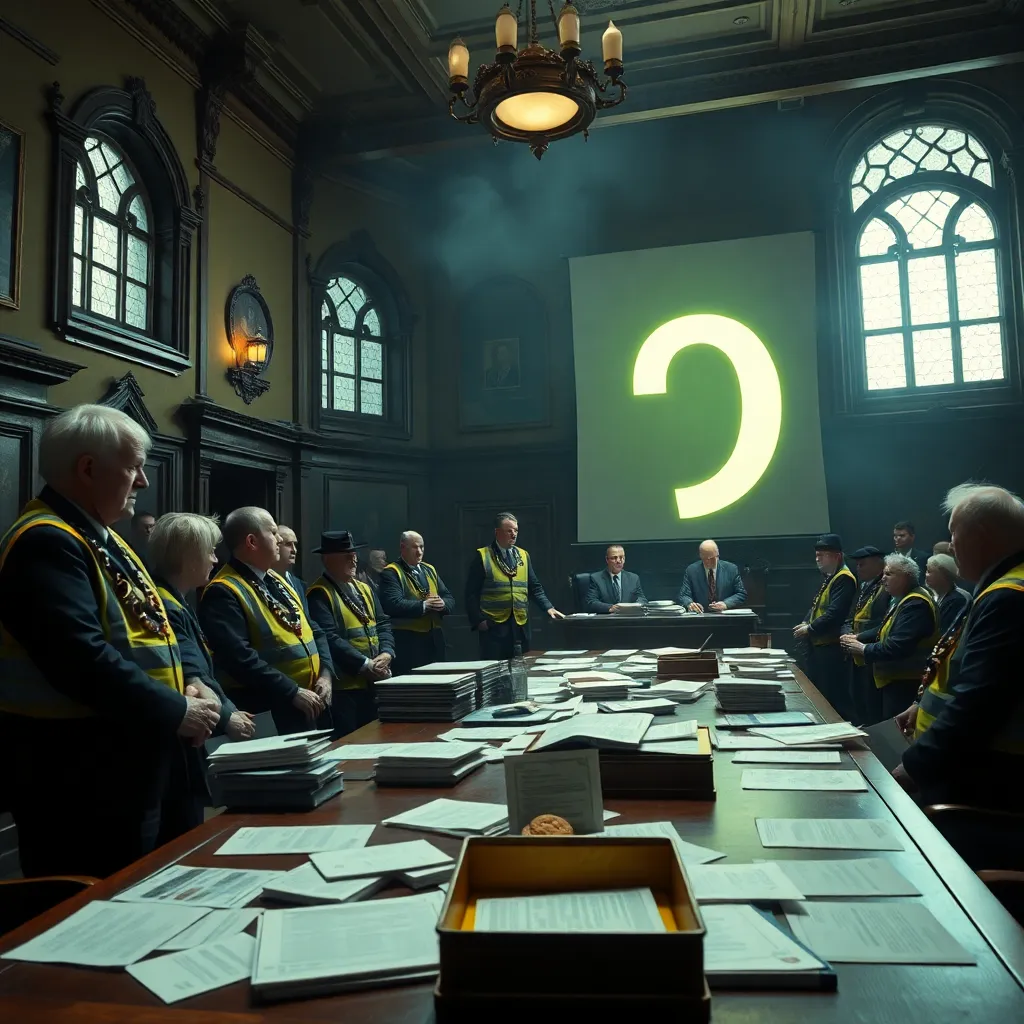
Attempts to restore order were hampered by the fact that no one could agree whether the semicolon had been inserted by accident, malice, or “grammar maximalism.” A special subcommittee on punctuation resilience was immediately formed, then accidentally merged with the flood response task force after a councillor muttered “let’s combine them somehow” into an active microphone. This created the borough’s first ever Department of Syntax and Sandbags, which has already issued guidance advising residents to keep calm, elevate valuables, and avoid dependent clauses during periods of high anxiety.
By 9 p.m., the legal team had produced a 67-page interpretation of the motion, concluding that while the semicolon did not technically compel the end of days, it did create “a regrettable but enforceable pathway toward broad municipal unraveling.” This pathway reportedly includes a phased closure of ornamental roundabouts, a review of whether pigeons should continue to enjoy voting-age ambiguity, and a pilot scheme replacing all street signs with “more intuitive gestures.”
The public gallery, sensing that history was being made in the worst possible way, split into factions. Traditionalists demanded a return to commas, insisting they had served the town faithfully for generations and knew their place. Reformists argued punctuation should be modernized with dashes, icons, and “a vibe-based framework.” One man in a fleece simply stood up and yelled, “This is what happens when nobody respects the colon,” before being escorted out for undue dramaturgy.
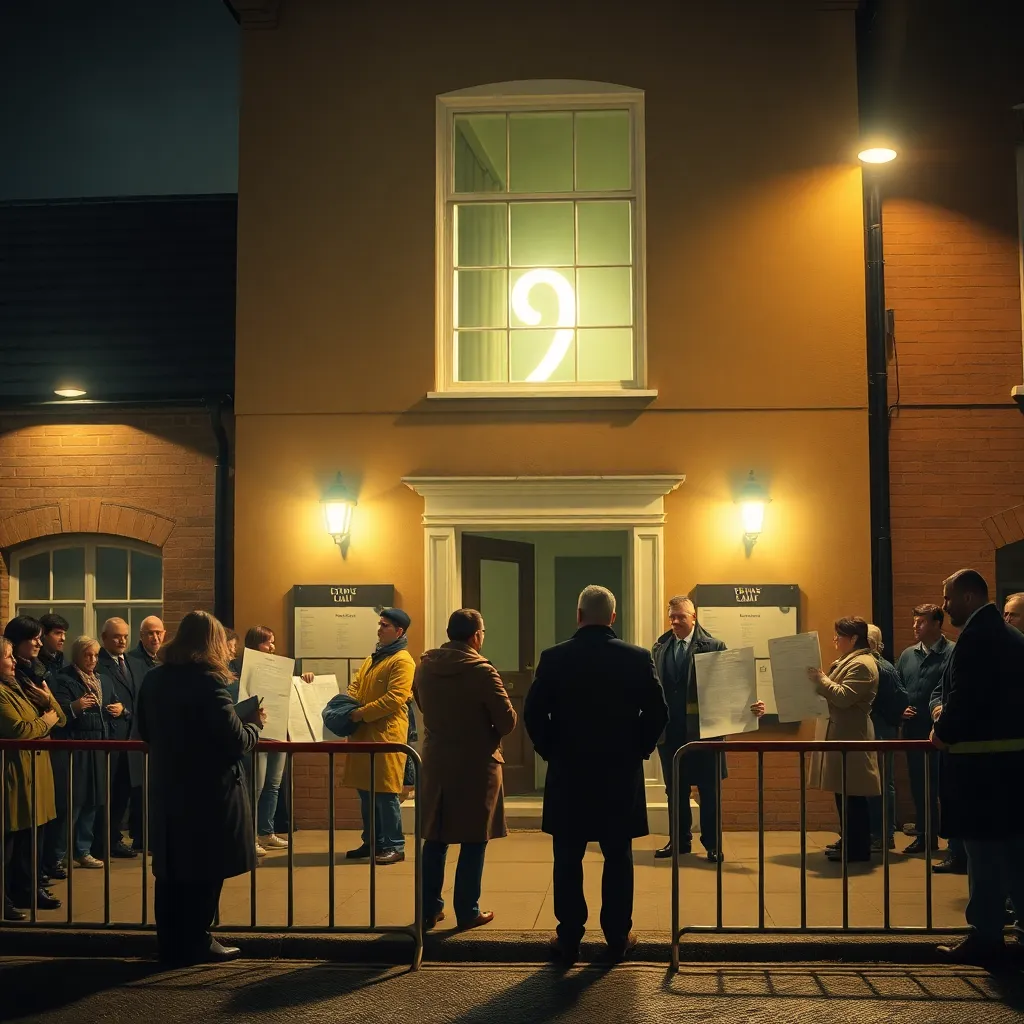
Outside, emergency services erected a temporary cordon around the municipal building after rumors spread that the semicolon had not only altered the motion but achieved a kind of administrative sentience. Staff reported printers producing unsolicited addendums, clocks skipping directly to “later,” and the vending machine dispensing only custard creams “in preparation.” A spokesperson for the fire brigade confirmed they were monitoring the situation closely and had classified the incident as “not a fire yet, but definitely grammatical.”
In an effort to reassure the public, the mayor held a press conference just after midnight, standing before a lectern bearing the borough crest and an expression usually seen on men discovering a swan in their conservatory. “Let me be absolutely clear,” he said, reading from a prepared statement later found to contain four contradictory amendments and a recipe for parsnip soup. “The town remains open for business. We are not, at this time, entering a permanent dusk. Any suggestion that residents should stockpile tinned peaches, waterproof socks, or legal dictionaries is premature, though not necessarily unwise.”
The statement did little to calm nerves after the mayor’s microphone cut out on the phrase “as the horizon event approaches.” Within minutes, local supermarkets were stripped of candles, tea bags, and those little novelty crackers no one likes until institutions begin trembling. Several families reportedly fled to nearby villages thought to be less vulnerable to cascading governance failures, only to discover those councils still use fax machines and are therefore considered structurally immortal.
Experts have since weighed in. A professor of municipal linguistics from the regional university called the event “a textbook example of syntax-driven overreach,” adding that semicolons are best handled by trained professionals wearing gloves and low expectations. “In literature, they can be elegant,” she explained. “In local administration, they’re a gateway drug. First it’s a pause with ambition; next thing you know, allotments are under martial law.”
Council workers returned to the chamber at dawn wearing high-visibility jackets and the thousand-yard stare of people who had spent six hours trying to amend appendix C. There, on the agenda screen, they found the semicolon had vanished, replaced by a full stop and the single word: “Proceed.” Officials refused to comment on how this occurred, though one janitor admitted he heard “a tiny, satisfied click” from the stationery cupboard around 4:30 a.m.
For now, the borough remains technically intact, albeit under revised wording. The duck pond has been denationalized, the bollards are back under consultation, and the emergency biscuit tin has been resealed with tamper-evident tape. Still, residents say they will not soon forget the night punctuation came for them. “It makes you think,” said a shaken attendee, staring into the middle distance as workers removed caution signs from the foyer. “All these years, we thought the biggest threat to the town was the bypass. Turns out it was a mark that wanted to be two things at once.”
Next Tuesday’s meeting has been postponed pending a full independent inquiry into clauses, subclauses, and who exactly authorized the phrase “where feasible, the sun.”
Public Response
Comments
No comments yet.