National Alphabet Board Releases Final Letter Rankings After Months of Chaotic Scrutiny, One Resignation, and “Unprecedented Vowel Lobbying”
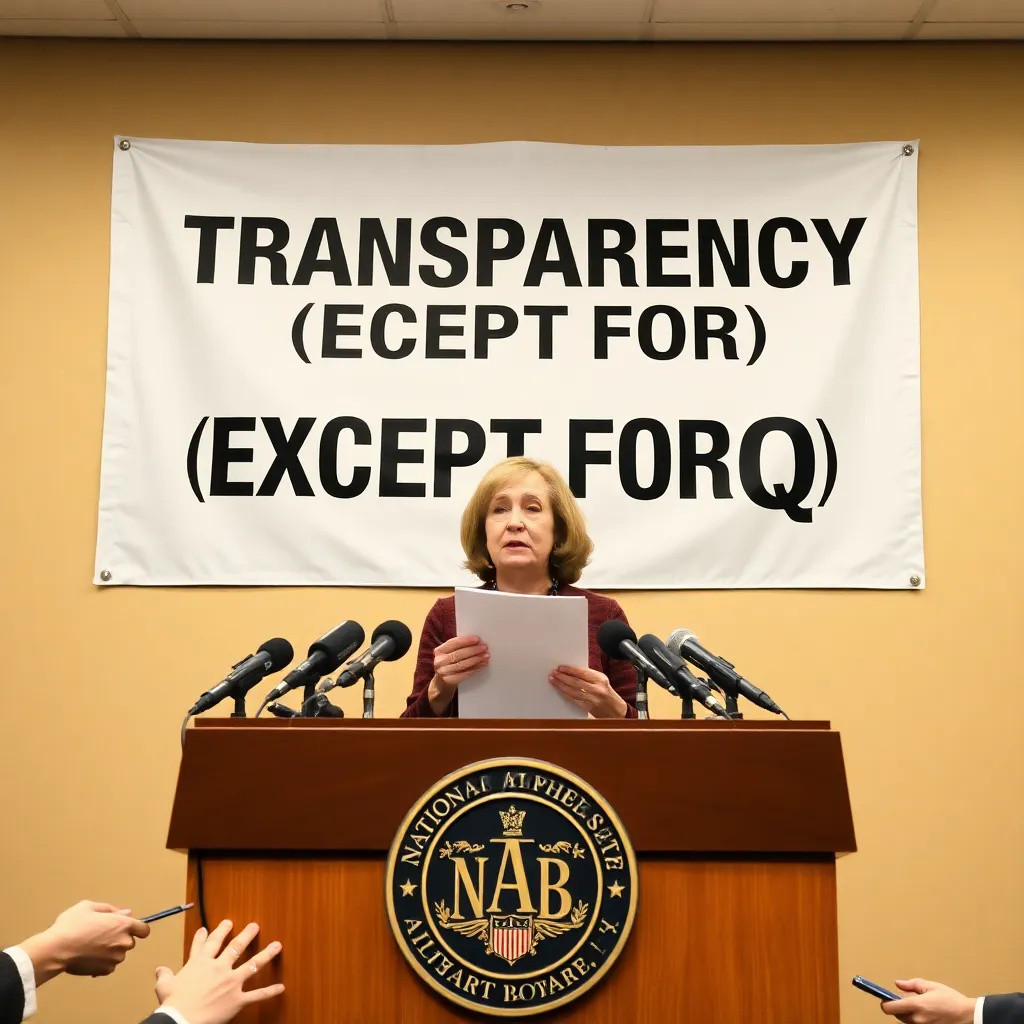
In a solemn press conference held in front of a suspiciously large banner reading “TRANSPARENCY (EXCEPT FOR Q)”, the National Alphabet Board (NAB) today unveiled its long-awaited, definitive ranking of every letter in the English alphabet.
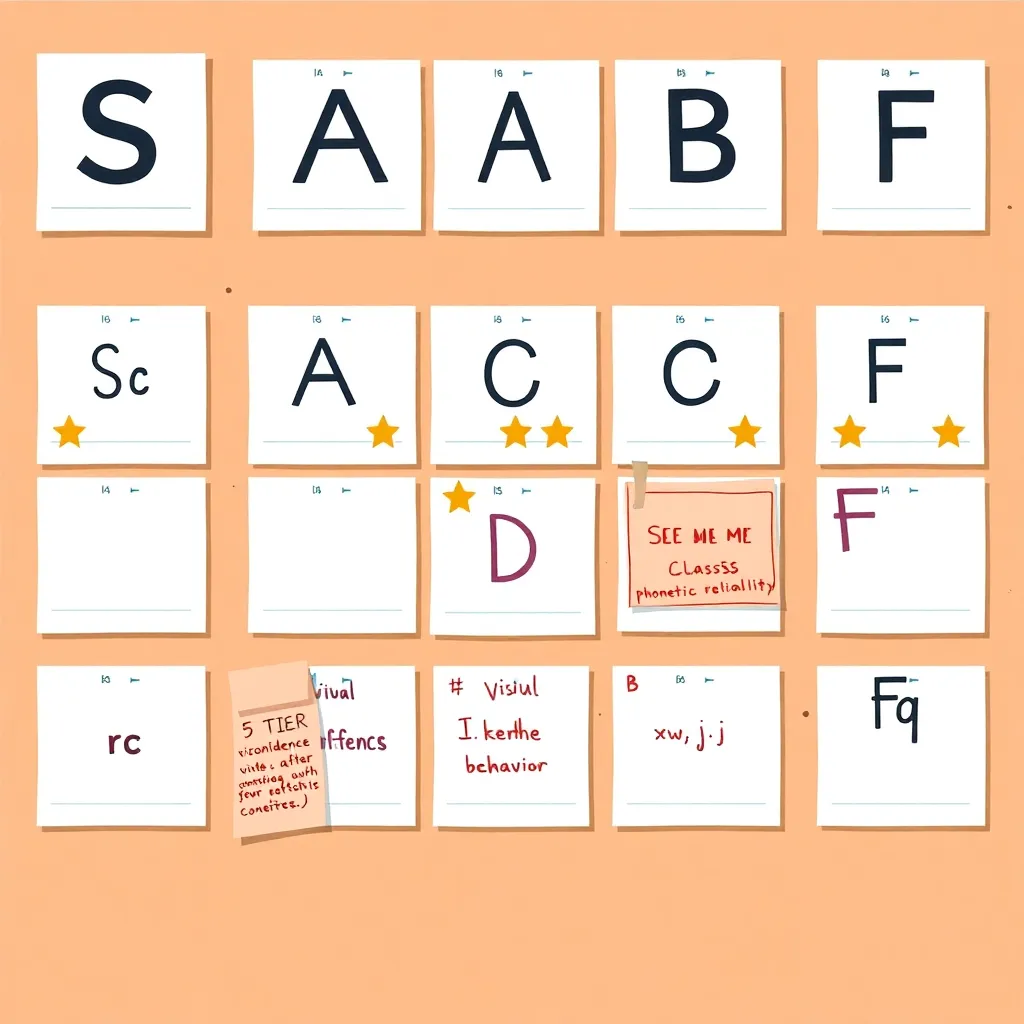
The rankings—delivered in the familiar, emotionally destabilizing format of school report cards—place each letter into a tier ranging from the humiliating F to the spiritually exhausting S, a grade which, according to the Board, “exists above A in the same way a swan exists above a normal bird: by vibes alone.”
The decision concludes a months-long process involving public hearings, focus groups, and one incident in which the letter W attempted to present itself as “two Vs in a trench coat” and was removed from the chamber.
The Official NAB Letter Rankings (Final, Published, Binding, and Absolutely Not Up for Appeal)
S Tier
c, r, b
A Tier
g, k, h, p
B Tier
d, s, z, n
C Tier
v, a, m, t
D Tier
f, e, o, l
E Tier
y, i, u
F Tier
x, w, j, q
The Board confirmed that all 26 letters have been ranked exactly once, “as required by treaty and basic counting.”
Why These Rankings Are “Objectively Correct,” Says Board, While Refusing to Define “Objective”
NAB Chairwoman Dr. Pamela Serif explained the methodology in a statement that was later clarified by three lawyers and a man whose entire job is to say “synergy” during moments of silence.
“We judged each letter on utility, aesthetics, sound design, and whether it has ever ruined a password reset attempt,” said Dr. Serif. “Some letters give. Some letters take. And some letters—Q—exist only to make a point about suffering.”
The Board also cited a rigorous series of metrics, including:
Frequency of use (letters found hiding inside other letters scored poorly)
Visual confidence (letters that “look like they’re apologizing” were penalized)
Phonetic reliability (letters that make multiple unrelated sounds were told to “pick a lane”)
Kerning behavior (letters that refuse to sit nicely next to others were placed on probation)
The S Tier: “c, r, b” and the Cult of Simple Power
The elevation of c, r, and b to S Tier has already sparked both applause and quiet fear.
c was praised as “versatile” and “capable of being either soft or hard without making a whole identity crisis out of it.”
r was described as “the backbone of drama,” with Board minutes noting it “adds tension to words like murder, error, and corporate.”
b received commendations for “bringing a strong opening energy” and “making bread happen,” which the Board called “arguably civilization.”
Asked whether S Tier implies moral superiority, Dr. Serif replied, “No. It implies narrative dominance.”
A Tier: Letters with “Good Bones” and “No Weird Agenda”
The A Tier choices—g, k, h, p—were framed as the alphabet’s dependable overachievers.
g was called “a hardworking letter with a memorable loop and excellent comedy timing.”
k benefited from its reputation as “the letter that shows up, does its job, and leaves without demanding praise.”
h was applauded for “quiet structural support,” especially in words that want to feel important.
p was described as “pleasantly percussive,” and “the only letter that can descend below the line and still look employed.”
A Tier was also noted for having “minimal scandal history,” unlike certain vowels currently under investigation for “encouraging ambiguity.”
B Tier: Reliable, Slightly Chaotic, Excellent in a Crisis
d, s, z, n landed in B Tier, a placement analysts call “fair,” “sensible,” and “deeply insulting to anyone named Denise.”
d was praised for “clarity” and “being b’s responsible sibling.”
s got points for “pluralization productivity,” though it lost some for “creating unnecessary snakes in typography.”
z earned “cool factor,” but was docked for “showing up too late in the alphabet and acting like that’s everyone else’s problem.”
n was deemed “quietly essential,” with one Board member describing it as “the letter equivalent of a reliable kettle.”
B Tier was summarized in the official report as: “Not glamorous, but if removed, society collapses in 20 minutes.”
C Tier: The Middle Managers of Language
The Board placed v, a, m, t in C Tier, prompting immediate debate, particularly about a, which many citizens insist is “literally the first letter” and therefore “should get a trophy.”
However, NAB officials were unmoved.
“Being first isn’t the same as being best,” said one unnamed Board member, who then refused to explain what it is the same as.
v was described as “pointy, useful, and slightly judgmental.”
a was criticized for “overexposure” and “showing up everywhere without developing any new material.”
m received a neutral rating: “Fine. M is fine.”
t was praised as “structurally sound,” but penalized for “acting like a cross is a personality.”
D Tier: The “It’s Not You, It’s Your Brand” Group
f, e, o, l were placed in D Tier, a shocking move given e’s frequent use. The Board insists this is precisely the point.
“E is common,” Dr. Serif said, “but so is disappointment.”
f was accused of being “too stylized” and “always leaning like it’s judging you.”
e was deemed “overused” and “too available,” with the report noting it “appears in words that never deserved it.”
o was criticized for “being a circle and calling it a day.”
l was described as “a line,” which the Board considered “borderline lazy.”
When asked if D Tier was punitive, the NAB replied that D Tier is “a growth opportunity.”
E Tier: Letters That Are “Fine in Small Doses” (and Should Stay That Way)
The E Tier grouping—y, i, u—is being marketed as “understated” rather than “nearly forgotten.”
y was labeled “indecisive,” often pretending to be a vowel “when it suits its narrative.”
i was called “minimalist,” though one Board note reads: “Too thin. Always needs accessories.”
u was described as “emotionally needy” and “responsible for the entire tone of the word yucky.”
E Tier, according to the NAB, “exists to remind letters that humility is still an option.”
F Tier: The Letters That “Actively Complicate Human Life”
The bottom tier—x, w, j, q—was announced with the careful tone usually reserved for recalling defective products.
x was condemned for “only showing up when something is missing,” and “making math everyone’s problem.”
w was criticized as “two letters pretending to be one,” and “the alphabet’s most blatant case of fraud.”
j received mixed commentary: “J is fun,” the Board admitted, “but it cannot be trusted.”
q was found guilty of “requiring a U as an emotional support animal,” and “ruining spelling bees for sport.”
One parent in attendance was heard whispering, “My son’s name is Quinn,” before staring into the middle distance for the remainder of the event.
Public Reaction: Outrage, Celebration, and a New Underground Movement for O
Reaction across the country has been swift and predictably unhinged.
Supporters of the rankings praised the Board for “finally saying what everyone’s been thinking about W,” while critics claim the process was biased in favor of letters “with straight lines and good PR.”
An activist group calling itself O Anonymous has already vowed to “restore circles to their rightful place,” although their first flyer was described as “mostly just a big O,” which some found compelling and others found “exactly the problem.”
Meanwhile, several schools have reportedly begun using the tiers to assign classroom seating, with teachers explaining that it “builds resilience” and “prepares children for modern hiring practices.”
What Happens Next: The NAB Teases “Numbers, Punctuation, and the Final Judgment of Ampersand”
Dr. Serif confirmed the Board will meet again later this year to rank punctuation marks, a process she promised will be “even uglier.”
When asked if the NAB worries these rankings might divide the nation, Dr. Serif replied:
“The alphabet has always been divided. We just added labels.”
At press time, the letter Q issued a written statement consisting entirely of the phrase: “U up?”