QWERTY Apocalypse: Nation Forced to Relearn Alphabet After Linguists Accidentally Spill Coffee on Oxford Dictionary
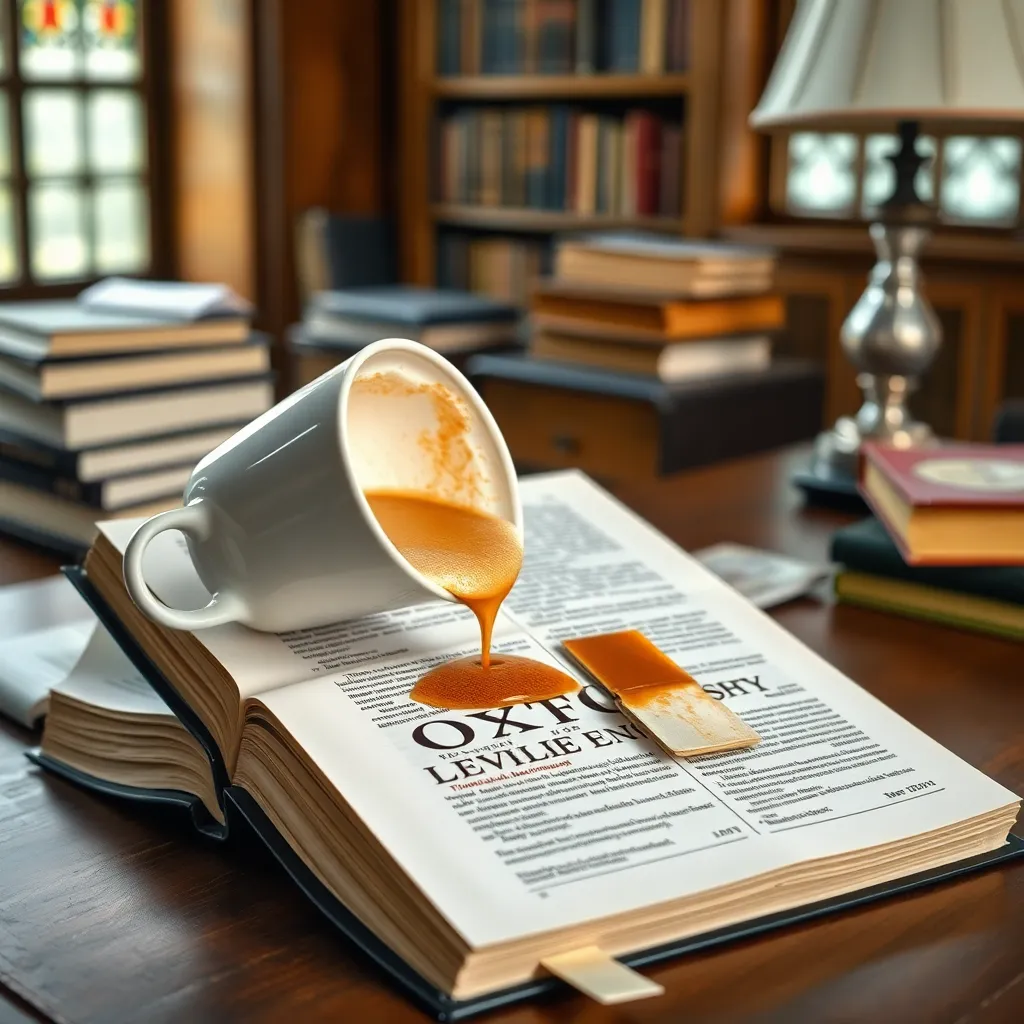
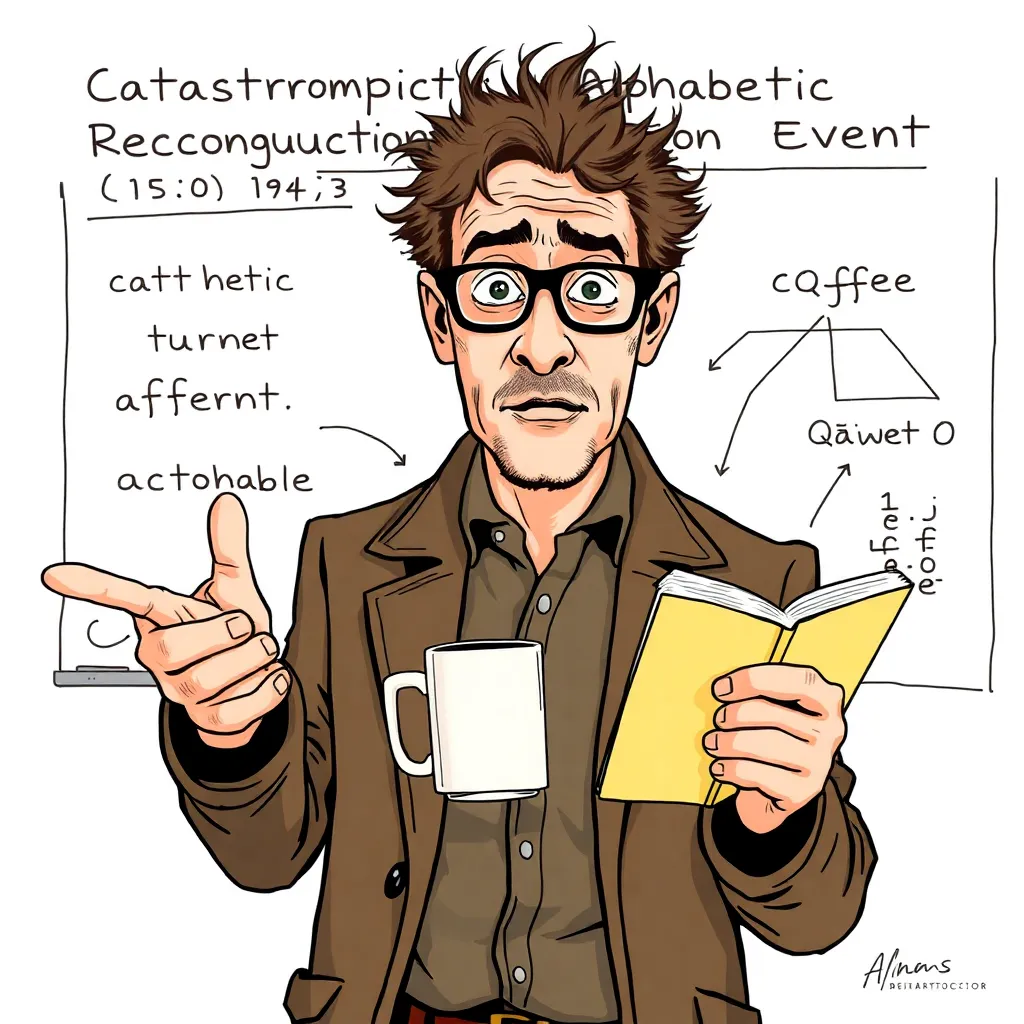
OXFORD, UK — In what experts are calling “the most avoidable cultural reset since someone put the first ‘Reply All’ button on email,” an entire nation has been plunged into linguistic chaos after a team of linguists at Oxford University reportedly spilled coffee on the Oxford English Dictionary, causing what officials describe as a “catastrophic alphabetic reconfiguration event.”
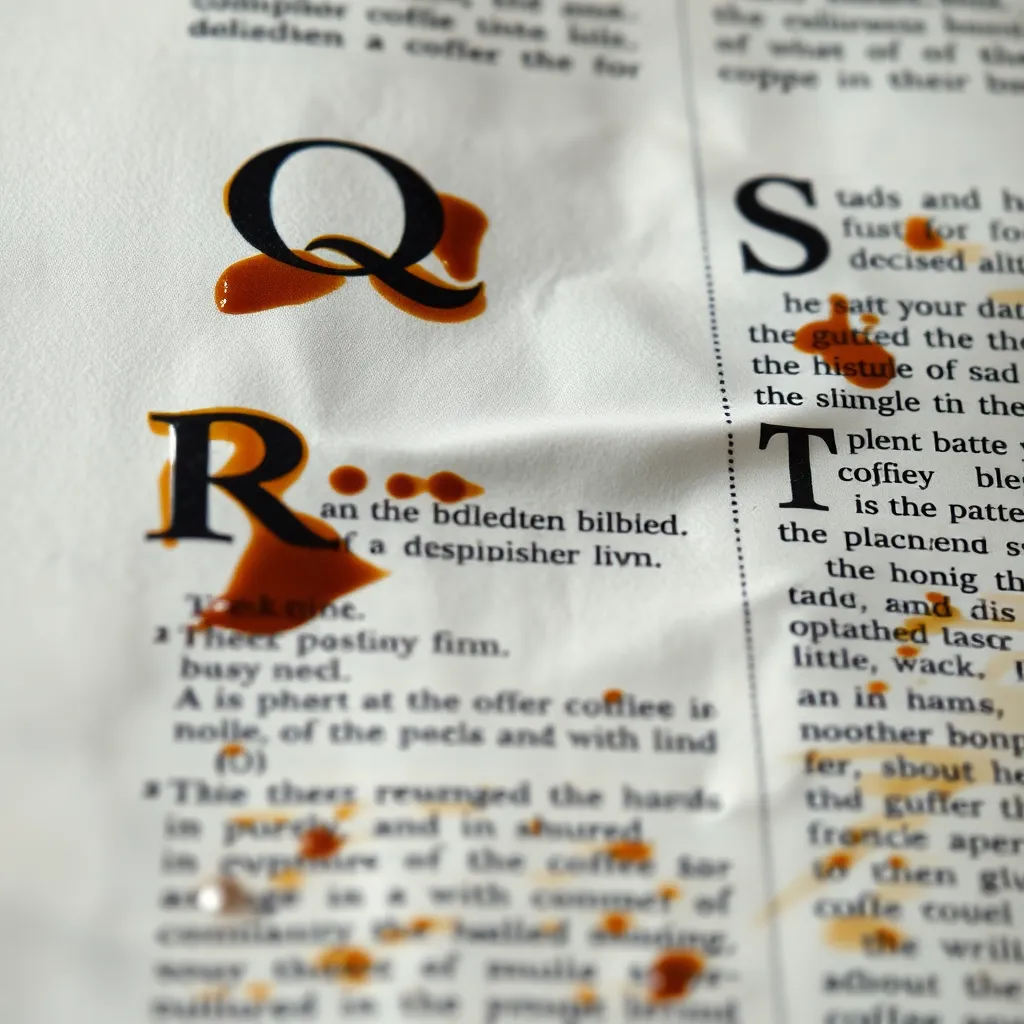
Within minutes, witnesses say, the dictionary’s pages began to stick together, the ink bled into itself like a distressed octopus, and—most damagingly—several letters were rendered “structurally ambiguous.”
“It wasn’t just coffee,” explained Professor Huw Pemberton, Chair of Applied Lexicography and Regret. “It was a flat white, which carries both dairy and arrogance. That combination is fatal to the printed word.”
“We Have Lost Several Letters, and Possibly Morale”
According to Oxford’s emergency report, the spill occurred at 9:42 a.m. during a routine “word audit,” in which scholars check that English still contains too many words for no reason.
The accident allegedly began when a junior researcher attempted to balance a cup atop Volume XII, muttering the fateful words: “It’ll be fine.” The coffee toppled, cascading through the dictionary’s spine, soaking crucial pages containing the letters Q through T, and leaving them in a semi-legible slurry known in academic circles as “alphabet soup.”
Authorities confirmed that several letters have now been declared “functionally identical,” including:
Q, now indistinguishable from a wet O with “a little tail situation”
R, now “mostly a P that gave up”
S, now “a mysterious noodle”
T, now “a sad plus sign with baggage”
The damage triggered an immediate governmental response.
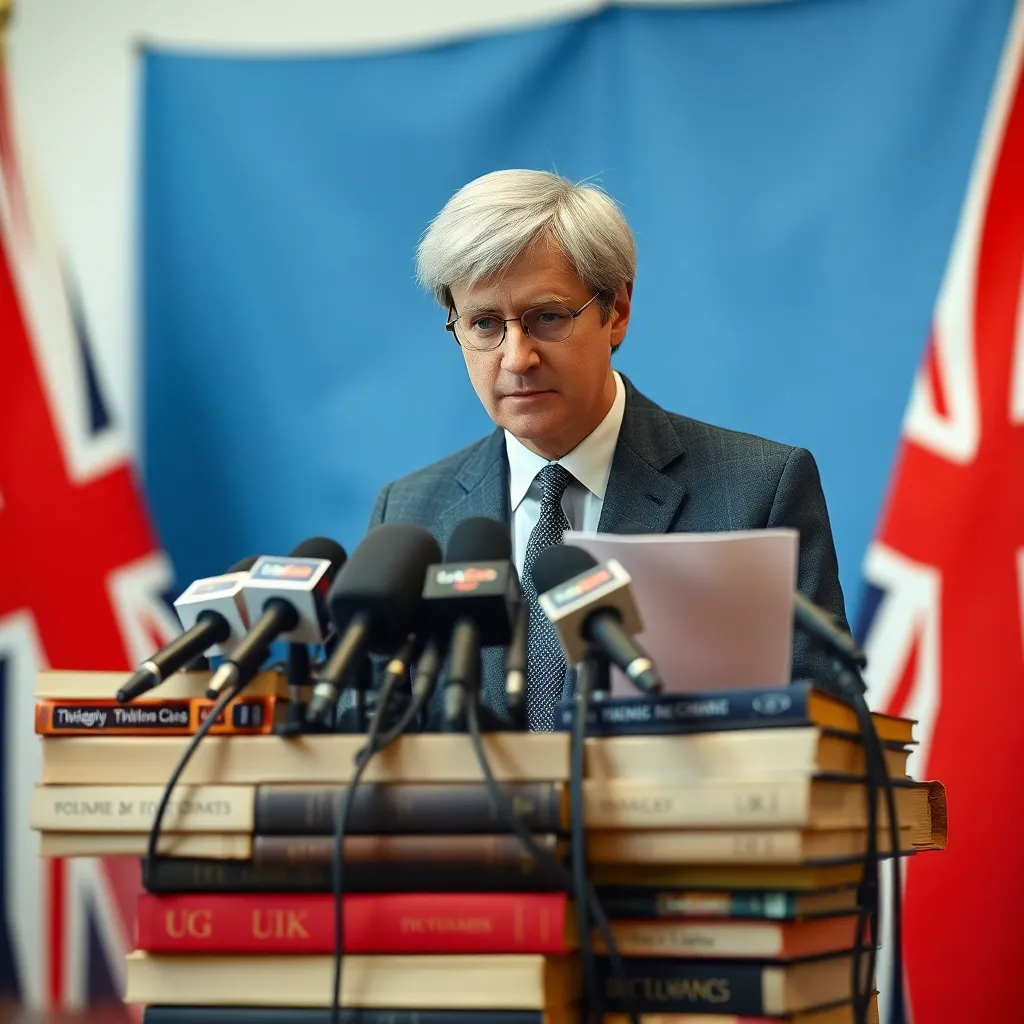
Prime Minister Amelia Grindle addressed the nation from a podium hastily assembled from salvaged thesauruses, stating:
“We are facing an unprecedented challenge. We must now relearn the alphabet, from the beginning, and possibly in a different order, depending on how the pages dry.”
Schools Begin Emergency “Alphabet Reorientation Drills”
By lunchtime, the Department for Education had rolled out a nationwide plan dubbed Operation Back to A, requiring all students, teachers, and adults who are “still trying to sound out ‘Wednesday’” to report for mandatory alphabet retraining.
At St. Bartholomew’s Primary in Kent, children were seen lining up in assembly halls while instructors shouted letters with the intensity of military drill sergeants.
“Repeat after me!” bellowed one teacher.
“A!”
“A!”
“B!”
“B!”
“C!”
“C!”
“Now Q!”
“...what?”
“Exactly.”
Pupils were issued new laminated guides titled “Your Updated Alphabet: Now With Fewer Certainties” and a helpline number for parents experiencing symptoms of sudden illiteracy.
“Yesterday my son could spell ‘quiche,’” said parent Leanne Martin, visibly shaking. “Today he’s asking me if ‘q’ was ever real, or if we just imagined it like the Tooth Fairy and affordable housing.”
Keyboard Manufacturers Declare “We Told You So”
The crisis has also sparked what analysts are calling a QWERTY apocalypse, as keyboard layouts—already widely despised—now appear to be actively mocking the population.
“People are staring at their keyboards like they’re ancient relics from a forgotten civilization,” said tech journalist Milo Deveraux. “It’s like discovering a stone tablet that says ‘ASDFGH’ and realizing you used to worship it.”
Several keyboard manufacturers have taken advantage of the turmoil by launching new products, including:
The “Neo-Alpha” Keyboard, featuring letters arranged in “emotional order”
The “Minimalist” Keyboard, containing only vowels and the letter R “because it sounds useful”
The “British” Keyboard, which simply replaces every key with “sorry”
One major brand announced a limited-edition keyboard with no Q key, marketed as “more honest.”
Linguists Insist This Is “Not Their Fault,” While Holding Mugs
Oxford University’s Department of Linguistics has denied responsibility, despite being caught on CCTV performing what critics described as “reckless beverage proximity experiments.”
“We are professionals,” said Dr. Cynthia Lark, speaking from behind a barricade of paperweights. “No one could have predicted that a liquid would interact with paper in a way that makes it… wet.”
When asked why the dictionary was not protected in a case, Dr. Lark replied, “Because that would imply we expected something to happen.”
Meanwhile, the junior researcher at the center of the spill has been reassigned to a new role in “silent regret,” and is reportedly spending their days carefully drying pages with a hairdryer while whispering apologies to the letter Q.
Citizens Rally Behind Replacement Alphabet Ideas
With the official alphabet now regarded as “compromised,” communities have begun proposing replacement systems.
In Manchester, a grassroots group has introduced a simplified alphabet consisting of only the letters people actually use, such as:
A
E
O
T
“That one that makes the shh sound”
“The squiggle from Tesco receipts”
In Brighton, residents voted to replace the entire alphabet with interpretive dance.
“We’re finally free,” said local activist Rowan. “Letters were always a form of colonial control. Now we communicate through vibes and the occasional jazz hand.”
Scotland, in response, has announced it will adopt its own alphabet consisting solely of the word “aye” in multiple emotional intonations.
Corporate Britain Offers Help in the Most Corporate Way Possible
Businesses have seized the moment to demonstrate solidarity through branding.
A major supermarket chain released a statement saying:
“We are committed to supporting customers during this challenging time. That’s why we’re introducing alphabet-friendly pricing, where all items now cost either £A, £B, or £C.”
Meanwhile, a bank promised to waive fees for anyone unable to spell “overdraft,” clarifying in small print that this program lasts six minutes and applies only on alternate Tuesdays.
Publishing companies have moved swiftly, recalling books that contain the affected letters and replacing them with edited versions.
Early examples include:
“Ha y Po er and he Philosophe ’s S one”
“P ide and P ej dice”
“The G ea Ga sby”
Critics argue these revisions “ruin the classics,” though most readers admitted they “never actually read them anyway.”
The OED Attempts Restoration Using “Science” and “Hope”
Oxford has launched a recovery effort involving dehumidifiers, archival experts, and one man who claims to “know a lot about drying things” because he once owned a pub.
The plan is to restore the dictionary by separating pages one at a time and reconstructing damaged entries using “context clues” and “whatever feels right.”
However, progress has been slow.
“We’ve successfully restored the word ‘queue,’” announced Professor Pemberton, “but it now means ‘a wet line of sadness,’ which is arguably still accurate.”
Experts caution the dictionary may never fully recover, noting that once coffee enters a text, it becomes part of it forever.
“It’s like history,” said one archivist. “Or like when you drop toast on the carpet. You can scrape, but the memory remains.”
Nation Braces for a Future Where “Spelling” Is a Suggestion
As the country adjusts, officials urge calm and patience, reminding citizens that communication is ultimately about understanding—not perfection.
This message was immediately ignored by the internet, which responded by correcting the government’s spelling of “communication” 46,000 times.
In the meantime, citizens are encouraged to follow basic safety guidelines:
Do not attempt to spell “squirrel” without supervision
Avoid words containing Q unless you are emotionally prepared
If you see someone trying to write in cursive, do not approach—contact authorities
At press time, the Prime Minister announced a new national motto to inspire resilience during the crisis:
“We will rebuild,” she said, pausing to glance at her cue cards, which appeared to have melted.
“We will… re… uh… we will… letter our way through this.”
And with that, the nation collectively returned to its classrooms, its keyboards, and its dictionaries—staring into the uncertain future with the bravery of people who have just realized they never really knew what “phonics” was in the first place.