Senate Declares “Bread and Circuses” Outdated, Announces “Bread, Circuses, and Mildly Educational Scrolls” to Appease Restless Populace
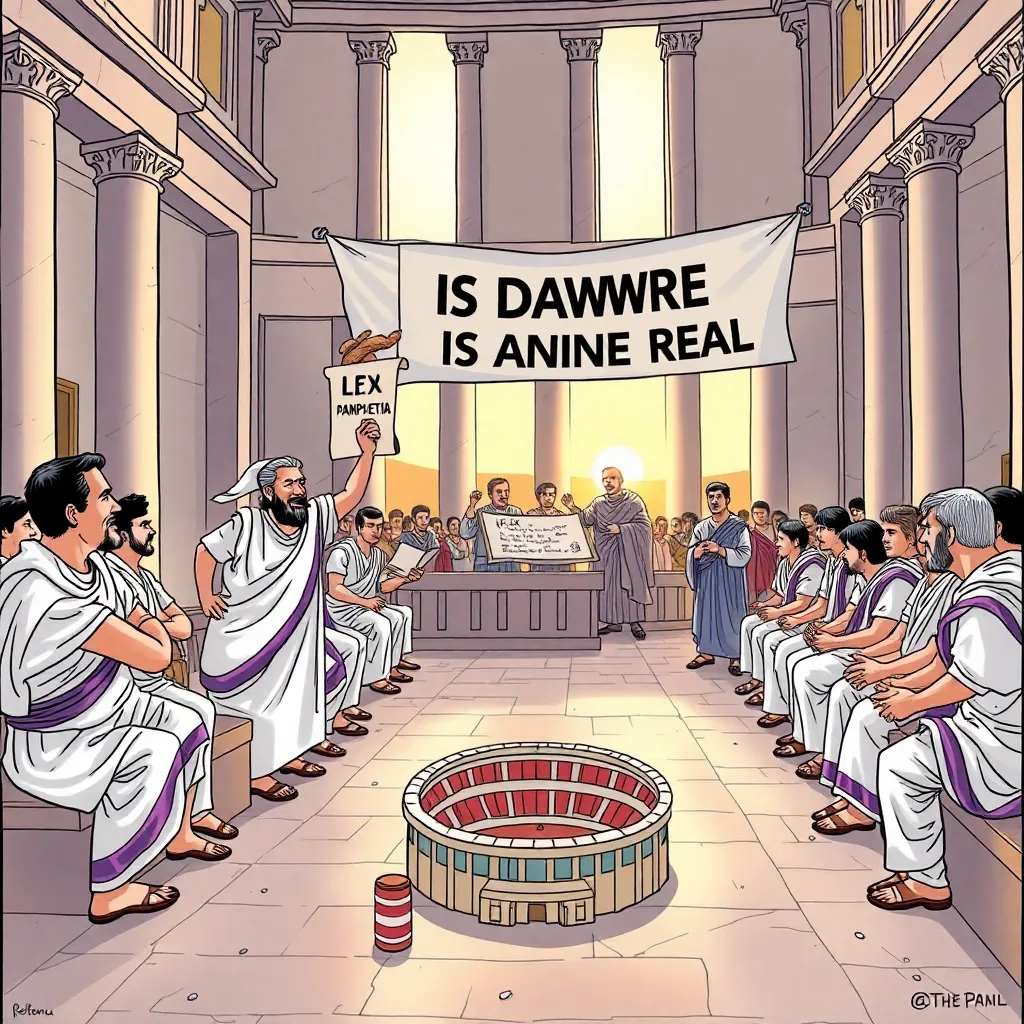
ROME, IMPERIUM — In a landmark session that began at dawn, ended at dusk, and was briefly interrupted by a philosophical fistfight over whether dawn is “real,” the Roman Senate has voted to modernise its public-content strategy, formally replacing the ancient social contract of panem et circenses with a new, more “holistic” initiative: panem, circenses, et volumina leviter instructiva — bread, circuses, and mildly educational scrolls.
The decision follows weeks of polling by the Office of Public Mood (OPM), a recently established bureau tasked with measuring the average citizen’s satisfaction by observing how loudly they sigh in queues and how aggressively they throw figs at tax collectors.
“Look, we’ve done bread,” explained Senator Gaius Fuscus Maximus, speaking to The Wibble while being fanned by a staffer whose job title was “Senior Breeze Consultant.” “We’ve done circuses. We’ve done circuses with bread. We even tried ‘circuses, but the lions are slightly smaller so it feels more family-friendly.’ And yet the people remain… how do I put this diplomatically… awake.”
The new programme will distribute free loaves, subsidise gladiatorial spectacles, and—most controversially—include a limited run of short scrolls containing “harmless, non-inflammatory knowledge,” such as basic arithmetic, the names of common herbs, and a list of approved opinions regarding the Emperor’s jawline.
“A Citizen Who Can Read Is a Citizen Who Can Misread”
The proposal, introduced as the Lex Pamphletia, initially met resistance from conservative senators who argued that literacy was “a slippery slope toward thinking,” which in turn could lead to “asking questions,” and then, as one senator put it with visible horror, “having ideas.”
Senator Lucius Pompilius Severus, head of the Traditional Values Caucus and inventor of the phrase “Make Rome Rome Again,” condemned the measure as “reckless.”
“First you give them scrolls,” Severus warned, “and next they’ll want to write their own. And once they start writing, you’ll see poems, and then satire, and then before you know it someone has composed a twelve-act comedy in which a senator is portrayed as a stuffed goose. Civilization cannot endure that.”
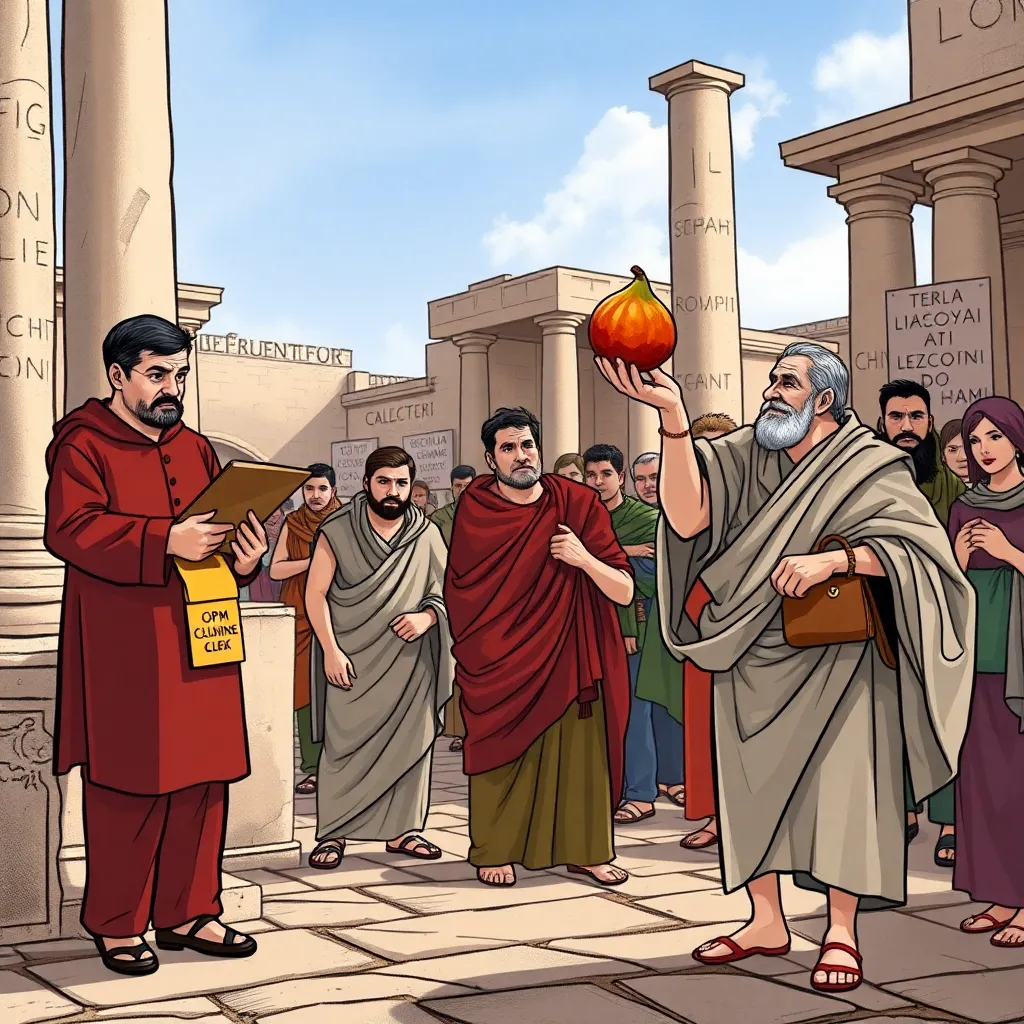
Despite these concerns, the Senate passed the reform after a spirited debate in which multiple senators were seen consulting their aides to find out what “mildly educational” meant. One reportedly asked whether it was a new kind of wine.
Pilot Programme: The Colosseum’s New Half-Time Show
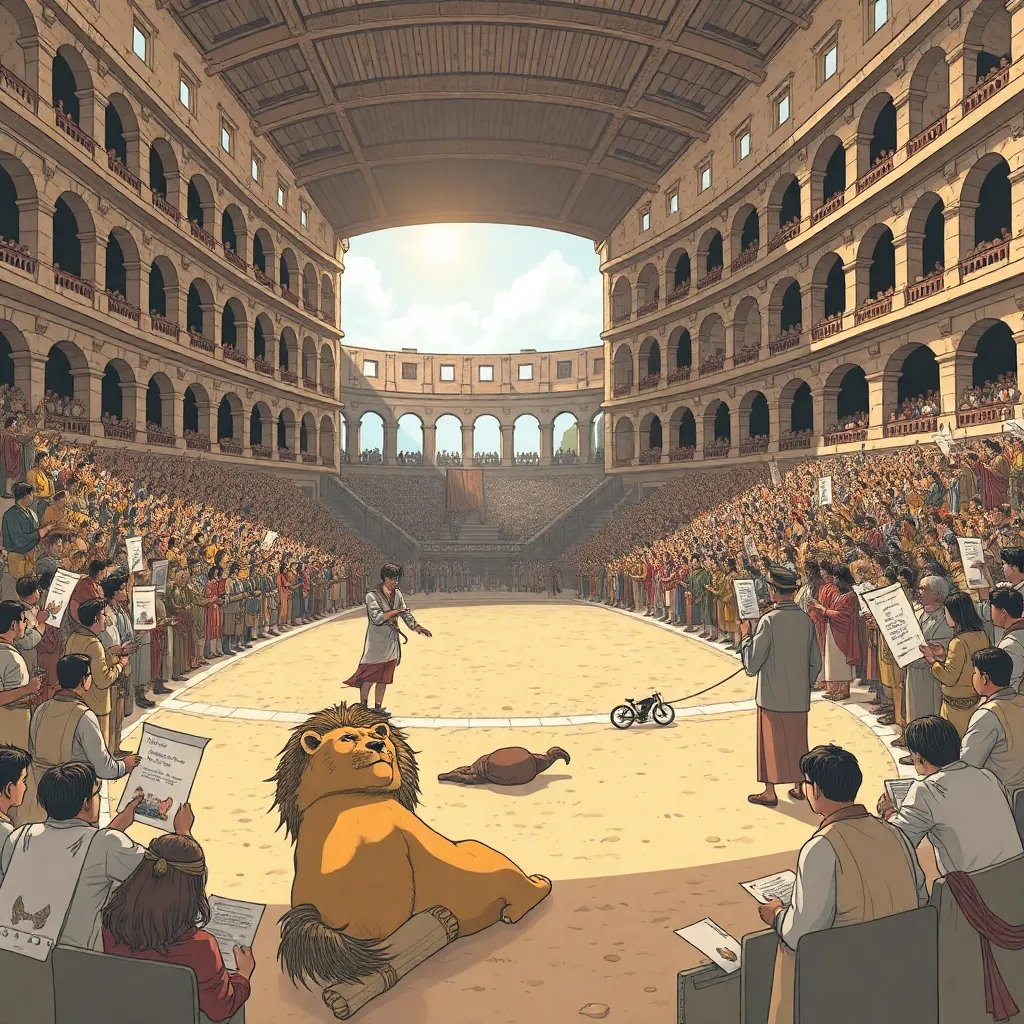
To launch the initiative, the Colosseum will introduce what organisers call “intermission enrichment,” in which spectators will receive short, illustrated scrolls during breaks in combat.
“Not during the fighting,” clarified Colosseum Games Director Marcia of the Twelve Stamp Seals. “We tried that once. People got distracted, and the lions felt emotionally neglected.”

The scrolls will be written in simple Latin, with optional footnotes for patricians who wish to feel superior at a glance. Early drafts seen by The Wibble include titles such as:
“Counting: A Beginner’s Guide (For Those Who Prefer Not to Count Their Taxes)”
“What Is an Aqueduct, and Why Is It Always Leaking Near My House?”
“Fifty Approved Ways to Praise the Emperor Without Sounding Desperate”
“How to Identify a Barbarian: A Helpful Chart (May Contain Bias)”
A spokesperson for the Ministry of Public Merriment assured citizens that the content would be “apolitical, non-provocative, and completely incapable of inspiring collective action,” adding that anyone caught using a scroll to organise a protest would be “asked politely to stop and then fed to a symbolic animal.”
The Emperor Responds, Then Responds Again, Then Issues a Clarifying Response
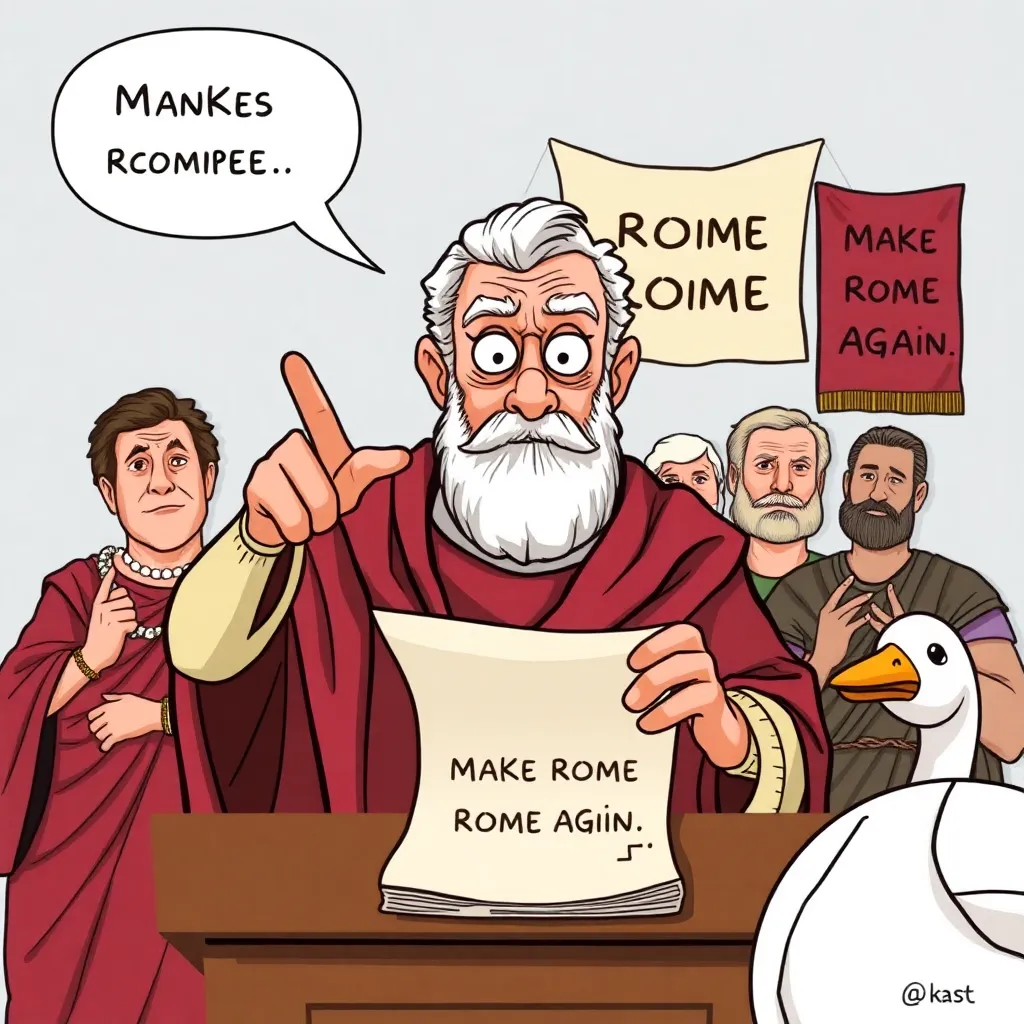
The Emperor—whose official title now reportedly includes “First Citizen,” “Father of the Nation,” and “Unquestioned Winner of the Annual Imperial Calf-Throw”—addressed the announcement from the Palatine Hill.
“Rome is strong because Rome adapts,” he declared, standing before a marble backdrop depicting himself looking thoughtfully into the distance at something that was later confirmed to be a sculptor. “If the people desire knowledge, we shall give them knowledge—carefully measured, responsibly portioned, and ideally not knowledge about how much grain we have.”
He then paused, consulted a wax tablet, and added: “Also, the circuses will be bigger.”
This second point received louder applause, though historians note it may have been because the Emperor’s Praetorian Guard began applauding first with a tempo described as “compulsory.”
Citizens React: “I Prefer My Entertainment Unburdened by Information”
In the Forum, reactions were mixed.
“I’m not against scrolls,” said Quintus, a sandal merchant who asked that his surname not be printed “in case the Senate reads.” “I just worry it’s a gateway. Today it’s arithmetic, tomorrow it’s ‘rights.’”
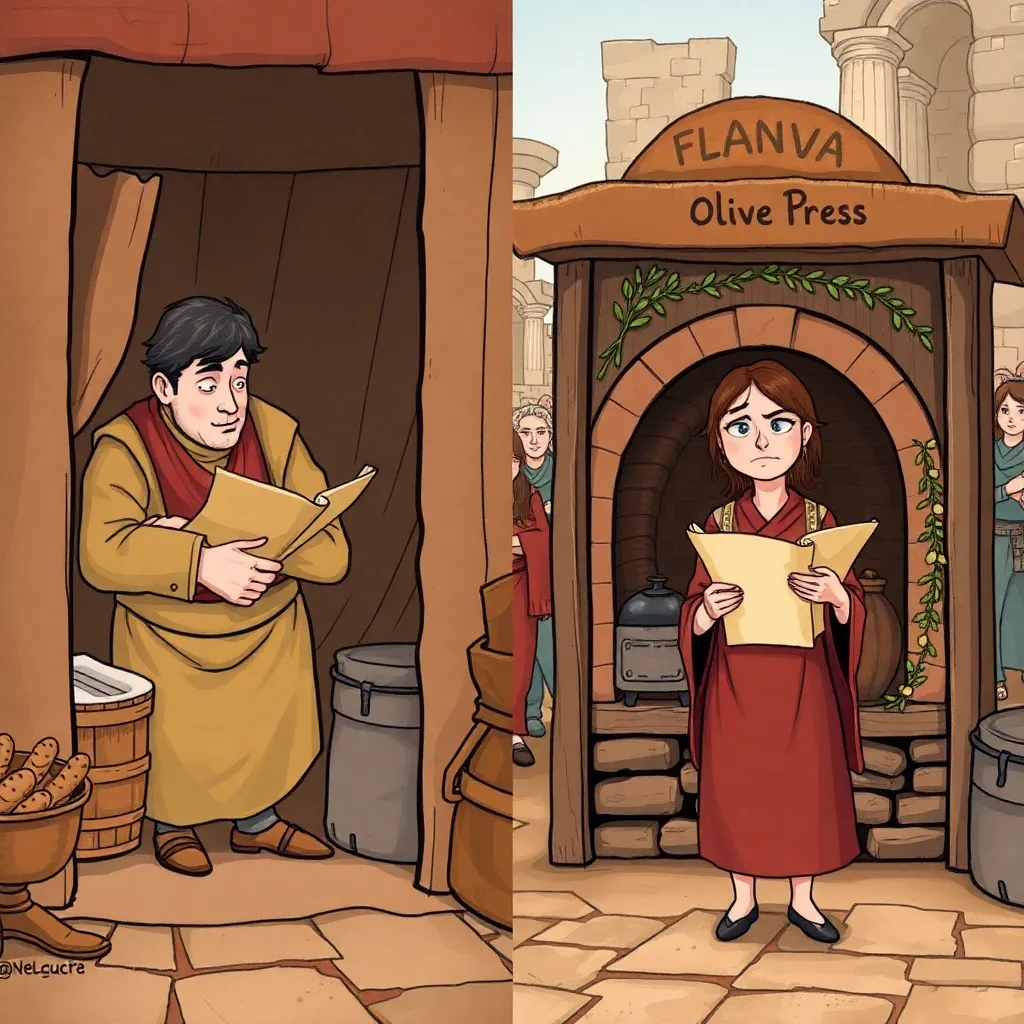
A local baker, Flavia, was cautiously optimistic. “Bread is bread,” she shrugged. “But if they’re handing out scrolls too, maybe I can finally read the instructions on that new olive press. Last week I accidentally worshipped it.”

Meanwhile, a group of youths expressed enthusiasm for the educational component, largely because it comes free.
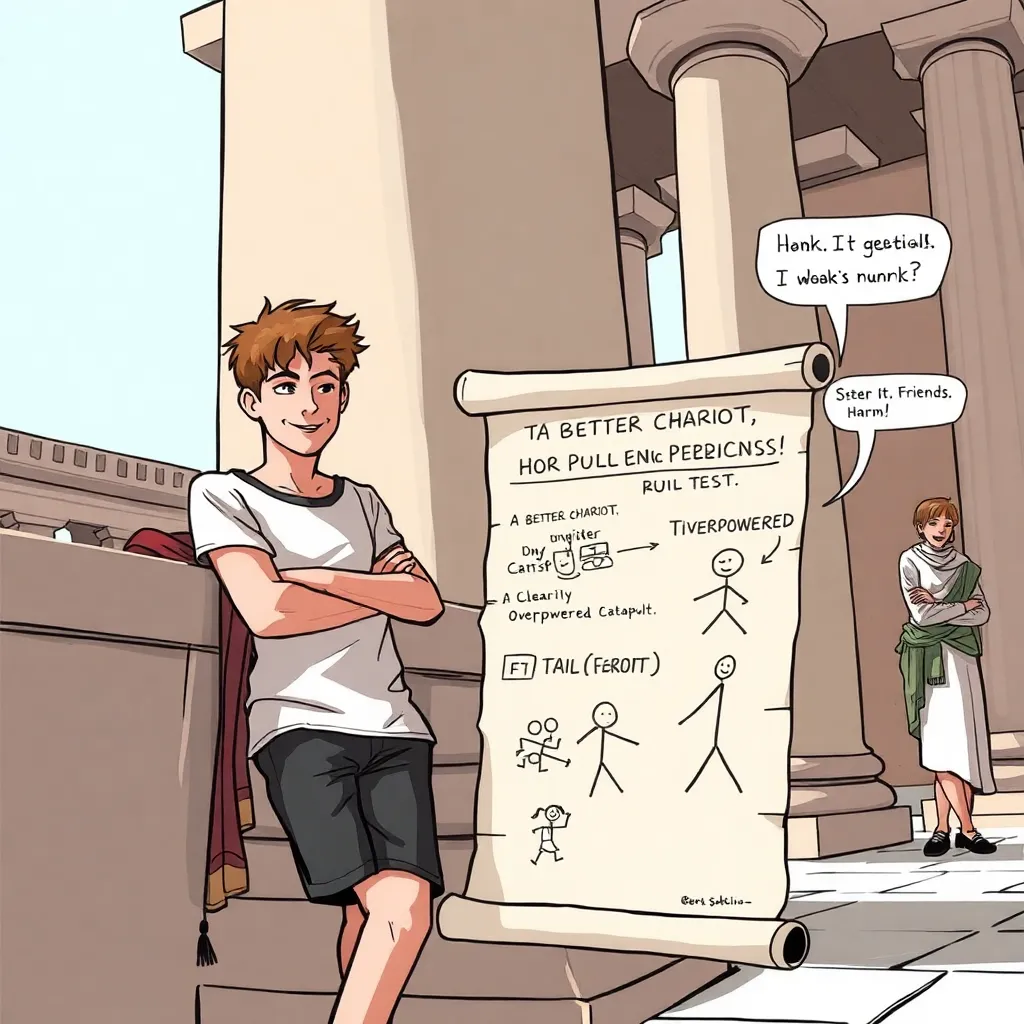
“Look, I can’t afford a tutor,” said a teenager named Publius, leaning against a column in what he described as “a casual, non-seditious manner.” “If they give me a scroll on engineering, maybe I can build something. Like… a better chariot. Or a device that flings senators into the Tiber. Educational.”
When asked if that last part sounded political, Publius insisted it was “purely mechanical.”
Senators Assure Public: Scrolls Will Be “Non-Addictive”
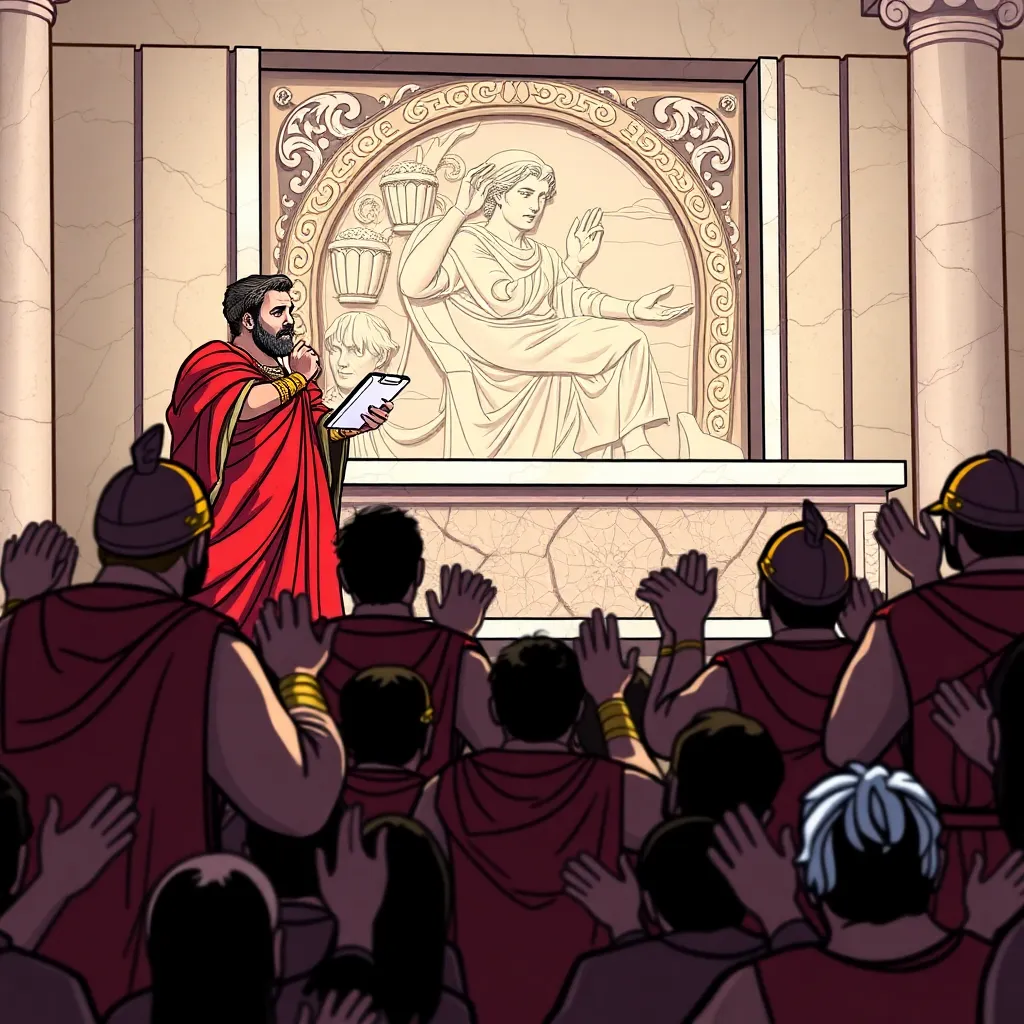
To address concerns that citizens might develop a taste for independent learning, the Senate has insisted the scrolls will be carefully calibrated to provide only a modest intellectual buzz.
“These are not full ideas,” Senator Fuscus emphasised. “More like… idea samples. A tasting menu of comprehension.”
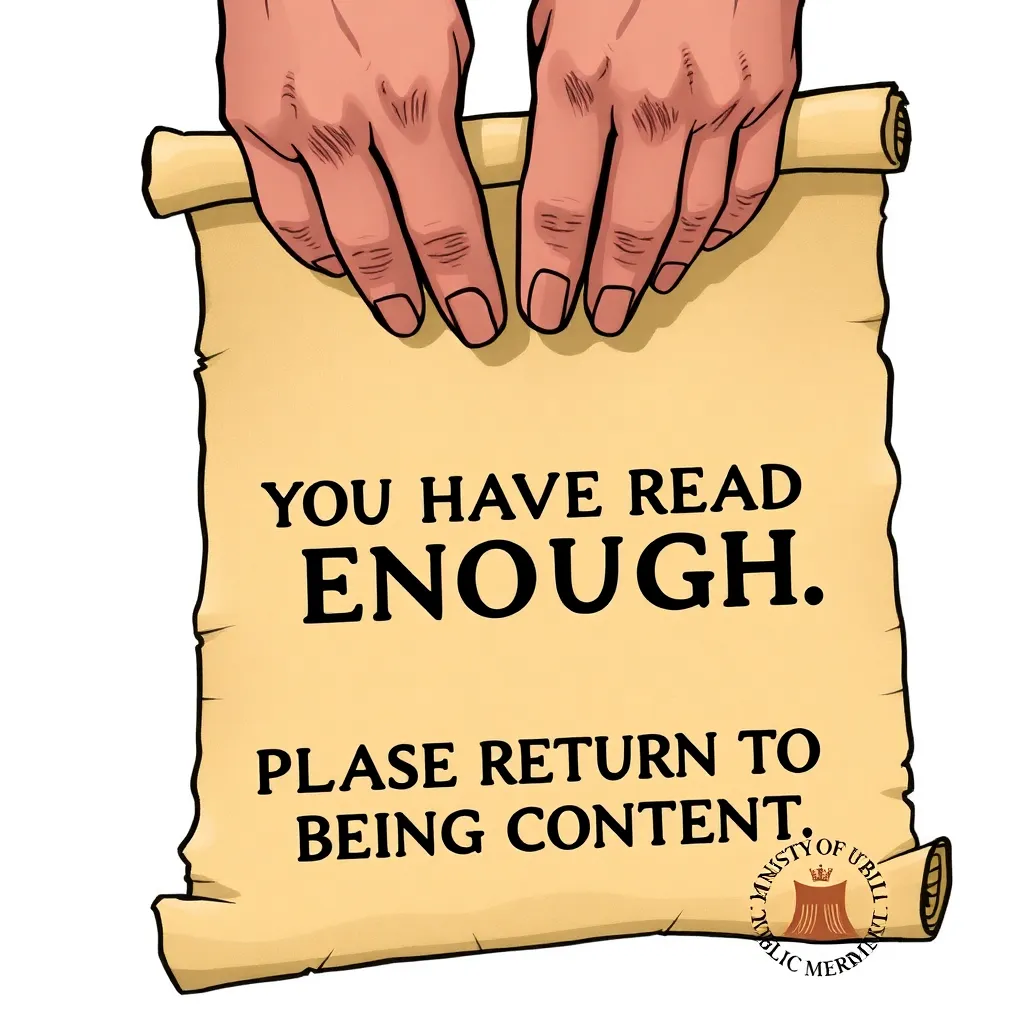
The OPM also confirmed that the scrolls will be printed on slightly itchy papyrus to discourage prolonged handling. Additionally, each scroll will end abruptly with a message reading:
“YOU HAVE READ ENOUGH. PLEASE RETURN TO BEING CONTENT.”
The programme has been criticised by some scholars as “performative enlightenment,” though they admitted the term was coined after a long afternoon in a bathhouse and may not survive peer review.
The Guild of Scribes Celebrates Windfall, Immediately Demands Hazard Pay
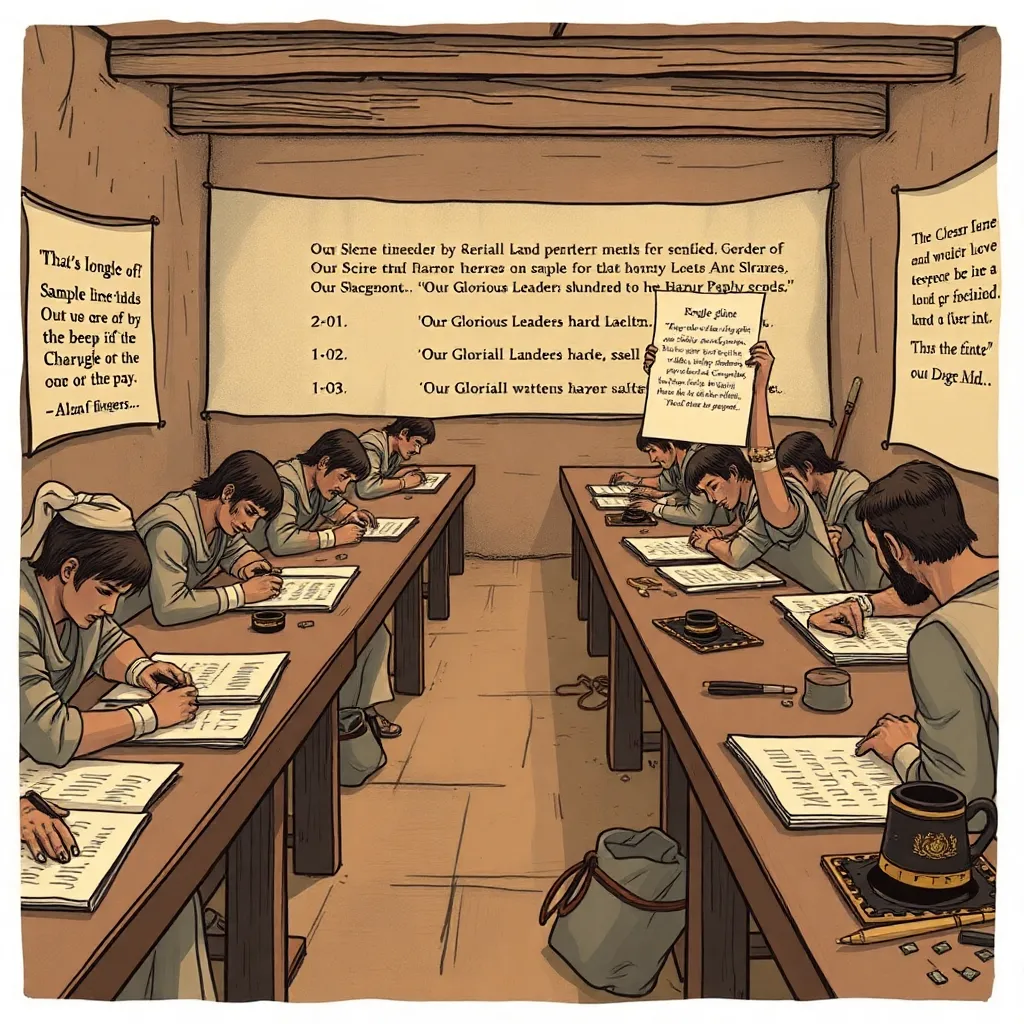
The Scribes’ Guild, long relegated to copying love letters and administrative proclamations about how taxes are “for the common good,” has welcomed the project as a rare chance to work on something “almost meaningful.”
“We are thrilled,” said Scribal Representative Aemilia Ink-Fingers. “But we have concerns about volume. Rome is large. Also, the Senate wants every scroll to include at least one flattering reference to the Emperor. That’s not education, that’s… it’s basically a genre.”
The Guild has requested additional compensation, citing the physical toll of copying the phrase “Our Glorious Leader” thousands of times a day.
“Do you know what that does to the wrist?” Aemilia asked. “My hand has started praising him involuntarily.”
Opposition Leaders Offer Alternative: “Just Fix the Roads”
Not everyone is convinced the initiative addresses the real issues facing the Empire. A small but vocal faction in the Senate argues the funds would be better spent repairing infrastructure.
“The roads are falling apart,” said Senator Decimus Plain-Speakingus, who is widely disliked for his insistence on being accurate. “People aren’t angry because they lack scrolls. They’re angry because their carts are turning into rubble on the Via Appia. Also, the provincial governors keep inventing new taxes, like the ‘Tax on Existing Near a Governor.’”
His speech was reportedly met with uncomfortable silence, followed by the Senate’s traditional rebuttal: commissioning a statue of the Emperor as “Protector of Roads” and declaring the matter solved.
Experts Predict Unintended Consequences, Which Rome Plans to Handle Traditionally
Political augurs consulted by The Wibble warned that even mild education may have unexpected effects on a population.
“If citizens learn basic arithmetic,” said one analyst, “they may begin calculating how much grain is being ‘misplaced’ on its journey from the provinces to certain villas. And if they learn to write, they may begin composing petitions. And if they learn to think critically, they may—how shall I say—become difficult.”
When asked how the Empire plans to respond if citizens become “difficult,” an Imperial spokesperson replied, “We have several longstanding, culturally significant methods,” before gesturing meaningfully toward a nearby amphitheatre.
Rollout Schedule: Knowledge, Carefully Metered
The Ministry of Public Merriment released an official schedule for the new initiative:
Week One: Bread distribution expanded; circuses upgraded; scrolls introduced quietly to avoid spooking anyone.
Week Two: Scrolls include basic literacy lessons and a small fold-out map of approved places to feel patriotic.
Week Three: Scrolls include a moral fable about the dangers of questioning authority, narrated by a fictional donkey who “learned his lesson.”
Week Four: Programme evaluated by OPM using advanced metrics including “crowd boo volume” and “percentage of citizens making that face.”
If the pilot is successful, the Senate will consider additional reforms, including “wine with fewer impurities,” “public baths with slightly less eel,” and a daring new concept known as “paying soldiers on time.”
Final Word from the Forum
As the sun set over Rome, citizens gathered to discuss the news, chewing on subsidised bread and debating whether the scrolls would be entertaining enough to compete with a man fighting a lion while dressed as Neptune.
“I’ll read it,” said Flavia the baker. “But if it’s boring, I’m throwing it into the arena.”
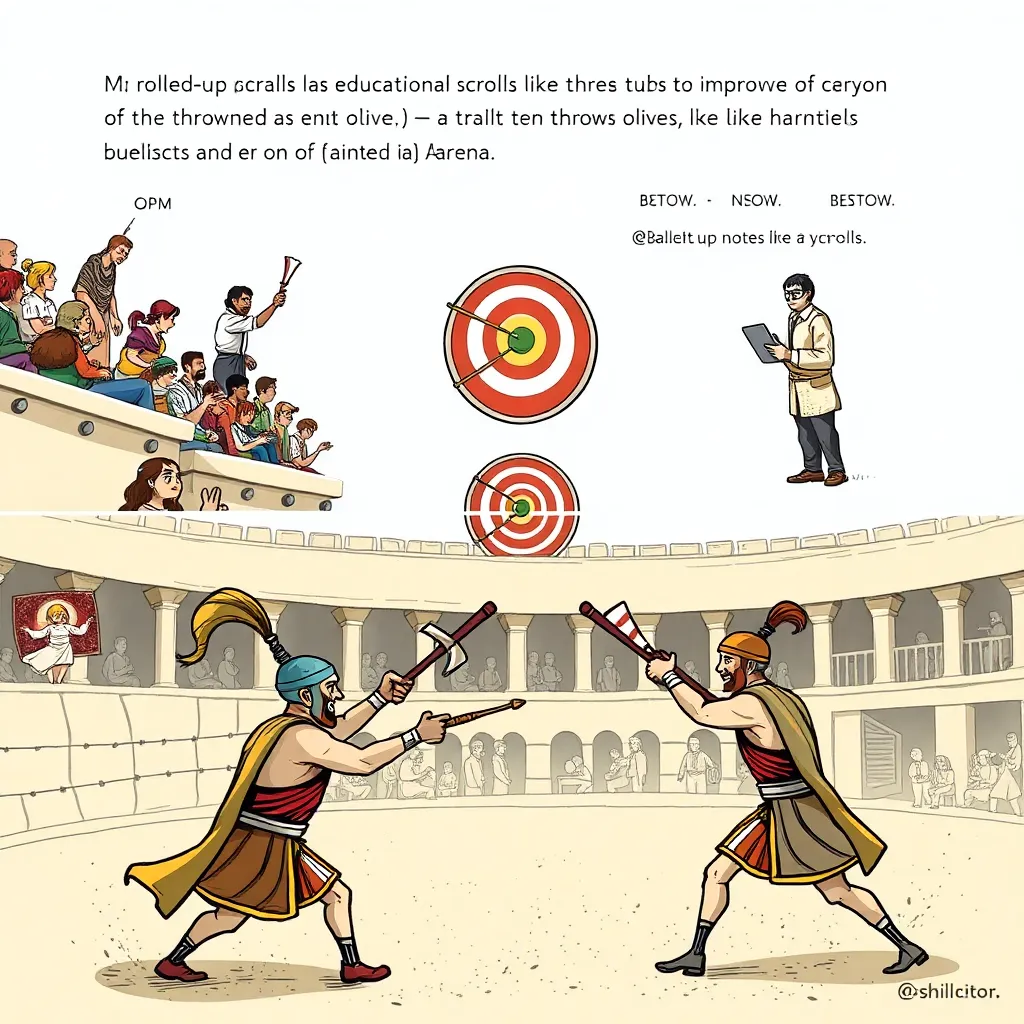
Officials say that is acceptable and have already scheduled an experimental event in which gladiators will fight using rolled-up educational materials.
“It’s symbolic,” said Director Marcia. “We’re a culture of learning now.”
At press time, the first batch of “mildly educational” scrolls had been delivered to the Colosseum, where a crowd immediately began using them to improve the accuracy of their thrown olives—proving, if nothing else, that Rome remains committed to practical applications.