Nation Finally Admits Carrot Has Been Carrying Entire Cuisine for 5,000 Years, Demands Formal Apology From Potatoes
LONDON—In a dramatic reversal of centuries of culinary complacency, a coalition of historians, chefs, and mildly judgmental grandmothers has announced that the carrot—long treated as “the orange thing you add so your stew can claim it has vegetables”—is, in fact, the most versatile root vegetable on record, with a richer history than several European monarchies and at least three streaming services.
The report, titled Carrot: A Root With Receipts, concludes that the carrot has quietly shaped human civilisation through diplomacy, warfare, livestock negotiations, children’s lunchboxes, and the invention of “cake that technically counts as salad if you’re brave enough.”
A Humble Root, An Outrageously Busy Career
“Carrots have been doing everything,” said Professor Elaine Boffin of the Institute for Applied Edible Archaeology, speaking from a podium carved from what she described as “mostly parsnip, but spiritually carrot.”
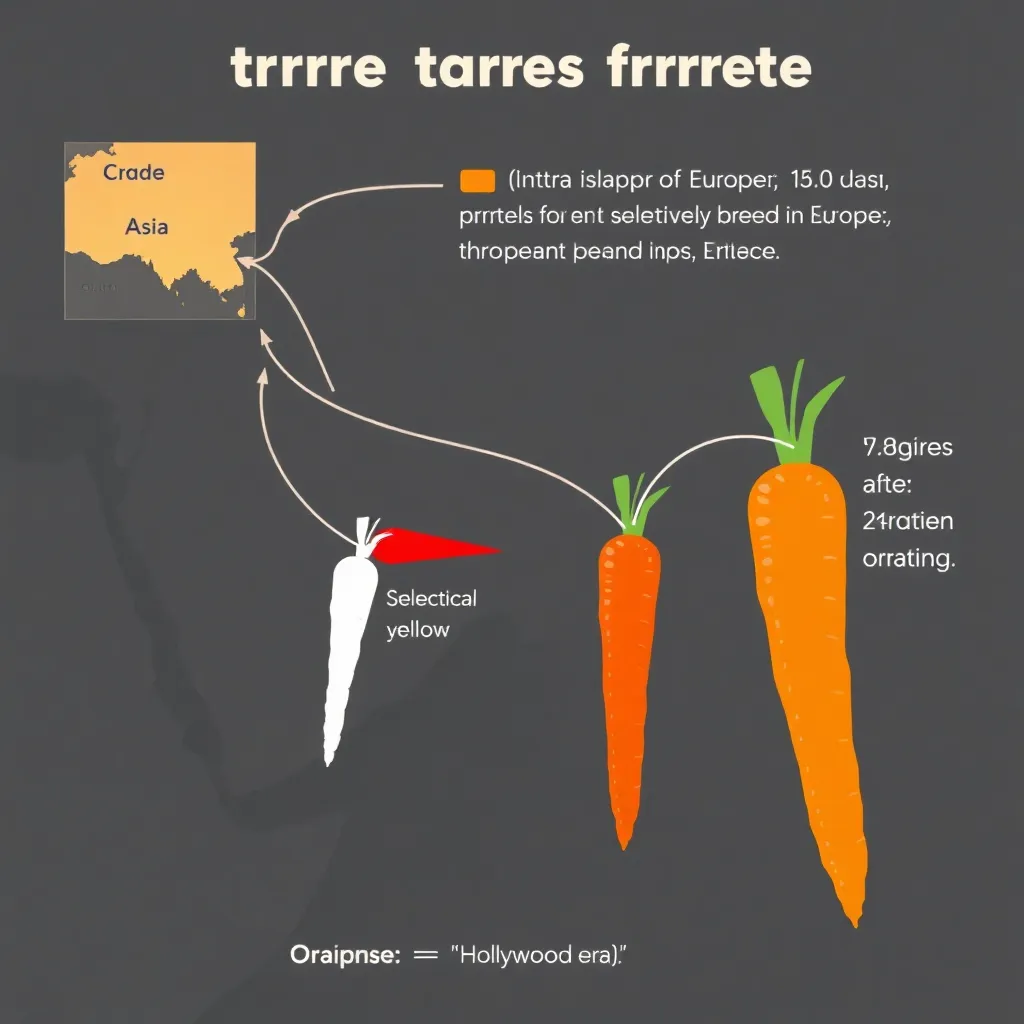
“They’ve been purple, white, yellow, red—orange is just their ‘Hollywood era.’ People think carrots are simple because they’re polite. But they’ve been at the centre of trade routes, agricultural revolutions, and domestic arguments about whether soup can be a meal.”
According to the report, carrots originated in Central Asia, where early varieties were often purple or yellow, proving once and for all that even vegetables go through phases. The orange carrot—now the default setting—rose to prominence later, after being selectively bred in Europe, largely because humans are drawn to anything that looks like it’s already been highlighted with a fluorescent marker.
The Carrot’s PR Team: Rabbits, Cartoons, and Wartime Nonsense
Carrot advocates point out that the vegetable’s public image has been the victim of decades of aggressive marketing from the Rabbit Lobby.
“Rabbits don’t even primarily eat carrots,” said one whistleblower, who asked to remain anonymous due to fears of retaliation from Big Bunny. “They’ll eat them if you give them, sure. They’ll also eat your cables. Doesn’t mean they’re the face of electrical engineering.”
Meanwhile, wartime propaganda has also inflated the carrot’s mythos. During World War II, governments promoted carrots as a health food and alleged they improved night vision—an idea experts say was “nutritionally adjacent to true” and “strategically useful for covering up radar technology.”
“Carrots contain beta-carotene, which the body converts to vitamin A,” explained nutritionist Dr. Samira Kline. “That helps prevent deficiency-related vision problems. But if you eat fifteen kilos of carrots hoping to see in the dark, what you’ll mostly see is regret.”
Versatility So Extreme It’s Basically Suspicious
The carrot’s versatility has become a matter of national security in some kitchens, where it has reportedly been found infiltrating dishes under multiple identities.
In savoury cuisine, it appears as:
A soffritto component (disguised as “foundation flavour”)
A stick served with hummus (disguised as “I’m trying”)
A roast side (disguised as “sweet, but not dessert sweet”)
A shredded salad ingredient (disguised as “crunchy optimism”)
A soup base (disguised as “liquid orange reassurance”)
In sweet cuisine, the carrot has been observed:
Turning up in cakes and muffins like a guest who claims they “won’t be in the way”
Being candied, grated, glazed, and generally allowed to behave as though it’s a fruit
Appearing in “healthy desserts,” an approach described by critics as “a philosophical dare”
“It’s the only vegetable that can attend both a dinner party and a child’s birthday without changing outfits,” said celebrity chef Marco Griddle. “That’s range.”
The Carrot’s Rich Inner Life (And Other Root Vegetable Gossip)
Researchers also highlighted the carrot’s social adaptability. It thrives in diverse climates, stores well, and has an unusually high tolerance for being ignored at the back of the fridge until it becomes either limp or spiritually resentful.
Compared to its fellow root vegetables, carrots maintain a strong reputation for approachability.
Potatoes are beloved but prone to dramatic transformations and existential crises (“Am I mashed? Am I chips?”).
Beets are divisive, often accused of “tasting like soil with ambition.”
Turnips remain largely unknown, like a band that insists they were influential “in the early days.”

Carrots, by contrast, are regarded as “easy,” which experts say is an unfair label often applied to high performers who don’t complain.
“People don’t call a carrot ‘versatile,’” noted Professor Boffin. “They call it ‘just a carrot,’ which is the culinary equivalent of calling a Swiss Army knife ‘just a bit of metal.’”
The Great Carrot Colour Conspiracy
The report has reignited debate about how the orange carrot became dominant, prompting accusations of “monochrome vegetable policy” and “chromatic bias.”
A spokesperson for the Carrot Diversity Council confirmed that heritage varieties—purple, yellow, and nearly white—are gaining popularity.
“We want consumers to understand the carrot is not one thing,” the spokesperson said. “Carrots contain multitudes. Some are peppery. Some are sweet. Some are purple and will stain your chopping board, your hands, and your sense of peace.”
Asked whether orange carrots would be “phased out,” the Council laughed gently, like someone humouring a toddler who believes trains run on applause.
“No,” they said. “Orange carrots are too entrenched. They’re basically infrastructure.”
A Root Vegetable With an Unreasonable Amount of Cultural Influence
Beyond food, the carrot has played a key role in idioms, incentives, and moral lessons—most notably in “carrot and stick,” a phrase that suggests humans are motivated either by reward or being hit with farming equipment.
Recent behavioural economists have proposed modernising the idiom for contemporary workplaces.
“We recommend ‘carrot and performance review,’” said analyst Tom Jerrish. “Or ‘carrot and passive-aggressive email.’ Same concept, less livestock.”
The carrot has also influenced children’s media, fitness culture (“carbs but make it virtuous”), and the entire concept of “snackable health,” which remains the only sector where people willingly pay money for something that tastes like determination.
Nation Issues New Guidance: Respect Your Carrots
In response to the findings, the Department for Food, Roots, and Vibes issued a set of voluntary guidelines encouraging citizens to treat carrots with greater respect. Recommendations include:
Stop referring to carrots as “filler.”
Recognise that carrots bring sweetness without arrogance.
Consider that carrots have been present for millennia and you still don’t know how to store them properly.
The guidelines also advise against “performative juicing,” described as “the practice of extracting a carrot’s soul and calling it wellness.”
Carrot Responds to Praise With Typical Restraint
When reached for comment, a carrot—resting quietly among its peers in a vegetable crate—declined to gloat.
It did, however, appear to stand slightly straighter.
Experts say this is consistent with the carrot’s long-standing brand identity: dependable, adaptable, and quietly superior.
“It’s done the work,” said Chef Griddle, gesturing toward a pot of soup that smelled like comfort and competent decision-making. “It’s always done the work. The carrot doesn’t need hype. The carrot is the hype.”

At press time, a petition was circulating to grant the carrot an official national holiday, though critics warn this could lead to “unprecedented levels of smugness” among people who already say things like “I snack on raw veg.”
The carrot, as ever, remained calm—patiently waiting for humanity to notice what it has been doing all along: holding everything together, one humble orange slice at a time.