The Tiny Honk That Sent 4,000 Servers Into Spiritual Retreat
At 9:14 a.m. on Tuesday, the entire infrastructure of Bristle & Fondant Analytics collapsed not with a bang, nor with a spark, but with a noise described by witnesses as “somewhere between a bicycle horn in a cathedral and a goose discovering tax law.”
Within seconds, dashboards froze, alerts multiplied like wet gremlins, and engineers sprinted into conference rooms carrying laptops, adapters, and the facial expression usually reserved for people who have just remembered they left soup on the stove three states away.
Initial theories were sensible. A bad deploy. A cloud outage. A routing failure. A firmware bug. One manager proposed “quantum turbulence,” which was not helpful, but did sound premium. Yet after six hours of furious diagnosis, packet tracing, log combing, and one regrettable interaction with a decorative fern, the company reached a conclusion that experts are now calling “deeply rude.”
The servers had been taken down by a simple noise.
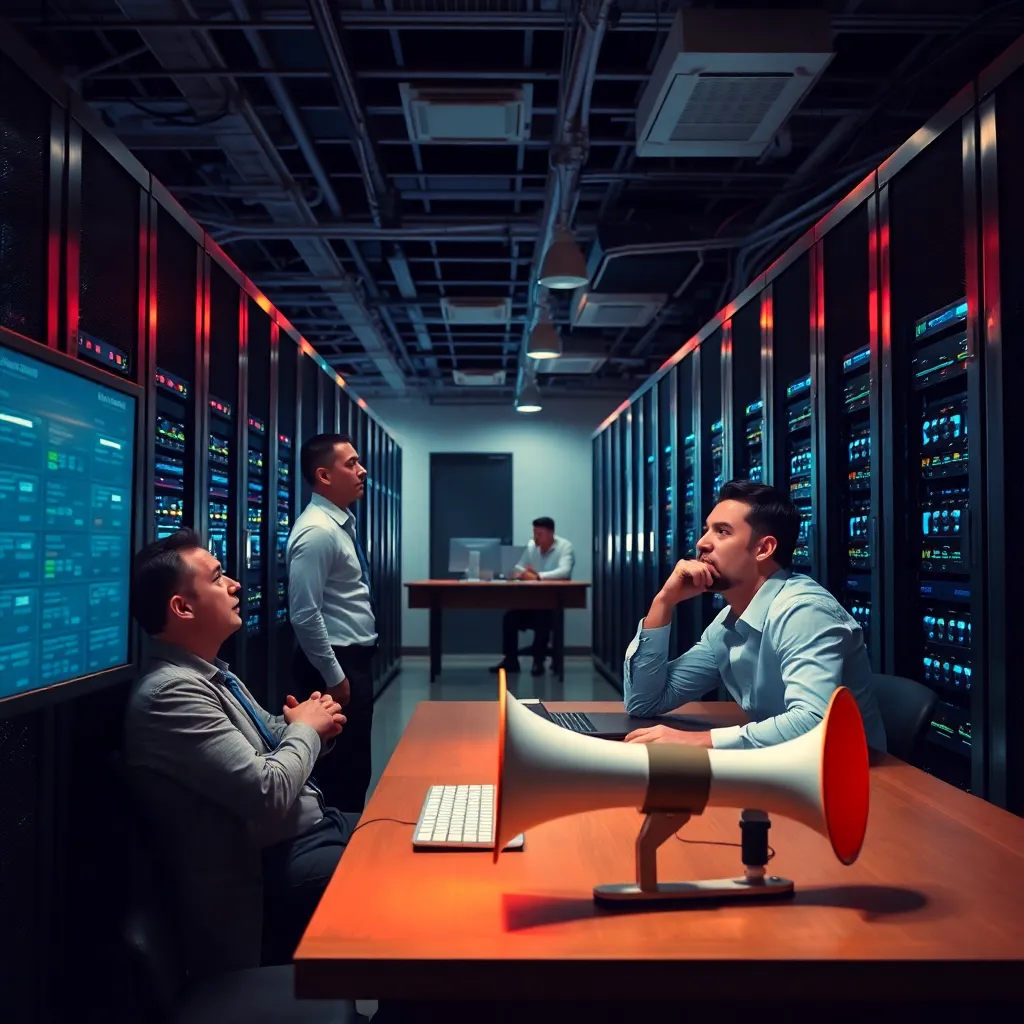
The incident began innocently enough in Conference Room C, where a quarterly morale breakfast had devolved into an argument about whether croissants are a food or a personality. According to staff, an intern reached into a promotional gift bag, removed a small novelty noisemaker shaped like a cheerful turnip, and squeezed it once.
That was all.
Not repeatedly. Not aggressively. Not in rhythm. Just one compact, optimistic honk.
Unfortunately, Conference Room C shares a wall with the audio testing lab, which shares a ceiling cavity with the machine-learning appliance cluster, which shares a poorly documented vibration-isolation bracket with Rack 14, known internally as “The Grandfather” because nobody is sure how old it is and it occasionally makes decisions no one understands.
A forensic reconstruction revealed a sequence so preposterous that several employees laughed, then stopped laughing when they realized payroll was offline.
The honk vibrated a glass water pitcher. The pitcher buzzed at exactly the frequency required to agitate a loose metal badge reel hanging from a chair. The badge reel tapped the drywall in a pattern identical to a long-deprecated maintenance signal accidentally still recognized by an ancient environmental monitor. That monitor, believing it had received the emergency code for “acoustic coolant distress,” triggered a safety subroutine.
That subroutine instructed the smart ventilation system to enter Quiet Preservation Mode, a feature designed during a brief corporate obsession with “mindful hardware.” Quiet Preservation Mode reduced fan speed to minimize “sonic fatigue” in nearby teams. Reduced fan speed increased rack temperature. Rising temperature prompted automated workload migration. The migration controller, in turn, attempted to shift traffic to backup capacity.
The backup capacity was in the middle of a billing audit and had, according to one internal report, “the emotional availability of a folding chair.”
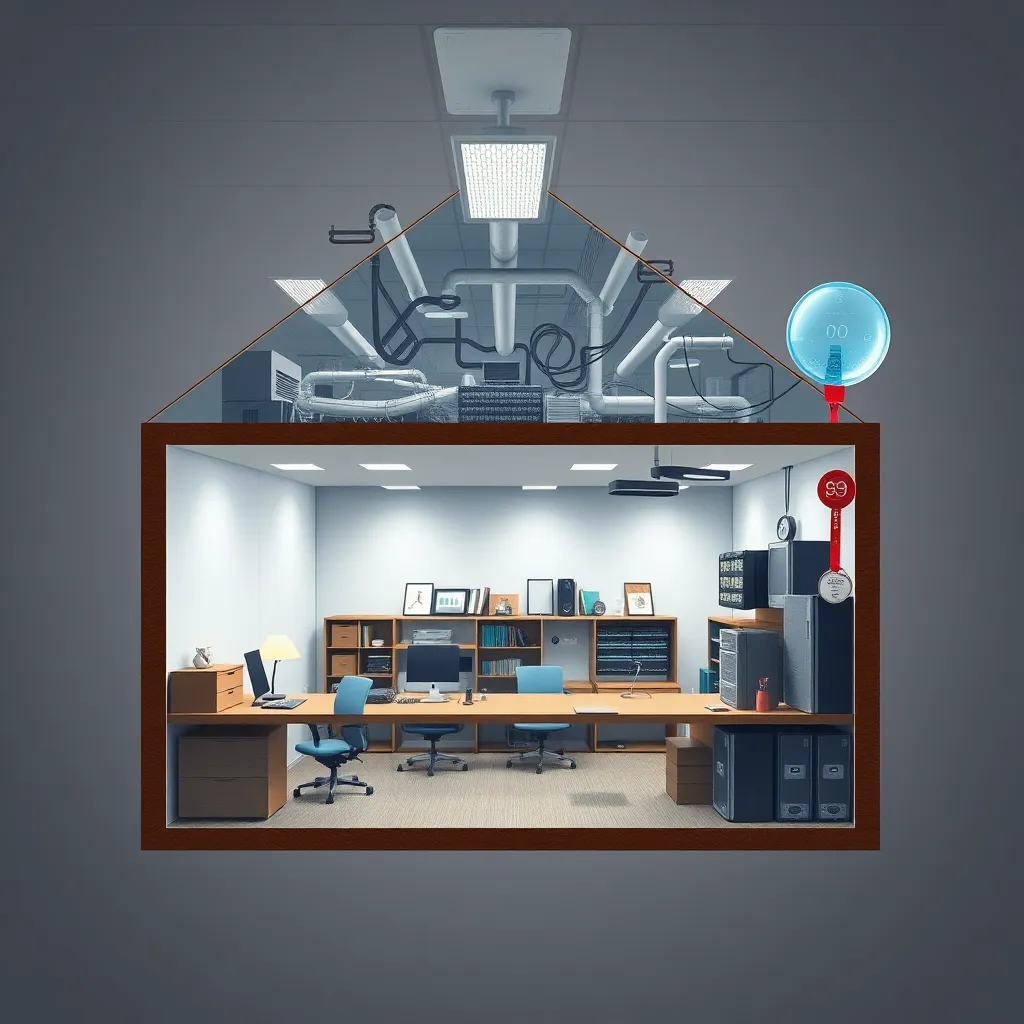
At this point the system might still have survived, had it not encountered the company’s oldest and most feared script: final_final_migration2_REAL.py.
Every workplace has one. A script no one wants to touch, everyone depends on, and several people insist was written by “a genius,” which in corporate settings usually means “someone who quit before explaining anything.” As traffic surged, the script interpreted the sudden pattern as a data-center split event and began launching contingency routines intended for “extreme geographical ambiguity.”
Servers were reassigned. Caches were purged. Database replicas lost confidence. A load balancer in New Jersey briefly announced that it was primary for everything, including systems it had never met. Monitoring software, unable to process the absurdity, started sending alerts with subject lines such as “PLEASE LOOK AT THIS” and “NO REALLY.”
Several customer-facing services remained visible but unusable, leading thousands of users to report that the platform had become “eerily polite but spiritually absent.” Pages loaded, buttons shimmered, and every action concluded with the digital equivalent of a distant sigh.
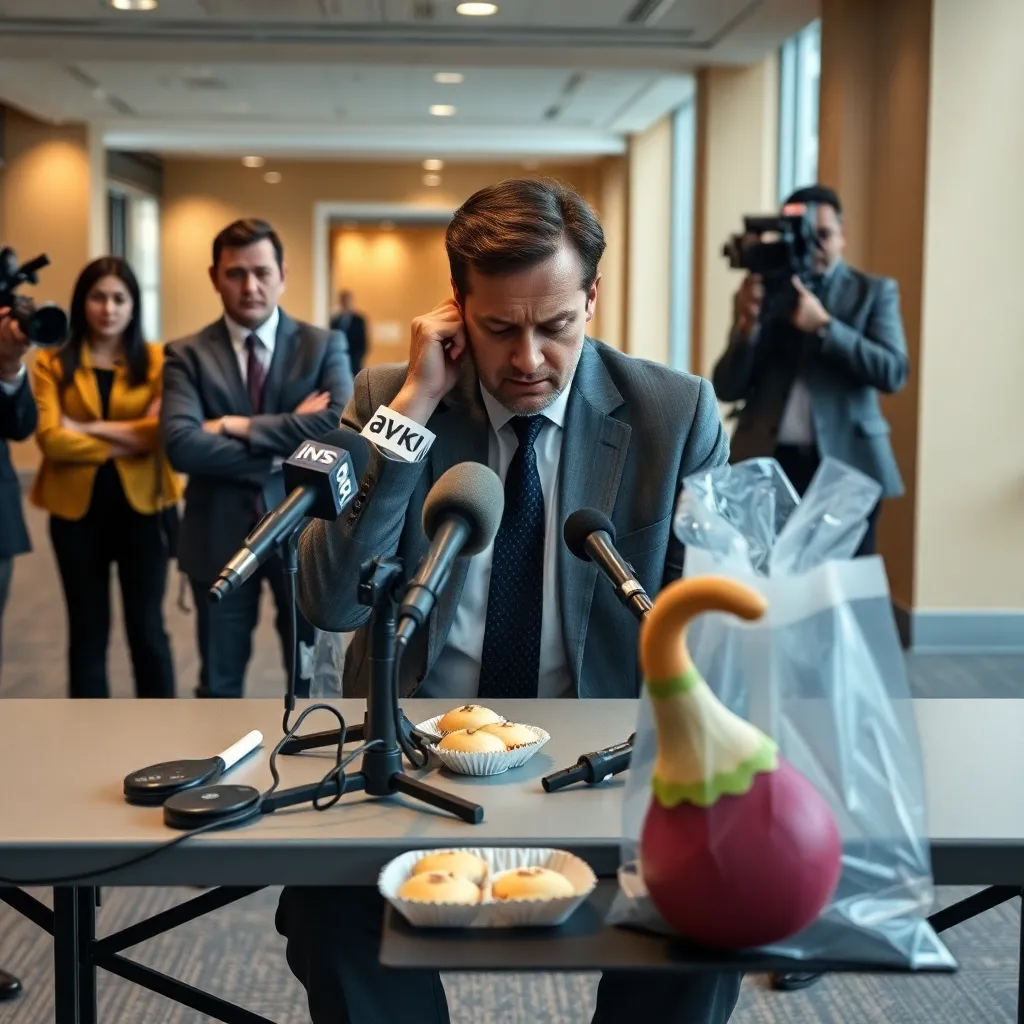
The company’s Chief Technology Officer, Lorna Vex, addressed reporters from a folding table near reception, where a tray of untouched mini-muffins had become an accidental symbol of the crisis.
“We prepare for power failures, network failures, hardware failures, and human error,” said Vex. “What we had not fully modeled was a whimsical vegetable horn achieving lateral influence across facilities.”
She confirmed that the noisemaker has been placed in an evidence bag and stored in a locked drawer “pending emotional readiness.”
Employees have since come forward with additional details painting a portrait of an office held together less by systems engineering than by ritual, mutual optimism, and zip ties.
One senior platform engineer admitted that Rack 14 had long been considered “sound-sensitive.” Another said the cooling controller was inherited from a startup that once tried to make data centers “feel heard.” A third confessed that a warning about acoustic-trigger false positives had existed in internal documentation, but was buried inside a wiki page titled “Fun Little Quirks.”
This page also reportedly included the sentence: “If you hear a duck-like note near Cluster B, avoid large-scale deployments until lunch.”
Acoustics specialists brought in after the outage have proposed a deeper explanation. Modern offices, they note, are packed with resonant surfaces, ad hoc modifications, aging fixtures, and devices that have never been formally introduced to one another. In such environments, a single sound can become less a sound than a social event.
“Buildings remember,” said one consultant, standing beside a heat map of the east wing and speaking in the grave tone normally used for volcanic activity. “A squeak is never just a squeak. A honk is a referendum.”
Her team now believes the office had, over several years, developed what she called a “structural preference” for one narrow frequency range due to renovations, movable dividers, hanging planters, and a motivational wall installation made entirely of brushed aluminum commas. When the turnip horn struck that frequency, the entire floor briefly behaved like a giant, highly confident instrument.
This finding has led to difficult conversations in the executive suite, particularly around the company’s decision last year to replace carpet with “collaboration hardwood.”
Shareholders, meanwhile, have reacted with a mixture of fury and reluctant admiration. One investor told Wibble News, “If I’m going to lose seven figures in a morning, I do appreciate originality.”
Clients have demanded reassurance that future outages will not be caused by produce-shaped accessories, geese, celebratory kazoos, or “ambient whimsy of any kind.” In response, Bristle & Fondant Analytics has unveiled a 14-point resilience plan that includes acoustic zoning, script retirement, bracket replacement, horn amnesty, and a new internal rule requiring all novelty objects to pass through what the company is calling Sonic Governance.
The intern at the center of the event has not been named, though colleagues describe them as “devastated,” “very apologetic,” and “still technically Employee of the Month due to a clerical lag.” Sources say they have been reassigned temporarily to a silent records digitization project in the basement, where even their keyboard has been fitted with “courtesy felt.”
The noisemaker industry, sensing an opportunity, has already moved in. Several manufacturers announced enterprise-safe horns by Wednesday afternoon, featuring compliance labels, decibel ratings, and reassuring packaging promises such as Cloud Compatible and Does Not Interact With Legacy Cooling.
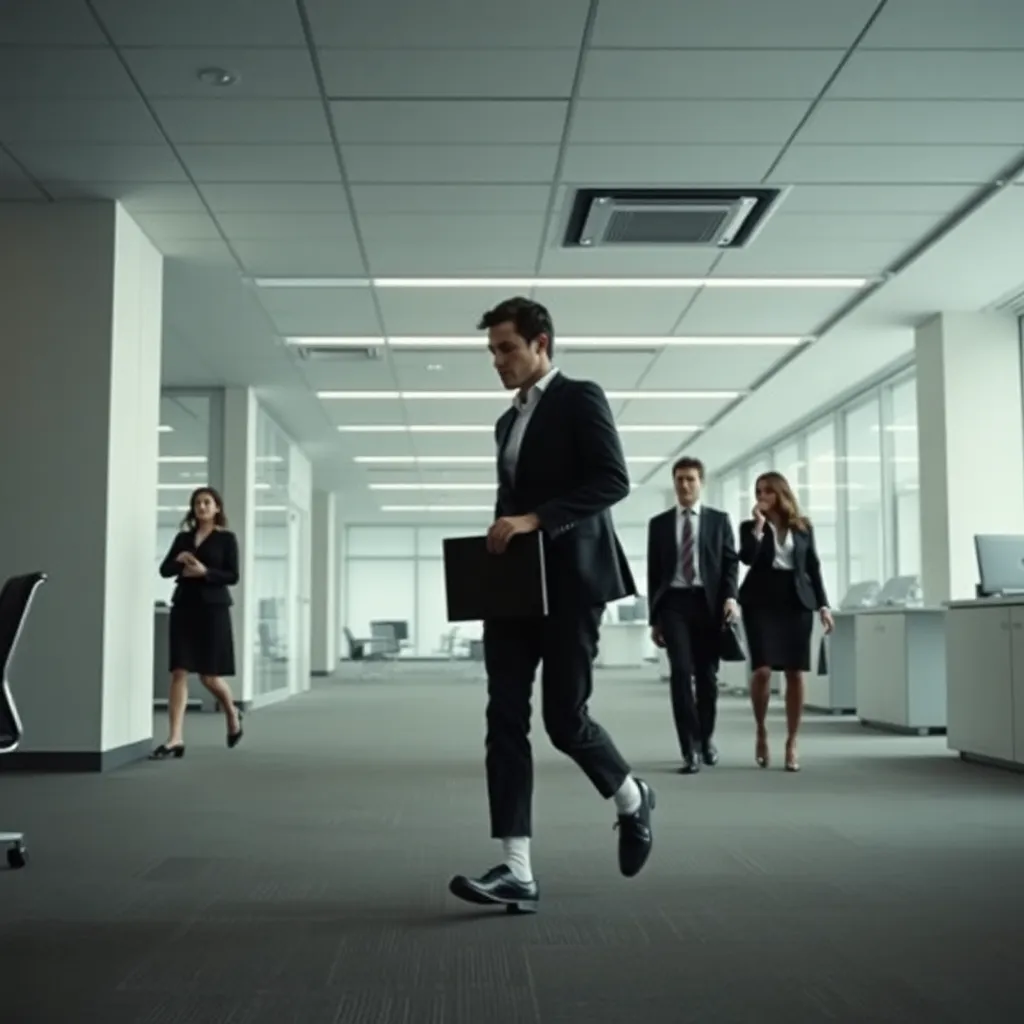
In the wake of the disaster, employees returned to work under a new and unusually reverent quiet. Conversations were whispered. Chairs were lowered carefully. One product manager removed a squeaky shoe and completed the rest of the day in socks. At 3:00 p.m., somebody dropped a spoon in the kitchen, prompting a temporary evacuation of two departments and one very startled accountant.
By Thursday, most systems had been restored, though some residual oddities remained. Calendar invites arrived in Icelandic. A staging environment began auto-replying “I need time.” The office printer produced 73 pages containing only a centered semicolon.
Still, leadership insists the company has emerged stronger, wiser, and considerably less tolerant of festive compression bulbs.
As for Rack 14, it has been decommissioned with honors. Staff placed a small plaque beside the empty floor tile reading, It Heard Too Much. Flowers were considered inappropriate, but someone did leave a pair of industrial ear defenders.
There are outages caused by storms, outages caused by hackers, and outages caused by executives saying “how hard can it be?” And then there are the rare, majestic failures that seem to rise naturally from the hidden agreements between architecture, neglect, and office party merchandise.
In the annals of corporate catastrophe, Tuesday’s event will endure as a landmark warning to organizations everywhere: if your infrastructure depends on undocumented scripts, temperamental cooling, and a wall cavity with opinions, the distance between “normal business operations” and “total systems collapse” may be exactly one cheerful little honk.