Nation Declares Ice Cream “Seasonal,” Promptly Eats It Year-Round Out of Spite
SCOOPINGTON, TUESDAY — In a bold display of calendar-based denial, the nation has once again attempted to classify ice cream as a “summer treat,” only to immediately consume it in every other season with the grim determination of people who refuse to be told what their teeth should feel.
The announcement, issued jointly by the Ministry of Weather Vibes and the National Association of People Who Think They’re Being “Bad,” defined ice cream as “a warm-weather indulgence ideally enjoyed in sunshine, near water, and with the illusion that your life is in order.”
Within minutes, citizens across the country were spotted eating ice cream in rain, hail, wind, and that ambiguous grey period known only as “February,” when time slows down and all sound becomes the noise of your own thoughts.
“Listen, I’m not supposed to be doing this,” whispered local resident Karen P., clutching a pint of salted caramel like contraband as she stood beside an open freezer door. “It’s not even hot out. It’s practically sleeting. That’s what makes it… powerful.”
Experts Confirm Ice Cream Is 90% Texture, 10% Emotional Coping Mechanism

According to the newly released State of the Cone Report, ice cream is no longer considered a dessert so much as a “therapeutic delivery system for cold sweetness, social permission, and small crunchy bits.”
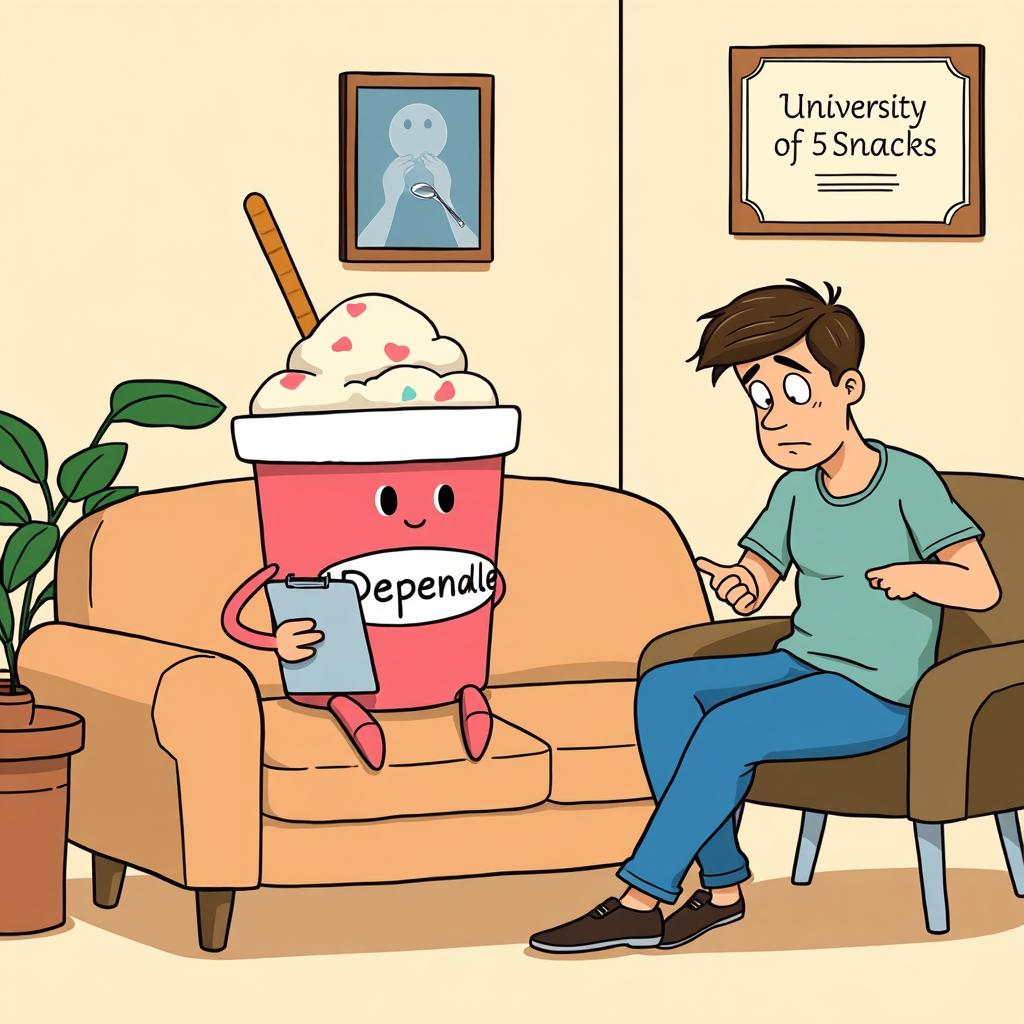
Dr. Malcolm Grange, a leading food psychologist at the University of Snacks, explained that the modern consumer does not eat ice cream because it is “nice.”
“They eat it because it is dependable,” said Grange. “Unlike people. Unlike the economy. Unlike your phone battery. Ice cream comes in a tub, remains in that tub, and asks absolutely nothing of you except that you occasionally stop chewing and breathe.”
When asked whether ice cream can ever truly be “just a treat,” Grange shook his head solemnly.
“It begins as a treat,” he said. “Then you have a stressful Tuesday and suddenly you’re eating directly from the carton with the freezer open like a raccoon that found electricity.”

The Great Soft Serve Arms Race Escalates in Suburbs Nationwide
In a separate development, municipalities have reported a sharp increase in soft-serve-related tensions, as rival ice cream vans expand their territories into previously stable neighborhoods.
Residents of Lower Puddleton described “a chilling conflict” in which two vans played competing jingles within audible range of each other, forcing parents to choose between their children’s loyalty and their own financial survival.
“At first it was just one van, and we could budget for it,” said Tom Wiles, father of two and owner of a rapidly disintegrating wallet. “Now we have two. One plays a song that sounds like childhood. The other plays a song that sounds like childhood but slightly faster, like it’s trying to outrun your better judgement.”
Local councils have proposed zoning measures to prevent escalation, including designated “treat corridors,” mandated jingle volume limits, and a ban on the phrase “You can have it if you’re good,” citing concerns that it incorrectly implies morality can be purchased with sprinkles.

Scientists Warn: “One Scoop” Is a Fiction Invented to Control You
While official serving sizes continue to suggest that “one scoop” is an appropriate portion, scientists at the Institute for Dessert Realism have confirmed that a scoop is not a unit of measurement but a “mood-based concept.”
“The scoop is elastic,” said lead researcher Professor Elaine Mirth, gesturing toward a chart titled Scoop vs. Emotional Weather. “A scoop can be a neat hemisphere when you’re calm. A scoop can also be the entire tub when you’ve received an email that begins, ‘Just circling back.’”
The study revealed that 72% of people eat “one scoop,” then immediately return for “just a little more,” followed by “I don’t want to leave it uneven,” and finally “well now I’ve opened it.”
The remaining 28% were found to be either lying or in possession of uncommon inner peace.
Gelato Demands Respect, Receives Suspicion
As ice cream continues its reign, gelato has launched a renewed campaign to be taken seriously, describing itself as “ice cream with a passport” and “the more mature choice.”
The Gelato Council issued a statement insisting that gelato is not “fancy ice cream,” but rather “a distinct artisanal experience with a denser texture and a quiet expectation that you’ll pronounce it properly.”
Despite these efforts, shoppers continue to regard gelato with the wary expression normally reserved for a new acquaintance who says they don’t own a television.
“I bought gelato once,” said local shopper Nina Ford. “It was delicious, but it came in a container that looked like it had opinions about me.”

Parents Report Children Have Developed Advanced Negotiation Skills Via Ice Cream
Authorities have noted a troubling rise in juvenile bargaining, with children employing sophisticated tactics previously seen only in hostage negotiations and corporate mergers.
“Can I have ice cream?” asks the child.
“No,” says the parent.
“Okay. What about just one bite?” the child counters, voice calm, eyes unwavering.

The parent, already defeated by the concept of time, agrees.
Twenty minutes later, the parent is found standing over the sink at midnight, eating the last spoonful of “cookie dough” and wondering what happened to their life.
“It’s not even about the ice cream,” said one exhausted mother. “It’s about the fact that I said no and my child treated it like an opening offer.”
New Flavours Continue to Push Society Past Its Breaking Point
In supermarkets, shoppers have been confronted with a wave of new flavours that appear to have been invented during a dare.

Recent launches include:
Birthday Cake Confetti Explosion (identified by researchers as “sugar wearing glitter”)
Triple Chocolate Brownie Pile-Up (described as “a regret disguised as a dessert”)
Salted Honey Pretzel Crunch Swirl (for people who want their ice cream to sound like a podcast sponsor)
Midnight Cookie Chaos (a flavour name that implies legal consequences)
“Flavour innovation has outpaced human dignity,” warned consumer advocate Liam Kett. “At this point, ice cream is less a food and more an event you attend.”
Meanwhile, traditionalists are pleading for a return to “normal” flavours like vanilla, strawberry, and chocolate—though these too have been quietly rebranded as Classic Madagascan Vanilla Bean Dream, Summer Strawberry Nostalgia, and Dark Chocolate Intensity No. 7.
Vanilla Once Again Forced to Defend Its Reputation

Vanilla, long maligned as “boring,” has issued a formal complaint to the public.
“I am not boring,” said Vanilla in a prepared statement. “I am foundational. I am versatile. I am what you add things to because you have no confidence in your own personality.”
Vanilla’s supporters argue it is the only flavour brave enough to stand alone without hiding behind cookie pieces, candy chunks, or “swirls” that resemble interior decorating trends.
“Vanilla is pure,” said one devotee, staring into the middle distance. “If you need twelve mix-ins to feel something, that’s between you and your therapist.”
The Cone vs. Cup Debate Reaches New Levels of Pointless Intensity

In a development that experts have called “inevitable,” the annual cone-versus-cup debate has erupted, with both sides presenting arguments that are clearly driven by identity rather than logic.
Cone advocates cite the edible container as “efficient” and “fun,” while cup supporters claim cones are “stressful,” “leaky,” and “an unnecessary test of athleticism.”
“I don’t want a dessert that requires strategy,” said cup loyalist Raj M. “With a cone, you’re on a timer from the moment it’s handed to you. It’s not a treat, it’s a mission.”
Cone purists responded by accusing cup users of “embracing defeat” and “refusing to live deliciously,” then immediately dropping a scoop onto their shoes.
Government Considers Emergency Measures After “Freezer Door Stare” Hits Record Levels
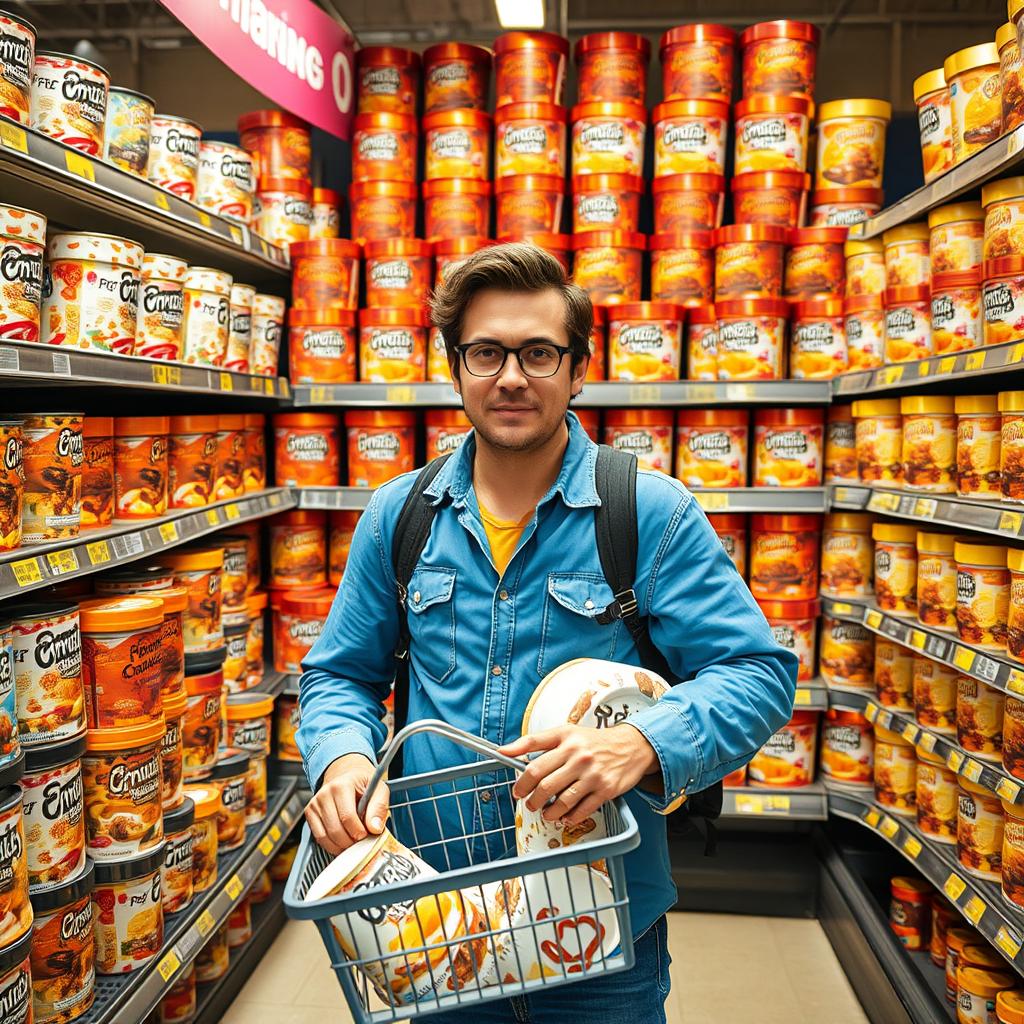
The Department of Domestic Behaviour has expressed concern over a national spike in “freezer door stare,” a phenomenon in which a person opens the freezer, sees ice cream, and stands motionless for several minutes as though receiving a transmission.
“It’s not hunger,” explained spokeswoman Janice Holt. “It’s a form of internal negotiation. The citizen is assessing their day, their stress levels, their social commitments, and whether anyone is watching.”
A pilot program may soon be introduced requiring citizens to close the freezer door within ten seconds, though critics argue this is “an overreach” and “literally the only quiet time some of us get.”
Forecast: Ice Cream Expected to Remain the Only Reliable Joy
As the week continues, analysts predict ice cream will maintain its position as the nation’s leading source of low-stakes happiness, regardless of season, weather, or the fact that you promised yourself you’d “eat better” starting Monday.
In a closing statement, the National Association of People Who Have Eaten Ice Cream Standing Up affirmed the public’s right to continue treating ice cream as both celebration and consolation.
“Whether it’s a cone in the sun or a spoon in the dark,” the statement read, “ice cream will be there. Cold. Sweet. Unjudging. Quietly reminding you that sometimes the simplest solution is dairy, sugar, and a little bit of denial.”
At press time, a spokesperson for Ice Cream had no comment, having melted under pressure.