Filed Report
Nation Stunned as Office Unveils Scrum Board to Manage Scrum Ceremonies, Immediately Schedules Emergency Retro About It
In a development hailed by consultants as "the purest form of progress ever laminated," a mid-sized product organization yesterday unveiled a dedicated scrum board for tracking all scrum ceremonies, thereby ensuring that every meeting about work can now be supported by at least three meetings about the meeting.
Witnesses described the atmosphere as electric, procedural, and lightly scented with dry-erase marker. The new board, mounted with solemn reverence between a sad ficus and an unused collaboration nook, features the columns To Be Ceremonied, In Ceremony, Ceremonied, and Blocked by Calendar Conflict. A fifth experimental lane, Needs Pre-Grooming Before We Groom the Grooming, has already reached capacity.
"Before this, our ceremonies were tragically unmanaged," said one agile lead while moving a sticky note labeled Discuss whether standup is becoming too horizontal. "Standups occurred standing up, planning happened with alarming spontaneity, and retrospectives were conducted without first estimating the emotional complexity of looking back. Frankly, we were operating in the dark."
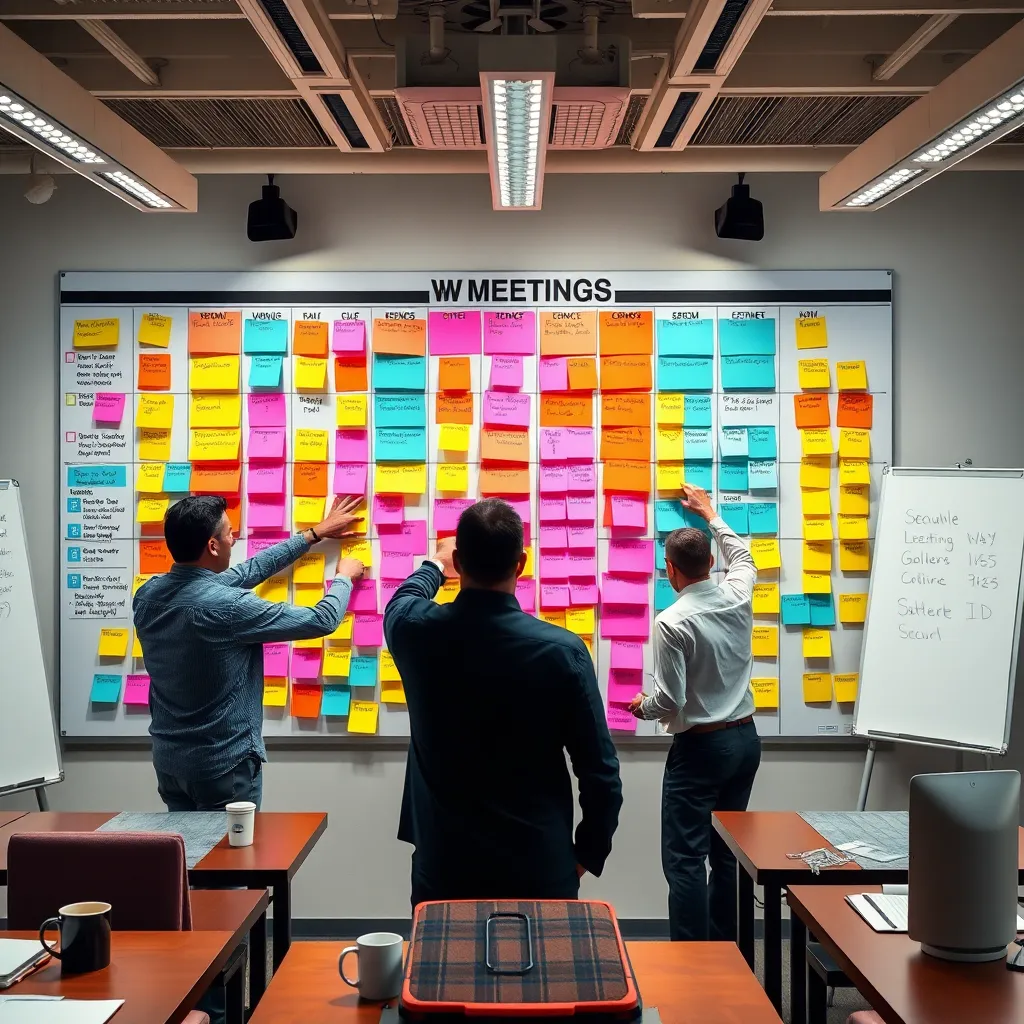
The board, according to internal documentation printed in a 47-page slide deck, is intended to "increase transparency around ritual throughput" and "maximize ceremony velocity across cross-functional stakeholder touchpoints." In practice, this means the daily standup now has its own backlog, complete with recurring subtasks including confirm who talks first, revisit parking lot from previous parking lot, and identify owner for action item to define action items.
By midmorning, the board had already delivered measurable value. A bottleneck was identified in sprint planning preparation, where cards repeatedly stalled awaiting refinement by the Meeting Readiness Tiger Team, a special task force assembled to determine whether agenda bullets should be verbs or noun phrases. A breakthrough came at 11:20 a.m. when someone placed a red blocker magnet on Retro about overlong retros and whispered, "At last, truth has a home."
Analysts say the innovation represents a major leap forward in the mature enterprise lifecycle. "The old model assumed ceremonies simply happened," explained a transformation consultant wearing white sneakers of authority. "That was naive. Modern organizations understand that meetings are living organisms. They must be fed, observed, color-coded, and occasionally moved to the right because someone is out on Friday."
The board's daily usage is governed by a lightweight framework of only nine companion ceremonies. These include the Ceremony Triage Huddle, the Weekly Ritual Refinement Workshop, and the Quarterly Offsite for Reimagining the Emotional Arc of Demo Day. Teams are encouraged to keep these sessions concise, ideally under two hours each, unless "meaningful alignment opportunities emerge," in which case they may continue until everyone begins nodding with the expressionless serenity of airport luggage.

Not everyone was immediately convinced. Some engineers reportedly asked whether the board might be "a bit much," a concern that was swiftly captured as a yellow sticky note and moved into the Open Questions for Retro swimlane, where it will be revisited in six to eight business months. Others wondered if the board duplicated information already stored in calendars, chat channels, and shared documents. Leadership responded by creating an epic called Unify Sources of Truth by Adding Another Source of Truth.
Still, supporters insist the benefits are undeniable. Since the board's launch, confusion about scrum ceremonies has been replaced with a richer, more layered confusion featuring owners, deadlines, and acceptance criteria. Team morale has reportedly risen among employees who enjoy physically moving paper squares from one rectangle to another while saying things like "good momentum here" and "let's socialize this asynchronously before we workshop it live."
In a particularly successful pilot, one department used the board to identify that its sprint review had itself become a deliverable requiring stakeholder signoff, legal review, and a risk assessment. This discovery allowed the team to split the review into smaller stories: Review Prep, Review Review, and Post-Review Reflection Review, each estimated at five points due to uncertainty around screen sharing.
An internal champion of the initiative praised the board's emotional clarity. "People say ceremonies are intangible," she said, gently straightening a note titled Decide if today's standup should include wins. "But here, you can see them. You can touch them. You can watch them age in place under fluorescent lighting until they become part of the wall. That's accountability."
There are already plans to expand the system. A second board may soon be introduced to manage dependencies between ceremonies and the action items generated by discussing those dependencies. Long term, the organization hopes to achieve what it calls full-stack agility, a condition in which every event in the company, including lunch, fire drills, and mild sighing, can be planned in two-week increments and revisited in a psychologically safe format.
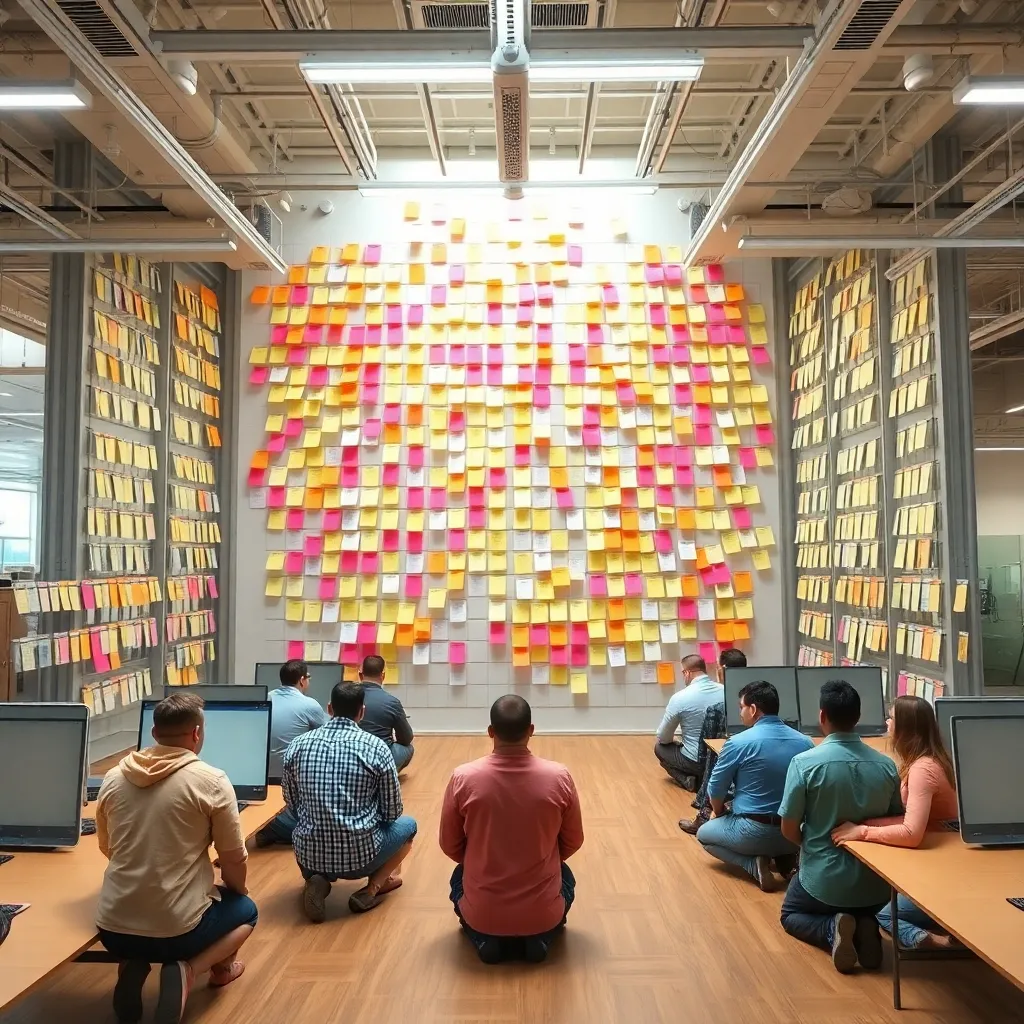
As of press time, the scrum board to manage scrum ceremonies had entered the Needs Review column after concerns emerged that no one had clarified who owns updating the board during the weekly board-maintenance sync. A follow-up meeting has been scheduled to determine whether this should be discussed in standup or escalated directly to the Ceremony Steering Committee, which meets every Thursday to preserve agility from the dangerous unpredictability of getting anything done.
Public Response
Comments
No comments yet.